
French Fries: The Global Icon Reinvented for Every Lifestyle
Special French fries, also known as specialty value added or premium fries are enhanced potato products that go beyond conventional straight cut fries. These products feature unique shapes, coatings, seasonings, premium cuts or advanced processing techniques designed to improve texture, flavor, appearance and cooking performance across various preparation and serving conditions.
Unlike standard straight cut fries which are typically thin rectangular strips, special French fries provide additional value through innovative design and formulation. Examples include increased surface area for enhanced crispiness and better sauce adhesion, specialty coatings that improve heat retention and maintain crunch for longer periods and visually distinctive cuts that enhance menu appeal and product differentiation.
Why Special French Fries Are Gaining Popularity Globally ?
The growing global popularity of special French fries is driven by rising consumer demand for premium, indulgent, yet convenient food experiences. Growth is supported by expanding quick service restaurants (QSRs), continuous menu innovation in casual dining, increasing frozen food consumption and the growing adoption of home cooking appliances such as air fryers. Consumers increasingly favor visually appealing, texture rich products that deliver superior crispiness, bold flavors and longer holding times, particularly for takeaway, delivery and convenience focused dining.
Demand for special French fries continues to expand across multiple sectors. In restaurants and QSRs, they serve as premium side options that support menu differentiation, higher customer satisfaction and upselling opportunities. In the retail and frozen food sector, they offer convenient, restaurant quality products with consistent performance and extended shelf life for home consumption.
The global French fries market strongly influenced by frozen and specialty products has been valued at approximately USD18–25 billion in recent years with projections suggesting growth beyond USD 30 billion by the early 2030s, supported by a compound annual growth rate (CAGR) of around 5–6%. Frozen products account for the majority of market share due to their convenience, consistency, scalability and compatibility with modern cooking methods.
Special French fries continue to cater to evolving consumer preferences by combining premium quality, convenience, visual appeal and innovative flavor experiences making them an increasingly important segment within the global potato processing industry.
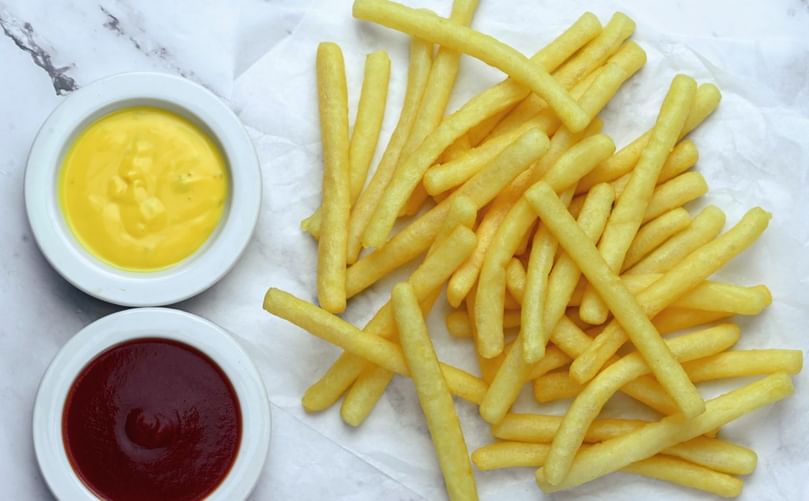
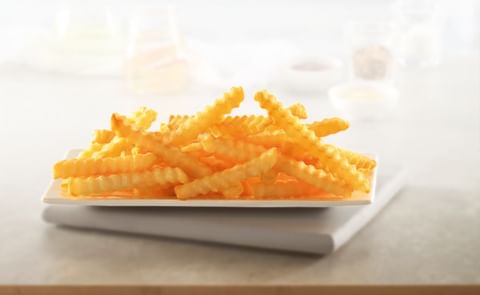
Special French Fries (Source: Pitco)
The Origins: A Belgian Innovation, Not French
The roots of French fries trace back to Belgium's Meuse Valley in the late 17th century around 1680, where impoverished villagers in Namur relied on frying small fish from the local river. When harsh winters froze the Meuse, preventing fishing, they substituted by slicing potatoes introduced to Europe from South America via Spanish explorers in the 16th century and frying them in animal fat for a similar crispy texture. This resourceful adaptation quickly became a staple with 18th century Belgian manuscripts documenting "fried potatoes" as an everyday dish in the region.
The "French" designation likely originated in America, where Thomas Jefferson during his ambassadorship to France from 1785-1789, encountered the dish and later served it at a White House dinner in 1802, noting it as "potatoes served in the French manner." An alternative narrative credits Parisian street vendors on the Pont Neuf bridge, who began selling fried potato slices amid the chaos of the 1789 French Revolution, capitalizing on the bridge's bustling traffic. By the mid-19th century, "French fried potatoes" appeared in English cookbooks, spreading the treat's popularity across continents.
Belgium continues to champion fries as a national icon, often enjoyed in "fritkots" (fry shops) with over 25 sauce varieties and has pursued UNESCO intangible cultural heritage recognition to affirm its claim. This cultural pride highlights fries' evolution from survival food to a symbol of culinary heritage.
Wrapping It Up: Fries for Every Palate
From their ingenious Belgian origins in the 17th century born of necessity during frozen winters to today sophisticated health focused iterations, special French fries seamlessly merge time honored tradition with cutting edge innovation, offering endless adaptability across cultures and diets. Whether you are savoring air fried sweet potato fries loaded with herbs for a nutrient packed twist or indulging in coated low-fat versions that deliver guilt free crunch without compromising flavor, these versatile delights cater to every preference from vegan enthusiasts to gourmet seekers. Experiment with global toppings like spicy gochujang or fresh elote for added excitement and remember moderation pairs best with balanced meals.
Frozen French Fries: A Spectrum of Shapes and Cuts
Frozen French fries, typically pre-cut, blanched, par-fried in oil and flash frozen to lock in freshness provide unmatched convenience for home cooks and commercial kitchens, ensuring consistent texture and flavor upon cooking. Innovations like specialized batters or coatings enhance crispiness that lasts longer, while brands focus on organic sourcing or reduced sodium options to meet health trends. Here's an expanded overview of popular varieties including their dimensions, ideal pairings and market highlights
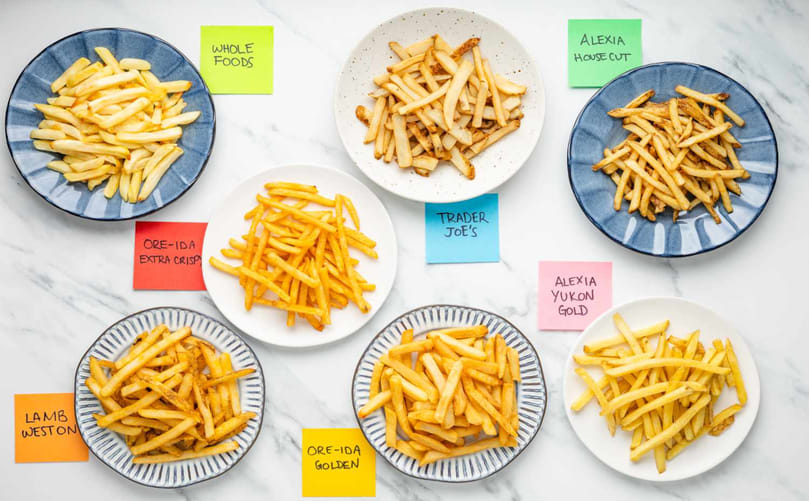
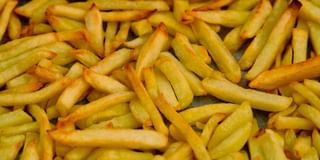
Frozen French Fries: A Spectrum of Shapes and Cuts (Source: Simply Recipes)
Straight Cut Fries: Standard rectangular strips, often 1/4- to 3/8-inch thick, valued for uniform cooking and adaptability in recipes like poutine or as a base for seasonings. Best for everyday sides; McCain and Trader Joe's versions excel in even oven baking with coated types minimizing oil absorption for a lighter bite.
Shoestring Fries: Slender 1/8-inch cuts maximizing surface area for intense crispiness ideal for quick snacks or dipping in gourmet sauces like truffle aioli. Market Pantry's budget friendly packs use advanced freezing to retain delicate texture, popular for their fast cook time.
Curly Fries: Twisted spirals from specialized cutters, excellent at retaining bold seasonings like Cajun or garlic parmesan, suiting fun appetizers or chili loaded dishes. Arby's style from Lamb Weston add visual appeal to party platters with high demand in foodservice.
Waffle Fries: Thick, lattice patterned grids with enhanced crunch from increased surface exposure, perfect for trapping thick toppings like cheese curds or gravy in loaded variations. Chick-fil A inspired, they draw from Belgian influences and thrive in frozen formats for bold, shareable snacks.
Crinkle Cut Fries: Wavy ridges boost crispiness and sauce adhesion making them prime for nacho style loads or retro diner vibes. Ore-Ida and Roots Organic dominate with the segment expanding due to nostalgic appeal and superior texture retention.
Steak Fries: Robust 1/2-inch+ wedges with a pillowy interior suited for upscale sides or minimalistic dips often paired with steaks or burgers. Ore-Ida Classic reduces acrylamide through shorter cooking attracting health-conscious consumers.
Wedges: Skin-on quarters or halves for a hearty, rustic feel, versatile in seasoned applications like herb roasted or spicy wedges. Lamb Weston leads in foodservice with easy portioning.
Dippers: Innovative scoop shapes optimized for sauce retention, enhancing appetizers or shareable plates. Lamb Weston's premium line is gaining popularity for its functional design.
Special French Fries: Chilled, Low-Fat, Non-Fried and Alternative Tubers
"Special" fries innovate beyond traditional deep fried potatoes by emphasizing health benefits, sustainability, convenience and flavor diversity through advanced storage techniques, fat reduction methods, oil free cooking alternatives and nutrient rich tuber substitutions. These variations often align with dietary trends like low carb, gluten free or plant-based eating, while minimizing harmful compounds like acrylamide a potential carcinogen formed during high heat processing. Drawing from food science research, they offer practical solutions for home cooks and foodservice, such as enhanced nutrient retention or extended shelf life making fries more accessible and guilt-free.
Chilled/Refrigerated French Fries: These fresh cut potato strips are stored at 34-40°F (1-4°C) without par frying to preserve natural enzymes, texture and flavor, preventing oxidation and sprouting for a farm fresh quality. Unlike frozen options, they avoid ice crystal formation that can lead to sogginess upon thawing but require consumption within 3-5 days to maintain crisp potential. Preparation involves submerging in cold water to remove excess starch followed by quick oven baking or air-frying for optimal results they are ideal for foodservice settings where on-demand preparation ensures minimal waste and authentic taste.
Research highlights benefits like increased resistant starch a prebiotic fiber that aids gut health and blood sugar control when potatoes are cooked and then chilled for at least 24 hours, potentially turning fries into a healthier option by improving digestibility and reducing glycemic impact. Freezing pretreatments at -10°C before final cooking can reduce acrylamide by up to 50% in chips and fries as lower temperatures inhibit asparagine sugar reactions during heating.
Long-term freezing of par fried fries (up to 180 days) boosts resistant starch content to 9.13%, enhancing nutritional value without altering taste significantly. Fermentation as a preparation step adds positive flavors like tangy notes, while further lowering acrylamide and improving shelf stability. Environmentally chilled chains for fries show lower carbon footprints than frozen ones in some studies due to reduced energy for freezing and transport. Creative uses include incorporating into breakfast hashes, salads or even crepes for versatile meal integration.
Low-Fat French Fries: Focused on minimizing oil absorption, these fries employ pretreatments to create barriers or alter potato structure, resulting in products with 10-50% less fat than traditional versions while retaining crunch and flavor. Hydrocolloid coatings, such as pectin or alginate based edible films form a protective layer that reduces oil uptake by 40-50% during frying by limiting moisture escape and pore formation. Infrared (IR) dry blanching heats potatoes uniformly with electromagnetic waves, inactivating enzymes like polyphenol oxidase and reducing fat content below 10% in final fries, often outperforming water blanching by preserving color, texture and vitamins without water waste.
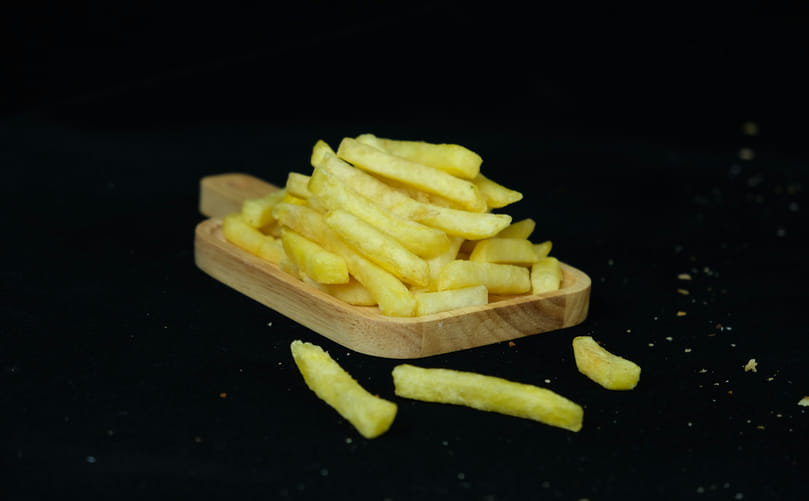
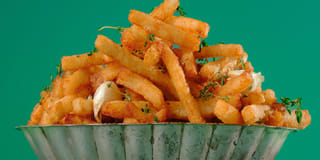
Crispy Low Fat French Fries: Guilt Free Indulgence
For instance, IR blanching at 160-190°C for short durations (2-5 minutes) softens tissue leading to fries with comparable quality to deep fried but fewer calories. Other methods include steam or microwave assisted blanching, which can soften sweet potatoes by 50% pre-frying, easing cooking and fat reduction. These techniques are scalable for commercial production appealing to health focused consumers and can be enhanced with natural additives like inulin for creamier textures without added fats.
Non-Fried French Fries: Eliminating deep frying altogether, these methods use hot air circulation, radiant heat or microwaves to achieve crispiness with 70-90% less oil, significantly lowering calories (30-50% reduction) and harmful compounds like acrylamide, which forms less at controlled temperatures. Air frying circulates superheated air at 180-200°C for 10-20 minutes, mimicking fried texture with minimal oil spray and studies show it produces lower acrylamide than deep frying or microwaving in some cases, though results vary by potato type and browning level.
Baking at 218°C (220°C) for 20-30 minutes with occasional flipping promotes even crisping and nutrient preservation, ideal for batch cooking. Microwave frying shortens times but may require pre-cooking to avoid unevenness, reducing oil while maintaining quality. Vacuum or air frying also cuts hydroxy methyl furfural (another toxin) making these fries safer for frequent consumption. Benefits extend to easier cleanup and energy efficiency with oven baked versions showing the lowest acrylamide when browned lightly.
Sweet Potato and Other Tuber Fries: Substituting white potatoes with nutrient dense tubers diversifies flavors and boosts health profiles, offering higher fiber, antioxidants and lower glycemic indices for better blood sugar management. Sweet potato fries, cut into wedges and baked or air fried, provide beta-carotene (converting to vitamin A for eye and immune health) with a 236g serving yielding 354 calories, 3.5g protein, 16.5g fat, 47g carbs and antioxidants that combat inflammation; varieties like Kabode have denser starch for crispier results.
Recipes often involve seasoning with garlic, Italian herbs or lemon, then baking at 218°C for 25-30 minutes. Yuca (cassava) fries, boiled first for 10-15 minutes to detoxify cyanogenic compounds, deliver a low GI of 46, high fiber (for digestion) and chewy interior with crunchy exterior perfect for Latin inspired dips like mojo sauce they are lower in calories than potatoes and versatile in air frying with coconut oil and salt. Taro fries, mashed or fried, add creamy texture rich in potassium (for blood pressure) and resistant starch, often prepared by steaming then crisping they are a staple in tropical cuisines.
Yam fries, similar to sweet potatoes but starchier, offer vitamins B6 and C with recipes calling for olive oil spray and spices for a hearty alternative. These tubers can be tempura coated or seasoned boldly, expanding options beyond potatoes for gluten free, paleo friendly meals.
Raw Material Requirements for Special French Fries
The quality of potatoes used for specialty French fries plays a critical role in determining texture, color, yield, flavor and overall frying performance. Since specialty fries often involve unique cuts, coatings and premium positioning, selecting the right raw material is essential to ensure consistent product quality and processing efficiency.
Several key characteristics define an ideal potato for special French fry production. Potatoes with high dry matter content, typically corresponding to 20–25% starch content and a specific gravity of 1.080–1.095 are preferred because they produce fries with a fluffy interior, crispy exterior and lower oil absorption during frying. High dry matter also improves texture and processing efficiency.
Low reducing sugar content, ideally below 0.25% is another important requirement. Excess sugars can lead to excessive browning during frying and increase the risk of acrylamide formation, negatively affecting appearance, flavor and food safety. Low sugar levels help achieve the light golden color preferred by consumers and foodservice operators.
For efficient cutting and high product yield, processors favor long, uniformly shaped tubers with consistent size, shallow eyes and minimal deformities. These characteristics are particularly important for specialty cuts such as curly, crinkle, waffle or steak fries, where uniformity affects appearance and cooking consistency. Potatoes should also have low defect levels, proper maturity and good storage stability to maintain quality throughout the processing cycle.
Several potato varieties are widely preferred for French fry production worldwide due to their strong processing characteristics.
Russet Burbank: Often considered the industry benchmark, Russet Burbank is widely used for French fry production, particularly in the United States. It offers high dry matter content, excellent frying quality a fluffy interior with a crispy exterior and a long oval shape suitable for uniform cutting.
Innovator: Innovator is widely used in Europe and other major processing regions because of its strong frying performance, high yields and suitability for producing long, uniform fries.
Fontane: Fontane is a high yielding variety known for large tubers, high dry matter content and excellent suitability for French fries and dehydrated potato products.
Shepody: Shepody is an early maturing processing variety valued for its reliable frying characteristics and its role in maintaining supply continuity for major processors.
Other important potato varieties used in fry processing include Ranger Russet, Umatilla Russet, Clearwater Russet, Agria, Bintje and Maris Piper. The final variety selection depends on regional growing conditions, disease resistance, storage performance, processing requirements and the specific type of specialty fries being produced.
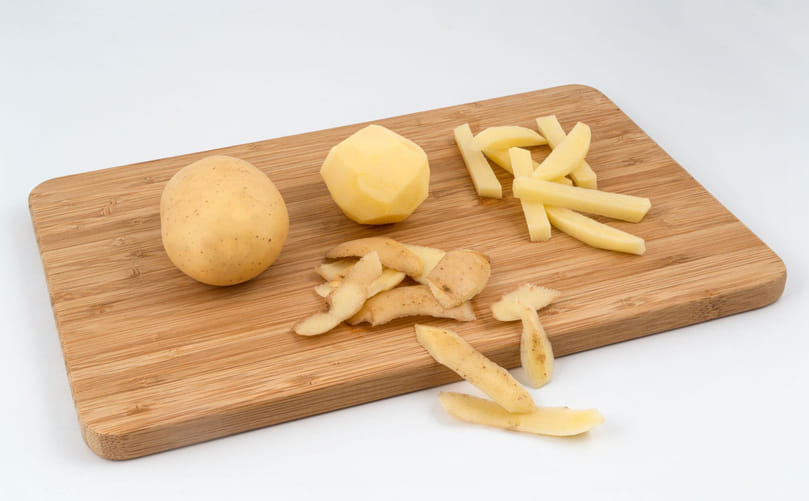
Raw Material Selection for Premium French Fries
Manufacturing and Processing of Special French Fries
The production of special French fries involves a highly automated, industrial scale process designed to ensure consistency, yield, texture, food safety and product performance. Compared to conventional straight cut fries, specialty variants such as crinkle cut, waffle, curly, coated or seasoned fries often require additional equipment and modified processing techniques to achieve their distinctive appearance, texture and flavor.
Potato Selection and Receiving: The process begins with the careful selection and inspection of potatoes. Raw potatoes are evaluated for size, shape, dry matter content, sugar levels and physical defects to ensure they meet processing standards. Advanced optical sorting systems and quality control measures help remove damaged, misshapen or unsuitable tubers, ensuring consistent final product quality.
Washing: Potatoes are thoroughly washed using high pressure water systems to remove soil, stones and other field contaminants. Proper washing is essential to maintain hygiene and prevent contamination during downstream processing.
Peeling: Most specialty fries undergo steam peeling, in which high pressure steam loosens the potato skin for efficient removal through mechanical brushing systems. For skin-on or natural-cut fries, peeling may be partially performed or skipped entirely to retain the rustic appearance and flavor associated with potato skin.
Cutting and Shaping: Cutting is one of the most critical stages in specialty fry production as different fry styles require specialized cutting technologies.
Crinkle cut fries are produced using corrugated blades that create a wavy surface texture, while waffle or lattice fries are formed by rotating the potato during slicing with crinkle cut blades to create a cross hatched pattern. Curly fries are manufactured using spiral cutting systems that create their signature helical shape. Steak fries and shoestring fries are produced by adjusting blade thickness to achieve the desired cut size and texture.
Increasingly, processors are adopting Pulsed Electric Field (PEF) technology, which weakens potato cell structure before cutting. This results in smoother, more precise cuts, reduced breakage, improved yield and lower energy consumption during processing.
Blanching: After cutting, fries undergo blanching in hot water, typically at temperatures between 70–95°C, to inactivate enzymes, reduce excess sugars and improve texture. This step is particularly important for controlling fry color and minimizing acrylamide formation during frying.
Drying: Surface moisture is removed through air knives or conveyor drying systems before frying. Effective drying reduces oil absorption, improves crust formation and enhances crispiness in the final product.
Coating and Seasoning: For specialty fries, coatings and flavoring systems play a major role in product differentiation. Batter or starch-based coatings are applied to improve crispiness, extend holding time and enhance heat retention. Dry seasonings or liquid flavor systems may be added using tumblers or spray applicators to create flavors such as Cajun, peri-peri, cheese, garlic or herb infused varieties. Many processors now also offer clean label and gluten free coating solutions.
Par-Frying: Fries are partially fried in vegetable oils commonly high oleic oils chosen for their thermal stability and frying performance. Controlled par-frying helps establish the outer crust, partially cook the interior and create the texture consumers expect. Multi-zone fryers allow processors to customize frying conditions based on fry shape, thickness and coating requirements.
Freezing: Following par-frying, fries are rapidly frozen using Individual Quick Freezing (IQF) technology. Blast freezing preserves texture, prevents clumping and locks in product quality by maintaining the characteristics developed during frying.
Packaging: The frozen fries are automatically packed into retail bags, foodservice cartons or bulk packaging formats. Protective packaging systems including modified atmosphere solutions in some cases, help maintain product quality and shelf life. Labels typically include cooking instructions optimized for ovens, deep fryers and air fryers.
Modern specialty fry manufacturing plants increasingly incorporate advanced technologies for shape precision, coating application, texture optimization and automated quality control through color vision systems and defect detection. Sustainability initiatives including energy efficient equipment, water recycling and the use of potato by-products such as peels for animal feed or biogas production are also becoming important components of modern processing operations.
Frozen Special French Fries: A Fast-Growing Global Market
Frozen specialty French fries represent the largest segment of the French fries industry, driven by convenience, consistency, long shelf life and year-round product availability. Frozen formats account for an estimated 80–88% of the market share largely because they offer standardized quality, scalability and ease of preparation for both foodservice operators and consumers.
The broader global French fries market was valued at approximately USD18 billion in recent years and is projected to grow to around USD 24–33 billion by the early 2030s, supported by a compound annual growth rate (CAGR) of approximately 5–6%. Frozen specialty fries are expected to grow at a similar or slightly faster pace due to rising demand for premium products, convenience foods and restaurant style experiences at home.
Several countries dominate global frozen French fry production and exports. Belgium and Netherlands are considered major processing and export hubs, supplying large volumes of frozen fries worldwide and leading in processing efficiency and innovation. In North America, Canada and the United States play major roles in frozen fry production supported by large scale potato processing industries and globally recognized manufacturers such as McCain Foods, Lamb Weston and J.R. Simplot Company. These companies continue to lead the market in processing capacity, product quality and specialty fry innovation.
Maintaining a strict cold chain is essential for preserving the quality and safety of frozen specialty fries. Products are typically stored and transported at –18°C or below to prevent quality deterioration, texture loss and microbial risks. Under proper storage conditions, frozen fries generally maintain a shelf life of 12 months or longer depending on formulation and packaging.
Retail demand for frozen specialty fries continues to grow through supermarkets, hypermarkets and online grocery channels. Increasing consumer interest in premium cuts, flavored fries, air fryer compatible products and convenient meal solutions is driving product diversification and category expansion in the frozen food sector.
Market Trends and Consumer Preferences in Special French Fries
The specialty French fries market is increasingly shaped by changing consumer lifestyles, premium food experiences, convenience and evolving dietary preferences. One of the most significant trends influencing the sector is premiumization with consumers willing to pay higher prices for fries that offer distinctive shapes, bold flavors, enhanced textures and superior visual appeal. Products featuring specialty cuts, coatings and gourmet seasonings are experiencing faster growth than conventional plain fries.
Consumers are increasingly drawn to flavor experimentation and menu innovation, creating strong demand for unique seasoning profiles such as peri-peri, garlic parmesan, truffle, spicy blends, cheese flavors, herbs and regional spice combinations. Limited time offerings (LTOs) and seasonal flavors have also become popular strategies among restaurants and brands to attract consumer attention and encourage repeat purchases.
The growing demand for convenience-oriented foods continues to support the expansion of specialty fries. Busy lifestyles, increased takeaway consumption and the growth of food delivery platforms have intensified the need for fries with better holding performance. Crispiness retention and resistance to sogginess have become critical product attributes, particularly for coated fries designed to maintain texture during transport.
The rapid adoption of air fryers and home cooking appliances has significantly influenced product development. Manufacturers are increasingly designing fries optimized for air fryer and oven preparation, enabling consumers to achieve restaurant style crispiness using less oil and more convenient cooking methods.
At the same time, health-conscious consumer preferences are driving demand for reduced fat products, sweet potato fries, clean label ingredients, organic options and plant-based or gluten free coating systems. Although indulgence remains a core purchasing factor, consumers increasingly seek products perceived as healthier without sacrificing taste and texture.
Growing sustainability awareness is also influencing purchasing decisions. Consumers and retailers increasingly favor products made with responsibly sourced ingredients, environmentally friendly packaging, reduced food waste and lower carbon production systems.
Another important trend is the continued growth of the frozen retail segment supported by increased home consumption and the popularity of premium frozen foods. Retailers are expanding product assortments with variety packs, flavored options and value-added fry formats to meet changing consumer preferences.
In the foodservice sector, restaurants and quick service restaurants (QSRs) continue to drive innovation through menu differentiation and premium side offerings, while retail channels benefit from expanding e-commerce availability and product diversification. Meanwhile, emerging markets are experiencing strong growth, driven by urbanization, rising disposable incomes, expanding fast food culture and increased demand for convenient frozen foods.
Applications of Special French Fries Across Foodservice
Special French fries are widely used across multiple foodservice channels due to their versatility, premium appeal and ability to enhance menu differentiation. Different fry formats are selected based on operational requirements, customer preferences, serving style and profitability objectives.
In quick service restaurants (QSRs), specialty fries are commonly used to deliver consistency, speed and strong brand identity in high volume operations. Chains such as McDonald's, Chick-fil-A and Burger King often utilize coated fries, crinkle cut fries or proprietary fry formats designed for consistent texture, heat retention and operational efficiency. Specialty fries also support premium menu offerings and limited time product innovation.
In casual dining restaurants and steakhouses, thicker formats such as steak fries, waffle fries and loaded fries are popular because they complement larger meal portions and provide a hearty indulgent eating experience. These premium fry options also support upselling opportunities by increasing perceived value and enhancing plate presentation.
Fine dining restaurants, gourmet burger outlets and cafés increasingly use skin-on fries, seasoned fries and artisan style cuts to reinforce premium positioning. Gourmet seasonings, premium toppings and rustic presentations help elevate fries from a simple side dish to a differentiated menu feature.
In sports venues, cinemas, amusement parks and entertainment locations, loaded fries have become highly popular as shareable snack options. Fries topped with cheese, sauces, meats, herbs, jalapeños or specialty ingredients appeal to consumers seeking indulgent, high value convenience foods.
The rapid expansion of food delivery and takeaway services has further increased demand for coated specialty fries. Fries designed for longer hold times and improved heat retention are particularly important for maintaining texture and customer satisfaction during transportation, where sogginess can reduce product quality.
Across foodservice, specialty fries are commonly served as side dishes, appetizers, snack items or the base for loaded meal concepts. Their versatility, premium perception and ability to increase menu profitability make them an increasingly valuable category for operators.
At the same time, home consumption continues to grow rapidly, supported by expanding retail availability of frozen specialty fries and the increasing popularity of air fryers and convenient meal solutions.
Innovations in Specialty Fries: Technology, Health and Sustainability
The specialty French fries industry continues to evolve through innovations focused on improving texture, convenience, health, sustainability and processing efficiency. Manufacturers are increasingly adopting advanced technologies and formulations to meet changing consumer expectations while maintaining the indulgent qualities associated with premium fries.
One major area of innovation is the development of extra crispy and functional coatings. Advanced batter and starch-based coatings are designed to enhance crispiness, extend heat retention, improve texture and reduce oil absorption. These coatings are particularly valuable for takeaway, food delivery and quick service restaurant (QSR) operations, where maintaining product quality over time is essential.
The growing popularity of air fryers has accelerated the development of air fryer optimized formulations. These specialty fries are engineered with adjusted moisture levels and coating systems to deliver crispier textures with minimal oil usage allowing consumers to recreate restaurant-style fries at home.
Health-focused innovation is also driving the adoption of reduced oil and healthier processing technologies. Advanced methods such as Pulsed Electric Field (PEF) processing and optimized par-frying techniques help lower oil absorption while maintaining texture, flavor and overall product quality. These technologies can also improve processing efficiency and reduce energy use.
Manufacturers are increasingly experimenting with customized cuts, shapes and bold seasoning profiles to enhance product differentiation. Specialty fries featuring spicy, herb infused, cheese flavored, peri-peri or low sodium seasonings cater to growing consumer demand for unique and personalized flavor experiences.
The market is also witnessing increased demand for plant-based, clean label and gluten free coatings, reflecting consumer preferences for simpler ingredient lists and dietary inclusivity. Manufacturers are reformulating products to minimize artificial additives while maintaining texture and performance.
Sustainability initiatives are becoming increasingly important across the specialty fries sector. Companies are investing in energy efficient processing systems, reducing food waste through by-product valorization and adopting more sustainable packaging solutions to lower environmental impact.
In addition, automation and artificial intelligence (AI) are transforming production facilities by improving potato sorting, defect detection, yield optimization and quality control. Smart processing technologies help ensure product consistency while reducing labor requirements and operational inefficiencies.
These innovations are helping specialty fries manufacturers balance performance, convenience, health-consciousness and environmental responsibility, while continuing to deliver the premium taste, crispiness and indulgent experience consumers expect.
Challenges Facing the Specialty French Fries Industry
Despite strong market growth, the specialty French fries sector faces several challenges that affect production costs, supply stability, operational efficiency and long-term profitability. Rising economic pressures, changing regulations, climate related risks and shifting consumer expectations continue to reshape the industry.
One of the biggest concerns is rising input costs. Potato prices have become increasingly volatile due to higher fertilizer expenses, energy costs, adverse weather conditions and geopolitical disruptions affecting agricultural supply chains. Fluctuations in vegetable oil prices also significantly impact par-frying costs, while increased packaging and transportation expenses further raise production costs for processors and foodservice operators.
Supply chain disruptions and market volatility continue to challenge the sector. Extreme weather events, transportation bottlenecks, geopolitical tensions and inconsistent crop performance can lead to fluctuations in potato availability and quality. In some cases, processors may adjust production volumes, delay expansion plans or temporarily reduce operations in response to supply-demand imbalances or changing market conditions.
Another major challenge involves rising labor and operational costs. Labor shortages, increasing wages and higher energy prices have raised manufacturing expenses across potato processing facilities. Since specialty fries often require advanced shaping, coating, seasoning and quality control systems, production costs can be higher than those for conventional fries.
At the same time, consumer health concerns continue to influence purchasing behavior. French fries are often perceived as high in calories, fat and sodium, creating increased competition from healthier snack alternatives. Regulatory concerns surrounding acrylamide formation during frying, along with growing demand for clean label products and healthier ingredients have added complexity to product development and processing.
The industry is also facing increasing sustainability and regulatory pressures. Stricter regulations related to water usage, nitrogen emissions, carbon footprints, food waste reduction and sustainable packaging particularly in major markets such as Europe are increasing compliance costs for processors and food manufacturers.
Climate change and agricultural risks pose long-term challenges for potato production. Rising temperatures, irregular rainfall, drought conditions and water scarcity are affecting potato growing regions and can reduce yields, alter tuber quality and increase production uncertainty. Processing varieties such as Russet Burbank may experience quality and yield variations under changing environmental conditions.
These combined pressures can contribute to higher retail and menu prices, reduced profit margins and in some cases, product downsizing or reformulation strategies. As a result, continuous innovation, operational efficiency improvements, supply chain resilience and sustainable production practices are becoming increasingly important for maintaining competitiveness in the specialty fries market.