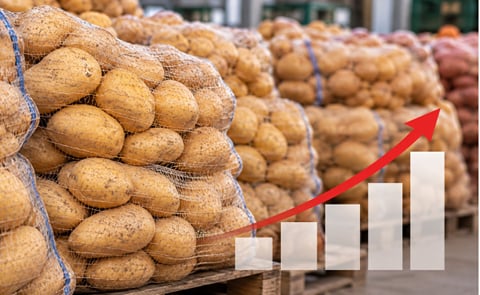

PiperPlus, the UK's first approved precision-bred Maris Piper potato, combines resistance to late blight, Potato Virus Y (PVY), and Potato Leafroll Virus (PLRV) to support more sustainable potato production with reduced reliance on crop protection chemicals.
UK Approves First Precision-Bred Disease-Resistant Maris Piper Potato as PiperPlus Moves Closer to Market
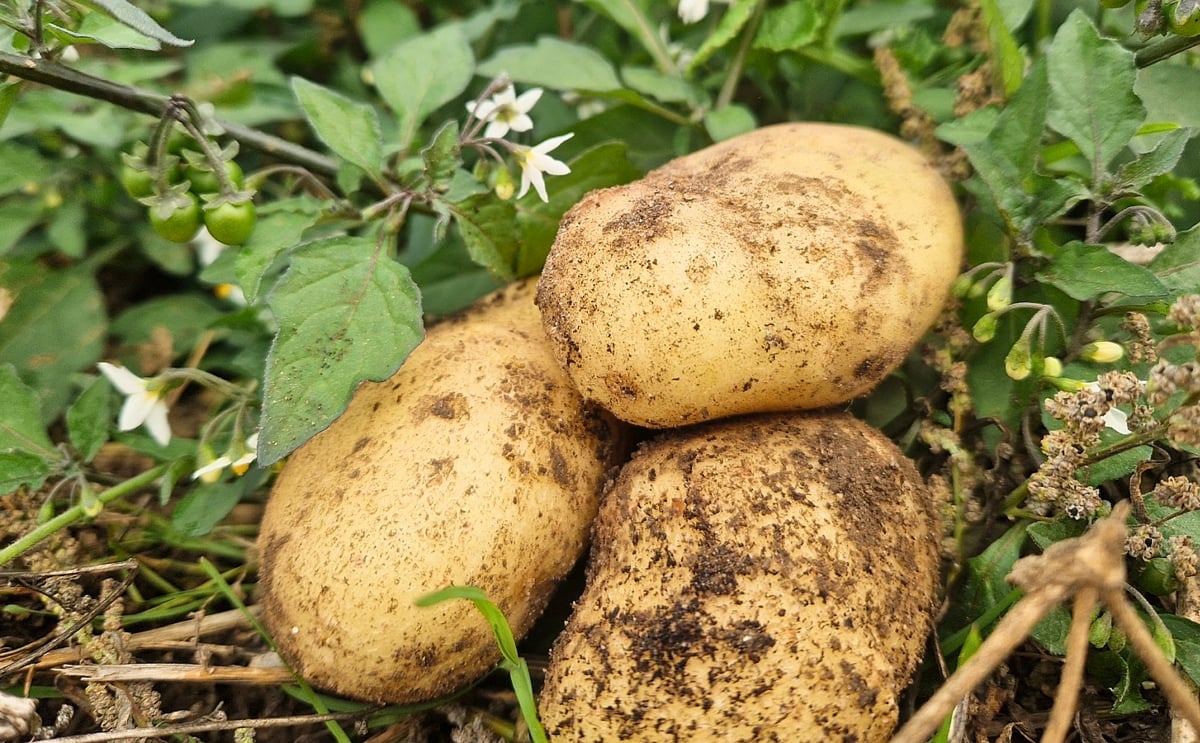
The Sainsbury Laboratory (TSL) has announced a landmark milestone for UK agriculture after its disease-resistant Maris Piper potato, named PiperPlus, became the first precision-bred potato to receive a marketing notice approval under the UK's Genetic Technology (Precision Breeding) Act 2023.
The approval marks a major step toward commercial cultivation of a potato with built-in resistance to late blight, Potato Virus Y (PVY) and Potato Leafroll Virus (PLRV), potentially reducing reliance on fungicides and insecticides while improving sustainability.
First Precision-Bred Potato Receives Defra Approval
The approval follows a rigorous scientific assessment by the Advisory Committee on Releases to the Environment (ACRE). The Department for Environment, Food & Rural Affairs (Defra) confirmed that two new PiperPlus potato lines meet the legal definition of a Precision Bred Organism (PBO) under the Precision Breeding Act. Under the legislation, a crop qualifies as precision bred only if its genetic changes could have occurred naturally or through conventional breeding.
The breakthrough is the result of decades of disease-resistance research led by Professor Jonathan Jones FRS and his team at The Sainsbury Laboratory, supported by grants from the Biotechnology and Biological Sciences Research Council (BBSRC). The research identified resistance genes that provide PiperPlus with innate immunity against three of the most damaging potato diseases affecting commercial production.
Professor Jonathan Jones FRS, Group Leader at The Sainsbury Laboratory:
"I’m delighted to see that after dedicated and extensive effort from my outstanding team of scientific colleagues at The Sainsbury Laboratory, supported by grants from BBSRC, we’ve identified two potato lines that have been approved by DEFRA for a marketing notice under the Precision Breeding Act."
"It has also been extremely encouraging to see the EU catching up by introducing its own NGT1 regulatory framework. We believe PiperPlus will become a flagship example of what's possible through precision breeding, showing how these technologies can reduce fungicide use, improve sustainability, and deliver real benefits to the public."
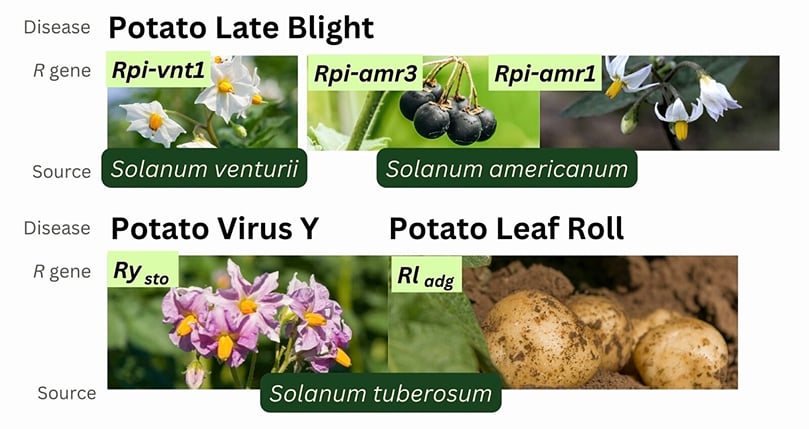
Rather than relying on chemical protection, the researchers strengthened Maris Piper's natural immune system by introducing resistance genes from potato’s wild relatives that encode for immune receptors that detect pathogen molecules and then activate defence.
PiperPlus Targets Late Blight and Major Potato Viruses
Late blight, caused by Phytophthora infestans, remains one of the biggest challenges for UK potato growers. Because most commercial potato varieties are susceptible to the disease, farmers often apply preventative fungicides throughout the growing season, sometimes requiring up to 15 fungicide sprays annually. PiperPlus has been developed to significantly reduce that need by providing natural resistance to late blight.
Reducing fungicide applications could lower production costs, decrease labour requirements, reduce tractor operations and carbon emissions, minimize soil compaction, and help protect beneficial soil fungi and microbiomes.
The variety also carries resistance to Potato Virus Y (PVY) and Potato Leafroll Virus (PLRV), two viruses that become increasingly damaging with each successive potato generation. Since virus-free seed potatoes are essential for maintaining healthy crops, the new resistance could provide significant advantages for seed potato production.
Currently, most British seed potatoes are produced in Scotland, where cooler conditions help limit virus pressure. According to TSL, virus-resistant varieties such as PiperPlus could enable more seed potato production in England, reducing transport costs and associated carbon emissions. Because both PVY and PLRV are spread by aphids, the resistant variety could also reduce the need for insecticide applications.
Next Step: Food Safety Approval and Commercial Launch
TSL said Defra's approval demonstrates the type of agricultural innovation the Precision Breeding Act was designed to enable by supporting the development of improved crops for the benefit of farmers, consumers and the environment.
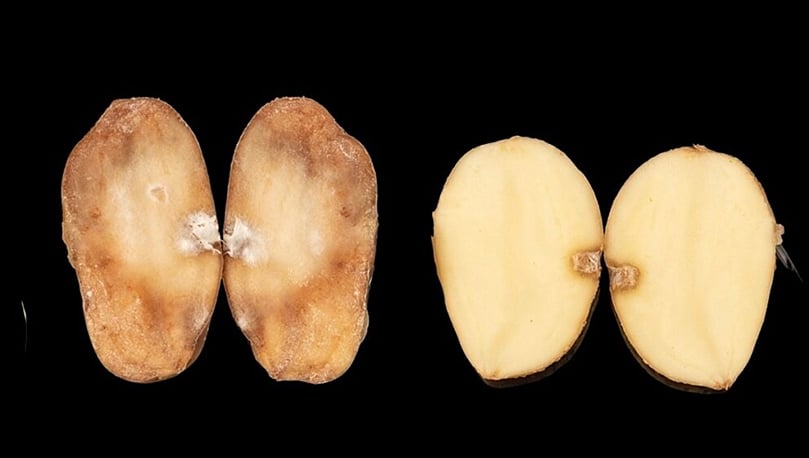
Left: A susceptible Maris Piper tuber infected with the late blight pathogen Phytophthora infestans. Right: A late blight-resistant PiperPlus tuber. The inner notches show where the tubers were inoculated with the pathogen. PiperPlus Rpi genes detect P. infestans and activate the plant's immune system, preventing the pathogen from spreading.
The next regulatory milestone will be approval from the Food Standards Agency (FSA). As part of the process, the FSA will review compositional and safety data to confirm that precision-bred PiperPlus potatoes are as safe to eat as conventional Maris Piper potatoes currently available to consumers.
According to Professor Jones, bringing a new potato variety to market typically requires at least five years, allowing time for National List variety registration, official approvals and multiplication of sufficient seed potato stocks. While the Precision Breeding Act currently applies only to cultivation in England, products from precision-bred crops can be sold to consumers across the United Kingdom.
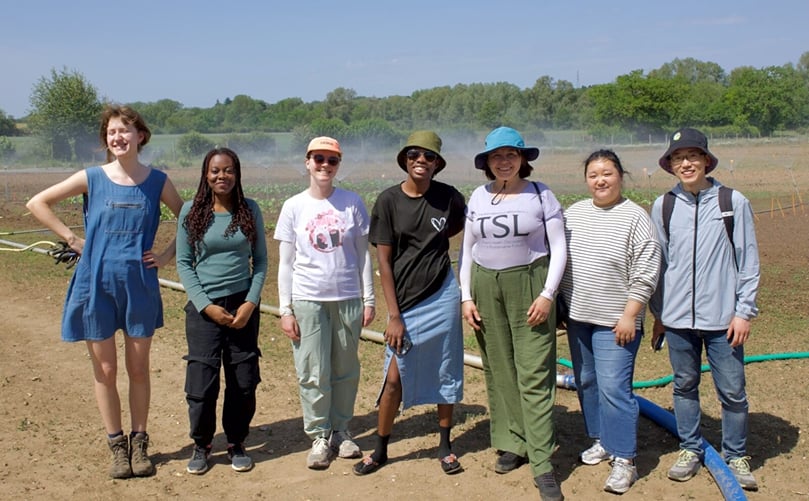
The amazing team of TSL staff and students who helped to plant disease resistant potato lines at our field trial earlier this year. Led by Dr. Agnieszka Witek (3rd from right)
¿Te gustaría recibir noticias como esta por correo electrónico? ¡Únete y suscríbete!
Get the latest potato industry news straight to your WhatsApp. Join the PotatoPro WhatsApp Community!
Empresa Destacada

Noticias relacionadas

Septiembre 28, 2026
México: menor oferta de papa podría impulsar los precios durante el invierno
En México, el cierre de cosechas, los menores rendimientos y la reducción de la superficie sembrada podrían restringir la oferta de papa y generar presión al alza sobre los precios entre diciembre de 2026 y febrero de 2027.

Septiembre 28, 2026
España: la sequía reduce la cosecha de patatas en 2026
La producción española de patata caerá entre un 8% y un 10% en 2026, hasta unos 1,8 millones de toneladas, con descensos de hasta 35% en Andalucía debido principalmente a la sequía y los menores rendimientos.

Septiembre 23, 2026
Chile: buscan mejorar el diagnóstico molecular de la sarna polvorienta y la sarna común en papa
En Chile, el proyecto SCAB-ID 2.0 busca validar un sistema de qPCR multiplex capaz de detectar y diferenciar simultáneamente la sarna polvorienta y la sarna común de la papa, con miras a transferirlo a laboratorios de diagnóstico agrícola.