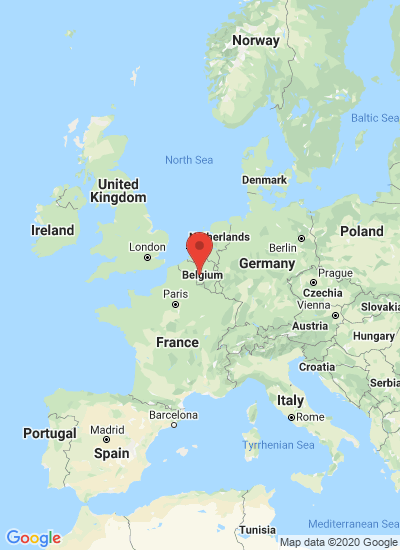

Scientists from the European Food Safety Authority (EFSA) are setting up a task force to coordinate investigations to track down the source of any contaminated sprouted seeds in the European Union following an E.coli outbreak in the Bordeaux region of France which was preceded by a similar outbreak in Germany associated with sprouts.
In response to an urgent request from the European Commission, EFSA scientists are providing immediate scientific assistance and are being joined by experts from the European Commission, EU Member States, in particular from France, Germany, Italy and the United Kingdom, and scientists from the European Centre for Disease Prevention and Control (ECDC) and the World Health Organisation (WHO). The task force will seek to understand how the production and distribution chain of seeds, bean sprouts and other sprouted seeds are organised throughout the EU. Such scientific cooperation proved useful in investigating the recent German outbreak.
To do this, the task force will coordinate the gathering and analysis of information regarding the outbreak which will be channelled through the Rapid Alert System for Food and Feed (RASFF) – Europe’s super highway information exchange system.
Investigations by French authorities into the Bordeaux E.coli outbreak are still ongoing and a possible link between the consumption of sprouts and the health effects observed is yet to be definitively established. If confirmed, seeds could be seen as a common factor between the French outbreak and an outbreak in May in Germany associated with bean sprouts.
French authorities have reported patients suffering from bloody diarrhoea in the Bordeaux region of the country, several of whom have been diagnosed with haemolytic uremic syndrome (HUS), which can be caused by Shiga toxin-producing E. coli (STEC).
Preliminary bacteriological tests found the E. coli strain O104:H4 to be present in two of the cases. French officials said this was the same strain as that responsible for the outbreak in Germany. They said an epidemiological investigation found that a number of patients, who live in close proximity to each other, had attended an open day at a recreational centre in the commune of Bègles near Bordeaux on 8 June and many of these were said to have eaten bean sprouts scattered on various dishes at the centre.
Following the outbreak in Germany, EFSA, in cooperation with ECDC, issued public health advice on the prevention of diarrhoeal illness with a special focus on STEC. EFSA also issued scientific advice on options to mitigate the possible risks of food contamination and human infection from STEC, confirming existing advice on the importance of following good agricultural practices, and good manufacturing and hygiene practices as laid down in internationally recognised guidelines.
EFSA sets up European task force to help investigate French E.coli outbreak

Like to receive news like this by email? Join and Subscribe!
Get the latest potato industry news straight to your WhatsApp. Join the PotatoPro WhatsApp Community!
Related News

September 15, 2026
Survey Finds Americans Increasingly Turn to Food Delivery and Grocery Convenience Services
A FinanceBuzz and Bank of America survey finds 63 percent of Americans use food delivery monthly, while high fees influence ordering decisions, with 68 percent abandoning a delivery order after seeing the final cost.

September 06, 2026
FAO Food Price Index rises in August amid broad-based increases, led by sugar
The FAO Food Price Index averaged 131.1 points in July 2026, up 0.7 points from its June level. Increases in the price indices for cereals, sugar and vegetable oils were partially offset by declines in those for meat and dairy products.

August 07, 2026
FAO Food Price Index edges higher in July on stronger crop prices
The FAO Food Price Index averaged 131.1 points in July 2026, up 0.7 points from its June level. Increases in the price indices for cereals, sugar and vegetable oils were partially offset by declines in those for meat and dairy products.