

Advanced laser sorting technology inspects potatoes beyond the surface, helping detect hidden defects, internal quality issues and foreign materials that conventional camera systems may miss.
Laser Sorting Raises the Bar for Quality and Food Safety in Potato Products

Optimum Sorting highlights advanced laser technology designed to detect hidden defects, foreign materials and internal quality issues in potatoes, fries and chips.
Optimum Sorting is showcasing how advanced laser sorting technology can help potato processors achieve higher quality, improved food safety and greater sorting precision across a wide range of potato products.
Chips, French fries and whole potatoes come in different shapes, sizes and conditions, creating complex challenges for processors. While conventional camera-based sorting systems can accurately identify external variations in color and shape, some important defects remain hidden beneath the surface. Optimum Sorting's laser technology addresses this limitation by inspecting the internal characteristics of potato products.
Laser sorting goes beyond conventional camera inspection
Optimum Sorting has extensive experience in sorting potato products using advanced camera technology. High-performance cameras can identify variations in color and shape and are particularly effective for analyzing external characteristics such as product length, shape and color.
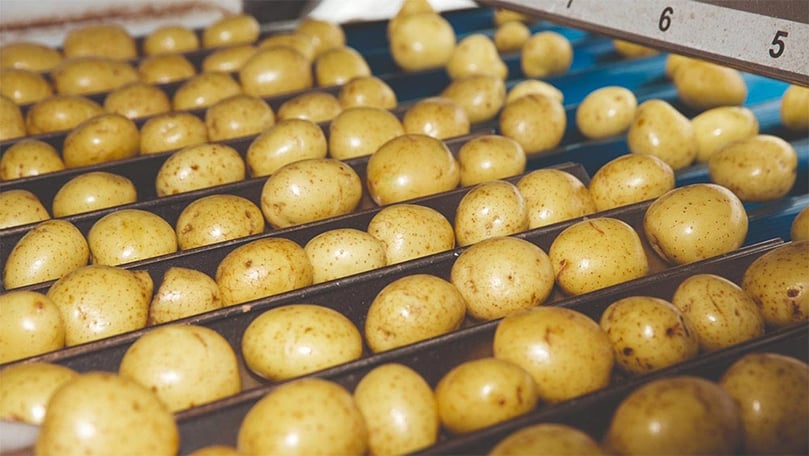
Potatoes move through an advanced sorting line as laser technology helps processors detect hidden defects and improve product quality and food safety.
However, cameras cannot detect every defect. Laser technology provides an additional layer of inspection by analyzing the internal structure of potatoes and potato products.
By examining differences in density, moisture and composition, lasers can distinguish between products that may appear identical externally. This enables processors to identify products that are too hard, too soft, too wet or too dry and remove them with greater precision.
Detecting foreign materials in French fries
Laser technology provides a significant advantage when sorting French fries because it can inspect more than the product's surface.
By analyzing laser-beam reflections, the system can determine differences in object density and identify foreign materials that may enter the product stream during processing. These include pieces of plastic, glass and metal, including both ferrous and non-ferrous materials.
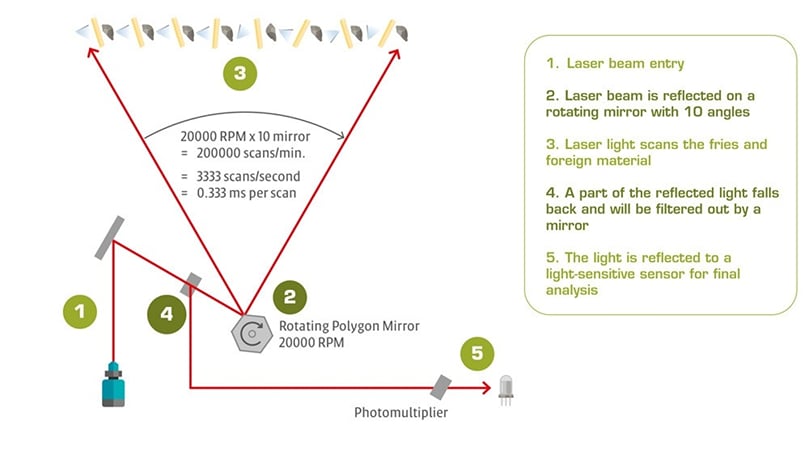
A high-speed rotating mirror directs laser beams across the product stream, while reflected light is analyzed to detect differences in density, moisture, composition and other quality characteristics.
The technology can also identify stones and rubber pieces that may be difficult to detect visually, as well as organic debris such as leaves and twigs.
Another important application is the detection of sugar ends in French fries. These dark tips develop after frying when potatoes contain elevated sugar levels. They can be difficult to identify in raw fries, particularly when sorting at high speeds.
Near-infrared (NIR) lasers can penetrate the product surface and detect subtle chemical variations, allowing sugar ends to be identified at an early stage and automatically removed.
Identifying wet centers and other defects in chips
Laser sorting is also particularly valuable for chips, including kettle chips, where defects may not always be visible from the outside.
Using advanced density and moisture detection, laser technology can identify issues such as oil spots and wet centers caused by incomplete frying. These defects can negatively affect texture and shelf life.
The technology can also distinguish between undercooked and burnt chips, helping processors remove inconsistent products and improve the overall quality of the finished product.
Detecting soft rot inside potatoes
One of the advanced applications of laser sorting is the detection of soft rot, also known as water rot, in whole potatoes.
Soft rot is an internal form of decay that causes potato flesh to become soft, moist and often slimy. It typically develops because of bacterial infections combined with excess moisture during cultivation or storage.
The condition can be particularly difficult to detect after washing because affected potatoes can look almost identical to healthy potatoes. Conventional camera systems may therefore struggle to identify them.
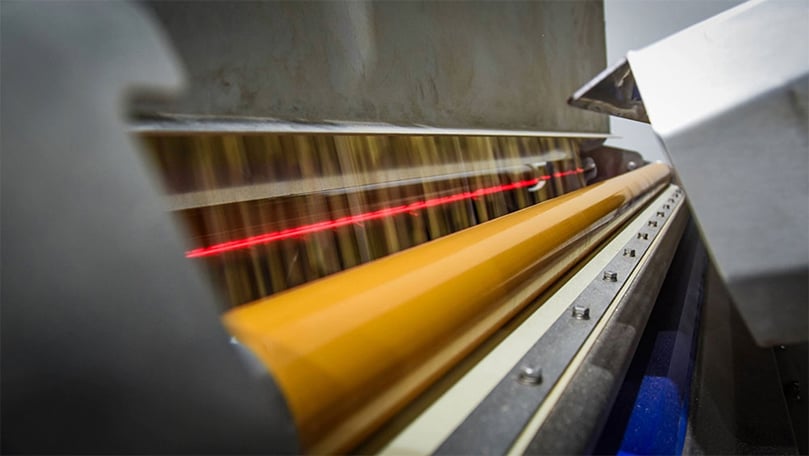
Laser sorting detects hidden soft rot and solanine, removing unhealthy potatoes before processing.
Laser sorting addresses this challenge by examining internal variations in density and composition. Affected potatoes can consequently be identified and removed before they enter subsequent processing stages.
For potato processors, this can help reduce rejected batches, minimize waste and maintain more consistent product quality. The technology can be particularly valuable during wet years, when soft rot problems can occur more frequently.
Laser technology targets solanine
In addition to soft rot, Optimum Sorting's laser technology can be used to detect solanine.
Solanine is a naturally occurring toxin found in potatoes and other tubers. Its presence can increase when potatoes are exposed to light or damaged.
Specialized fluorescent lasers identify solanine by analyzing the distinctive light reflection associated with the compound. This allows contaminated or unhealthy tubers to be removed early in the processing line, potentially before visible defects become apparent.
Ventus and Novus sorters provide flexible laser inspection
Optimum Sorting's laser technology is available through its Ventus free-fall sorter and Novus belt sorter, with the Novus equipped with an optional laser box.
These systems are designed to identify even small defects in potatoes and fries while combining high-speed processing with detailed product inspection.
Optimum Sorting states that its laser technology offers an optical resolution of 0.3 mm, which it describes as up to four times sharper than the 1.3 mm standard offered by other suppliers.
Each laser can perform up to 3,333 scans per second, supporting rapid and accurate analysis of individual products as they move through the sorting system.
Each laser also operates at a dedicated wavelength. This enables the sorting system to make highly accurate decisions based on a combination of characteristics, including color, shape, structure and internal properties.
Combining speed, depth and precision
For potato processors, the ability to identify defects that cannot be detected through conventional surface inspection can provide an important quality-control advantage.
Optimum Sorting's laser technology is designed to detect and remove defects including soft rot, wet centers, burnt and undercooked pieces, sugar ends and foreign materials such as stones, wood, plastic, glass and metal.
By combining high scanning speeds with internal product inspection and fine optical resolution, laser sorting provides processors with a more comprehensive approach to quality control and food safety across potatoes, French fries and chips.
Optimum Sorting's approach demonstrates how advanced optical sorting can move beyond conventional surface inspection to deliver greater control over the quality, consistency and safety of potato products.
(Click picture to watch video)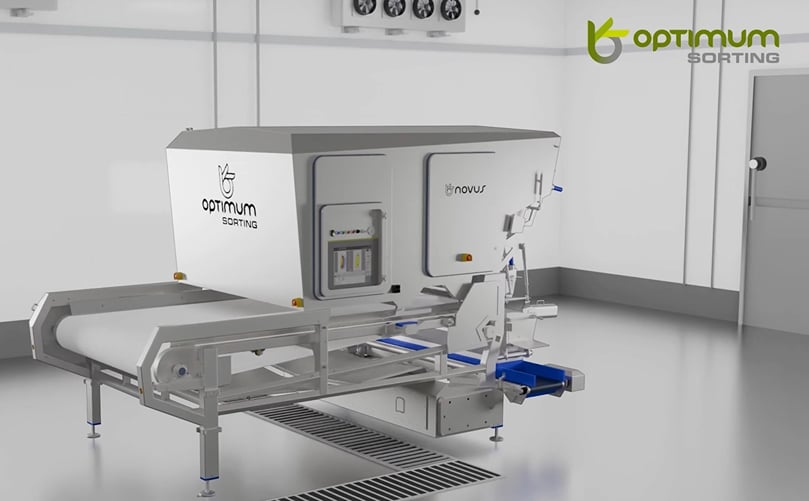
Discover Novus belt sorter | Optimum Sorting
Like to receive news like this by email? Join and Subscribe!
Get the latest potato industry news straight to your WhatsApp. Join the PotatoPro WhatsApp Community!
Highlighted Company

Related News

October 19, 2026
Urschel and KRONEN to Demonstrate Integrated Processing Line at Pack Expo International 2026
Urschel and KRONEN will showcase integrated processing solutions at Pack Expo International 2026, including the Sprint 2 Dicer and HEWA 3800 PLUS, alongside cutting, washing, drying and produce processing equipment.

October 18, 2026
Urschel Laboratories Appoints Tim Crammer as President
Urschel Laboratories appointed Tim Crammer as President, effective October 12, 2026. Formerly a senior executive at Henny Penny Corporation, Crammer will work alongside CEO Rick Urschel to strengthen leadership and support the company's future growth.

October 11, 2026
Flikweert Vision Introduces AI-Powered QualityGrader for Faster Potato and Onion Sorting
Flikweert Vision introduces its upgraded QualityGrader to North America at IFPA 2026, featuring AI-powered sorting, up to 30 tonnes per hour capacity, flexible configurations and improved quality inspection for potatoes and onions.