
Research technician Zoe Park suited up in pesticide application PPE at the field research site. (Courtesy: The American Phytopathological Society)
No Silver Bullet for Potato Cyst Nematode: PAPAS Research Featured in AGDAILY

Research led by the University of Idaho’s Pale Cyst Nematode (PCN) program is receiving national attention following a new feature in AGDAILY highlighting the ongoing efforts to control and eradicate the pale cyst nematode (Globodera pallida) in Idaho.
The article, “No Silver Bullet: Controlling Idaho’s Potato Cyst Nematode Takes a Full Toolbox,” was written by PAPAS researchers Paige Hickman, Ph.D., and Louise-Marie Dandurand, Ph.D. It examines how the discovery of PCN in Idaho in 2006 reshaped agricultural regulations, challenged potato production and international trade, and drove nearly two decades of research into effective eradication strategies.
The feature underscores a central message of the PAPAS research program: there is no single solution to PCN. Successful eradication depends on combining multiple scientifically validated approaches, supported by rigorous regulatory measures and continued research.
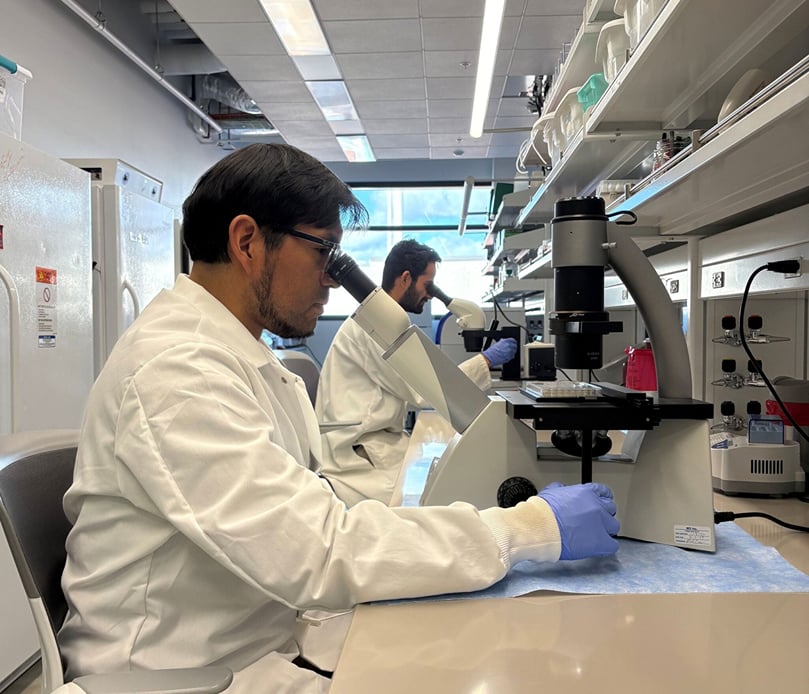
Members of Dr. Louise-Marie Dandurand’s PCN program, research technician Cesar Palomino Ayquipa (front) and Postdoctoral Fellow Dr. Bhupendra Bhatta (back) counting nematode samples in the lab. (Courtesy: The American Phytopathological Society)
A comprehensive toolbox for PCN eradication
Unlike many agricultural pests that can be managed through routine crop protection practices, PCN is subject to a federal regulatory program focused on containment and eradication. Its cysts can protect viable eggs in the soil for up to 30 years, making the pest particularly difficult to eliminate.
To address this challenge, PAPAS and University of Idaho researchers have investigated and validated complementary control strategies designed to reduce nematode populations below detectable levels.
- Crop rotation and trap crops: Strategic, multiyear crop rotations can help deplete PCN populations. Trap crops stimulate nematode eggs to hatch but prevent successful reproduction, interrupting the pest’s life cycle. Litchi tomato (Solanum sisymbriifolium) has demonstrated the potential to reduce PCN egg densities by more than 80% in a single growing season and by as much as 99% when incorporated into rotation with susceptible potato. Quinoa has also shown reductions of up to 40%, with the added advantage of producing a potentially marketable crop.
- Biofumigation: Plant-derived compounds offer another promising approach. Seed meal extracts from Indian mustard (Brassica juncea) and white mustard (Sinapis alba) can substantially reduce PCN populations. Research indicates that combining biofumigation with trap crops may provide additional benefits.
- Resistant potato varieties: Developing a PCN-resistant russet potato suitable for Idaho production remains a major PAPAS research objective. Resistant varieties can stimulate nematode hatch while limiting reproduction, helping to reduce populations over successive growing seasons. Experience with the related golden nematode (Globodera rostochiensis) in New York demonstrates the value of host resistance: more than 40 potato varieties carry resistance to this pest, supporting its suppression below detectable levels in regulated fields.
- Chemical fumigation and emerging nematicides: Soil fumigation with Telone II remains part of the available eradication strategy. At the same time, research into compounds derived from litchi tomato has revealed direct toxic effects on PCN eggs and juveniles, opening potential avenues for developing new biologically derived nematicide technologies.
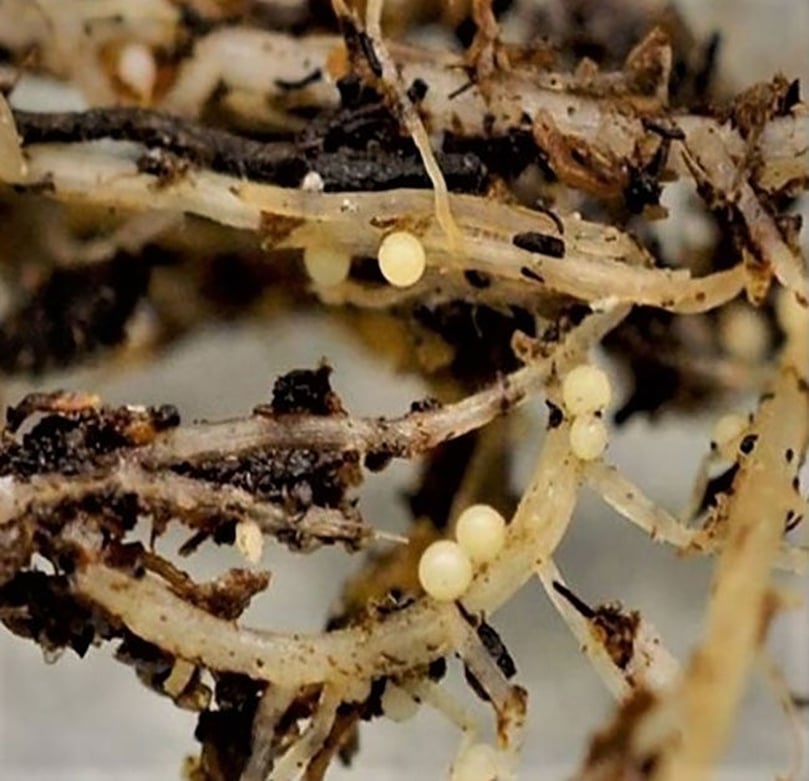
A close-up photo of pale cyst nematode (Globodera pallida) cysts on susceptible potato roots. (Courtesy: The American Phytopathological Society)
Progress toward eradication in Idaho
Since PCN was detected in Idaho in 2006, containment measures, regulatory oversight, sanitation protocols and targeted research have played essential roles in limiting its spread. The first field to be deregulated in Idaho represents a significant milestone, demonstrating that eradication can be achieved through sustained effort and coordinated implementation of multiple control measures.
However, the process is demanding. The experience in Idaho illustrates how a single pest introduction can result in long-term restrictions on land use, increased production costs and disruptions to agricultural markets.
PAPAS research continues to focus on improving the effectiveness, efficiency and accessibility of integrated control strategies, with the goal of accelerating eradication while protecting Idaho’s potato industry.
What growers need to know
Preventing the spread of PCN remains a shared responsibility. Equipment sanitation, careful management of soil movement and awareness of regulated areas are among the most practical measures growers and agricultural professionals can take to reduce the risk of introducing or spreading the pest.
The broader lesson extends beyond Idaho: protecting agricultural production requires early detection, science-based regulation and sustained investment in research.
As highlighted in the AGDAILY feature, the path toward PCN eradication does not depend on a single breakthrough. Instead, progress comes from combining complementary tools, validating their effectiveness and applying them within a coordinated eradication program.
Through continued research and collaboration, PAPAS and the University of Idaho are working to turn these lessons into more effective solutions for growers and a more secure future for potato production.
Read the full article in AGDAILY: No Silver Bullet: Controlling Idaho’s Potato Cyst Nematode Takes a Full Toolbox
Like to receive news like this by email? Join and Subscribe!
Get the latest potato industry news straight to your WhatsApp. Join the PotatoPro WhatsApp Community!
Highlighted Company

Related News

October 22, 2026
Belgian Potato Exports Rise as UK Demand for Premium Convenience Foods Grows
Belgian potato exporters are targeting UK demand for premium convenience foods. Innovative frozen, fresh-processed and airfryer-friendly products, alongside private-label expertise, are creating growth opportunities as domestic supply falls short.

October 21, 2026
Europatat Congress 2027 to Celebrate 75th Anniversary in Lisbon
Europatat Congress 2027 will take place in Lisbon, Portugal, from 2–4 June, celebrating Europatat’s 75th anniversary. Co-organised with Porbatata, the event will feature a conference, gala dinner, technical visits and sponsorship opportunities.

October 21, 2026
Kazakhstan and Belgium Partner to Boost Potato Processing and Exports
Kazakhstan and Belgium have signed a memorandum to develop potato processing, modernise cultivation and attract investment. With the 2026 harvest forecast at 2.8 million tonnes, Kazakhstan aims to expand exports of higher-value potato products.