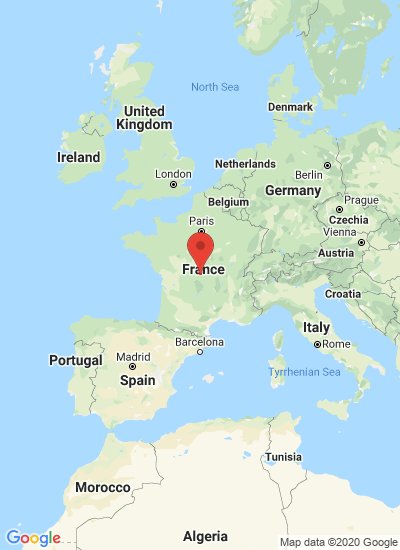

Bonnotte de Noirmoutier potatoes return to market as heavy winter rains and changing weather conditions challenge this year’s harvest.
Noirmoutier Bonnotte Potato Harvest Threatened by Heavy Rain and Climate Change

The famous Bonnotte early potato of Noirmoutier has returned to market stalls, but growers are facing a challenging season after heavy winter rainfall disrupted planting across the island. Harvesting began on March 17, following an exceptionally wet start to the year.
Recognized as a Protected Geographical Indication (PGI) product, the Bonnotte is one of Noirmoutier’s most sought-after agricultural specialties. Known for its mild and distinctive nutty flavour, the early potato continues to attract consumers despite concerns that production could be lower this season.
Bonnotte Returns to Noirmoutier Markets
The arrival of Bonnotte potatoes is a major event for Noirmoutier’s markets. Local retailers consider the variety an essential product because visitors often travel to the island specifically to buy it.
Shopkeeper:
"It's the product that people come to Noirmoutier to look for, So we have to have them and have them at a rather attractive price."
Consumers also value the variety for its distinctive taste.
Customer:
"It's milder in general and it tastes nutty."
Another Vendée consumer said they enjoy the Bonnotte’s unique texture, particularly when the potatoes are sautéed with a mixture of butter and olive oil.
Heavy Winter Rain Disrupts Planting
While the harvest calendar remained broadly normal, exceptional winter rainfall created significant difficulties for growers. Excess water prevented farmers from planting the full area they had planned.
Rudy Bugeon, a potato producer from Noirmoutier:
"During the winter, we had trouble planting because the weather conditions were complicated."
"We had a lot of water and we couldn't plant the desired area. There will surely be a little less potatoes during this period of early vegetables."
Bugeon, like most producers on the island, is part of the Agricultural Cooperative of Noirmoutier. Harvested potatoes are delivered to the cooperative, where they are washed and packaged before reaching consumers.
The cooperative produces around 11,000 tonnes of early potatoes each year, making it an important part of Noirmoutier’s agricultural economy.
Climate Change Adds Pressure
Weather volatility is becoming an increasing concern for Bonnotte growers. Changing rainfall patterns and rising temperatures are making planting and harvesting schedules more difficult to manage.
Nicolas Paille, director of the Agricultural Cooperative of Noirmoutier, pointed to the extreme heat experienced in recent years.
Nicolas Paille, director of the Agricultural Cooperative of Noirmoutier:
"In 2022, we all remember the five heat waves. Potatoes don't like high temperatures like this. That means we have to finish the season a little earlier."
The combination of excessive winter rainfall and extreme summer temperatures highlights the growing vulnerability of early potato production to changing weather conditions.
From Normandy Origins to Noirmoutier
The potato arrived on Noirmoutier in the late 19th century, when local farmers primarily grew cereals. The Bonnotte variety is believed to have originated in the Barfleur area of Normandy’s Manche region.
Its history on Noirmoutier dates to the 1920s and 1930s, when a farmer introduced the variety to the island. The Bonnotte adapted particularly well to Noirmoutier’s light, sandy soils, seaweed-enriched growing conditions and distinctive microclimate.
The variety is fragile and traditionally harvested by hand. Its production declined during the 1960s, as mechanization transformed potato farming, eventually bringing Bonnotte production to an end.
Three decades later, in 1995, growers decided to revive the variety with support from the National Institute for Agricultural Research (INRA) in Brest, working to recreate the distinctive tuber.
Today, the Bonnotte de Noirmoutier has regained its status as a celebrated French early potato and is consumed across the country. However, as weather patterns become increasingly unpredictable, producers face the challenge of protecting this distinctive crop while maintaining the quality and supply that have made Bonnotte the "yellow gold" of Noirmoutier.
Like to receive news like this by email? Join and Subscribe!
Get the latest potato industry news straight to your WhatsApp. Join the PotatoPro WhatsApp Community!

Related News

October 08, 2026
ICAR-CPRI Potato Varieties Cover Nearly 75% of India’s Potato Area
ICAR-CPRI's Kufri Jyoti, Kufri Bahar, Kufri Pukhraj and Kufri Chipsona-1 together cover nearly 75% of India's potato cultivation area. The varieties have boosted productivity, farmer incomes and the potato processing sector.

October 06, 2026
Dutch Potato Organisation Celebrated Potato Tuesday at Utrecht Central Station on October 6
The Dutch Potato Organisation celebrated Potato Tuesday on October 6 at Utrecht Central Station during the Week of Our Food. Visitors can enjoy free recipe booklets and discover the people behind the Dutch potato industry.

October 05, 2026
Punjab Agricultural University Introduces Four Potato Varieties for Higher Yield and Disease Resistance
PAU Ludhiana has released four potato varieties—PP-101, PP-102, PP-103 and PP-104. Yields range from 142–184 quintals/acre, with PP-103 offering early harvest and PP-104 moderate late-blight resistance. Seed is now available.