

Spain
Spain is an important potato producing country in the European Union, with cultivation distributed across several contrasting agricultural regions. Potato production occurs in northern, central, Mediterranean and island environments, allowing Spain to supply early, mid-season and late-season potatoes over an extended production calendar. According to Spain’s Ministry of Agriculture, Fisheries and Food (MAPA), the country produced about 2.14 million tonnes of potatoes from 65,966 hectares in 2021, while the sector has experienced a long-term reduction in planted area alongside improvements in yields.
The main potato producing regions are Castilla y Leon and Galicia. In 2023, Castilla y León accounted for 16,965 hectares, or 28.6% of Spain's potato area, while Galicia had 16,423 hectares, representing 27.7%. Andalucía was the third largest producing region by area with 8,504 hectares, followed by the Region of Murcia with 4,134 hectares. Other important production areas include the Canary Islands, Valencian Community, Castilla-La Mancha, the Balearic Islands and the Basque Country. These regions differ considerably in climate and production systems, supporting potatoes for fresh consumption as well as different seasonal markets.
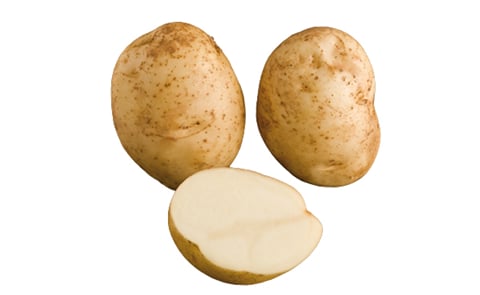
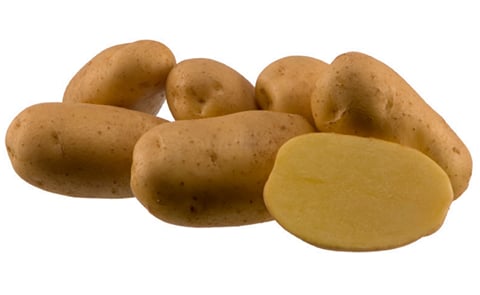
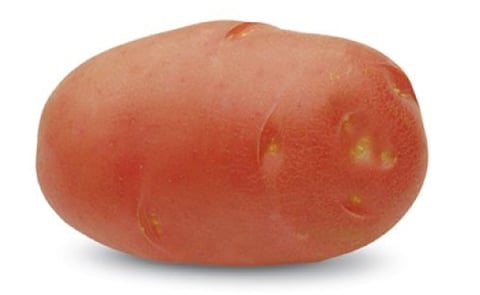
Spain also has a strong regional identity associated with particular potato products and traditional cultivars. Galicia is especially known for Pataca de Galicia, an IGP-protected potato produced from the Kennebec, Agria and Fina de Carballo varieties. The Canary Islands are particularly distinctive for their large collection of traditional "papas antiguas", including coloured and locally maintained cultivars that have developed under the islands' unique agricultural conditions. Some traditional Canary Island potatoes are protected under the DOP Papas Antiguas de Canarias.
The potato reached Spain from the Andes during the period of Spanish contact with South America in the 16th century and subsequently became established in European agriculture. The Canary Islands played a particularly important early role in the history of the crop. Historical records indicate potato shipments from Gran Canaria to Antwerp in 1567 and from Tenerife to Rouen in 1574, providing some of the earliest documented evidence of potatoes moving from the Atlantic islands into European trade networks. The exact route and dates of the potato's first introduction into different parts of Spain remain uncertain, however and historical sources do not provide a single definitive account.
In the Canary Islands, potato cultivation developed into a distinctive agricultural tradition, with Andean derived materials becoming adapted and maintained locally over centuries. Historical research indicates that potatoes were already an important food on the islands by the late 18th century, while numerous local cultivars continued to be exchanged and maintained by farmers. On mainland Spain, the crop gradually became integrated into farming and food systems and by the 18th and 19th centuries agricultural literature was documenting potato cultivation and its expansion. Today, Spain combines this long agricultural heritage with specialized commercial production, protected regional products and modern fresh market and processing supply chains.


Make This Page Even Better!
This content was last updated on September 29, 2026
Have a helpful detail to contribute? Catch something that should be corrected?