
Potato Washing: Ensuring Cleanliness, Safety and Market Quality
Potato washing is a critical step in the post-harvest supply chain. Since potatoes are harvested directly from soil, they carry dirt, debris, stones, residual plant material (such as rhizomes), pesticide residues, microorganisms and potential pathogens such as E. coli, Salmonella and Listeria. Effective washing removes these contaminants, improving hygiene and food safety while reducing the risk of cross contamination during handling, storage and further processing.
Washing also enhances the visual quality of potatoes for retail markets, where clean and appealing produce has higher consumer acceptance and market value. In addition, it prepares tubers for processing into products such as chips, fries, flakes and starch or for export markets that require strict compliance with quality and food safety standards.
Poorly washed or unwashed potatoes can lead to faster spoilage, increased wear and tear on downstream processing equipment and potential food safety risks. Although potatoes are typically cooked before consumption, cross contamination during handling or the use of potatoes in ready-to-eat products can still pose serious concerns. Mechanized washing systems significantly improve efficiency compared to manual methods, reduce labor dependency and support traceability and regulatory compliance in global supply chains.
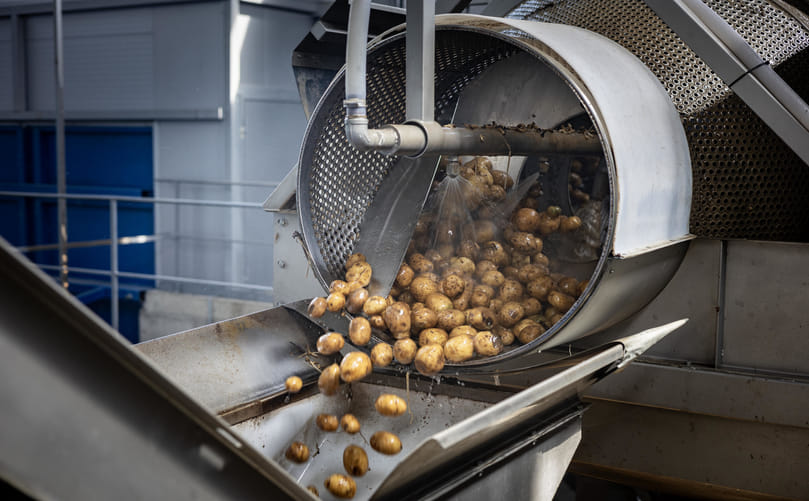
Industrial Potato Drum Washer for Efficient Soil Removal
Definition of Potato Washing Equipment
Potato washing equipment refers to mechanized systems designed to clean potato tubers using water combined with mechanical actions such as rotation, brushing, spraying, agitation, bubbling or flotation. These systems effectively remove soil, stones, debris and other contaminants while maintaining the physical integrity of the tubers.
The equipment ranges from simple units, such as drum washers and brush washers to advanced fully integrated processing lines equipped with water filtration, recycling systems and automation controls. Modern washing systems are engineered to provide thorough yet gentle cleaning, achieving high impurity removal efficiency typically exceeding 95–99% under optimized operating conditions while minimizing mechanical damage and water usage.
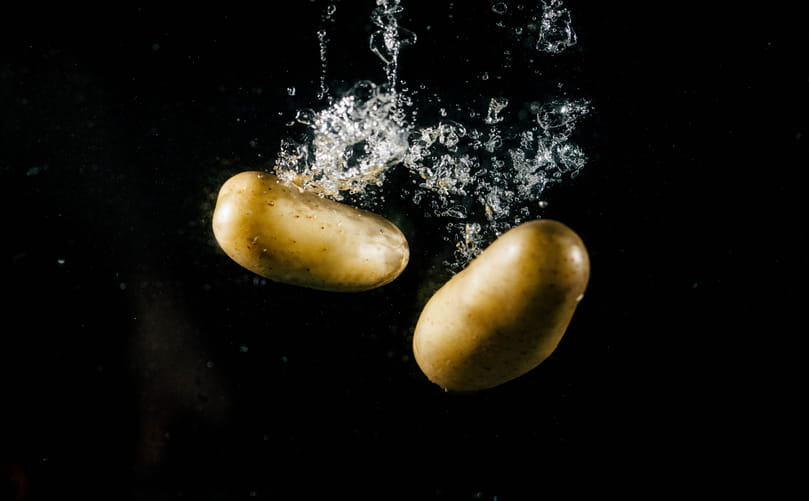
Potatoes Undergoing Water Washing: Initial Cleaning Stage
Types of Potato Washing Equipment: Technologies for Efficient and Gentle Cleaning
Potato washing equipment can be classified based on the cleaning mechanism, processing capacity and level of gentleness required to preserve tuber quality. The following are the key types used across fresh and processing supply chains
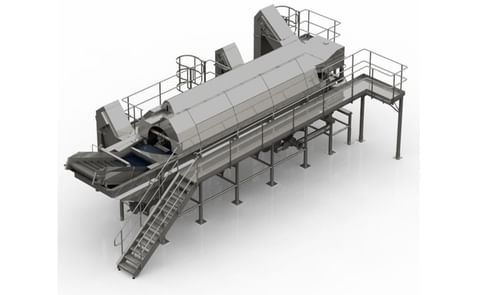
Drum (Barrel) Washers: These washers use large, spinning drums that are either punched with holes or have inside parts like flights or augers.The potatoes are tumbled inside the drum while water sprays to wash away dirt, clay, sand and other unwanted materials. Cleaning happens by using both mechanical movement and the friction between the tubers.
These systems work well for handling large amounts of work without stopping and are especially good at cleaning potatoes that have a lot of dirt on them. Many designs also integrate destoning functions. When the speed of rotation and the flow of water are set just right, they get a lot of output without hurting the product much. If you go too fast or use something too rough, it can hurt your skin, so it's important to keep things under control.
Brush Washers: use several spinning brushes made from nylon or soft threads along with water sprays to softly clean the surfaces of potatoes. These systems work well for getting rid of tough dirt without hurting the skin.
They are commonly used for fresh market potatoes and other products where the look is very important. Brush washers can also give a polishing effect that makes things look more attractive. Their performance can be changed by adjusting how hard the brush presses and how fast it spins, letting workers find the right mix between cleaning well and keeping the product from getting bruised or damaged. They are commonly used in systems that have more than one washing stage.
Flume (Water Channel) and Flotation Systems: Flume and flotation systems use water-filled channels or tanks to move potatoes along while also cleaning them at the same time. These systems work because of differences in weight, heavier things like rocks and dirt sink to the bottom, while potatoes float and move with the water.
Bubble washing systems help by adding air to make the water move around more, which loosens the dirt and cleans everything evenly without using strong force or rubbing too hard. These systems work well for soft handling and are often used first to clean and remove stones in processing steps. They also help cut down on manual work and make operations run more smoothly.
Combined / Multi-Stage Washing Systems: Combined or multi-stage washing systems use several cleaning methods together to get better results. A usual setup might involve dry cleaning methods like shaking, using rubber chains or brushes, and then moving on to wet washing steps such as drum washing, high pressure spraying and bubble or ultrasonic cleaning.
These systems use a "progressive cleaning" method, starting with rough cleaning and then moving to finer cleaning steps. Because of this, they can remove more than 95–99% of impurities while keeping the material from getting damaged. Multi-stage systems are commonly used in today's processing plants because they help achieve high efficiency, consistent results, and good product quality.
Additional Variants: Other specialized washing systems include spray washers that use high or low pressure water jets on conveyor belts, abrasive roller systems for tougher cleaning requirements and vibration-based cleaners that help remove loose soil before wet washing.
The choice of equipment depends on several factors including soil type, potato variety, level of contamination and the requirements of downstream processing or fresh market standards.
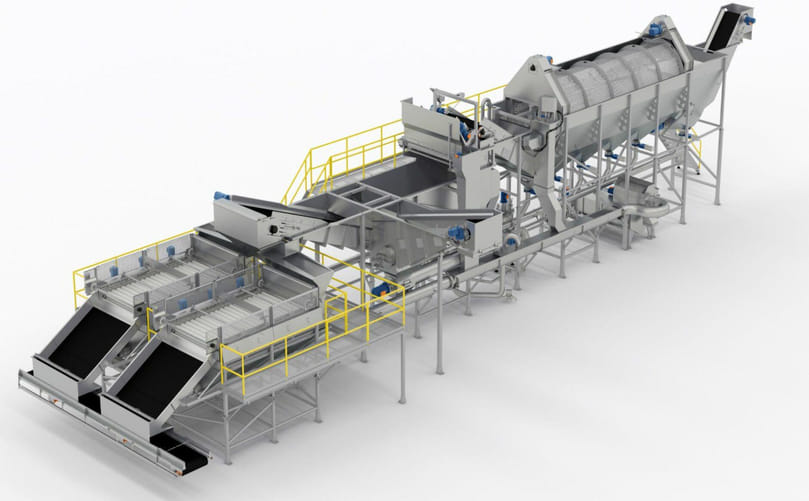
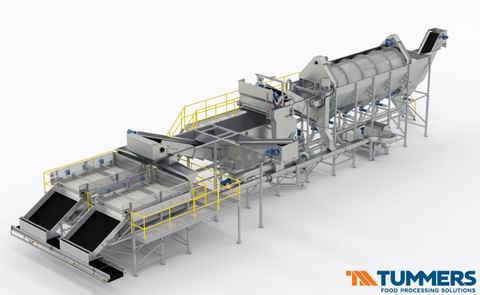
Multi-Stage Potato Washing Line: Integrated Cleaning Technologies
Working Principle & Key Components of Potato Washing Equipment
Working Principle: Potato washing systems operate through a combination of mechanical action, hydraulic forces and separation processes to remove soil and contaminants effectively. Potatoes are introduced into the system through a controlled feeding mechanism and pass through sequential cleaning stages.
Initially, loose soil and debris are removed through dry cleaning methods. This is followed by wet cleaning, where mechanical actions such as tumbling, brushing and friction work alongside water-based processes like spraying, immersion and turbulence to dislodge firmly attached dirt.
Modern systems use a gradient or multi-stage cleaning approach, progressing from coarse to fine cleaning. Technologies such as air bubble injection or ultrasonic systems enhance cleaning by creating turbulence or cavitation, which helps remove contaminants from eyes and crevices without causing excessive mechanical damage.
Water flow is typically designed in a counter current or cascading manner to improve efficiency and reduce water consumption. When operating parameters such as drum speed (around 20 rpm), retention time (approximately 4 minutes) and loading rate are optimized, washing efficiency can reach approximately 90–95% while keeping bruising to a minimum (generally below 5%).
Key Stages and Components of Potato Washing Systems: From Feeding to Water Recycling
Feeding System: The process begins with a feeding system that ensures uniform and controlled input of potatoes into the washing unit. Equipment such as hoppers, box tippers, rubber chain rod conveyors and vibratory conveyors are commonly used. These systems often perform initial dry cleaning by removing loose soil, stones and plant debris before wet washing begins.
Washing & Mechanical Cleaning: This is the core stage of the process, where potatoes are cleaned using a combination of rotating drums, brush rollers, high pressure spray nozzles, immersion tanks and bubble or ultrasonic systems. Mechanical forces such as tumbling and brushing remove adhered dirt, while hydraulic forces such as water jets and turbulence enhance cleaning efficiency. Conveyors, mesh belts or augers are used to transport potatoes through the system.
Separation Systems: Separation units remove heavier impurities such as stones, soil clods and debris. Equipment such as destoners, flume systems, vibratory screens and flotation tanks are used for this purpose. These systems rely on density differences, allowing heavier materials to settle while potatoes continue through the process. Collected sludge and waste are removed for disposal or treatment.
Discharge & Finishing: After washing and separation, clean potatoes are discharged and transferred to finishing stages such as drying or polishing. This step ensures the potatoes are ready for storage, packaging or further processing, while waste materials are diverted from the main product stream.
Water Management System: Efficient water management is essential in modern washing systems. Pumps, filtration units (such as rotary, disc or membrane filters) and sedimentation tanks are used to recycle and reuse water. Sensors monitor parameters such as turbidity, flow rate and water quality to maintain consistent performance and reduce water consumption.
Most equipment is constructed from food grade stainless steel (such as SUS304 or SUS316) and incorporates hygienic design, variable speed drives and safety features to ensure durability, efficiency and compliance with food safety standards.
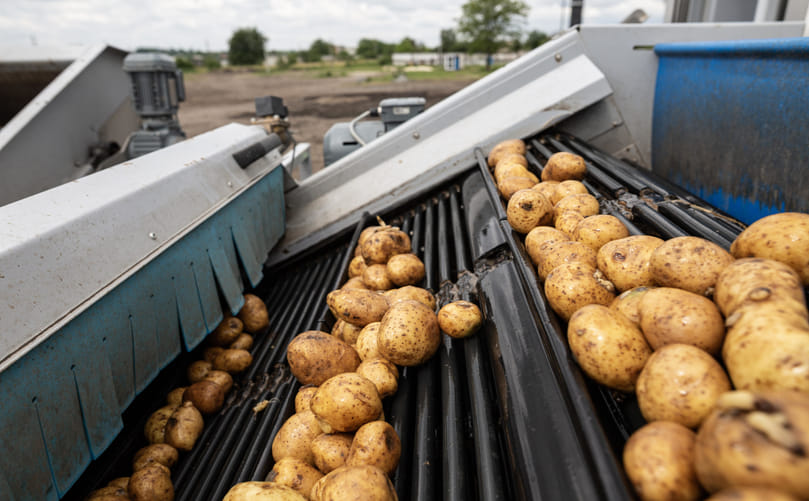
Potato Washing System: Working Principle and Multi-Stage Cleaning Process
Applications of Potato Washing in the Industry: From Fresh Markets to Processing and Export
Potato washing is a critical early-stage operation in the value chain, tailored to the final use of the tubers. Its role extends beyond simple cleaning to ensuring quality, safety and process efficiency across different segments of the potato industry.
In the fresh market and retail segment, washing systems particularly gentle brush or bubble washers are used to produce clean, visually appealing potatoes while preserving skin integrity. This improves consumer acceptance and market value. Proper washing also contributes to extended shelf life, typically up to 6–8 weeks for fresh consumption and up to around 3 months for seed potatoes under suitable storage conditions. It reduces spoilage by removing contaminants that can accelerate decay and is essential for ready-to-pack or pre-washed potato products.
In processing applications such as chips, fries, flakes and starch production, thorough washing is essential to remove soil, stones and other impurities. This prevents damage to downstream equipment like peelers, slicers and cutters, ensuring smooth and continuous operations in high-capacity processing lines. Clean potatoes also contribute to consistent product quality by minimizing defects that can affect frying performance, oil absorption, color uniformity and food safety.
For seed potato cleaning, washing plays an important role in reducing the load of soil borne pathogens including bacterial and fungal contaminants. This helps minimize disease transmission during storage and subsequent planting. However, the process must be carefully controlled to avoid mechanical damage as seed potatoes are particularly sensitive to bruising and skin injury.
In export preparation, washing is essential to meet stringent international standards related to hygiene, phytosanitary compliance and visual quality. Clean, residue free potatoes are better suited for long distance transportation and extended storage. Washing is typically combined with drying, grading and sorting to ensure that only high-quality tubers meet export grade specifications.
Overall, potato washing is integrated immediately after harvesting and initial dry cleaning and before grading, sorting, peeling or further processing. It supports traceability, reduces microbial load and prepares potatoes for subsequent operations such as hydro cooling, optical sorting and packaging, making it a cornerstone of modern potato handling and processing systems.
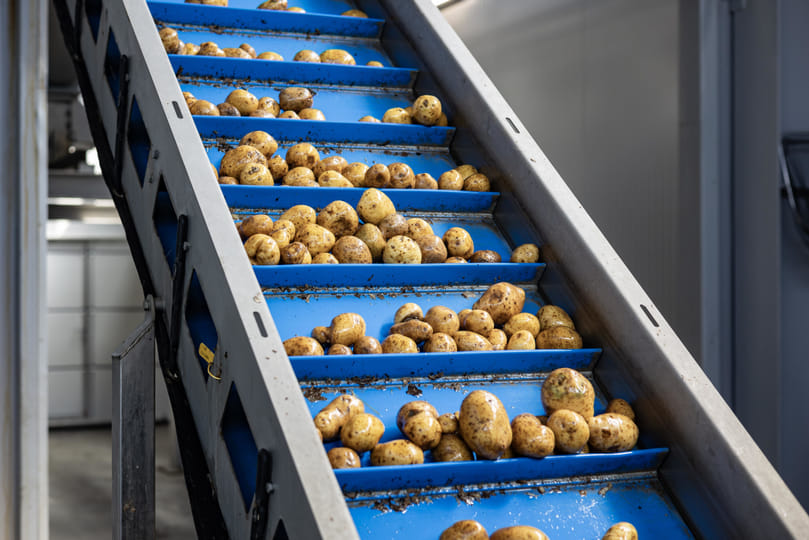
Potato Washing in Practice: From Farm Handling to Processing and Global Markets
Water Usage & Sustainability in Potato Washing: Challenges and Solutions
Potato washing uses a lot of water and is one of the biggest water users in the steps after harvesting and during processing. Traditional washing systems use a lot of water, and in the past, some estimates said they could use as much as about 1,000 gallons for every ton of potatoes washed. In today's processing plants, the total amount of water used is usually between 8 and 28 liters for every kilogram of potatoes that are processed and a big part of that water is used for washing.
The wastewater that comes out has a lot of organic stuff in it, like starch (which is about 1.5 to 2%), proteins and dirt particles. This causes higher levels of chemical oxygen demand (COD) and biological oxygen demand (BOD), which raises the cost of treating the water and creates environmental problems if the water is released without proper treatment.
To deal with these challenges, the industry is starting to use more sustainable ways to manage water. Water recycling and filtration systems are very important. Technologies like rotary screens, disc filters, membrane filtration and centrifugal separators help reuse 70 to 95 percent or even more of the water used in the process. Counter current or cascading flow designs help make the process more efficient by using the cleanest water during the last rinse, which greatly lowers the amount of fresh water needed. In many situations, improved systems have cut down total water use by almost half.
Another important approach is byproduct recovery. Starch and protein parts can be separated from wastewater by letting them settle, using a sieve, or filtering with mesh sizes that go from about 1000 micrometers down to 30 micrometers. The material that was recovered usually has about 85 to 90 percent starch and can be used again for animal feed, food uses or in industrial processes. This adds more value while also lowering the amount of natural material in the wastewater.
Advanced treatment methods are also commonly used to make sure that environmental rules are followed. These systems include anaerobic digestion units that create biogas, aerobic treatment methods, sedimentation tanks and constructed wetlands used for the last step of cleaning. Closed loop systems that use ozone, UV light or approved sanitizers help keep the water clean and safe, allowing it to be reused multiple times during the washing process.
Regulatory rules about treating and releasing wastewater and protecting the environment are important reasons why new ideas and solutions are being developed in this field. So, many facilities are now spending money on eco-friendly solutions that help use less water, save money on running the place, and protect the environment better. New methods, like using natural systems for treatment and low or no energy solutions are helping to achieve sustainability goals.
Sustainable potato washing systems work well with the idea of a circular economy because they use less fresh water, get useful byproducts from the process, and help make money more efficiently. These practices are becoming increasingly important in regions facing water scarcity and stricter environmental regulations making water efficient washing technologies a strategic priority for the global potato industry.
Potato Washing Equipment Selection: Key Criteria for Performance, Quality and Efficiency
Selecting the right potato washing equipment requires a careful balance between operational efficiency, product quality and long-term cost effectiveness. The choice depends on production scale, raw material conditions and the intended end use of the potatoes.
Capacity (Throughput): Equipment should be matched to the required production volume. Small to medium scale operations, typically handling around 100–500 kg per hour can rely on compact or semi-automatic systems. In contrast, large industrial facilities processing 1–5+ tons per hour require high capacity, continuous systems such as drum washers, flume systems or multi-stage washing lines. It is important to consider both current and future production needs as undersized equipment creates bottlenecks while oversized systems increase unnecessary costs and inefficiencies.
Soil Conditions and Potato Variety: The type of soil adhering to the potatoes significantly influences equipment selection. Heavy clay soils or stony conditions require robust systems like drum washers or flotation-based destoners for effective cleaning. Lighter soils can be managed with gentler systems such as brush or spray washers. Additionally, potato varieties differ in skin strength and shape; delicate or thin-skinned varieties require low impact cleaning methods to minimize bruising and skin damage.
End Use Requirements: The intended application of the potatoes is a critical factor. Fresh market and retail segments prioritize gentle washing systems that preserve skin quality and enhance visual appeal. Processing industries including chips, fries and starch production require thorough cleaning often achieving impurity removal rates above 95–99% to protect downstream equipment and ensure consistent product quality. Seed potatoes demand damage free cleaning to reduce disease transmission risks, while export markets require strict adherence to hygiene, residue limits and appearance standards.
Level of Automation: The degree of automation should align with operational scale and labor availability. Manual or semi-automatic systems are suitable for smaller or more flexible operations, offering easier cleaning and adaptability for multiple crops. Large scale operations benefit from fully automated systems equipped with PLC and HMI controls, variable speed drives and Clean-In-Place (CIP) systems, which improve consistency, reduce labor dependency and support continuous 24/7 operation.
Water Availability and Management: Water availability is a crucial consideration, particularly in regions facing scarcity. Systems with advanced filtration and recycling capabilities enabling 70–95% water reuse are preferred in such conditions. It is also important to evaluate access to fresh water, wastewater treatment infrastructure and the energy requirements for pumps and filtration systems.
Space, Integration and Infrastructure: The physical footprint of the equipment and its compatibility with existing processing lines must be assessed. A typical workflow may include a box tipper, destoner, washer and finishing units such as polishers or dryers. Considerations should include plant layout, power supply, ease of installation and maintenance accessibility. Most modern systems are constructed using food-grade stainless steel (SUS304 or SUS316) to ensure hygiene, durability and compliance with food safety standards.
Beyond these core factors, additional considerations include initial investment versus return on investment, energy consumption, maintenance requirements and durability under demanding operating conditions. Compliance with food safety and quality standards is essential for market acceptance. Performance should be validated under real operating conditions, focusing on key metrics such as impurity removal efficiency (typically above 95–99%), low damage or bruising rates (generally below 2–5%) and optimized energy and water usage.
Smart Potato Washing Systems: Automation, AI and Next Generation Processing Technologies
Automation has transformed potato washing from labor intensive, batch-based operations into efficient, data driven continuous processes. Modern systems deliver higher consistency, reduced labor dependency, improved traceability and better resource efficiency across the potato value chain.
Automated Washing Lines: Today’s potato washing systems are fully integrated and controlled through PLC-based automation with variable frequency drives (VFDs) that allow precise adjustment of drum speed, water flow and conveyor movement. These systems typically follow a multi-stage or gradient approach, combining dry pre-cleaning, immersion washing, high pressure spraying and advanced techniques such as bubble or ultrasonic cleaning. This integration ensures thorough cleaning with minimal manual intervention while maintaining product quality.
Sensor-Based Optimization: Advanced sensors play a crucial role in real time process control. Parameters such as water turbidity, flow rate, temperature and potato throughput are continuously monitored. Based on these inputs, the system automatically adjusts spray pressure, brush intensity, bubble action or retention time to maintain optimal performance. Such intelligent control helps achieve high washing efficiency often around 90–95% while keeping bruising and mechanical damage at low levels.
Integration with Downstream Systems: Modern washing systems are seamlessly integrated with downstream processing equipment including graders, optical sorters, peelers, dryers and packaging lines. Machine vision and AI-based inspection systems are increasingly used after washing to detect defects, size variations or quality issues. Robotic sorting technologies further enhance precision and efficiency, ensuring consistent product quality throughout the processing chain.
Smart Water and Energy Management: Automation also extends to water and energy optimization. Systems incorporate automated recycling loops with filtration units, counter current water flow and sanitization technologies such as ozone or UV treatment. IoT-enabled sensors support predictive maintenance by monitoring equipment performance and identifying potential failures before they occur, thereby reducing downtime and maintenance costs. Data driven optimization helps minimize both water and energy consumption.
Emerging Technologies: Recent innovations include ultrasonic cleaning and air bubble cavitation systems that enable deep cleaning of potato eyes and crevices without causing physical damage. Artificial intelligence and machine learning are being used to optimize process parameters dynamically, while robotics is improving material handling and inspection. Data analytics platforms provide insights for continuous process improvement, aligning potato washing operations with Industry 4.0 principles.
Overall, these technological advancements deliver significant benefits including higher throughput, reduced labor requirements, lower product damage (often below 2–5% in optimized systems), improved food safety and better regulatory compliance. Adoption of automated washing technologies is increasing globally, driven by the need for efficiency and consistency in both advanced and emerging potato processing markets.
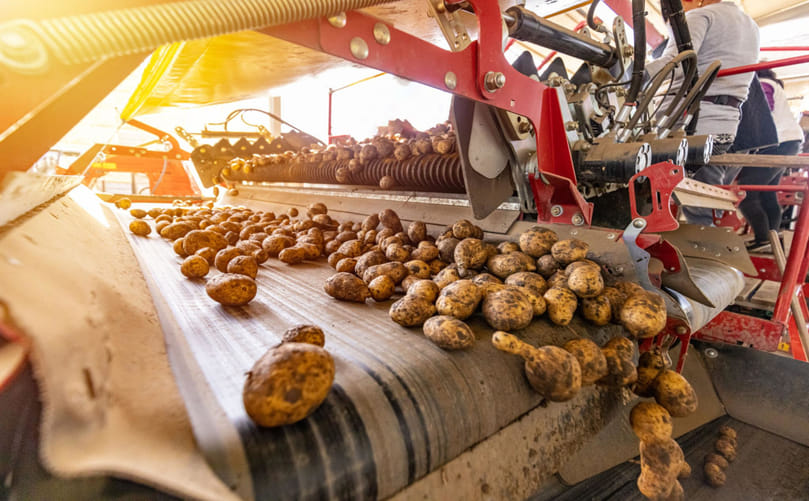
Smart Potato Washing Systems: Automation, AI and Integrated Processing Technologies
Seamless Integration of Potato Washing Systems in Modern Processing Lines
Potato washing is a foundational early-stage operation in integrated potato handling and processing lines. It is typically positioned after harvest intake or storage unloading and before grading, sorting, peeling or further processing. This ensures that clean raw material enters downstream operations, reducing equipment wear and maintaining consistent product quality.
Typical Integration Flow: In both fresh market and processing lines, potato washing is embedded within a continuous workflow. The process usually begins with intake and pre-cleaning, where potatoes are unloaded using equipment such as box tippers or elevators. This is followed by horizontal debris removers that eliminate loose soil, vines and plant residues. In some systems, a wet hopper is used to soak and loosen adhering soil before washing.
The next stage involves destoning and washing. Flume-based destoners or integrated washer destoner units remove stones and heavy debris using density separation. Potatoes then pass through drum, brush or bubble washers for thorough cleaning, often followed by polishing units to improve surface appearance.
After washing, potatoes move to post washing stages such as drying, using sponge rollers or forced air systems to remove surface moisture. This is followed by inspection tables for manual or automated quality checks, grading and sizing using screen graders and optical sorting systems. Depending on the end use, potatoes are then directed either to peeling and cutting operations (for processing) or to packaging lines (for fresh market distribution).
Examples of Integrated Systems: In fresh market or packing lines, capacities can range from around 5 tons per hour to 50–60 tons per hour. A typical setup includes an elevator, wet hopper, barrel washer combined with a polisher, water recycling filters, drying rollers and screen graders. Many modern systems also integrate water filtration units to enable reuse and improve efficiency.
For processing applications such as French fries and chips, integration is more complex and designed for continuous, high-capacity operation. Systems often include cyclone or auger-based destoners, pre-washers, main washing units, peelers, slice washers and blanching equipment. Effective removal of soil and stones at the washing stage is critical to protect downstream machinery such as hydro cutters and peelers.
Advanced multi-stage gradient systems combine dry pre-cleaning (using rubber fingers or brush rollers), wet immersion or bubble washing, high-pressure spray cleaning and final rinsing. These systems are fully integrated with conveyors and vibratory units and are controlled through PLC-based automation to ensure smooth, continuous flow.
Benefits of Integration: Integrating potato washing into processing lines provides several operational advantages. It minimizes tuber damage by reducing manual handling and ensuring gentle, controlled movement throughout the process. Water efficiency is improved through cascading and recycling systems that reuse water across different stages. Hygienic design, typically using food grade stainless steel and Clean-In-Place (CIP) systems, enhances food safety and traceability.
Modern systems are also modular and customizable allowing processors to scale operations from small units handling 100–500 kg per hour to large industrial lines exceeding 5–700 tons per hour. This flexibility enables producers to adapt to changing production demands while maintaining efficiency and product quality.
Global Market Relevance of Potato Washing Equipment
The demand for potato washing equipment is closely linked to the rapid expansion of the global potato processing industry and increasingly stringent food safety and quality standards. The broader potato processing market was valued at approximately USD 41 billion in 2023–2024 and is projected to reach around USD 60–67 billion by 2031–2033, growing at a compound annual growth rate (CAGR) of about 5–5.5%. This growth is largely driven by rising global consumption of convenience foods such as frozen French fries, chips, flakes and snack products.
Within this broader industry, the potato washing and peeling equipment segment is experiencing slightly faster growth with an estimated CAGR of around 6–6.6%. The market size for this segment is expected to expand from roughly USD 0.78–1.0 billion in the mid-2020s to approximately USD 1.3–1.9 billion by 2032–2035. This growth reflects the increasing importance of efficient, hygienic and automated pre-processing solutions in modern potato supply chains.
One of the primary drivers is the growing demand for processed potato products, which remains strong in regions such as North America and Europe, while expanding rapidly in Asia. Countries like China and India are witnessing increased processing adoption, although a relatively small proportion of total production is currently processed indicating significant growth potential.
Food safety regulations and export standards are also becoming more stringent worldwide. Requirements related to hygiene, pesticide residues and product quality are pushing producers and exporters to adopt mechanized washing systems. These systems ensure compliance with international standards while improving product consistency and reducing contamination risks.
Mechanization is another key trend particularly in emerging markets across Asia, Latin America and Africa. As labor costs rise and efficiency becomes more critical, producers are shifting from manual washing methods to mechanized and semi-automated systems. At the same time, sustainability pressures especially related to water use and wastewater management are driving demand for advanced washing systems with recycling and energy efficient features.
Developed markets, particularly in Europe including countries like Netherlands, United Kingdom and Germany along with North America lead in the adoption of highly automated, large scale processing lines. In contrast, emerging markets tend to prioritize cost effective, scalable solutions that can gradually expand with production needs. Overall, potato washing equipment plays a critical role in ensuring product quality, operational efficiency and regulatory compliance in a highly competitive global industry.
Leading Companies in Potato Washing Equipment
Several specialized manufacturers dominate the global market by offering advanced technologies, turnkey solutions and integrated processing systems:
- Kiremko (Netherlands): A leading provider of complete potato processing lines for fries, chips and flakes. Known for integrated washing, destoning and highly automated systems with a strong focus on sustainability.
- Tummers Food Processing Solutions (Netherlands): Offers robust washing, peeling and destoning equipment designed for high-capacity operations. The company emphasizes system integration and performance optimization across processing lines.
- Vanmark (USA): Specializes in potato washers, peelers, hydrocutters and water handling systems, with strong presence in the chips and fries industry, particularly in North America.
- Tong Engineering (United Kingdom): Known for barrel washers, polishers, destoners and integrated sorting solutions. Offers flexible systems for both fresh market and processing applications.
- Wyma Solutions (Global presence): Recognized for innovative equipment such as the Vege-Polisher™ and water efficient washing systems, particularly suited for gentle handling and small-to-medium operations.
- Allround Vegetable Processing (Netherlands): Provides modular and turnkey solutions including integrated pre-cleaning, washing and destoning lines tailored for different scales of operation.
Other notable players include Marcelissen-Venlo, GELGOOG, KRONEN GmbH, Lyco Manufacturing and Flo-Mech
European manufacturers generally lead in advanced automation and technology driven solutions, while Asian manufacturers often provide more cost competitive options tailored to emerging markets. Ultimately, equipment selection depends on production capacity, regional requirements and the intended application whether for fresh market supply or industrial processing.
Challenges in Potato Washing Systems: Managing Efficiency, Quality and Sustainability
While potato washing is an essential step in the supply chain, it presents several operational, technical and environmental challenges that must be carefully managed to ensure efficiency and sustainability.
High Water Usage and Wastewater Management: Potato washing is inherently water intensive. Even with modern recycling systems, significant volumes of wastewater are generated, containing starch, soil particles and organic matter. This results in high chemical oxygen demand (COD) and biological oxygen demand (BOD), increasing treatment complexity, disposal costs and regulatory pressure. Improper handling can lead to environmental contamination of soil and water resources. In addition, sludge accumulation from sedimentation and filtration systems requires proper handling, adding to operational costs and system complexity.
Risk of Tuber Damage: Excessive mechanical action such as high drum speeds, aggressive brushing or prolonged tumbling can damage potato tubers. Common issues include skinning, bruising, cracking and internal injuries, which reduce shelf life and market value. Maintaining optimal operating conditions is critical; for example, controlled drum speeds (around 20 rpm), appropriate retention time (approximately 4 minutes) and balanced loading can achieve high cleaning efficiency (around 90–95%) while limiting damage to about 5% or less. Delicate or immature tubers are particularly sensitive and require gentler handling.
Maintenance and Operational Costs: Potato washing equipment operates in harsh conditions involving water, abrasion and organic matter, leading to wear and tear of components such as brushes, bearings, screens and filters. Regular maintenance is essential to prevent breakdowns and maintain performance. Cleaning and sanitation are also critical as biofilm formation on equipment surfaces can harbor microorganisms and compromise food safety. While hygienic design and Clean-In-Place (CIP) systems help, they require consistent implementation. Energy consumption for pumps, motors and filtration systems further contributes to operational costs.
Other Limitations: Variability in incoming raw material such as differences in soil type, moisture content and contamination levels can affect washing consistency and performance. Advanced washing systems often involve high initial capital investment, which may be a barrier for smaller operations. Integration into existing or older processing lines can also be challenging due to space, layout or compatibility constraints. Additionally, when water is reused, there is an increased risk of cross contamination if disinfection and monitoring are not properly managed.
Mitigation Strategies: These challenges can be effectively managed through proper system design and operation. Optimizing process parameters, implementing regular maintenance schedules, investing in efficient water recycling and treatment technologies and ensuring staff training are key steps. Pilot testing under real operating conditions can help fine tune system performance. With a balanced approach, these limitations can be minimized, enabling efficient, cost effective and sustainable potato washing operations.