

Understanding Potato Spindle Tuber Viroid (PSTVd)
Potato Spindle Tuber Viroid (PSTVd) is a small, infectious, single stranded circular RNA molecule that causes spindle tuber disease in potatoes and bunchy top disease in tomatoes. It belongs to the viroids, a unique class of subviral pathogens that consist solely of circular RNA and do not encode proteins. PSTVd was the first viroid to be discovered and remains a model organism for studying RNA-based plant pathogens.
PSTVd is one of the most economically important viroids affecting potato and tomato production worldwide. Its ability to spread through infected seed, vegetative propagation, contaminated tools and equipment and in some cases, pollen and true seed, combined with its capacity to remain latent in many host plants makes it highly persistent and difficult to eradicate. These characteristics pose significant challenges to crop production, food security and the global movement of planting material.
The economic impact of PSTVd can be substantial. Severe strains may reduce potato yields by up to 65% and tomato yields by 40–50% with even greater losses when infection occurs early in plant development. In addition to yield losses, PSTVd reduces tuber quality by causing elongated or misshapen tubers, cracking, lower dry matter content and reduced processing quality, which decreases market value. Further economic costs arise from seed rejection, eradication programs, quarantine measures and trade restrictions. If left uncontrolled, annual economic losses in the European Union alone could reach millions of euros.
PSTVd is also highly significant for potato seed certification and international trade. It is regulated as a quarantine pest in many countries and the detection of infected seed lots or consignments can result in rejection, destruction or restrictions on trade. Strict seed certification and phytosanitary programs have successfully eliminated PSTVd from commercial potato production in countries such as the United States and Canada helping to maintain disease free seed stocks and facilitate the safe international trade of seed potatoes.
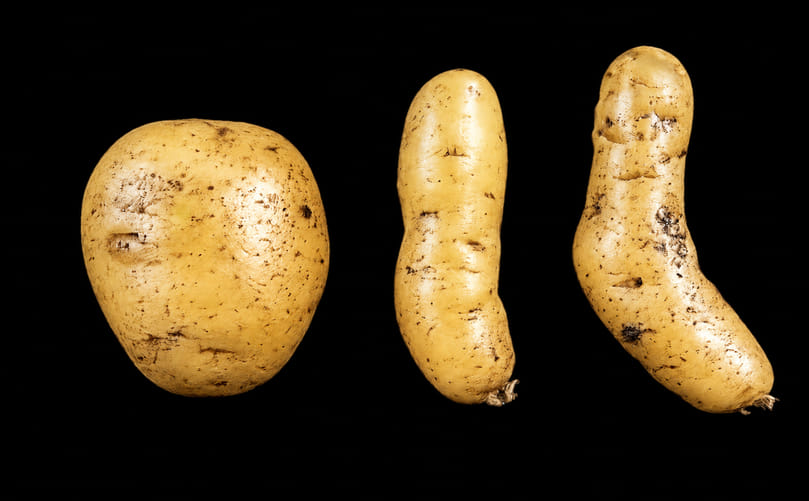
Potato Spindle Tuber Viroid (PSTVd): A Global Threat to Potato
What is a Viroid?
Difference Between Viroids and Viruses: Viroids are the smallest known infectious plant pathogens. Unlike viruses, they consist solely of naked, single-stranded circular RNA (ssRNA) and lack both a protein coat and protein coding genes. Their genomes are much smaller than those of viruses, typically ranging from 246 to 401 nucleotides, whereas viral genomes usually contain thousands of nucleotides. Viroids rely entirely on host enzymes for replication, while viruses contain either DNA or RNA genomes enclosed within a protein coat (capsid) and generally encode proteins required for replication, movement and infection.
Characteristics of Potato Spindle Tuber Viroid (PSTVd): Potato Spindle Tuber Viroid (PSTVd) is highly stable because of its compact, rod-like secondary structure, which protects it from degradation by host enzymes. It replicates autonomously in the nucleus of infected plant cells using the host's transcription machinery and spreads systemically throughout the plant via the phloem, enabling infection of multiple tissues and organs.
Genome and Structure: The PSTVd genome consists of approximately 359 nucleotides although naturally occurring variants range from 341 to 364 nucleotides. The RNA folds into a highly base-paired rod-like secondary structure composed of 26 stems and 27 loops. The genome is organized into five functional domains: the Terminal Left (TL), Pathogenicity (P), Central (C), Variable (V) and Terminal Right (TR) domains. It also contains highly conserved structural elements, including the Central Conserved Region (CCR) and Loop E, which are essential for replication, RNA processing, movement and pathogenicity.
Infection and Replication: Viroids infect plants primarily through wounds caused by mechanical damage, grafting, vegetative propagation or contaminated tools and equipment. After entering the host, PSTVd replicates in the nucleus using the host enzyme RNA polymerase II through an asymmetric rolling circle replication mechanism. Newly synthesized viroid RNA moves from cell to cell via plasmodesmata and is transported over long distances through the phloem. Although PSTVd does not encode proteins, it disrupts normal host gene expression and cellular processes, resulting in disease symptoms, reduced plant growth and lower crop productivity.
Causal Agent and Taxonomy
Scientific Classification: Potato Spindle Tuber Viroid (PSTVd) belongs to the family Pospiviroidae, genus Pospiviroid and species Potato spindle tuber viroid (PSTVd). The species has also been referred to as Pospiviroid fusituberis under updated viroid taxonomy. Historically, PSTVd was incorrectly described as Potato spindle tuber virus or Tomato bunchy top virus before it was recognized as a viroid.
- Family: Pospiviroidae
- Genus: Pospiviroid
- Species: Potato spindle tuber viroid (PSTVd; also Pospiviroid fusituberis)
- Historical synonyms: Potato spindle tuber virus, Tomato bunchy top virus
Genome Organization: PSTVd consists of a circular, single-stranded RNA (ssRNA) genome organized into five structural domains: the Terminal Left (TL), Pathogenicity (P), Central (C), Variable (V) and Terminal Right (TR) domains. These domains contain conserved structural motifs that are essential for replication, pathogenicity, systemic movement and interactions with the host plant.
Strains: PSTVd occurs as mild, intermediate and severe strains, which differ in their ability to cause disease. Mild strains often produce subtle or no visible symptoms allowing infected plants to remain undetected. Intermediate strains cause moderate disease symptoms, whereas severe strains result in pronounced stunting, leaf and tuber deformities and significant yield losses. The severity of symptoms is primarily determined by sequence variations within the viroid genome, particularly in the pathogenicity (P) domain
History and Global Distribution of Potato Spindle Tuber Viroid (PSTVd)
Discovery: Potato Spindle Tuber Viroid (PSTVd) was first observed in potato crops in the United States during the 1920s, when infected plants exhibited elongated, spindle-shaped tubers and reduced vigor. For several decades, the causal agent was believed to be a virus. In 1971, Theodor O. Diener demonstrated that the pathogen was instead a small, circular RNA molecule lacking a protein coat leading to the discovery of the first viroid. This landmark discovery established viroids as a new class of plant pathogens and significantly advanced the understanding of RNA-based infectious agents.
Historical Outbreaks: PSTVd became widespread in North America during the mid-20th century, causing significant losses in potato production through reduced yields and poor tuber quality. The disease spread primarily through infected seed potatoes and vegetative propagation. Comprehensive surveillance, strict seed certification and eradication programs implemented in the United States and Canada gradually eliminated PSTVd from commercial potato production between the 1980s and 2000s. Although potato outbreaks declined, several outbreaks in tomatoes have been reported worldwide many of which have been traced to infected imported seed lots or contaminated propagation material.
Current Global Status: PSTVd has been reported in numerous countries across North America, South America, Europe, Asia, Africa and Oceania. While it has been successfully eradicated from commercial potato production in countries such as the United States, Canada, parts of Australia and Argentina, the viroid continues to persist in ornamental plants, greenhouse crops, volunteer plants and some agricultural regions. It remains a regulated quarantine pest in many countries and occasional detections in commercial crops or imported planting material trigger rapid surveillance, containment, eradication and trace back investigations to prevent further spread. Ongoing monitoring and international phytosanitary measures remain essential for protecting potato and tomato production and facilitating the safe trade of seed and planting material.
Host Plants of Potato Spindle Tuber Viroid (PSTVd)
Main Hosts: Potato Spindle Tuber Viroid (PSTVd) primarily infects potato (Solanum tuberosum) and tomato (Solanum lycopersicum), which are its most economically important hosts. These crops are highly susceptible to infection and can experience significant reductions in yield and quality, depending on the viroid strain and the stage of infection.
Other Cultivated Hosts: In addition to potato and tomato, PSTVd can infect several cultivated plant species. Pepper (Capsicum annuum) is susceptible to infection but often develops only mild or no visible symptoms. Eggplant (Solanum melongena) is also a recognized host, while avocado (Persea americana) has been reported as a host under certain conditions.
Ornamental Hosts: A wide range of ornamental plants can harbor PSTVd, including Brugmansia spp., Petunia spp., Solanum jasminoides, Dahlia spp and Chrysanthemum spp. Many ornamental hosts remain symptomless despite infection allowing the viroid to persist unnoticed and serving as potential sources of inoculum for susceptible crops.
Wild Hosts: Several wild plant species can also host PSTVd. Black nightshade (Solanum nigrum) and various wild Solanum species act as natural reservoirs, enabling the viroid to survive outside cultivated fields. These wild hosts play an important role in the epidemiology of PSTVd by maintaining the pathogen in the environment and contributing to its spread to cultivated potato and tomato crops.
Disease Cycle of Potato Spindle Tuber Viroid (PSTVd)
The disease cycle of Potato Spindle Tuber Viroid (PSTVd) begins with its survival in infected plant material. The viroid persists in infected potato tubers, true seeds of tomato and some other hosts, ornamental plants, weeds and volunteer potatoes. Its highly structured, circular RNA is remarkably stable and can survive for extended periods on contaminated surfaces, in plant sap or in crop debris, enabling it to persist between growing seasons and subsequent crops.
The primary source of inoculum is infected planting material, particularly seed potatoes and contaminated seeds. Once introduced into a crop, PSTVd enters healthy plants through microscopic wounds caused by mechanical injury during cultivation, pruning, grafting, harvesting or other agricultural operations. Unlike many plant viruses, PSTVd does not require a specific biological vector for initial infection.
Following entry into the host, PSTVd replicates in the nucleus using the plant's DNA dependent RNA polymerase II. Replication occurs through an asymmetric rolling circle mechanism, in which the circular positive sense [(+)] RNA strand is transcribed into multimeric negative sense [(-)] RNA strands. These negative sense strands serve as templates for the synthesis of new positive sense RNA molecules, which are subsequently cleaved and ligated into mature circular viroid genomes. This replication process enables the production of large quantities of viroid RNA without the synthesis of any proteins.
After replication, PSTVd spreads systemically throughout the plant. The viroid moves from cell to cell through plasmodesmata and is transported over long distances via the phloem, eventually reaching all plant tissues, including leaves, stems, roots, tubers, flowers and seeds.
The spread of PSTVd to new plants occurs primarily through contaminated tools, machinery, hands, grafting, vegetative propagation, infected seed tubers and contaminated true seeds. Under specific conditions, certain insects may contribute to transmission when helper viruses are present, although insects are not considered primary vectors. In seed transmitted infections, the disease cycle begins again in the next generation of plants.
Disease development and spread are favored by warm temperatures, intensive crop handling and dense planting conditions, which facilitate rapid transmission, particularly in greenhouses and seed production systems. Latent infections in ornamental plants and wild weed hosts further complicate detection and eradication allowing the viroid to persist unnoticed.
Understanding the disease cycle of PSTVd highlights the importance of using certified disease-free planting material maintaining strict sanitation practices and preventing the introduction of infected plant material. Consequently, the use of clean seed and rigorous hygiene measures remains the cornerstone of PSTVd management and prevention.
Transmission Pathways of Potato Spindle Tuber Viroid (PSTVd)
Potato Spindle Tuber Viroid (PSTVd) is one of the most contagious plant pathogens due to its efficient mechanical transmission. The primary route of transmission in potato production is through infected seed tubers, which transmit the viroid systemically to emerging plants. Even low infection rates in seed lots can lead to widespread field infections because of secondary spread.
True seeds (botanical seeds) play a major role in the transmission of PSTVd in tomato and some breeding programs. PSTVd is seed transmitted in tomato, and contamination can occur during fruit processing. Pollen transmission has also been documented, allowing the viroid to spread during flowering.
Mechanical transmission is highly efficient. PSTVd spreads readily when sap from infected plants comes into contact with wounds on healthy plants. This occurs through cutting knives used for slicing seed tubers, farm machinery such as tractors and harvesters, human handling by workers moving between plants, grafting tools and tissue culture contamination. The viroid's stability on surfaces makes disinfection critical. Common sanitation practices include the use of sodium hypochlorite or other approved sanitizers.
Additional sources of inoculum include weed hosts, such as black nightshade and volunteer potatoes, which act as reservoirs. Limited insect transmission, such as aphids in the presence of potato leafroll virus can occur but is not the primary driver of disease spread. Grafting and vegetative propagation in ornamental plants further facilitate long-distance movement through global trade. Preventing the mechanical spread of PSTVd through rigorous hygiene is essential as even trace contamination can initiate epidemics.
Symptoms of Potato Spindle Tuber Viroid (PSTVd)
Foliage Symptoms: Foliage symptoms vary but often include stunting of the entire plant. Infected potato plants frequently exhibit an upright, spindly growth habit with smaller, narrower and sometimes rough textured leaves. Chlorosis (yellowing) may develop, progressing to purpling or reddening, particularly in tomatoes under high light and temperature conditions. Leaves may become distorted, twisted, brittle or necrotic along the veins with reduced leaf size toward the plant apex. In tomatoes a characteristic "bunchy top" develops due to shortened internodes and apical proliferation.
Stem Symptoms: Stem symptoms are closely associated with foliar changes. Shortened internodes give the plant a compact, bunched appearance, particularly in tomatoes. Stems may become thinner with reduced branching. In severe infections, overall plant vigor declines, resulting in delayed flowering and fruit set.
Tuber Symptoms: Tuber symptoms are the hallmark of Potato Spindle Tuber Viroid (PSTVd) infection in potatoes. Tubers become smaller, elongated and spindle shaped, often with prominent, deeply set eyes distributed more evenly along the tuber. The tuber skin may become rough or cracked, especially as the tubers expand. These deformities reduce marketability and processing quality.
Internal Tuber Symptoms: Internal tuber symptoms include reduced dry matter content and lower specific gravity, affecting both culinary and industrial uses, such as reduced starch content for chipping. Symptom expression is not always uniform. Mild strains or tolerant varieties may exhibit minimal or no visible symptoms, whereas severe strains in susceptible cultivars cause pronounced damage. Environmental factors, particularly high temperature and intense light as well as the plant's age at the time of infection, influence symptom expression. Latent infections in many ornamental plants and some weeds make visual detection unreliable.
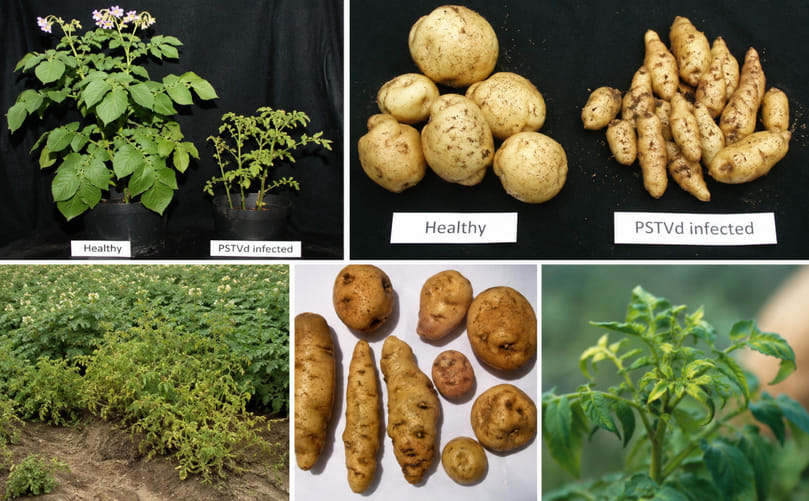
Disease Symptoms Caused by Potato Spindle Tuber Viroid (PSTVd)
Disease Development and Symptom Progression of Potato Spindle Tuber Viroid (PSTVd)
Disease development and symptom severity in Potato Spindle Tuber Viroid (PSTVd) infections are influenced by multiple interacting factors. Temperature plays a key role, with symptoms generally becoming more pronounced and developing more rapidly under warmer conditions, such as during hot summers or in greenhouses. These conditions also favor viroid replication and mechanical spread. In contrast, cooler temperatures may suppress visible symptoms while allowing the viroid to persist as a latent infection.
Viroid strain and host variety are also critical factors. Mild strains often produce subtle or no visible symptoms, whereas severe strains cause pronounced stunting, deformities and significant yield losses. Potato and tomato cultivars differ in their susceptibility, with some exhibiting greater tolerance through reduced symptom severity or lower viroid accumulation. Plant age at the time of infection also influences disease development as infections occurring during sprouting or the seedling stage generally result in more severe and systemic disease than infections acquired later in plant development.
Mixed infections can exacerbate disease. PSTVd may occur alongside viruses such as Potato leafroll virus (PLRV) or Potato virus Y (PVY), resulting in synergistic effects that can intensify symptoms and increase yield losses beyond those caused by either pathogen alone. Environmental stresses, including drought and nutrient imbalance can further influence disease development by either enhancing, masking or mimicking viroid symptoms.
Overall, disease development follows a progressive pattern beginning with a latent phase after infection and followed by increasing symptom severity during the growing season and across successive generations in vegetatively propagated crops. This complexity highlights the importance of molecular testing in addition to visual inspection and explains why PSTVd remains difficult to manage in diverse production systems. Ongoing research into host viroid interactions aims to identify the genetic factors responsible for disease development and improve prediction and management strategies.
Yield Losses and Economic Impact of Potato Spindle Tuber Viroid (PSTVd)
Potato Spindle Tuber Viroid (PSTVd) causes substantial direct yield losses. In potatoes, severe strains can reduce tuber yield by up to 65% with losses resulting from fewer and smaller tubers. Even mild strains can cause 17–24% yield reductions in sensitive cultivars such as 'Saco' and these losses accumulate over successive generations in seed production. In tomatoes, yield losses range from 40–50% and may approach 100% when infection occurs early, owing to stunted plants, reduced fruit set and poor fruit quality.
Beyond yield reduction, PSTVd also causes significant quality losses. Deformed, cracked or small tubers reduce market value, specific gravity and processing suitability for products such as chips and fries. In tomatoes, fruits become smaller, harder, unevenly colored and slower to ripen. Seed lots in which PSTVd is detected are subject to rejection, resulting in direct financial losses for growers and seed producers.
The economic impact of PSTVd extends beyond production losses to include trade restrictions and indirect costs. Export restrictions, phytosanitary testing and eradication programs increase production expenses. A European modeling study estimated that, if left unchecked, PSTVd could cause annual losses of several million euros in potato and tomato production, largely because of reduced supply and increased consumer prices. In regions that depend on potato production for food security, these losses affect both smallholder farmers and national economies. Additional economic burdens include the loss of export markets, seed certification programs and research and regulatory costs.
Global trade further amplifies the risk of PSTVd spread as contaminated ornamental plants or seeds can introduce the viroid into new regions, triggering outbreaks and quarantine measures. Successful eradication programs in the United States and Canada have prevented continued losses but required decades of sustained effort. Overall, PSTVd demonstrates how a single plant pathogen can disrupt supply chains and increase production costs worldwide.
Diagnosis of Potato Spindle Tuber Viroid (PSTVd)
Field diagnosis relies on visual inspection for characteristic symptoms, such as spindle shaped tubers and bunchy top. However, visual diagnosis is unreliable because of latent infections, mild strains, symptomless hosts and the similarity of symptoms to those caused by other stresses. Early or low-level infections are often missed.
Laboratory diagnosis is essential for confirming Potato Spindle Tuber Viroid (PSTVd) infection. Molecular methods are the primary diagnostic tools.
Real-time RT-qPCR is highly sensitive, quantitative and validated for testing leaves, tubers and seeds. Recent protocols enable reliable detection even in single true potato seeds when the viroid load is sufficient.
Conventional RT-PCR is widely used for routine testing and sequencing to confirm the identity and strain of PSTVd.
Molecular hybridization, such as DIG-labeled probes and return-PAGE are also used for broader viroid detection.
Next generation sequencing (NGS) is ideal for detecting viroid variants or mixed infections.
Biological indexing, such as inoculation onto sensitive tomato cultivars like 'Rutgers', is used to demonstrate pathogenicity but is slower and less sensitive than molecular methods. It requires greenhouse space and several weeks for symptom development.
Molecular diagnostic methods offer advantages such as speed, high sensitivity, specificity when combined with sequencing and high throughput testing capability. However, they require specialized equipment are susceptible to contamination and depend on proper sampling from multiple plant parts. An integrated approach combining visual inspection with molecular testing provides the most reliable diagnosis of PSTVd.
Differential Diagnosis of Potato Spindle Tuber Viroid (PSTVd)
Symptoms caused by Potato Spindle Tuber Viroid (PSTVd) can be confused with those of several other diseases and disorders. Potato virus Y (PVY) causes symptoms such as mosaic patterns, leaf drop and necrosis, but its tuber symptoms differ including necrotic rings in some strains and it is not transmitted through seed in the same manner as PSTVd.
Potato leafroll virus (PLRV) causes leaf rolling, stunting and phloem necrosis, often accompanied by more pronounced yellowing. However, it does not produce the characteristic spindle shaped tubers associated with PSTVd.
Nutrient deficiencies, such as nitrogen or phosphorus deficiency can cause chlorosis and stunting but are non-transmissible and can be corrected through fertilization. They do not result in the mechanical spread or tuber deformities characteristic of PSTVd. Herbicide injury and heat stress may also cause leaf distortion, purpling and stunting; however, these symptoms are usually uniform across fields, do not progress in new growth and are not associated with viroid RNA.
Other viroids, such as Tomato chlorotic dwarf viroid and related pospiviroids can produce similar symptoms but require sequence analysis for accurate differentiation. Mixed infections can further complicate diagnosis. Accurate identification of PSTVd relies on molecular testing and sequencing rather than visual symptoms alone. This is essential for regulatory reporting and the implementation of targeted disease management strategies.
Management of Potato Spindle Tuber Viroid (PSTVd)
Effective management of Potato Spindle Tuber Viroid (PSTVd) focuses on prevention because no curative treatments are available. Only certified PSTVd-free seed potatoes and seeds from reliable sources should be used. Strict quarantine measures and testing of imported plant material are essential.
Cultural practices include the removal of volunteer potatoes and weed hosts, such as black nightshade, prompt removal of symptomatic plants and maintaining proper field hygiene. Sanitation is critical for preventing mechanical spread. Cutting knives, tools and machinery should be disinfected between uses with approved agents, such as sodium hypochlorite. Worker hygiene practices, including the use of gloves, hand washing and avoiding movement from infected areas to clean areas help reduce transmission.
In propagation systems, tissue culture and mother plant indexing help ensure the production of clean planting material. Monitoring and rapid response measures, including trace back investigations and destruction of infected lots help limit outbreaks. Integrated Disease Management (IDM) combines the use of certified seed, sanitation, weed and volunteer plant control, regular testing (particularly in seed production) and awareness programs. In greenhouse production, separating infected areas and maintaining rigorous disinfection practices are essential. These management measures have enabled successful eradication of PSTVd in several countries.
Quarantine and Regulatory Importance of Potato Spindle Tuber Viroid (PSTVd)
Potato Spindle Tuber Viroid (PSTVd) is regulated as a quarantine pest due to its high transmissibility, potential for latent spread through trade and significant economic impact on potato, tomato and ornamental crops. Zero tolerance measures in seed and planting material help prevent its establishment and protect international trade.
Seed certification programs enforce rigorous testing, including methods such as RT-qPCR, under zero tolerance policies. Import and export regulations require phytosanitary certificates and often include pre-export testing. Many countries reject consignments in which PSTVd is detected.
International phytosanitary standards support global efforts to manage PSTVd. The International Plant Protection Convention (IPPC) provides ISPM 27 (Diagnostic Protocols), which includes a specific annex for PSTVd and emphasizes standardized testing and sequencing procedures. The European and Mediterranean Plant Protection Organization (EPPO) lists PSTVd as an A2 pest and provides regional recommendations for its management. Other organizations, such as COSAVE maintain similar regulatory lists.
These international standards promote harmonized phytosanitary measures, facilitate safe trade and support eradication efforts when outbreaks occur. Compliance with regulations is critical for exporters, while effective enforcement protects importing countries from the introduction and spread of PSTVd.
Research and Emerging Technologies for Potato Spindle Tuber Viroid (PSTVd)
Research on Potato Spindle Tuber Viroid (PSTVd) focuses on molecular biology, diagnostics and disease management. Recent validated RT-qPCR protocols enable quantitative monitoring of PSTVd in seeds and diverse potato germplasm, improving the accuracy of certification programs. Next-generation sequencing (NGS) continues to reveal strain diversity and provide insights into viroid evolution.
Resistance breeding efforts benefit from the identification of wild relatives showing tolerance to PSTVd. CRISPR-Cas13a, an RNA-targeting technology, has demonstrated efficient and specific suppression of PSTVd in potato, providing a potential pathway toward durable resistance. RNA interference (RNAi) and artificial microRNA (amiRNA) constructs targeting viroid sequences have also shown protective effects, sometimes combined with virus resistance strategies.
Emerging research areas include holobiont studies focusing on viroid microbiome interactions, predictive modeling for disease outbreaks and advanced sanitation technologies. Challenges remain in translating laboratory-based resistance into durable field level protection and addressing regulatory considerations related to genetically modified technologies. International collaboration continues to accelerate progress toward sustainable PSTVd management.