Primary tabs

TOMRA Food

Company Description

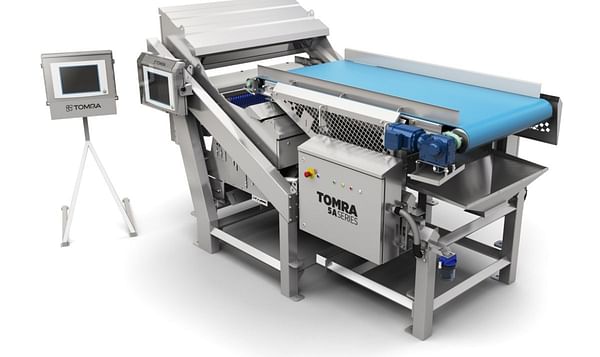
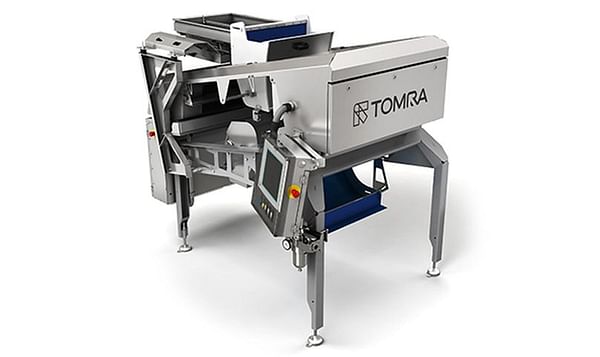
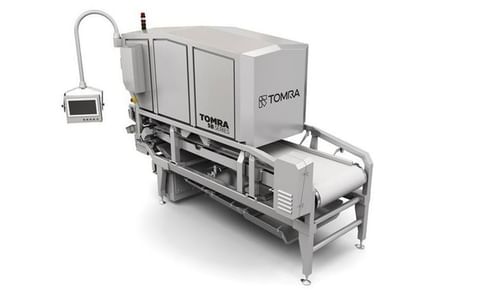
TOMRA Food is a global supplier of sensor-based sorting, grading, and peeling equipment to the food processing sector. The business creates technologies that combine cameras, lasers, and artificial intelligence (AI) to detect flaws, eliminate extraneous elements, and organize food products by color, size, shape, and quality. Its products are frequently utilized to improve food safety, product uniformity, and processing efficiency in industrial processes.

The firm provides a diverse range of equipment, including optical sorting machines (belt, chute, and free-fall sorters), grading and inspection systems, and steam peeling solutions including the Eco, Orbit, and Odyssey peelers. These systems may be used as standalone devices or incorporated into whole processing lines, enabling automated and high-capacity food production facilities.

The company has more than 12,800 units installed at food growers, packers and processors around the world for confectionery, fruit, dried fruit, grains and seeds, potatoes, proteins, nuts, and vegetables.

TOMRA Food operates centers of excellence, regional offices and manufacturing locations within the United States, Europe, South America, Asia, Africa and Australasia.


(Click picture to watch video)InVision2 in Action: High-Precision Fruit Sorting Demo
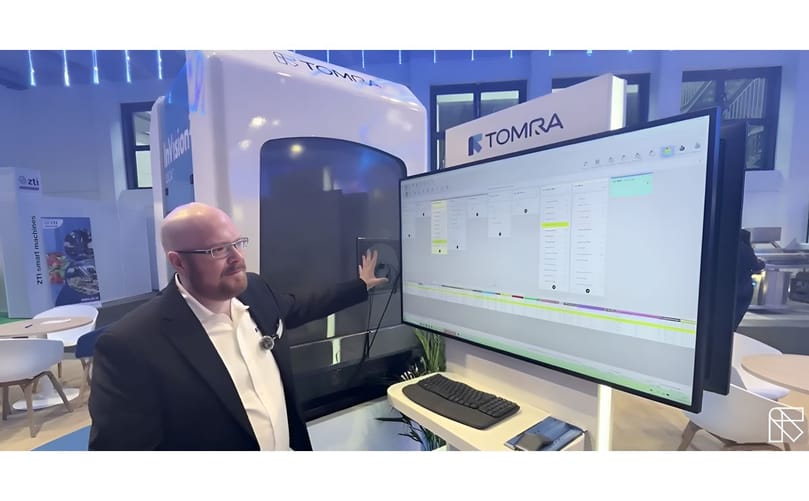

InVision2 in Action: High-Precision Fruit Sorting Demo
A subsidiary of:
Subsidiaries and Factory Locations
Products Offered
Product Types offered by this company
Brands
Trade Show Participation
News for this Company
Potato Europe visitors can see the latest handling innovations from Haith
August 15, 2022
Potato Europe visitors can see the latest handling innovations from Haith
The UK's leading manufacturer of vegetable handling solutions will present its revolutionary new grading machine – the ProSort - to European farmers at Potato Europe 2022.
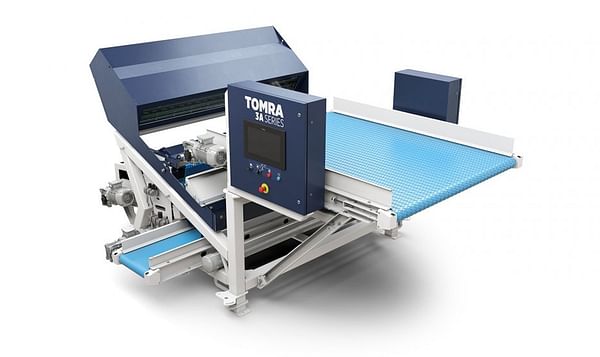
Tomra 5a
July 15, 2022
How potato growers and processors can gain from the latest sorting technologies
It’s not easy for potato growers and processors to always ensure food safety or meet customers’ specified standards. For one thing, all sorts of foreign materials get mixed up with potatoes when they’re harvested.
Leading by Example - TOMRA Steam Peeling Revolution
July 15, 2022
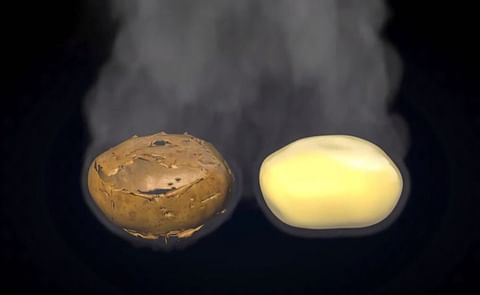
Peeling in Potato Processing: The TOMRA Steam Peeling Revolution
Peeling potatoes on potato processing lines can be a bit like peeling notes from a wad of dollar bills and then throwing them away. Because mechanized peel removal also removes potato flesh, a high quantity of saleable raw material.
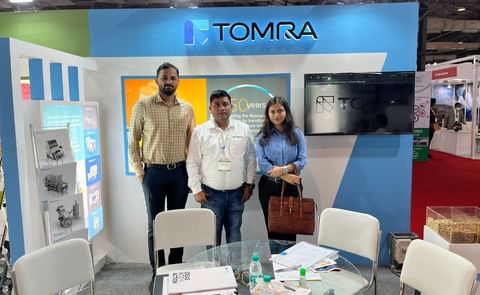
PotatoPro visiting TOMRA Food at InterFood Tech 2022 in Mumbai, India. From Left to Right: Nipun Krishnan, Business development at PotatoPro, Kuldeep Sharma Regional Sales manager for India and Bangladesh at TOMRA Food (India) and Sweta Kumari, Marketing
July 15, 2022
Kuldeep Sharma (TOMRA) on the Indian Potato Market: Unorganised but great Opportunities
During InterFood Tech in Mumbai, PotatoPro interviewed Kuldeep Sharma from TOMRA Food on the Indian Potato Market, how it differs differs from the European and American Market and Sustainability.
Agents for this company

Frequently Asked Questions

How does TOMRA’s technology influence pricing dynamics in agricultural markets?

By enabling precision grading, TOMRA allows producers to segment products into multiple value tiers. This leads to more dynamic pricing strategies where premium quality is monetized better, while lower grades are efficiently diverted to processing or alternative uses, maximizing overall revenue.

How does TOMRA’s technology impact processing efficiency in the potato industry?

In potato processing, sorting precision directly affects peeling loss, frying quality and final product consistency. TOMRA’s systems help reduce raw material waste, improve cut quality and ensure uniformity critical for products like chips and fries.

How might TOMRA influence the future design of food processing factories?

Factories may be designed around integrated, automated and data-connected systems rather than linear processes. TOMRA’s ecosystem approach could drive the shift toward smart factories in agriculture.

Can TOMRA’s solutions standardize food quality globally or will regional diversity resist it?

While technology pushes toward standardization, consumer preferences and local varieties will maintain diversity. The future likely involves standardized processing with localized customization.

Make This Page Even Better!

This content was last updated on March 28, 2026

Have a helpful detail to contribute? Catch something that should be corrected?