
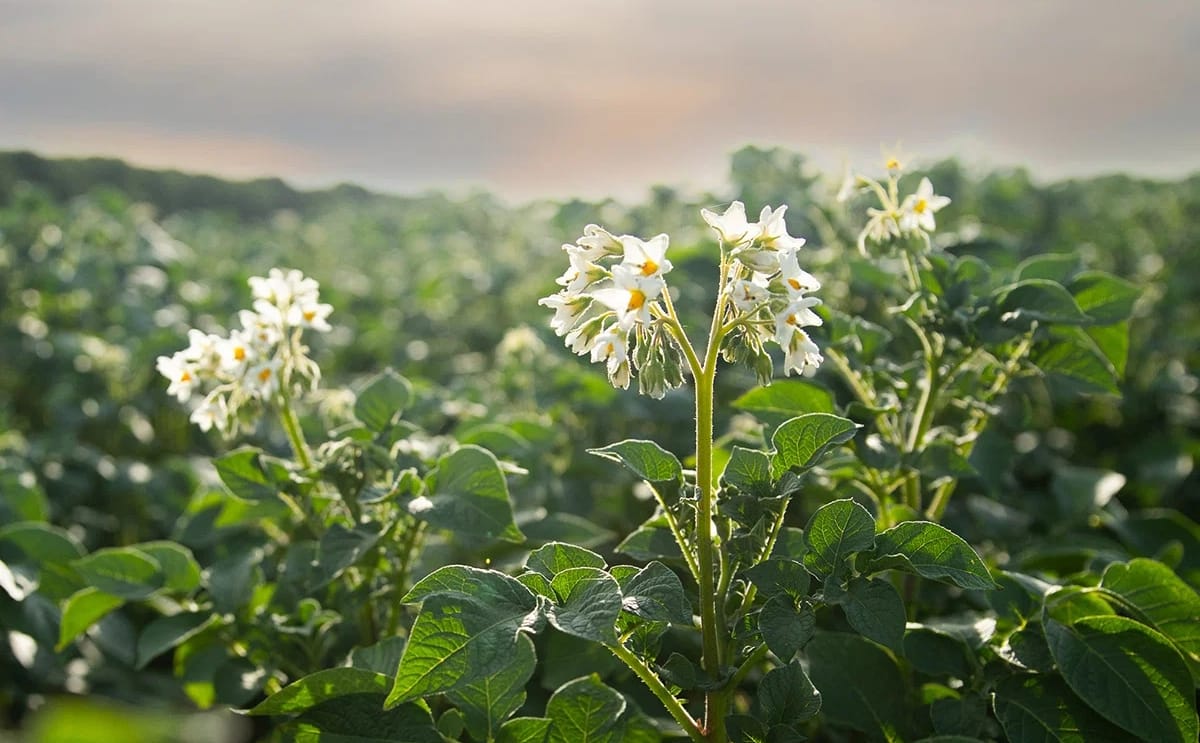
Potato crops in the Netherlands as growers and industry partners support the Outline Crop Protection Covenant to advance sustainable agriculture.
Dutch Growers and NAO Back Crop Protection Covenant to Advance Sustainable Potato and Plant Sectors
The Dutch plant sector has taken a significant step toward more sustainable agriculture with the signing of the Outline Covenant on Crop Protection on July 14, 2026. The agreement brings together the Dutch government, agricultural organizations, supply chain partners and civil society groups to reduce the environmental impact of crop protection, improve water quality and accelerate innovation, while providing growers with greater legal certainty and long-term planning.
The covenant was signed by BO Akkerbouw, Greenports Nederland, LTO Nederland and NAJK, with the Dutch Potato Organisation (NAO) participating through BO Akkerbouw. The NAO described the agreement as an important foundation for strengthening a sustainable and competitive Dutch potato sector.
Growers Seek Practical Path Toward Sustainable Crop Protection
The covenant promotes wider adoption of Integrated Crop Management (ICM), encouraging growers to reduce reliance on conventional crop protection products through innovation, precision technologies and non-chemical alternatives.
According to Greenports Nederland, growers are already investing heavily in more sustainable practices, but wider adoption will require continued research, faster approval of green crop protection products and advanced technologies. While the Dutch government has allocated EUR 250 million to support ICM research and implementation, sector organizations believe additional funding and risk-sharing mechanisms will be needed to help growers manage costly transitions.
Legal Certainty Considered Essential for Growers
Agricultural organizations emphasized that sustainability measures must be accompanied by clear and consistent regulations.
LTO Nederland noted that growers are facing increasing pressure from climate change, including more frequent droughts, flooding, pests and diseases, while the number of approved crop protection active substances has declined by more than 60 percent in recent years. At the same time, differing provincial and municipal regulations—including permit requirements, cultivation restrictions and pesticide rules—have created uncertainty for producers.
The organizations expect the covenant to lead to a national policy framework after the summer that provides science-based rules and greater legal certainty across the Netherlands.
Potato Sector Highlights Innovation and Global Food Security
In its separate statement, the Dutch Potato Organisation (NAO) stressed that the covenant is not only about environmental performance but also about maintaining a strong potato industry capable of continued investment and innovation.
The NAO highlighted the strength of the Dutch potato cluster, where breeders, seed potato traders, ware potato traders, growers, suppliers, researchers, educational institutions and quality assurance organizations work together to develop and commercialize new potato varieties and production technologies.
The organization also emphasized the importance of maintaining cultivation, breeding and practical field research in the Netherlands, noting that Dutch seed potatoes contribute to potato production for approximately 800 million people worldwide each year. The development of more resilient potato varieties capable of withstanding drought and heat is also seen as an important contribution to global food security.
Compensation and Action Perspectives Remain Key Issues
NAJK acknowledged that the covenant could require stricter measures in sensitive environmental and groundwater protection areas. However, the organization argued that growers must receive adequate financial compensation if major interventions affect their businesses.
Sector representatives also called for workable alternatives instead of restrictive measures such as cultivation bans, permit requirements and extensive buffer zones. During consultations with members, growers expressed support for sustainability efforts but emphasized the need for practical solutions based on independent scientific research.
Further Negotiations Continue After the Summer
The organizations described the signed document as a framework agreement, with several important elements still requiring further negotiation. Sector-specific agreements will be developed for individual crop sectors, including potatoes, to ensure the measures are practical and economically viable.
The NAO confirmed it will remain actively involved in shaping the final agreements, aiming to ensure that the Dutch potato sector can continue investing, innovating and improving sustainability while maintaining its international leadership in potato production, trade and breeding.
Like to receive news like this by email? Join and Subscribe!
Get the latest potato industry news straight to your WhatsApp. Join the PotatoPro WhatsApp Community!
Highlighted Company
Related News

September 28, 2026
HZPC France Begins Construction of New Greenhouse for Mini Potato Tuber Production
HZPC France has begun construction of a new greenhouse in Ruisseauville to produce up to 2 million mini potato tubers, supporting greater production autonomy, improved quality and faster marketing capacity in France.
September 27, 2026
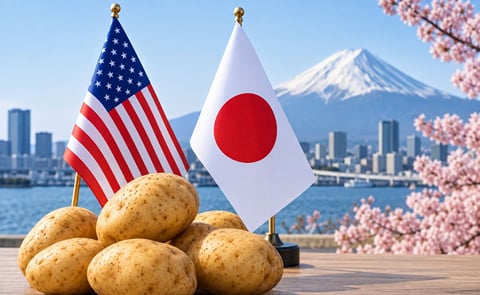
Japan Advances Quarantine Consultations on Fresh Potato Imports From the United States
Japan is advancing quarantine consultations on fresh potatoes from the United States for general distribution, with authorities assessing pest risks and potential management measures before deciding whether broader market access can be granted.

September 22, 2026
Croptimal Launches Tractor-Mounted Croptiscan 3000 for AI-Based Seed Potato Disease Detection
Croptimal has launched the tractor-mounted Croptiscan 3000, using camera and recognition technology to detect PVY and leaf roll early in seed potato crops, providing smaller growers with an alternative to fully self-driving machines.