
SeedNL’s Private Sector Spotlight features Agrico’s Michel de Bruin discussing quality seed, local value chains and flexible approaches to developing strong potato sectors.
Agrico Shares Key Lessons for Building Strong, Sustainable Potato Sectors

There is no standard recipe for developing a strong potato sector, according to Michel de Bruin, Business Innovation & Development Manager at Agrico. Working across markets with very different production systems, regulations, commercial structures and levels of development, de Bruin believes that successful sector development must be tailored to local conditions and remain flexible as circumstances change.
Quality Planting Material Is Only the Starting Point
Agrico, a Dutch cooperative of potato growers, develops and markets potato varieties and produces seed potatoes for different market segments, including retail, French fries, crisps and starch. Through its international network, the company is active in more than 80 countries, with its genetics present in many more.
For de Bruin, high-quality planting material is an essential starting point, but it cannot determine the final outcome for farmers on its own. Crop management, available inputs, weather conditions, access to markets and the price farmers receive all influence the result.
This becomes particularly important in markets where large parts of the potato sector remain informal. Agrico therefore increasingly takes a value-chain perspective, combining quality planting material with knowledge transfer and, where possible, connections to other resources farmers need.
Agrico Potato Services Africa in Kenya provides an example of this approach. The company produces certified seed potatoes in Nakuru County while also providing farmer training on crop management and profitable potato production. This reflects Agrico's 'local for local' approach, which focuses on developing potato production for local and regional markets rather than simply treating emerging markets as destinations for Dutch exports.
Growing the Market for Quality Seed
In many markets where de Bruin operates, the formal market for certified seed potatoes remains relatively small. This means Agrico is often competing not primarily with another international seed company, but with farm-saved seed.
Michel de Bruin, Business Innovation & Development Manager at Agrico:
"Our biggest competitor is farm-saved seed."
Highlighting the challenge of encouraging farmers to recognise the value of certified and quality planting material.
For Agrico, the opportunity is therefore to expand the overall market for quality seed rather than simply compete for an established customer base. The economic case is central to this approach.
De Bruin argues that although reusing planting material may appear inexpensive, the calculation changes when productivity, labour and other production costs are considered. Better planting material, suitable varieties and stronger crop management can increase yields and reduce production costs per kilogram, creating greater scope for farmers to invest in their businesses.
He gives the example of increasing productivity from six tonnes per hectare to 36 tonnes per hectare. Producing the same volume of potatoes at higher productivity requires less land, water and other resources. In this way, greater productivity can potentially strengthen both financial and environmental sustainability.
However, quality seed alone cannot deliver these results. Agrico therefore works with other private companies, governments and public organisations, including organisations that may also be commercial competitors.
Production, Markets and the Enabling Environment
De Bruin describes potato sector development through three interconnected elements: production, the market and the enabling environment.
Production covers varieties, seed quality, multiplication and cultivation knowledge. The market requires demand, distribution and a viable business case for farmers and other actors throughout the value chain.
The enabling environment includes import rules, certification, plant breeders' rights and other regulations that determine which varieties and production systems can operate.
Agrico's role is primarily focused on practical market development and implementation. The company can introduce varieties, make quality planting material available, share production knowledge and work with local partners. It can also contribute practical experience to strategic discussions by assessing what is likely to work, where risks may arise and whether an intervention can operate beyond a pilot.
De Bruin stresses the importance of this practical perspective. A technical solution may work under controlled conditions but prove difficult to distribute, finance or operate at scale. Similarly, a policy decision can have unintended consequences for farmers and private investment.
Flexibility Is Essential as Markets Change
De Bruin is also cautious about fixed solutions because potato markets continually evolve. Production systems, knowledge and commercial structures change, while political and economic developments can quickly alter the operating environment. Climate change adds another layer of uncertainty for an open-field crop exposed to changing rainfall, heat and other weather conditions.
He describes many of the markets in which Agrico operates as volatile, uncertain, complex and ambiguous.
Michel de Bruin:
"The only way to respond to volatility is flexibility."
That flexibility applies not only to companies but also to partnerships and development programmes. Approaches may need to change as conditions on the ground evolve, while programmes designed too rigidly can struggle when developments move faster than their planning cycles.
For this reason, de Bruin does not believe there is a universal formula for what should accompany quality seed potatoes. While broad similarities exist between countries, the practical solution must be shaped by local circumstances.
SeedNL Brings Different Perspectives Together
Agrico's interest in SeedNL follows this systems-based approach. The company had already worked with the Dutch government and other partners in international markets, but saw value in having a platform where private-sector experience, public ambitions and wider seed-sector expertise could be brought together more systematically.
SeedNL also provides a connection between the potato sector and the Dutch vegetable seed sector. Although the crops and business models differ, de Bruin sees similarities in challenges involving quality systems, regulation, variety introduction, market development and access to good planting material.
For Agrico, the value of SeedNL lies in 'channeling' different perspectives. Bringing companies, governments and other organisations together can create synergies while also helping identify unintended consequences before decisions are implemented.
Private companies contribute commercial and implementation experience, while public organisations and other partners can bring expertise and influence in areas that individual companies cannot address alone.
De Bruin sees SeedNL as a place where these perspectives can meet and where plans can be tested against the practical realities of the seed sector.
Agrico Continues to Invest in New Varieties
Alongside its work on potato value chains, Agrico continues to invest in the development of new varieties. Agrico Research in Bant is undergoing a major redevelopment, with around €15 million being invested in new and expanded facilities.
Agrico describes this as the largest investment in the cooperative's history, with the official opening planned for November 2026. The investment is expected to provide breeders with greater capacity to develop new varieties and traits suited to changing growing conditions and markets.
The investment illustrates the two levels at which Agrico operates: improving the genetics and planting material available to farmers while recognising that their value ultimately depends on the wider system in which they are used.
For de Bruin, successful potato sector development is therefore about connecting different contributions. Agrico can provide varieties, quality, market knowledge and practical implementation experience, while other partners bring capabilities that the company does not possess. The challenge is to connect these strengths in ways that fit each market and remain flexible enough to evolve with changing conditions.
Like to receive news like this by email? Join and Subscribe!
Get the latest potato industry news straight to your WhatsApp. Join the PotatoPro WhatsApp Community!
Highlighted Company
Related News
October 11, 2026
International Potato Symposium in Madrid Highlights Key Challenges and Opportunities for Europe’s Potato Sector
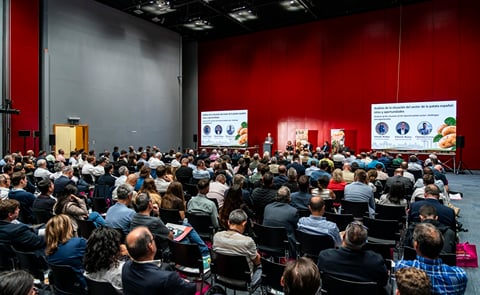
The 1st International Potato Symposium in Madrid brought together 250 professionals to discuss key challenges and opportunities in production, trade, plant health, innovation and sustainability, promoting stronger European cooperation.

October 10, 2026
India and Netherlands Strengthen Cooperation Through Seed Partnership
India and the Netherlands are strengthening cooperation in the seed sector through the India–Netherlands Seed Partnership. A recent mission included ministerial talks and a seed-sector business roundtable focused on future collaboration.

October 10, 2026
EarthFresh Butter Potatoes Reach More Than 4 Million Households as Retail Demand Surges
EarthFresh Butter Potatoes are gaining momentum across North America, reaching over 4 million households. With acreage up 40% and 100% incremental sales, the premium lineup offers retailers new opportunities to grow the potato category.