

Introduction: The Threat of Bacterial Blackleg and Soft Rot in Potatoes
Bacterial blackleg and tuber soft rot are among the most devastating diseases affecting potato (Solanum tuberosum) production worldwide, primarily caused by species within the genus Pectobacterium, a group of pectinolytic enterobacteria in the family Pectobacteriaceae. These opportunistic pathogens produce plant cell wall degrading enzymes such as pectinases, cellulases and proteases leading to tissue maceration and decay.
Key species include Pectobacterium atrosepticum (predominant in temperate climates for blackleg), P. carotovorum subsp. carotovorum (widespread for soft rot), P. brasiliense (emerging in warmer regions) and P. punjabense (newly identified in 2024 causing blackleg in Pakistan). Blackleg affects the growing plant, causing stem discoloration and wilt, while soft rot primarily impacts tubers in storage or post-harvest, turning them into foul-smelling mush.
These diseases thrive in wet, cool conditions (10–25°C for blackleg, warmer for soft rot) with seed tubers as the main source of infection. Economic losses exceed billions annually, with up to 50% yield reductions in severe outbreaks, exacerbated by climate change favoring pathogen spread. Recent genomic studies (2024) have identified virulence factors such as quorum sensing and biofilm formation, paving the way for more targeted disease management strategies.
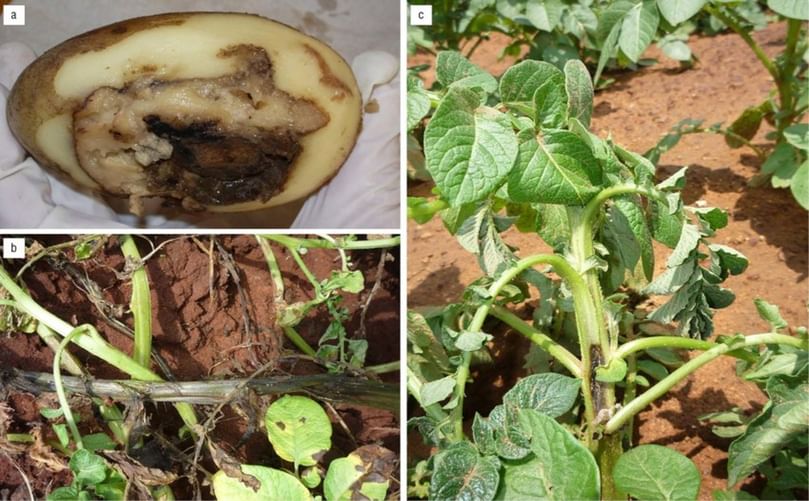
Blackleg Affected Potato Plant in Field
Historical Overview: Tracing the Legacy of Bacterial Blackleg and Soft Rot
The history of bacterial blackleg and soft rot dates back to the 19th century, with early European reports describing “wet rot” in potatoes, then attributed to unknown “ferments” before bacteria were recognized as the cause. In 1885, Erwinia carotovora (now Pectobacterium carotovorum) was first described by Jones as the causal agent of soft rot, while blackleg was linked to E. atroseptica in 1901 by van Hall.
The genus Pectobacterium was formally established in 1998 by Hauben et al., reclassifying Erwinia species based on molecular phylogeny with P. atrosepticum designated as the type species for temperate blackleg. Major 20th century outbreaks, such as those in Scotland during the 1970s, underscored the critical role of infected seed tubers in pathogen spread.
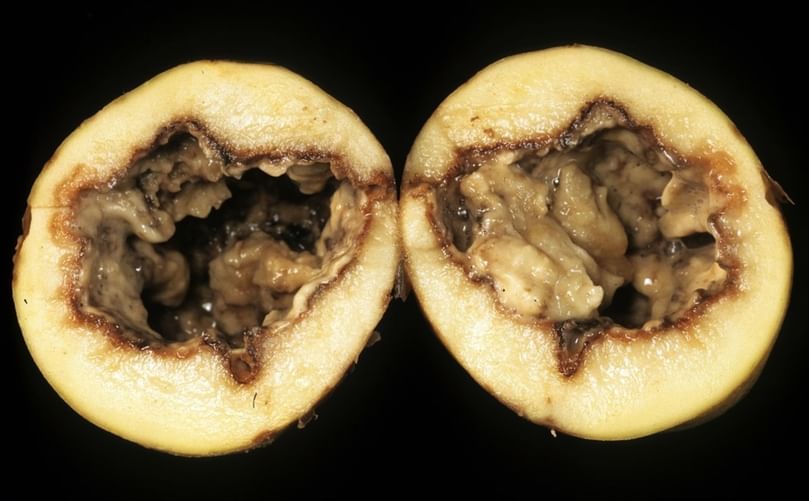
Early 20th century depiction of tuber soft rot symptoms from agricultural bulletins
In the 21st century, P. brasiliense emerged in Brazil (2004) and rapidly expanded to Europe and South Africa, while the discovery of P. punjabense in Pakistan (2024) reflected ongoing pathogen diversification and adaptation. Key research milestones include the identification of quorum sensing in Pectobacterium (2000s) and the development of biosensor-based detection tools (2020). The recent acceleration of outbreaks since 2020 highlights the growing impact of climate change as warmer and wetter conditions increasingly favor P. brasiliense proliferation and persistence.
Global Distribution and Pathogen Spread: A Worldwide Concern
Pectobacterium species have achieved near global distribution, thriving across climatic zones from temperate to tropical regions. P. atrosepticum dominates in cooler climates such as Europe and North America, while P. carotovorum subspecies. carotovorum prevails in warmer regions worldwide. Emerging species like P. brasiliense have spread rapidly through Brazil, South Africa and Europe, signaling expanding ecological adaptability.
The primary mode of spread is through contaminated seed tubers, which serve as latent carriers, enabling the bacteria to cross borders via international trade. Secondary dissemination occurs through irrigation water, insects, farm machinery and handling equipment although soil survival remains relatively short lived.
In Great Britain, non-indigenous species such as P. punjabense have recently established due to rising temperatures, with climate-based risk models predicting further northward expansion. EPPO distribution data indicate high prevalence across Europe, North America and Asia. Notably, P. brasiliense invasions in Finland (2021) exemplify trade driven spread into previously unaffected temperate zones. Climate change continues to act as a silent accelerator, broadening the habitats suitable for Pectobacterium proliferation.
Host Range and Crop Vulnerability: Beyond Potatoes
Pectobacterium species are polyphagous pathogens, capable of infecting more than 50% of known angiosperm families, reflecting their extraordinary adaptability. While potato (Solanum tuberosum) remains the principal host for both blackleg and soft rot, these bacteria also cause severe diseases in carrots, onions, tomatoes, cabbages, broccoli and ornamentals such as calla lilies and gladiolus.
Among the key species, P. carotovorum exhibits the widest host range, infecting over 159 plant taxa spanning major families like Fabaceae, Poaceae and Asteraceae making it a global threat across both food and ornamental crops. In contrast, P. atrosepticum shows a narrower, potato-specific adaptation, thriving predominantly in cooler temperate zones.
Weeds, volunteer crops and alternative hosts act as silent reservoirs, maintaining bacterial populations between cropping cycles and aiding seasonal outbreaks. Recent isolations from aroid plants (e.g., Philodendron, Zantedeschia) further extend the known host spectrum, underscoring the genus’s evolutionary plasticity.
Host preferences are primarily governed by pectinolytic enzyme profiles, biofilm formation and quorum sensing mechanisms that coordinate virulence factor expression, enabling efficient colonization and tissue degradation. The adaptability of Pectobacterium across such diverse hosts continues to complicate disease forecasting and integrated management.
Economic Impact and Yield Losses: A Billion Dollar Burden
Bacterial blackleg and soft rot impose an enormous economic toll on global potato production with annual losses exceeding USD 1 billion and yield reductions reaching up to 50% under severe infection. In Great Britain, the emergence of non-indigenous Pectobacterium strains now threatens nearly GBP 100 million worth of potato output, while recent outbreaks of P. punjabense in Iran (2024) have led to 30–40% yield losses.
Storage losses remain a hidden but major component with 20–30% of harvested tubers succumbing to soft rot during post-harvest handling and storage. Preventive measures such as certified seed use, field sanitation and fumigation raise production costs by 10–15%, straining profitability. In sub-Saharan Africa, where smallholders depend heavily on potatoes for income and nutrition, these diseases contribute to 40–70% yield losses, exacerbating food insecurity.
With climate change driving warmer and wetter growing conditions, highly aggressive species like P. brasiliense are expected to expand their range, potentially increasing global economic losses by 20–30% by 2030.
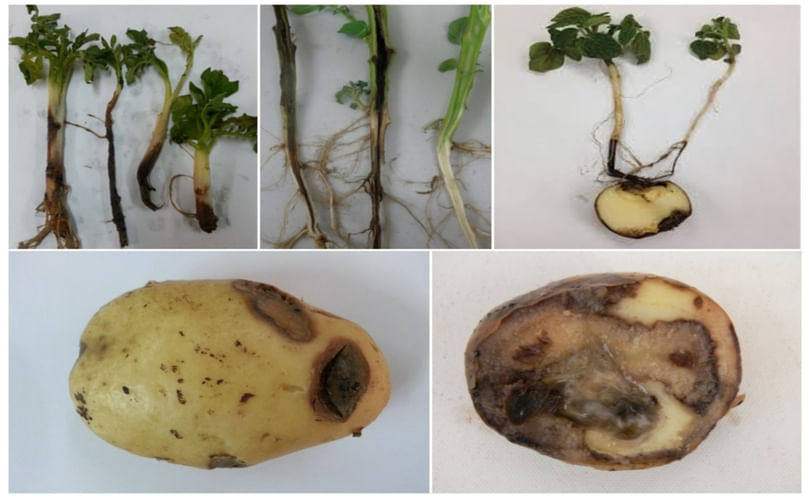
Damage induced by P. atrosepticum on seed tuber and stem of potatoes.(Source: Mahdis et al.,)
Biology and Life Cycle: The Hidden Rot Within
Pectobacterium species are Gram negative, rod shaped (0.5–1 × 1–3 μm), facultative anaerobic bacteria belonging to the family Pectobacteriaceae. They are pectolytic pathogens, capable of degrading plant cell wall components such as pectin, cellulose and hemicellulose, which leads to rapid tissue maceration and soft rot.
The life cycle typically begins with latent infections in seed tubers, which remain symptomless until favorable conditions particularly high soil moisture and moderate temperatures (10–25°C) activate bacterial multiplication. Infection occurs primarily through lenticels, wounds and stolons with bacteria colonizing intercellular spaces and moving systemically through the vascular tissue.
Once inside, Pectobacterium populations communicate via quorum sensing, a cell-to-cell signaling mechanism that regulates virulence gene expression and enzyme secretion, triggering tissue breakdown when a threshold population is reached. Spread occurs through contaminated irrigation water, insects (e.g., flies), tools and machinery, enabling field-to-field transmission.
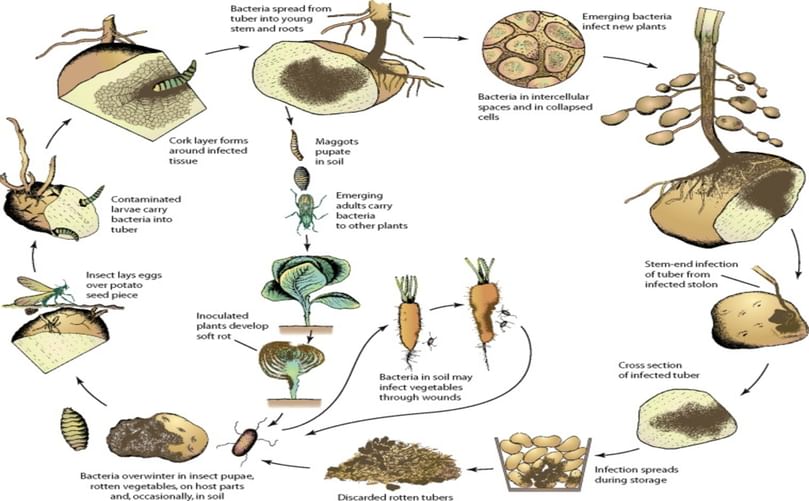
Disease cycle of bacterial soft rot of vegetables caused by soft rotting Erwinia sp.
Environmental persistence varies short lived in dry soils (a few weeks) but longer in cool, moist debris or water. Biofilm formation enhances survival on tuber surfaces and equipment, aiding re-infection cycles. Species differ in temperature preference:
- P. atrosepticum dominates in cool climates (10–20°C), often causing blackleg.
- P. brasiliense thrives in warmer conditions (25–35°C) and is increasingly associated with tropical and subtropical soft rot outbreaks.
The disease cycle completes as infected plants or tubers decay, releasing bacteria back into the environment, where they persist in crop residues or contaminated storage facilities, ready to initiate new infections in subsequent seasons.
Symptoms and Damage of Blackleg and Soft Rot in Potatoes
Blackleg: The disease typically begins at the base of the stem, where dark, water-soaked lesions develop and progress upward, turning black and slimy. Affected stems often collapse and foliage above the infected area becomes yellow, wilted or chlorotic. In advanced stages, the entire plant may topple or die prematurely. On tubers, blackleg infection results in vascular discoloration extending inward from the stolon end, often accompanied by a moist, dark brown to black decay.
Soft rot: This form primarily affects harvested or stored tubers, beginning as small, water-soaked spots around wounds, lenticels or eyes. The infected tissue becomes cream to light brown, rapidly breaking down into a soft, foul-smelling mass that collapses under slight pressure. As decay advances, the skin may wrinkle or detach and bacterial ooze may appear on the surface.
Both diseases are favored by cool, wet and poorly ventilated conditions. Waterlogged or anaerobic soils accelerate decay and secondary invaders such as Dickeya, Fusarium or other opportunistic bacteria can exacerbate rot severity. While symptoms of Pectobacterium induced blackleg resemble those caused by Dickeya spp., Pectobacterium tends to dominate in cooler regions, whereas Dickeya thrives under warmer conditions.
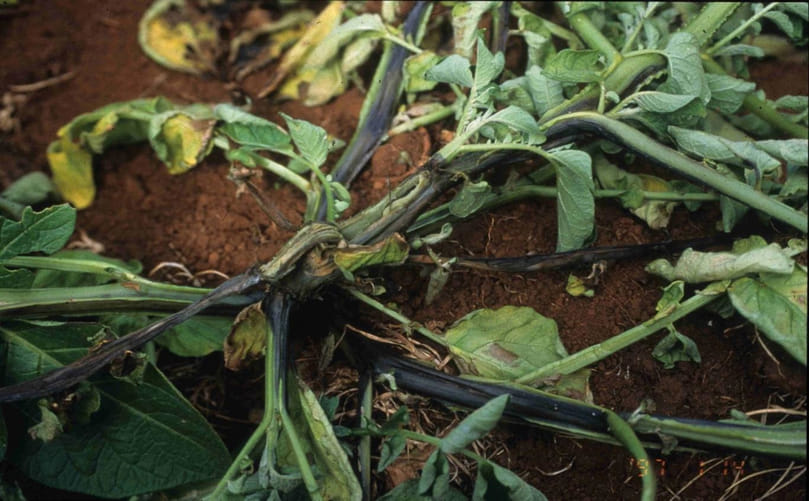
Potato Blackleg and Tuber Soft Rot: Disease Symptoms
Management Strategies: Integrated Approaches to Combat Blackleg and Soft Rot
Effective management of Pectobacterium induced blackleg and soft rot requires an Integrated Pest Management (IPM) approach that integrates cultural, biological, chemical and technological interventions for sustainable disease control.
Certified Seed and Resistant Varieties: Using certified, disease-free seed tubers remain the most reliable preventive measure, reducing disease incidence by 60–80%. Breeding programs incorporating wild Solanum species such as S. tuberosum subsp. andigena have demonstrated 20–30% lower susceptibility. Cultivars like ‘Russet Burbank’ exhibit partial resistance to P. atrosepticum, though no cultivar is fully resistant to P. brasiliense. Recent advances in CRISPR-based gene editing (2023) targeting susceptibility genes have achieved a 15–20% reduction in infection rates under experimental conditions.
Cultural Practices: Crop rotation with non-host crops (3–4 years), avoidance of waterlogged fields and good drainage can cut infection levels by 50–70%. Early planting in cooler climates helps evade peak P. atrosepticum activity (15–20°C), lowering disease by 20–30%. Harvesting during dry conditions, combined with wound curing at 15°C for two weeks, can reduce soft rot incidence by 50–60%. Equipment sanitation and tuber handling hygiene are also crucial to prevent pathogen spread.
Biological Controls: Bacteriophages, particularly BALOs (Bdellovibrio and like organisms) can reduce Pectobacterium populations by 70–90% in laboratory trials with 50–60% field efficacy reported in European studies. Beneficial microbes such as Pseudomonas fluorescens and Bacillus subtilis suppress pathogen growth by 40–50% through siderophore production and enzyme inhibition. Biological seed treatments using Rhizobium spp. have reduced blackleg incidence by 20–30% in multi-location trials.
Chemical Controls: Chemical control is supplementary and primarily preventive. Copper-based sprays (e.g., copper oxychloride) can lower blackleg occurrence by 30–40%, though resistance and phytotoxicity limit long term use. Hydrogen peroxide and peracetic acid are effective disinfectants, reducing tuber surface contamination by 50–60% in storage. Mancozeb applications prior to harvest have been shown to reduce secondary spread by 20–25%.
Technological Innovations: Modern diagnostics and remote sensing tools greatly enhance management efficiency. Biosensors detecting quorum sensing molecules (acyl-homoserine lactones) can identify early infections at concentrations as low as 10² CFU/g, reducing post-harvest losses by up to 50%. qPCR assays for P. atrosepticum and P. brasiliense enable seed lot screening with 95% accuracy. Hyperspectral drone imaging detects early blackleg symptoms such as chlorosis and wilting across 50–100 ha per day, improving the timing of interventions.
Integrated Approaches with Pest Management: Combining bacterial disease management with insect pest control (e.g., for potato armyworm) enhances protection, as pest inflicted wounds increase susceptibility to soft rot by 15–20%. Integrated “push-pull” pest management systems and pheromone traps indirectly reduce bacterial entry points, strengthening overall plant health.
Prevention & Good Practices: Smart Strategies for Disease Free Potato Production
Effective prevention of Pectobacterium caused blackleg and soft rot hinges on proactive cultural, sanitary and technological measures that minimize infection risk throughout the production cycle.
Use of Certified Disease-Free Seed: Planting certified, pathogen free seed tubers remain the cornerstone of prevention, reducing blackleg incidence by 60–80%. Certification programs (e.g., EU Seed Potato Certification Scheme) employ PCR-based detection to ensure contamination below 10³ CFU/g tuber. In low certification regions such as parts of Africa and South Asia where only 10–20% of seed is certified farmer saved tubers can elevate infection risk by 30–40%. Regular seed lot testing using portable biosensors (detection limit: 10² CFU/g) enhances reliability and enables decentralized disease surveillance.
Crop Rotation and Soil Management: Rotating potatoes with non-host crops such as cereals and legumes for 3–4 years disrupts bacterial survival cycles, cutting soil-borne Pectobacterium by 50–70%. As the pathogen survives only weeks without a host, long rotations are highly effective. Avoiding waterlogged soils and improving drainage through raised beds or ridging reduces infection risk by 20–30%. In tropical and subtropical zones, soil solarization using transparent polyethylene films for 4–6 weeks can suppress bacterial populations by 40–50%.
Sanitation and Equipment Hygiene: Strict hygiene is vital for preventing cross contamination between seed lots, fields and storage facilities. Disinfecting cutting tools, graders and transport crates with quaternary ammonium compounds or peracetic acid can reduce bacterial transfer by 30–40%. Removing infected plant debris and volunteer potatoes eliminates key pathogen reservoirs, lowering infection potential by 15–25%. Isolating suspect lots and implementing “clean-to-dirty” field movement protocols further restrict spread.
Harvest and Storage Practices: Harvesting during dry conditions (soil moisture below 20%) and minimizing tuber bruising are critical as wounded tissue provides ideal infection sites. Such practices can reduce soft rot by 50–60%. Post-harvest curing at 15°C and 90% relative humidity for 10–14 days allows periderm healing, sealing wounds that otherwise admit bacteria. Long-term storage at 4–10°C with 85–90% RH and adequate air circulation suppresses bacterial activity by 70–80%. Controlled atmosphere storage (e.g., 3% O₂, 5% CO₂) further inhibits pathogen proliferation by 20–30%.
Monitoring and Early Detection: Routine field scouting and tuber inspections help detect early blackleg symptoms such as basal stem blackening or slimy decay. Advanced diagnostic tools like qPCR and biosensors detecting P. atrosepticum at levels as low as 10² CFU/g enable timely intervention, reducing disease spread by 40–50%. Farmer training and community level disease awareness programs are crucial, especially in regions with low literacy and limited diagnostic access.
Integrated Pest Management Synergies: Incorporating pest management enhances bacterial disease control as insect feeding wounds act as pathogen entry points. Managing pests such as Spodoptera frugiperda (fall armyworm) through biological controls and pheromone traps can reduce soft rot incidence by 15–20%. Push pull systems, such as intercropping potatoes with Desmodium or marigold, not only deter pests but also improve soil microbial balance, indirectly reducing Pectobacterium colonization.
Future Threats : The Next Generation of Pectobacterium Challenges
The future threats of Pectobacterium caused blackleg and soft rot are intensifying under the combined influence of climate change, pathogen evolution and globalization. Without proactive adaptation, potato yield losses could rise sharply by 2030 and beyond.
Climate Change and Expanding Geographic Range: Global temperature increases (0.03–0.04°C per year) and shifting rainfall patterns are expected to accelerate blackleg and soft rot outbreaks by 20–30% in temperate zones such as Europe and North America by 2030 (RCP 4.5 scenario). Warmer, wetter conditions (25–35°C) favor virulent species like P. brasiliense and P. carotovorum subsp. carotovorum, which are displacing P. atrosepticum in cooler regions. In the UK and northern Europe, probabilistic models forecast a 15–25% rise in non-indigenous strain establishment (e.g., P. punjabense). Increased precipitation (10–15% higher during wet seasons) enhances bacterial dispersal via irrigation water and flooding, potentially affecting 30–40% more potato growing areas in South Asia and East Africa.
Emerging and Evolving Pathogens: The appearance of novel species such as P. punjabense (first detected in Pakistan, 2024) and the global spread of P. brasiliense underscore the pathogen rapid evolution. Comparative virulence studies reveal these emerging strains to be 5–10% more aggressive than P. atrosepticum. Genomic analyses (2024) indicate enhanced quorum sensing networks, increased secretion of pectolytic enzymes and improved biofilm formation traits that collectively boost infection efficiency by 15–20%. Moreover, horizontal gene transfer between Pectobacterium and Dickeya species may give rise to hybrid lineages with combined virulence factors, heightening global disease pressure by an estimated 10–15% by 2035.
Global Trade and Transboundary Spread: Rising global seed trade accelerates the long-distance movement of Pectobacterium. Studies estimate that up to 20–30% of internationally traded seed lots may carry latent infections. The introduction of P. brasiliense into Finland (2021) highlights how easily new strains cross borders. By 2030, there is a projected 10–15% probability of new introductions into Europe, Oceania and high-altitude Asian regions. Additionally, contaminated irrigation systems, packing materials and transport machinery continue to act as unnoticed vectors in expanding potato production zones across India, China and sub-Saharan Africa.
Reduced Control Efficacy: Traditional control measures are losing effectiveness. Copper-based bactericides face rising resistance with efficacy projected to decline by 20–25% by 2030. Simultaneously, environmental regulations such as EU chemical restrictions limit chemical intervention options. Climate-driven variability in temperature and humidity reduces the stability and infectivity of biological controls like bacteriophages by 15–20%. Furthermore, elevated CO₂ concentrations (550–700 ppm projected by 2050) may enhance bacterial enzyme synthesis, accelerating tissue maceration and lesion expansion by 10–15%.
Synergistic Effects with Pests and Environmental Stress: Interactions between Pectobacterium and insect pests pose compounded risks. Feeding wounds caused by Spodoptera frugiperda (fall armyworm) increase soft rot incidence by 20–30%, particularly in African and Asian fields. Concurrently, abiotic stresses drought, heat and nutrient imbalance compromise potato defense mechanisms, amplifying pest pathogen synergism by 15–25%. Such complex interactions are expected to become more frequent under future climate extremes.
Socioeconomic Vulnerabilities: Smallholder farmers responsible for nearly 80% of potato production in Africa and Asia remain highly exposed due to limited access to disease-free seed, diagnostic tools and resistant cultivars. Without targeted intervention, these regions could experience 25–40% higher yield losses by 2030. Weak seed certification systems, inadequate cold storage, and insufficient awareness further exacerbate the spread of Pectobacterium in emerging hotspots such as Pakistan and East Africa.
Management Challenges : The Complex Barriers to Controlling Pectobacterium Diseases
Managing Pectobacterium induced blackleg and soft rot remains a formidable challenge due to the pathogen latent nature, adaptive biology and socioeconomic limitations, particularly in potato-based production systems. Below are the major obstacles hindering effective management.
Latent Infections and Diagnostic Limitations: Pectobacterium species P. atrosepticum, P. carotovorum subsp. carotovorum, P. brasiliense and P. punjabense commonly persist in seed tubers without visible symptoms until favorable conditions, such as high moisture and warm temperatures, trigger disease expression. Studies indicate that 30–50% of certified seed lots globally may harbor latent infections, making detection extremely difficult. Conventional visual inspections often fail to identify early infections, while PCR-based assays, though sensitive (detecting as low as 10²–10³ CFU/g) are too costly and technically demanding for smallholders in sub-Saharan Africa and South Asia. Recent biosensor tools (e.g., quorum-sensing-based sensors) introduced after 2020 improve precision but still require laboratory infrastructure and trained personnel.
Antibiotic and Chemical Resistance: Resistance to copper-based bactericides and antibiotics such as streptomycin is an escalating issue, with 40–60% of field isolates in Europe and South Africa showing reduced susceptibility. Biofilm formation, governed by quorum sensing, provides additional protection, decreasing treatment efficacy by 20–30%. Moreover, environmental legislation such as the EU Regulation EC 1107/2009 restricting copper usage has reduced reliance on chemical controls, compelling a shift toward less potent alternatives like hydrogen peroxide or peracetic acid.
Co-Infection and Pest Interactions: Pectobacterium frequently coexists with Dickeya species, leading to complex mixed infections responsible for 15–25% of blackleg cases in North America. These co-infections mimic symptoms and complicate accurate diagnosis, necessitating broad-spectrum management that increases costs by 10–15%. Additionally, insect pests such as the potato armyworm (Spodoptera frugiperda) exacerbate disease spread by creating wounds that facilitate bacterial invasion. Studies demonstrate that pest-damaged fields experience 20–30% higher soft rot incidence, particularly under humid field conditions.
Climate Variability and IPM Disruption: Changing climate patterns especially wetter and warmer seasons (15–30°C) favor aggressive species like P. brasiliense and P. carotovorum, undermining traditional Integrated Pest Management (IPM) strategies such as dry harvesting and crop rotation. Predictive models suggest a 15–20% rise in blackleg outbreaks across temperate regions by 2030 due to extended wet seasons. Moreover, fluctuating rainfall reduces the stability of biological control agents like bacteriophages, whose field efficacy can drop from 70–90% under controlled humidity to nearly 50% under inconsistent weather.
Socioeconomic Constraints in Smallholder Systems: Smallholder farmers, who account for roughly 80% of potato cultivation in developing regions, face disproportionate challenges. Access to certified seed, pathogen diagnostics and disease management training remains minimal, with only 10–20% of African farmers using clean planting material. The high cost of integrated management tools ranging from USD 50–100 per hectare for biosensors or bacteriophage treatments limits adoption. In regions such as Pakistan, where P. punjabense recently emerged (2024), weak infrastructure and limited awareness lead to overdependence on ineffective chemical pesticides, worsening both economic and environmental outcomes.
Seed Certification Gaps and Inconsistent Standards: Variation in seed certification systems globally has left many regions vulnerable. While Europe enforces stringent pathogen testing, sub-Saharan Africa and parts of Asia lack robust protocols, resulting in up to 20–30% of seed lots carrying Pectobacterium contamination. Even in regions with strict regulation, non-indigenous species like P. brasiliense can evade current detection frameworks, highlighting the urgent need for standardized, molecular level seed health testing.