

Introduction: Understanding the Cutworm Threat
Cutworms are the larval stage of various moth species primarily in the family Noctuidae (Lepidoptera), known for their destructive feeding on young plants by "cutting" stems at or near the soil surface. These plump, smooth caterpillars, often gray, brown, black or green, curl into a "C" shape when disturbed and are nocturnal feeders that hide in soil during the day. Major pest species include the black cutworm (Agrotis ipsilon), granulate cutworm (Feltia subterranea), variegated cutworm (Peridroma saucia), western bean cutworm (Striacosta albicosta) and army cutworm (Euxoa auxiliaris).

An adult black cutworm moth
They affect a wide range of crops causing stand reductions and yield losses up to 50-80% in severe outbreaks, particularly in seedlings of corn, soybeans, vegetables and grains. Cosmopolitan in distribution, cutworms are adapted to temperate and subtropical climates with some species migrating annually. Recent research highlights increasing threats from climate change, resistance to insecticides and shifts in agricultural practices like conservation tillage.
Historical Background: From Ancient Fields to Modern Farms
Potato cutworms have been recognized as agricultural pests since ancient times. Roman agricultural texts by Columella describe soil dwelling larvae that severed young plants likely early observations of cutworm damage. The black cutworm (Agrotis ipsilon) was formally described by Johan Christian Fabricius in 1766 from New World specimens, but its impact on potato crops intensified during the 19th century, following the global spread of potatoes after their domestication in the Andes and introduction to Europe in the 16th century.
In the United States, early 20th century USDA bulletins reported significant tuber and stem damage in expanding potato fields, linking outbreaks to migratory patterns of cutworms. After World War II, synthetic insecticides such as DDT provided temporary control, however, resistance began emerging by the 1970s prompting the development of integrated pest management (IPM) strategies in potato systems.
S.E. Crumb’s 1956 monograph advanced larval identification techniques for potato pests, while recent genomic studies such as the 2023 A. ipsilon genome assembly have revealed evolutionary adaptations to potato volatiles and resistance related genes. In developing regions, historical outbreaks in India and Africa since the early 20th century continue to highlight the persistent challenge of cutworm infestations in subsistence potato farming.
Global Spread: A Worldwide Potato Pest
Potato cutworms are cosmopolitan pests with Agrotis ipsilon reported across more than 100 countries in temperate and subtropical regions including the Americas, Europe, Asia, Africa, Australia and Oceania. Originally native to Eurasia, the species spread globally through trade, reaching North America in the 19th century. It now overwinters in southern latitudes such as Mexico and Texas, migrating northward up to 500 km on prevailing winds to infest potato fields.
Other species also contribute regionally: Peridroma saucia is widespread in the Americas, Europe and Australia, Xestia c-nigrum dominates in the Pacific Northwest and Mamestra configurata occurs mainly in the North American prairies. The spread of these species is facilitated by adult flight, infested soil adhering to agricultural equipment and the global trade of seed tubers. Human mediated activities have notably expanded their ranges for instance, A. ipsilon was recorded in Hawaii for the first time in the 1990s.
Climate models predict further northward expansion of A. ipsilon by 200–500 km by 2050 with an estimated 20–30% increase in suitable habitat under RCP 4.5 scenarios, particularly across Asia and Europe. Localized outbreaks are often associated with fields rich in organic matter and weeds and their broad distribution continues to mirror major potato growing regions worldwide.
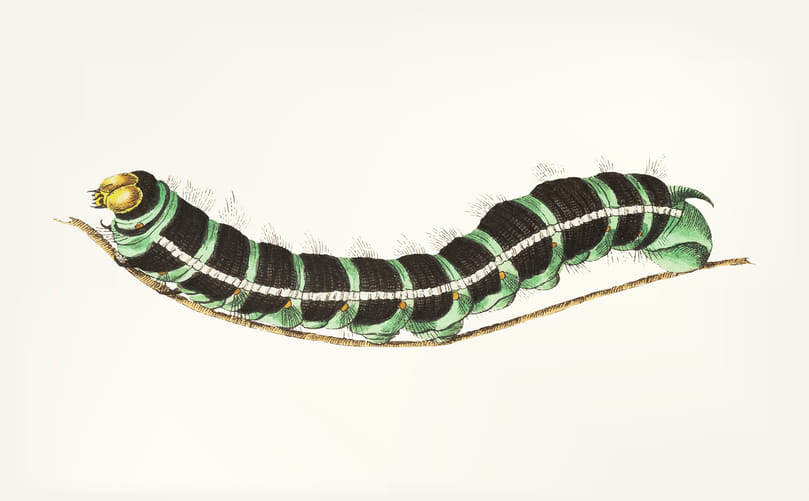
Potato Cutworms: A Cosmopolitan Agricultural Pest
Host Range: More Than Just Potatoes
Potato cutworms are highly polyphagous attacking over 100 plant species across more than 40 families but they primarily target potatoes (Solanum tuberosum), where larvae complete development by feeding on stems, leaves and tubers. Common hosts include members of the Solanaceae (tomato, pepper, eggplant), Brassicaceae (cabbage, broccoli), Fabaceae (beans, alfalfa) and Poaceae (corn, wheat). Several weed species such as chickweed (Stellaria media), curly dock (Rumex crispus) and lamb’s quarters (Chenopodium album) serve as important reservoir hosts, sustaining populations between cropping seasons.
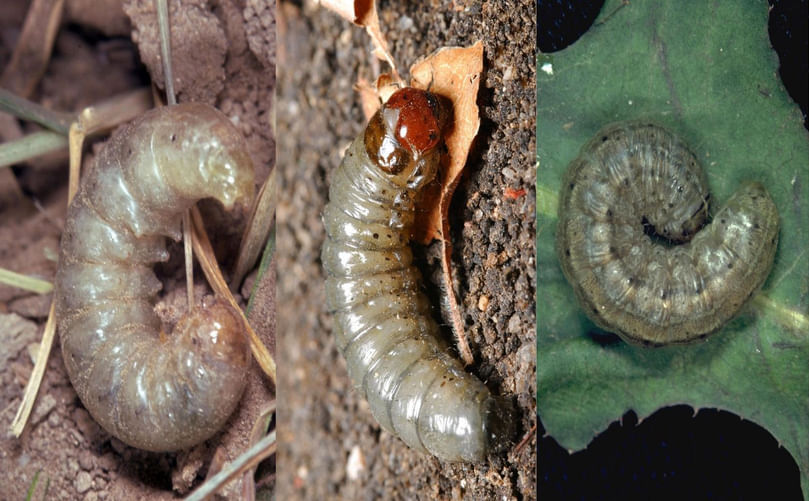
Cutworm larvae on various host plants including potato and weeds.
Agrotis ipsilon exhibits an exceptionally broad host range, feeding on nearly all major vegetable crops as well as alfalfa, clover, cotton, rice, sorghum, strawberry and tobacco. It also shows moderate cross virulence toward other lepidopterans such as Heliothis virescens and Helicoverpa zea. The granulate cutworm (Feltia subterranea) infests up to 159 plant taxa, including 22 species in Fabaceae, 19 in Poaceae and 16 in Asteraceae, highlighting its potential to damage cover crops and pasture species. The tobacco cutworm (Spodoptera litura) feeds on over 120 host plants, exhibiting higher reproductive success on potato and rice than on corn.
Host preference often varies with larval stage: younger instars graze on foliage, while later instars bore into tubers and underground stems. Chemoreceptive mechanisms enable larvae to detect host specific volatiles for plant selection. No complete developmental cycles have been observed on non-angiosperms, but weed rich environments significantly amplify population buildup and subsequent spread to potato fields.
Economic Impact: Counting the Cost of Cutworms
Potato cutworms cause substantial economic losses by damaging seedlings and reducing tuber quality. Yield losses range from 10–30% under mild infestations to up to 80% in untreated seedling fields. In India, Agrotis ipsilon alone accounts for 20–37% yield loss with established economic threshold levels (ETLs) of 2.88 larvae per 10 m² for table potato crops and 1.20 larvae per 10 m² for seed crops.

Potato tuber cut by cutworm larva.
Globally, cutworm damage to vegetables and potatoes is estimated to exceed USd 100 million annually with control costs averaging USD 20–50 per hectare. Secondary infections caused by pathogens such as Erwinia and Fusarium further increase tuber unmarketability by 20–40%. In Europe, Agrotis segetum causes comparable shoot and tuber damage, while in South Africa infestations affect thousands of hectares with average losses of 40–70% reported in smallholder systems. Predictive regression models demonstrate a clear inverse relationship between cutworm population density and potato yield with ETL-based management interventions capable of preventing 20–45% yield reductions. Climate change scenarios suggest that warmer conditions could double cutworm impact by 2030 through increased generational turnover and expanded distribution.
Although chemical control remains a major management strategy, the cost of insecticide applications, coupled with rising resistance and environmental concerns, continues to elevate the overall economic burden of cutworm infestations in potato production.
Life Cycle: From Egg to Moth
Potato cutworms undergo complete metamorphosis with a life cycle typically lasting 35–60 days under optimal conditions (20–30°C) and 1–4 generations per year depending on species and climate.
Adults are gray-brown moths with mottled wings, wingspan 30–50 mm. They emerge in spring, mate within 5–11 days and females lay 50–200 eggs per cluster, totaling 1,000–2,000 eggs per female. Eggs are laid on foliage, soil or weeds near potato plants with a preference for moist environments. Eggs are white, ribbed, approximately 0.5 mm in size and hatch in 3–10 days, extending up to 14 days under cold conditions.
Larvae progress through 1–8 instars. Young larvae (instars 1–3) feed on leaves creating small holes, while older larvae (instars 4–8, up to 5 cm) become subterranean, sever stems and bore into tubers. The larval stage lasts 20–40 days; for example, Agrotis malefida completes larval development in 43.78 days under laboratory conditions, exhibiting a net reproductive rate (R₀) of 800 and an intrinsic growth rate (rₘ) of 0.153.
Pupation occurs in soil chambers for 12–20 days with reddish brown pupae measuring 15–20 mm. Adults live 7–21 days, feed on nectar and migratory species like A. ipsilon can travel long distances. Overwintering occurs as larvae or pupae in mild climates with diapause induced by short days in some species (A. malefida). Cannibalism among larvae regulates population density under crowded conditions.
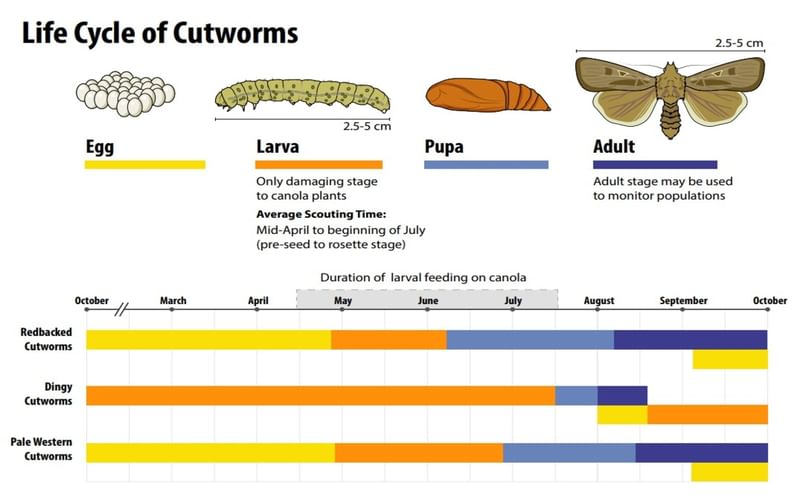
Life cycle of Cutworm
In India, A. ipsilon produces three generations per year with laboratory studies showing egg-laying from 0–1,421 eggs per female and a complete life cycle of 53–113 days on potato. Temperature significantly influences development: 25°C accelerates growth, whereas cold delays hatching; wet soils increase surface activity and larval dispersal.
Integrated Management Strategies: Smart, Sustainable Control
Effective management of potato cutworms relies on Integrated Pest Management (IPM), combining monitoring, cultural practices, biological controls and judicious chemical use to minimize economic losses while reducing environmental impact.
Monitoring & Scouting:
- Use pheromone traps to track adult moth activity.
- Employ degree day (GDD) models (e.g., 300–450 GDD, base 50°F for A. ipsilon) to predict larval emergence.
- Conduct weekly field checks, digging around damaged plants to count larvae. Thresholds: 2–5% cut plants or 1–2 larvae per 10 plants.
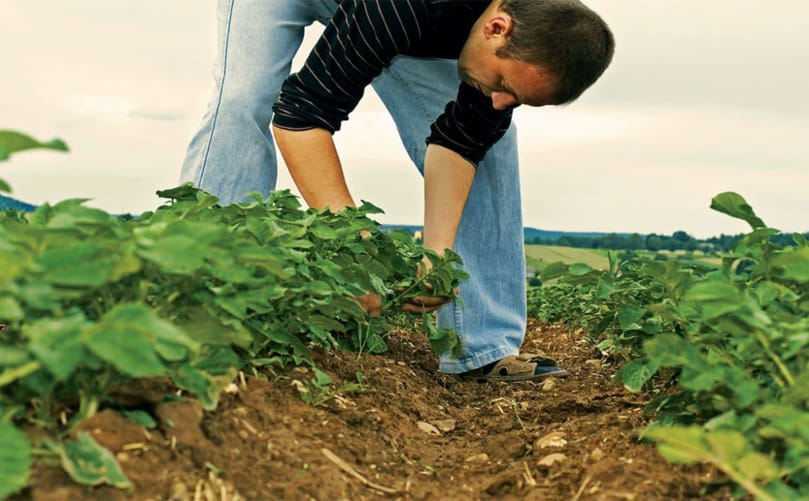
Field Scouting Techniques for Early Cutworm Detection
Cultural Controls:
- Deep plowing exposes overwintering pupae with 50–90% mortality from frost and predators.
- Crop rotation with non-hosts (e.g., cereals) interrupts life cycles.
- Delayed planting in warmer soils reduces seedling vulnerability.
Biological Controls:
- Entomopathogenic nematodes (Steinernema carpocapsae, 1–2 billion/ha) achieve 50–80% larval mortality.
- Fungi such as Beauveria bassiana provide 40–70% control when applied to soil.
- Natural predators include ground beetles, birds and parasitic wasps (e.g., Trichogramma for eggs).
- Bacillus thuringiensis var. kurstaki (Btk) sprays effectively target young larvae (70–90% mortality) while sparing beneficial organisms.
Chemical Controls:
- Seed treatments: Pyrethroids (e.g., lambda-cyhalothrin) or diamides (chlorantraniliprole) provide preventive protection.
- Foliar sprays: Spinosad or indoxacarb applied at early larval stages.
- Resistance management: Rotate modes of action (MOAs) IRAC groups 3A, 28, 5 to prevent resistance development.
- Efficacy ratings (PNW guidelines): AgriMek (abamectin) is highly effective against cutworms and Colorado potato beetle; Radiant (spinetoram) controls multiple lepidopteran pests including armyworms and loopers.
Integrated Field Applications:
- In Bangladesh, combining cultural (weed control), biological (nematodes) and chemical interventions reduced A. ipsilon populations by 60–80%.
- IPM schedules emphasize pre-plant weed removal, mid-season scouting and limiting insecticide applications to 1–2 per season, optimizing efficacy while minimizing environmental impact.
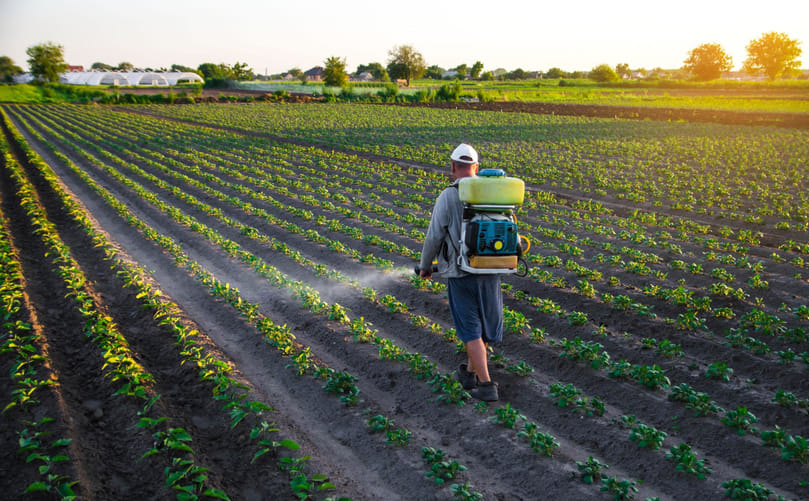
Integrated Chemical Control Strategies for Potato Cutworms
Prevention and Good Practices
Preventing potato cutworm infestations focuses on disrupting their life cycle and reducing habitat suitability through proactive cultural and monitoring strategies. Eliminating weeds and cover crops four to six weeks before planting helps starve early season larvae and removes preferred egg-laying sites as cutworms are especially attracted to weedy fields containing species such as chickweed and dock. Fall or early spring plowing exposes overwintering pupae to frost, predators and desiccation achieving mortality rates of 50–90%. Physical barriers including toilet paper rolls, paper cups or milk cartons with the bottoms removed can be placed around seedling stems to prevent larval access, while row covers effectively exclude adult moths in small plots.
to learn more about prevention method here
Monitoring remains crucial, using bucket or pheromone traps for adults and weekly field scouting by digging around wilted plants one to two inches deep to detect curled larvae. Degree day tracking further enables timely interventions. In organic systems, larvae can be handpicked at night or controlled through natural predation, such as allowing chickens to forage in infested areas. Proper irrigation supports rapid plant growth, reducing vulnerability, while avoiding late planting in high-risk fields and quarantining infested tubers or soil helps prevent pest spread. Integrating crop rotation with non-host crops, such as cereals for two or more years, disrupts cutworm life cycles. Food bait traps, such as bran and molasses mixtures, can attract and kill larvae effectively in garden settings. When combined, these preventive and good agricultural practices can reduce cutworm infestations by 60–80%, minimizing the need for chemical controls and promoting sustainable potato production.
Future Threats: Climate Change and Emerging Risks
Future threats to potato production from cutworms are expected to intensify under climate change, which alters pest distributions, life cycles and interactions with host plants and natural enemies. Rising temperatures of 0.03–0.04°C per year combined with erratic precipitation could extend cutworm ranges northward by 200–500 km by 2050 under RCP 4.5 scenarios, increasing suitable habitats by 20–30% in regions such as Europe and Asia and exposing previously unaffected potato growing areas to infestations. Warmer soils may prolong larval activity, potentially adding one to two additional generations per year and increasing outbreak risks by approximately 20%, similar to trends observed in related soil pests like wireworms.
Altered precipitation patterns including both droughts and floods can desynchronize cutworm development with potato phenology and reduce the effectiveness of natural enemies, such as parasitoids like Trichogramma, heightening vulnerability in water stressed fields. Elevated CO₂ levels may cause slight to moderate reductions in some pest populations but they can enhance the fitness of species such as A. ipsilon in subtropical areas. Emerging hotspots include southern Europe and Asia, where drought and heat stress render potato plants more susceptible to damage with projections indicating pest induced yield reductions of 10–20% by 2030.
Insecticide resistance presents an additional challenge exacerbated by overuse and accelerated pest metabolism under warmer conditions; genomic studies reveal enhanced detoxification capabilities in A. ipsilon. Conservation tillage, promoted for sustainability may inadvertently favor cutworm buildup by preserving overwintering sites. To mitigate these threats, adaptive breeding for heat and stress tolerant potato varieties, including the use of wild relatives will be crucial in sustaining production under changing climatic conditions.
Management Challenges: Gaps and Ground Realities
Managing potato cutworms is complicated by their biology, environmental factors and evolving agricultural practices. Their subterranean and nocturnal habits make detection difficult with significant damage often only apparent after substantial stand loss, necessitating intensive scouting that can require 69–177 soil samples per field for accurate population estimates.
Foliar applied insecticides are often of limited efficacy against soil dwelling larvae and repeated use can foster resistance was seen with carbamates and organophosphates, while also harming beneficial insects such as ground beetles. Misidentification of species for example, confusing variegated cutworms with black cutworms can delay timely and targeted interventions and sporadic outbreaks influenced by weather make prediction challenging.
Cultural practices such as weed control though effective are labor intensive and difficult for smallholders to implement with adoption rates below 50% due to constraints of poverty, low education and language barriers. Biological controls including entomopathogenic nematodes, perform inconsistently in the cold or wet soils common to potato growing regions and the complexity of integrated pest management often leads to misinformation and suboptimal implementation. Conservation tillage, while beneficial for soil health can inadvertently enhance cutworm survival by preserving overwintering residues and regulatory restrictions on broad spectrum pesticides further limit management options.
In regions like Bangladesh, integrating cultural, biological and chemical strategies remains challenging due to limited resources, variable efficacy and practical barriers to adoption, highlighting the need for context specific, sustainable solutions.
"Sustainable pest management is not about eliminating nature’s challenges but understanding them to grow smarter with every season."