

Colorado Potato Beetle (Leptinotarsa decemlineata): A Major Global Pest of Potato Crops
The Colorado potato beetle (Leptinotarsa decemlineata) is one of the most destructive and economically important insect pests of potato (Solanum tuberosum) worldwide. It is a highly specialized defoliator that affects potato production across major growing regions and is widely recognized as a key threat in integrated pest management systems.
Both larvae and adults actively feed on potato foliage causing rapid defoliation under favorable conditions. A single larva can consume approximately 40 cm² of leaf tissue during its development, while an adult beetle may feed on about 9–10 cm² of foliage per day. This intense feeding activity leads to rapid canopy loss, especially when population densities are high.
Severe infestations can result in complete defoliation of potato plants, reducing photosynthetic capacity, disrupting tuber bulking and significantly lowering yield and quality. Yield losses typically range from 20–100% in unmanaged fields with severe outbreaks causing 40–80% or more reduction in productivity. Although potato plants can tolerate limited defoliation (approximately 30% before flowering and around 10% after flowering), damage during early and mid-growth stages has the most significant impact on final yield.
The economic importance of the Colorado potato beetle extends beyond direct feeding injury. Its strong adaptability and resistance development make it a persistent pest in potato agroecosystems. The species has developed resistance to more than 50 insecticidal active ingredients across multiple chemical classes making chemical control increasingly complex. In addition, females have high reproductive capacity, laying approximately 300–800 eggs during their lifetime, which enables rapid population buildup under suitable conditions. Strong dispersal ability further enhances its spread and reinfestation potential across fields.
Originally native to North America, the Colorado potato beetle is now a near cosmopolitan pest in temperate potato growing regions of the Northern Hemisphere. Its global spread combined with resistance evolution and management complexity continues to increase production costs, insecticide dependence and long-term sustainability challenges in potato cultivation. This pest remains a classic example of an ongoing evolutionary arms race between agricultural systems and insect adaptation.
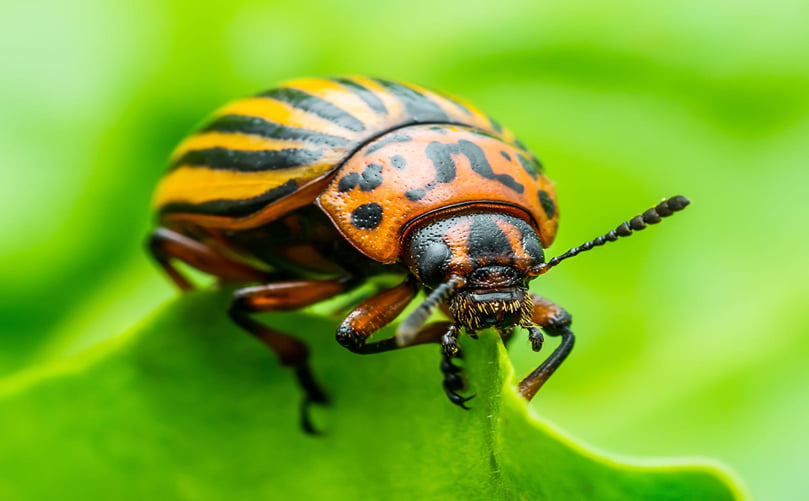
Colorado Potato Beetle: A Major Threat to Potato Production
History and Global Spread of the Colorado Potato Beetle
The Colorado potato beetle (Leptinotarsa decemlineata) is native to North America and is believed to have originated in the region between the Rocky Mountains and northern Mexico, particularly across the American Plains including areas of Colorado, Nebraska and Kansas. It was first scientifically described in 1824 by Thomas Say based on specimens collected from wild host plants such as buffalo bur (Solanum rostratum).
Initially, the beetle fed exclusively on wild members of the Solanaceae family. However, its shift to cultivated potato occurred around 1859 near Omaha, Nebraska, coinciding with the expansion of potato cultivation in North America. This host transition marked a turning point in its history, triggering a rapid eastward spread across the United States at an estimated rate of approximately 85–140 km per year. By 1874, the pest had reached the Atlantic Coast becoming a major threat to potato production.
The beetle spread to Europe in the early 20th century with the first established populations recorded near Bordeaux, France around 1922, likely introduced through international trade or military shipments from North America. Despite extensive quarantine and eradication efforts, it rapidly expanded across much of Europe. Over time, the pest also spread to parts of Asia including western China, where it was first reported in 1993 before expanding into northeastern potato growing regions. It has also reached parts of Central America and several other temperate potato producing regions worldwide.
The global spread of the Colorado potato beetle has been driven primarily by international trade in potatoes and seed material, agricultural expansion and the insect’s exceptional mobility, reproductive capacity and adaptability to diverse climatic conditions. Today, it is considered a near cosmopolitan pest throughout temperate potato growing regions of the Northern Hemisphere, occupying an extensive distribution range across North America, Europe and Asia, covering more than 16 million km² in Europe and Asia alone.
However, the beetle has not yet established permanent populations in countries such as the United Kingdom, where occasional incursions have been successfully eradicated nor in countries like Australia and New Zealand. Most tropical regions also remain largely free from establishment due to unsuitable climatic conditions although climate warming is increasing the risk of future expansion into previously unaffected areas.
Taxonomic Classification of the Colorado Potato Beetle
Taxonomy: The Colorado potato beetle scientifically known as Leptinotarsa decemlineata, belongs to the leaf beetle family and is one of the most destructive pests of potato crops worldwide. Its taxonomic classification is as follows:
The Colorado potato beetle scientifically known as Leptinotarsa decemlineata (Say, 1824) belongs to the Kingdom Animalia, Phylum Arthropoda, Class Insecta, Order Coleoptera (beetles), Family Chrysomelidae (leaf beetles), Subfamily Chrysomelinae, Tribe Doryphorini and Genus Leptinotarsa.
The species was first described by Thomas Say in 1824. Over time, it has been recorded under several synonyms including Chrysomela decemlineata and Doryphora decemlineata. The species name decemlineata, meaning “ten-lined,” refers to the insect’s characteristic ten black longitudinal stripes present on the wing covers (elytra).
Field Identification of the Colorado Potato Beetle
Adult Beetles: Adult Colorado potato beetles are oval shaped and measure approximately 6–11 mm in length and around 3 mm in width with body weights ranging from 50–170 mg. They are easily recognized by their yellowish orange to cream colored body and ten distinct black longitudinal stripes running along the elytra with five stripes on each wing cover. The pronotum located behind the head is orange with irregular black markings, while the underside of the body appears bright orange. Their antennae are comparatively short further aiding identification.
Eggs: The eggs are bright yellow to orange, elongate oval in shape and measure approximately 1.2–1.8 mm in length and 0.7–0.8 mm in width. Female beetles typically lay eggs in clusters of 20–30 although cluster size may range from as few as five to more than 100 eggs. These clusters are usually found on the undersides of leaves arranged in irregular rows and attached to the plant surface using a yellowish adhesive secretion.
Larvae: The larval stage consists of four developmental instars. Newly hatched first instar larvae are small measuring around 1.5–2 mm in length and appear reddish brown to cherry red with black heads, black legs and two rows of black spots along the sides of the abdomen. As larvae mature through successive instars, they become orange pink or salmon colored and can reach up to 15 mm in length during the fourth instar. The body is strongly convex or hump backed with a swollen abdomen. The fourth instar is particularly destructive and is responsible for nearly 75% of total larval feeding damage on potato foliage.
Pupae: Pupation occurs in the soil, typically at depths of 2–5 cm. The pupae are yellowish in color and develop within earthen cells. They possess short setae attached to small tubercles on the body surface.
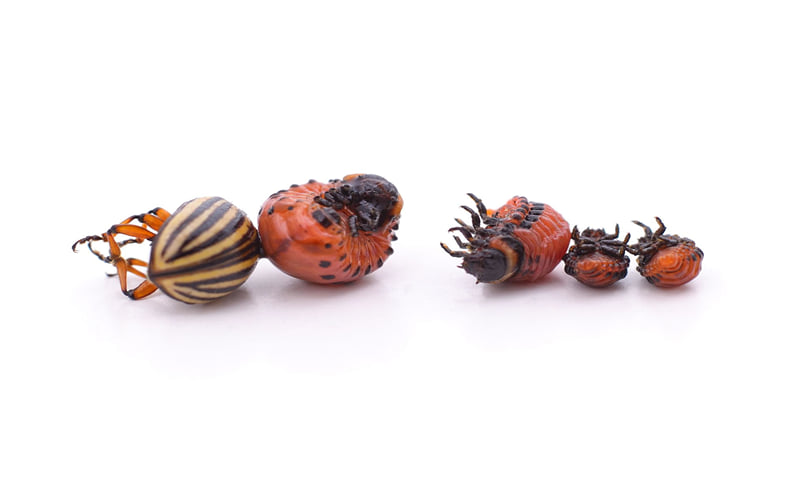
Adult Colorado Potato Beetle Showing Characteristic Black Stripes
Confusion with Similar Species of the Colorado Potato Beetle
The Colorado potato beetle may occasionally be confused with the closely related Leptinotarsa juncta (false potato beetle). However, the false potato beetle differs in having altered stripe arrangements on the elytra, paler larvae with only a single row of black spots along the abdomen and a more restricted host range. Accurate identification of the Colorado potato beetle depends on its distinctive ten stripe pattern, body size and strong preference for potato plants. Other leaf beetles including flea beetles are generally much smaller and lack the characteristic striped appearance.
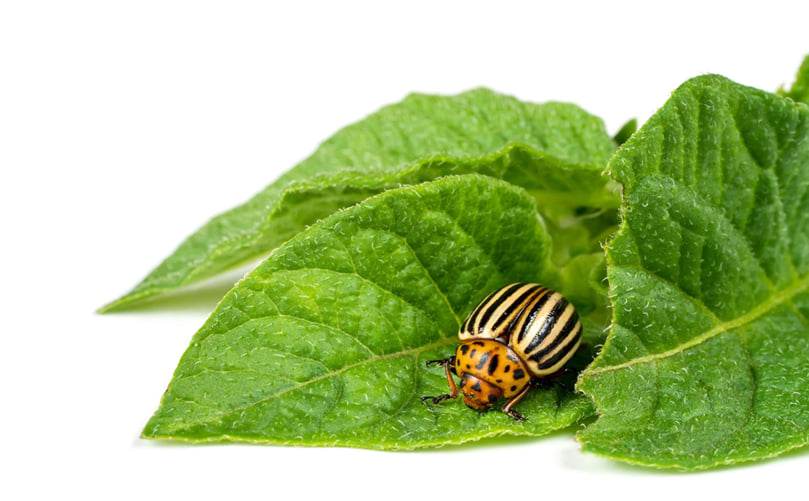
Colorado Potato Beetle (Leptinotarsa decemlineata) Adult Feeding on Potato Foliage
Life Cycle and Reproductive Biology of the Colorado Potato Beetle
The Colorado potato beetle undergoes complete metamorphosis progressing through four distinct life stages: egg → four larval instars → pupa → adult. Its development is strongly influenced by temperature with a lower developmental threshold of approximately 10–11.5°C and optimal growth occurring between 25–32°C with around 28°C considered ideal. Under warm conditions the complete life cycle from egg to adult may be completed within 21–30 days, whereas in cooler environments development can extend to one to two months or longer.
Egg Stage: The egg stage typically lasts 4–10 days depending on environmental temperature. Eggs hatch more rapidly under warmer conditions, often within four days, while cooler temperatures such as 15°C may significantly delay development. Females deposit eggs in clusters primarily on the undersides of leaves, which helps protect them from environmental stress and predators.
Larval Stage: The larval stage lasts approximately 7–20 or more days and consists of four developmental instars. Newly hatched first and second instar larvae remain close to the egg masses during the early feeding period but gradually disperse as they develop. Later instars particularly the fourth instar are the most destructive and account for the majority of foliage consumption. Once fully developed mature fourth instar larvae leave the plant and burrow into the soil for pupation.
Pupal Stage: The pupal stage generally lasts 5–14 days although the complete pre-pupal and post-pupal period may extend to two to three weeks. Pupation occurs within earthen chambers located approximately 2–5 cm below the soil surface, where the insect transforms into its adult form.
Adult Stage: Overwintering adults emerge during spring when soil temperatures rise to approximately 13°C. After emergence adults begin feeding and mating with females typically initiating egg laying within 5–8 days. Adult beetles are highly mobile and capable of flying several kilometers in search of suitable host plants. Depending on environmental conditions newly emerged adults may either produce additional generations or enter diapause for overwintering.
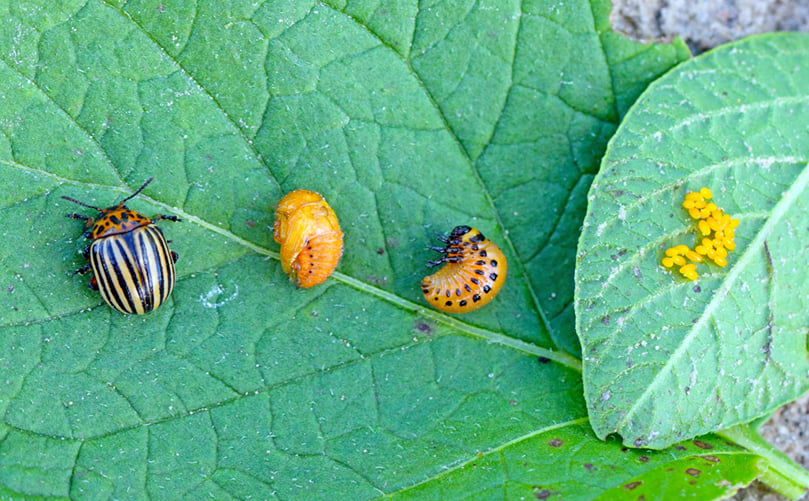
Life Stages of the Colorado Potato Beetle: Egg, Larva, Pupa and Adult
Reproduction and Breeding Behavior of the Colorado Potato Beetle
The Colorado potato beetle possesses an exceptionally high reproductive capacity. Females can lay approximately 300–800 eggs or more over several weeks to months contributing to rapid population growth. The species typically completes one to three overlapping generations per season although up to four generations may occur in exceptionally warm regions, depending on latitude, accumulated temperature (degree days) and photoperiod.
A key survival adaptation of this pest is facultative diapause, which is triggered by shortening day length. As a long-day insect, adults respond to seasonal changes by burrowing into the soil to overwinter allowing them to survive harsh winter conditions through deep diapause. In terms of sexual dimorphism females are generally larger than males.
Population Growth and Outbreak Potentia: Rapid population buildup in Colorado potato beetle populations results from a combination of high fecundity, short generation times under warm temperatures and strong dispersal ability. Additionally, the beetle exhibits behavioral thermoregulation moving within the crop canopy to maintain favorable temperatures for development. These biological characteristics significantly contribute to its ability to establish outbreaks and colonize new potato growing regions efficiently.
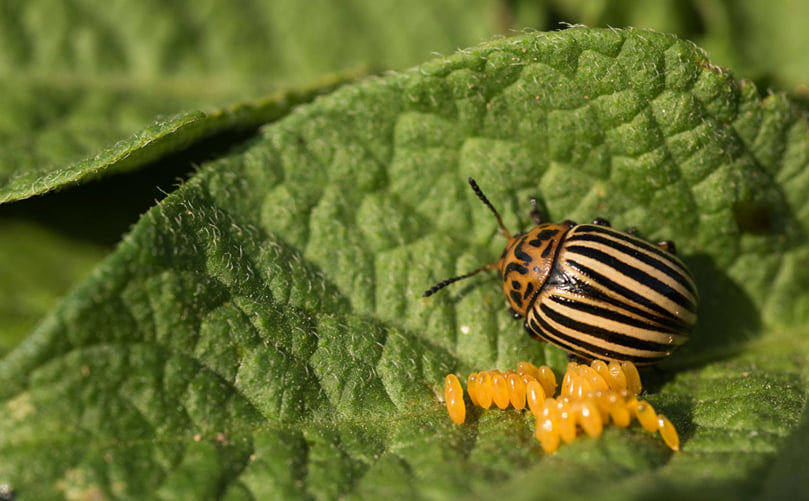
Colorado Potato Beetle Egg Clusters on the Underside of Potato Leaves
Host Range and Feeding Behavior of the Colorado Potato Beetle
The Colorado potato beetle (Leptinotarsa decemlineata) is an oligophagous herbivore meaning it feeds on a relatively narrow range of host plants, primarily within the Solanaceae (nightshade) family. Although its host range is limited, it includes several economically important cultivated crops as well as wild solanaceous species that support survival and population persistence.
Host Range: The primary host of the Colorado potato beetle is potato (Solanum tuberosum), which is by far the most preferred and suitable host for feeding, development and reproduction. Potato plants provide optimal nutrition, supporting the highest survival rates, faster development and greater reproductive success.
Several secondary and minor hosts are also utilized by the beetle. Eggplant (Solanum melongena) is often highly preferred and in some studies, may even be favored over potato under specific conditions. Tomato (Solanum lycopersicum) is another recognized host although it is generally less suitable for complete larval development and reproduction. Additional cultivated hosts include pepper, tomatillo and tobacco.
The beetle also feeds on numerous wild solanaceous plants, which can serve as alternative hosts and reservoirs for populations. These include buffalo bur (Solanum rostratum), considered the insect’s original native host as well as silverleaf nightshade, bittersweet nightshade (Solanum dulcamara), horse nettle, black nightshade and groundcherry species.
Although the Colorado potato beetle may occasionally feed on a few non-solanaceous plants, these hosts generally do not support successful completion of its life cycle. Host preference can also vary among geographic populations due to local adaptation and environmental conditions.
Feeding Behavior: Both larvae and adult Colorado potato beetles are highly destructive foliage feeders capable of causing severe defoliation in potato crops. Adult beetles can consume approximately 9–10 cm² of leaf tissue per day, while a single larva may consume around 40 cm² of foliage throughout its development. The third and fourth larval instars are the most damaging accounting for nearly 75–85% of total feeding injury.
Feeding generally begins at the leaf margins or undersides, particularly in young larvae and gradually progresses to leaf skeletonization, where only the veins and midribs remain. Early instar larvae often feed gregariously near egg masses, whereas later instars disperse across the plant canopy as feeding intensity increases.
Colorado potato beetles use a combination of plant volatiles, glycoalkaloids and aggregation pheromones to locate host plants and stimulate feeding behavior. Additionally, both larvae and adults display behavioral thermoregulation moving within the crop canopy to maintain favorable body temperatures for feeding and development.
Overwintered adults emerge in spring and travel to host crops by walking or flying several kilometers to colonize potato fields. Upon arrival, they begin feeding immediately before mating and laying eggs. This highly efficient feeding strategy combined with strong dispersal ability and rapid reproduction, enables the Colorado potato beetle to cause rapid canopy destruction and severe crop losses under favorable environmental conditions.
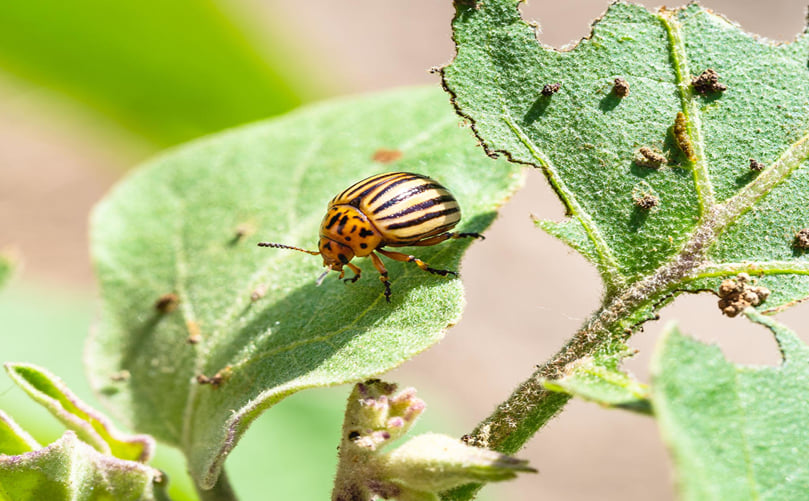
Colorado Potato Beetle on Eggplant: An Alternative Host Plant
Damage Symptoms and Yield Impact of the Colorado Potato Beetle
The Colorado potato beetle is one of the most destructive defoliating pests of potato crops capable of causing severe foliage damage and substantial yield losses when infestations remain unmanaged. Both larvae and adults feed aggressively on plant tissues, reducing photosynthetic capacity and ultimately affecting tuber development and crop productivity.
Visible Damage Symptoms: The initial symptoms of Colorado potato beetle infestation typically appear as irregular holes and notches along leaf margins, primarily caused by adult feeding. Early larval stages produce small pits or windowpane like feeding damage on young leaves, where only portions of the leaf tissue are consumed.
As beetle populations increase, feeding intensity escalates and leaves become skeletonized leaving only veins and midribs while most of the leaf tissue is consumed. Under heavy infestations, plants may experience complete defoliation reducing them to bare stems. In severe cases, beetles may also feed on stems and occasionally on exposed tubers when foliage becomes scarce.
Another characteristic sign of infestation is the presence of black, sticky frass (excrement) on leaves and surrounding soil surfaces. Severely damaged plants often appear scorched, weakened or wilted due to the extensive loss of photosynthetically active tissue.
Yield Impact: Defoliation caused by the Colorado potato beetle significantly reduces photosynthesis, limiting the production and allocation of carbohydrates required for tuber growth and bulking. As a result, plant vigor declines and tuber development is impaired.
Potato plants can tolerate a certain level of defoliation without experiencing major yield reductions. Generally, crops can withstand approximately 20–30% defoliation before or during flowering, while tolerance declines to around 10–25% during the tuber bulking stage although tolerance tends to increase later in the growing season.
However, uncontrolled heavy infestations may lead to substantial yield losses ranging from 20–100% with 40–80% losses commonly reported during severe outbreaks. Complete defoliation can result in plant death or the production of small, poorly developed and unmarketable tubers.
In addition to reduced yield Colorado potato beetle damage also negatively affects tuber quality leading to smaller tuber size, lower specific gravity and a decline in marketable produce. Early season infestations are especially damaging because they disrupt crop establishment, reduce plant vigor and limit the crop’s long-term productive potential.
Economic thresholds for management are often based on defoliation intensity or beetle population density, such as approximately one adult beetle per plant or one egg mass per ten plants although thresholds may vary depending on local recommendations and crop growth stage.
Overall, damage tends to be most severe in continuous potato monoculture systems or when infestations are detected late allowing beetle populations to build rapidly and overwhelm crop defenses.
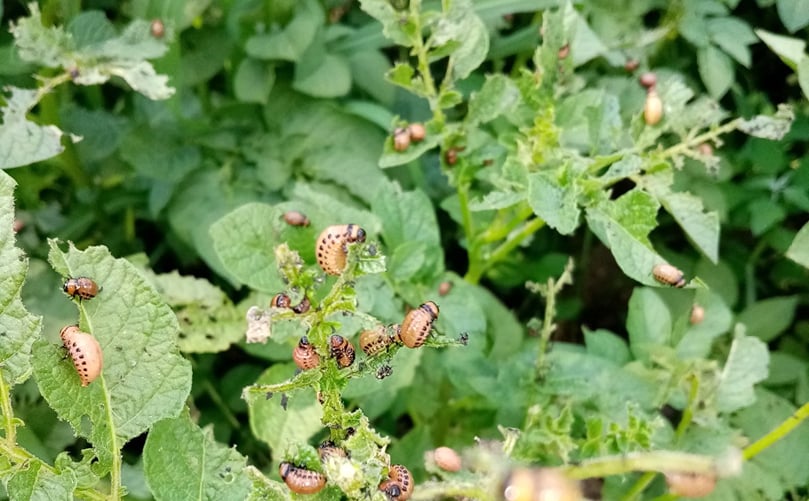
Visible Frass and Feeding Signs of Colorado Potato Beetle on Potato Foliage
Factors Influencing Pest Severity of the Colorado Potato Beetle
The severity of Colorado potato beetle infestations is determined by a complex interaction of biotic and abiotic factors, which together influence population growth, survival and outbreak dynamics. These factors often act synergistically meaning that favorable conditions for the pest combined with weak management practices can lead to severe and rapid outbreaks.
Climate and Temperature Conditions: Temperature is the most critical factor influencing population development. The beetle performs best under warm conditions with an optimal range of 25–32°C, which accelerates development, increases reproductive output and allows the completion of multiple generations per season (typically 1–3 or more). Milder winters also improve overwintering survival of adults contributing to higher initial spring populations.
In many cases, warm conditions have a stronger positive effect on population growth than cold conditions have on suppression. Additionally, precipitation patterns, soil moisture and atmospheric humidity can influence emergence timing and overall population dynamics.
Agronomic Practices: Agricultural management practices play a major role in determining pest severity. The absence of crop rotation allows overwintering adults to persist in or near fields leading to early reinfestation. Monocropping systems and large-scale continuous potato cultivation further enhance population buildup and facilitate rapid spread.
Planting date also influences risk as early planted crops and the presence of volunteer potato plants provide initial food sources that support early colonization and population establishment.
Pesticide Use and Resistance Development: Heavy reliance on chemical insecticides can reduce natural enemy populations and create strong selection pressure for resistance development in beetle populations. Over time, this can lead to reduced pesticide efficacy and control failures, often resulting in secondary pest outbreaks and more severe infestations.
Natural Enemies and Biological Control: The presence of natural enemies such as lady beetles, ground beetles, stink bugs, parasitoids and entomopathogenic organisms helps regulate population growth. However, their effectiveness is often reduced in simplified agricultural landscapes or where broad-spectrum insecticides are frequently used allowing beetle populations to increase unchecked.
Weed Hosts and Reservoir Populations: Wild Solanaceae weeds act as reservoir hosts, enabling the beetle to survive between cropping cycles. These “green bridge” plants maintain pest populations even in rotated fields, increasing the likelihood of reinfestation in subsequent seasons.
Early Season Establishment and Detection: Overwintered adults that emerge early in the season can rapidly establish populations before regular field monitoring begins. Delayed detection at this stage allows populations to expand quickly, often resulting in severe crop damage before intervention is implemented.
Landscape and Soil Influences: Landscape structure also affects pest severity. Fields located near overwintering habitats such as woodlots, hedgerows or field margins are more susceptible to early colonization. Soil properties influence pupation success and overwintering survival, while landscape diversity can either suppress or enhance pest movement and colonization rates.
Integrated Impact on Outbreak Development: In practice, these factors rarely act in isolation. Severe outbreaks are most commonly observed when warm and favorable climatic conditions coincide with continuous potato cultivation, weak biological control and delayed pest detection. Understanding these interacting drivers is essential for effective Integrated Pest Management (IPM) and long-term suppression of Colorado potato beetle populations.
Severe Colorado Potato Beetle Outbreak in Potato Field Under Favorable Conditions
Resistance Development: A Major Evolutionary Challenge in the Colorado Potato Beetle
The Colorado potato beetle (Leptinotarsa decemlineata) is widely recognized as a “super pest” due to its remarkable ability to evolve resistance to insecticides. It has developed resistance to more than 50–56 active compounds across nearly all major chemical classes including organochlorines (such as DDT, first reported in 1952), organophosphates, carbamates, pyrethroids, neonicotinoids and several other modern insecticide groups.
Mechanisms of Insecticide Resistance in the Colorado Potato Beetle
The beetle employs multiple biological and genetic mechanisms to survive chemical control, often acting simultaneously:
Metabolic detoxification: Increased activity of detoxification enzymes such as cytochrome P450 monooxygenases, glutathione S-transferases (GSTs), esterases and ATP binding cassette (ABC) transporters allows the insect to break down or sequester toxic compounds before they can act.
Target site mutations: Genetic changes in key proteins reduce insecticide effectiveness, such as modifications in acetylcholinesterase (affecting organophosphates and carbamates) and voltage gated sodium channels (affecting pyrethroids) leading to reduced binding of insecticides.
Reduced penetration: Structural changes in the insect cuticle can limit the absorption of chemical compounds decreasing their effectiveness.
Behavioral avoidance: Some populations exhibit altered feeding or oviposition behavior that reduces exposure to treated plant surfaces.
Epigenetic regulation: DNA methylation and gene expression changes induced by sublethal insecticide exposure can modify physiological responses and in some cases these changes may be inherited by offspring, enabling rapid adaptation without permanent DNA mutation.
Genetic and Evolutionary Basis of Resistance
Recent genomic research shows that resistance in Colorado potato beetle populations is often polygenic involving multiple genes and pre-existing genetic variation rather than a single mutation. This means resistance frequently evolves from standing genetic diversity already present within populations. Different geographic populations may independently develop resistance through similar physiological pathways but involving different specific genes a process known as repeated evolution.
This high level of genetic diversity enables extremely rapid adaptation across regions, especially under strong insecticide selection pressure.
Field-Level Resistance and Management Implications
Resistance levels vary significantly among populations and can become extremely high with some cases showing more than 100-fold resistance to certain neonicotinoids. This rapid evolutionary capacity makes the Colorado potato beetle a model organism for studying insecticide resistance but also represents a major challenge for sustainable pest management.
Its ability to quickly adapt to new control strategies underscores the importance of Integrated Pest Management (IPM) approaches including rotation of insecticide modes of action, biological control and cultural practices to slow resistance development and maintain long-term control effectiveness.
Economic Impact and Crop Losses Caused by the Colorado Potato Beetle
The Colorado potato beetle (Leptinotarsa decemlineata) causes significant economic losses worldwide through direct yield reduction, quality deterioration, increased pest control costs and resistance management challenges. It is widely considered one of the most economically damaging insect pests in potato production systems particularly in regions with intensive cultivation.
Yield and Quality Losses: Unmanaged or poorly controlled infestations can result in yield reductions ranging from 20% to 100% depending on infestation severity, crop stage and environmental conditions. Severe early season defoliation may lead to complete crop failure producing few or no marketable tubers if plants are unable to recover.
Even moderate defoliation negatively affects tuber development by reducing photosynthesis and carbohydrate accumulation. As a result, infestations often lead to smaller tuber size, reduced specific gravity, lower storability and decreased marketable yield, significantly affecting crop quality and profitability.
Control Costs and Resistance Related Expenses: Management of the Colorado potato beetle requires substantial investment in monitoring, insecticide applications and resistance management strategies. In the United States, the pest causes tens to hundreds of millions of dollars in annual losses and management expenses for potato, tomato and eggplant production systems.
Historical estimates from regions such as Michigan demonstrated the significant economic burden of resistance development. For example, resistance related management costs and crop losses reached approximately USD 13.3 million in a single year, while long-term annual impacts on the potato industry were estimated at USD 0.9–1.4 million.
In China, annual economic losses associated with the Colorado potato beetle have been estimated at approximately USD 3.2 million although the risk of higher losses continues to increase alongside the expansion of potato cultivation under national agricultural strategies.
Regional and Broader Economic Impacts: Across Europe and North America, the Colorado potato beetle significantly increases production costs in intensive potato systems. The evolution of insecticide resistance often forces growers to adopt more expensive or less effective control options, increasing input costs and in some cases, environmental risks associated with repeated chemical applications.
Indirect economic effects also include trade and quarantine concerns, particularly in regions where the beetle is absent or tightly regulated. Restrictions linked to pest movement can affect export markets and seed potato trade. Additionally, in potato dependent regions, severe infestations may threaten local food security and place disproportionate pressure on smallholder farmers, who often have limited access to effective pest management tools.
Long-Term Economic Significance: Although exact global economic estimates vary due to differences in cropping systems, pest pressure and management practices, the Colorado potato beetle is believed to cause hundreds of millions of dollars in annual economic losses worldwide when direct yield reduction, control expenditures, resistance management and research costs are combined.
These continuing economic pressures highlight the importance of sustainable Integrated Pest Management (IPM) strategies, which are essential for reducing long-term costs, maintaining productivity and delaying further resistance development.
Integrated Pest Management (IPM) for the Colorado Potato Beetle
Effective long-term management of the Colorado potato beetle relies on Integrated Pest Management (IPM) a holistic approach that combines multiple control strategies to minimize economic damage while reducing dependence on chemical insecticides.
Cultural Practices: Cultural control is the foundation of IPM with crop rotation being the most important tactic. Separating new potato fields from previous plantings by at least 0.25–0.5 miles (400–800 m) helps delay colonization as overwintered adults often walk to new host crops in spring. Additional practices include destruction of volunteer potato plants, which act as early season hosts and the use of mulching (such as straw) or trench barriers to reduce adult movement into fields.
Monitoring and Scouting: Regular field monitoring is essential for early detection and timely intervention. Scouting typically involves examining a set number of plants (for example, around 50 stalks per field) to assess the presence of adults, egg masses and larvae. Management decisions are often guided by economic thresholds, which may include approximately 0.5–1 adult per plant, 1–1.5 large larvae per plant or around 4 small larvae per plant although these thresholds vary depending on region and crop growth stage.
Host Plant Resistance: Where available, planting resistant or tolerant potato varieties can help reduce damage. Some varieties exhibit traits such as glandular trichomes or elevated glycoalkaloid levels, which can negatively affect beetle feeding and development.
Biological Control: Conservation and enhancement of natural enemies including predators and parasitoids play an important role in suppressing beetle populations. Maintaining beneficial insect habitats and reducing broad-spectrum insecticide use can improve biological control effectiveness.
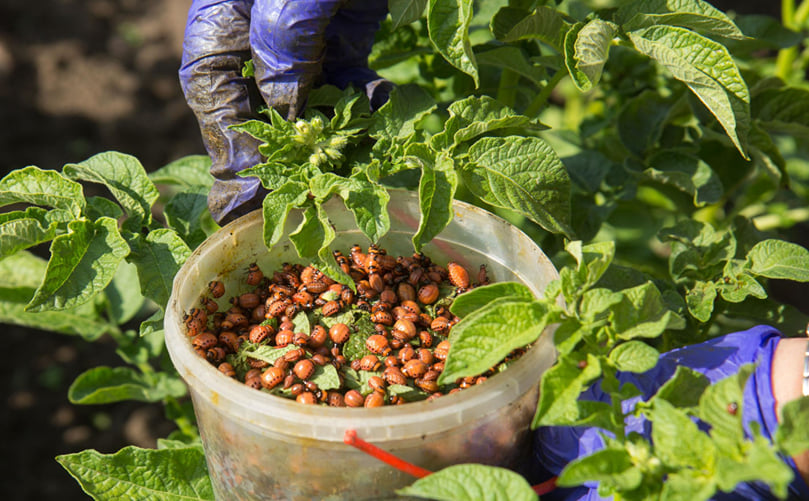
Mechanical and Physical Methods: In small scale systems, mechanical methods such as hand-picking larvae and adults can reduce populations effectively. Other approaches include physical barriers like row covers and localized methods such as flaming in certain production systems.
Chemical Control: Chemical control should be used judiciously as a last resort with emphasis on rotating insecticides with different modes of action to slow resistance development. Overreliance on chemicals should be avoided to maintain long-term efficacy.
Integrated Approach and Sustainability: IPM emphasizes prevention, early detection and the integration of multiple strategies to manage pest populations effectively. In many production systems combining crop rotation with targeted insecticide applications significantly reduces chemical use while maintaining effective control. This integrated approach is essential for slowing resistance development and protecting beneficial organisms within the agroecosystem.
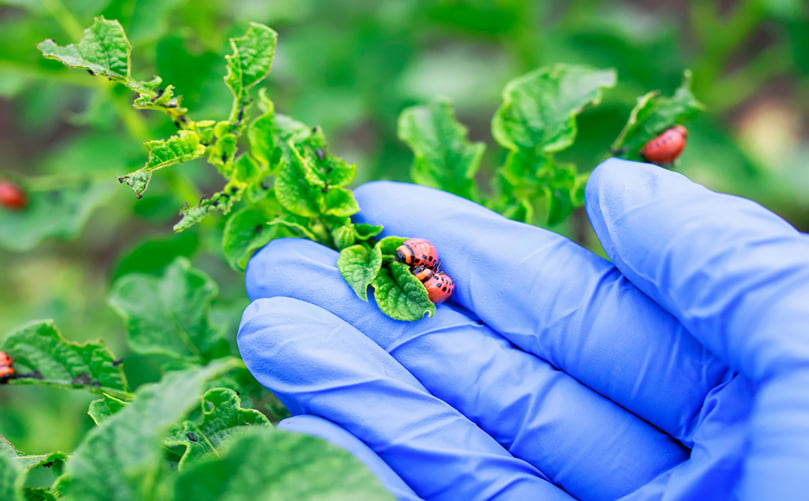
Manual Removal of Colorado Potato Beetle Larvae in Small Scale Fields
Biological Control of the Colorado Potato Beetle
Biological control provides a sustainable approach for suppressing Colorado potato beetle populations; however, it is often insufficient when used alone due to the pest’s high reproductive capacity and rapid population buildup. Effective management typically relies on conservation of natural enemies within the agroecosystem.
Predators: Several generalist and specialist predators contribute to natural suppression of the beetle. Lady beetles such as Coleomegilla maculata and related species feed on eggs and young larvae, reducing early population establishment. Predatory stink bugs including Podisus maculiventris and Perillus bioculatus, attack both larvae and adult beetles. Ground beetles such as Lebia grandis play a dual role with adults feeding on eggs and larvae, while their larvae parasitize beetle pupae in the soil. Additional predators including green lacewings, spiders, harvestmen and other generalist arthropods also contribute to population suppression.
Parasitoids: Parasitoid insects also play an important role in regulating populations. The egg parasitoid wasp Edovum puttleri can effectively target eggs, particularly in crops such as eggplant although its effectiveness is more limited in potato systems. Tachinid flies, particularly species within the genus Myiopharus parasitize larvae and contribute to population decline under favorable conditions.
Microbial Control Agents Microbial pathogens provide additional biological control options. The entomopathogenic fungus Beauveria bassiana can cause significant mortality in beetle populations with reductions of up to 75% under suitable environmental conditions and application timing. Bacillus thuringiensis (Bt) formulations are effective primarily against early larval stages. Entomopathogenic nematodes target pupae in the soil, disrupting development before adult emergence.
Role in Integrated Systems: Biological control is most effective in diversified agricultural landscapes where pesticide pressure is lower and natural enemy populations are conserved. Reduced use of broad-spectrum insecticides enhances the survival and activity of beneficial organisms. While augmentative releases of natural enemies may be useful in specific situations the overall effectiveness of biological control is often variable and strongly dependent on environmental conditions and farming practices.
Chemical Control and Resistance Management of the Colorado Potato Beetle
Chemical insecticides remain an important tool in commercial potato production; however, their long-term effectiveness is increasingly threatened by the Colorado potato beetle’s strong ability to develop resistance. Therefore, successful management depends on insecticide resistance management (IRM) strategies that integrate chemical and non-chemical approaches.
Resistance Management Strategies: A key principle is rotation of insecticide modes of action, guided by the IRAC (Insecticide Resistance Action Committee) classification. Insecticides from different IRAC groups should be rotated across seasons and generations to avoid repeated selection pressure. It is especially important not to rely on the same chemical class for both overwintered adults and subsequent summer generations.
Targeting the most vulnerable stages significantly improves control success. Early larval stages (1st–2nd instars) are most susceptible, while larger larvae and adults are more difficult to manage due to higher tolerance and feeding intensity.
Application Timing and Decision Making: Effective chemical control depends heavily on timing and monitoring. Applications should be based on economic thresholds derived from regular scouting rather than fixed calendar schedules. This ensures insecticides are applied only when pest populations exceed levels that can cause economic damage, reduce unnecessary sprays and slow resistance development.
Insecticide Selection: Where still effective, systemic at planting treatments such as neonicotinoids may be used, but their performance varies significantly due to widespread resistance in many regions. For foliar applications, selective insecticides such as spinosyns and diamides are generally preferred over broad-spectrum products because they are more targeted and less disruptive to beneficial organisms.
Maintaining untreated refuges within or around fields can also help preserve susceptible individuals in the population, slowing the overall evolution of resistance.
Emerging and Novel Approaches: Newer management tools include spinosyn-based chemistries, diamides and RNA interference (RNAi/dsRNA technologies), which represent promising additions to resistance management programs. These approaches aim to provide targeted control while reducing environmental impact and slowing resistance development.
Integrated Resistance Management: Chemical control is most effective when integrated with other IPM components such as crop rotation, biological control and regular scouting. Strict adherence to label instructions and regional recommendations is essential to ensure safe use and to delay further resistance evolution in Colorado potato beetle populations.
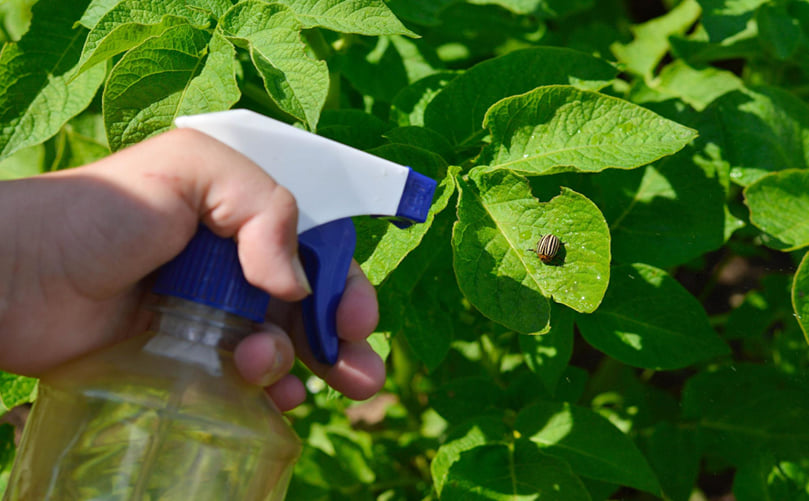
Insecticide Application in Potato Fields for Colorado Potato Beetle Control
Climate Change and Future Risk of the Colorado Potato Beetle
Climate change is expected to significantly influence the distribution, seasonal biology (phenology) and outbreak severity of the Colorado potato beetle (Leptinotarsa decemlineata). Because the species is highly temperature sensitive, warming climatic conditions are likely to favor its development, survival and geographic expansion in many potato growing regions.
Range Expansion: Rising temperatures are projected to enable the beetle to expand northward across the Northern Hemisphere, particularly in parts of Europe and North America. Climate suitability models indicate increased establishment risk in higher latitude regions including Scandinavia, the Baltic countries and northern areas of Russia and Canada. In Europe regions between approximately 50–65°N latitude is considered especially vulnerable to future establishment.
At the same time, some populations in warmer southern regions may experience reduced suitability due to excessive heat stress or prolonged drought conditions. Nevertheless, the overall trend suggests an expansion or poleward shift in suitable habitat.
Increased Generations per Season: Higher temperatures and increased accumulation of degree days accelerate beetle development allowing more generations to occur within a growing season. Regions that historically supported only one generation per year may increasingly experience two or partial third generations, particularly during warmer growing seasons.
Climate projections under moderate and high emission scenarios suggest faster completion of life cycles and more rapid population buildup. In several regions, second generations are expected to develop more quickly than the first due to warmer summer conditions.
Improved Overwintering Survival: Milder winters are expected to improve adult survival during diapause, increasing spring populations. Although beetles can burrow deeper into soil in colder climates to avoid freezing, reduced frequency of extreme cold events lowers winter mortality and enhances survival rates.
Phenological Shifts: Climate warming is also likely to alter the timing of beetle activity. Earlier spring emergence of overwintered adults triggered when soil temperatures approach approximately 13°C may result in earlier colonization of potato crops. This can increase overlap between beetle feeding periods and vulnerable crop growth stages intensifying damage potential.
Warm conditions generally promote faster population growth more strongly than cold temperatures suppress it increasing the risk of severe infestations.
Future Risk and Management Implications: Although projected changes in total suitable habitat may vary regionally, the combination of expanded geographic range, increased numbers of generations, improved overwintering survival and higher reproductive potential is expected to intensify Colorado potato beetle outbreaks in major potato producing regions.
These changes may increase dependence on insecticides, potentially accelerating resistance evolution and complicating pest management. Consequently, adaptive strategies such as enhanced monitoring, early detection in newly vulnerable northern regions, climate informed forecasting and stronger Integrated Pest Management (IPM) programs will be essential for minimizing future risks and maintaining sustainable potato production.