
Potato Packers: The Backbone of Modern Post-Harvest Efficiency
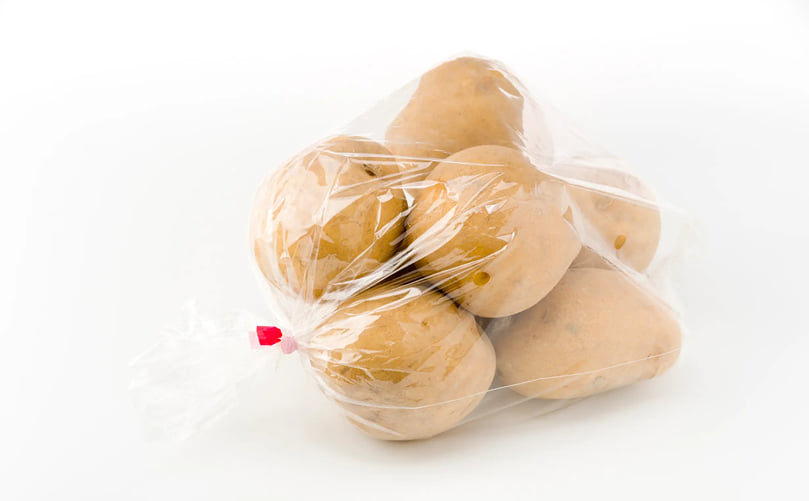
Potato packers form the backbone of modern agricultures post-harvest operations, converting freshly harvested tubers often irregular, soil-covered and inconsistent in quality into uniform, market-ready products that meet consumer expectations for freshness, safety and visual appeal. These integrated systems combine automated cleaning, sorting, grading and packaging technologies to handle everything from table potatoes for retail markets to processing grade tubers destined for chips and fries.
In a global industry where potatoes rank as the fourth largest food crop and annual production exceeds 376 million metric tons, packers play a crucial role in minimizing post-harvest losses which can reach 20–30% without automation. Advanced packing systems ensure compliance with stringent international standards such as USDA grades and EU quality regulations, while improving yield recovery to 90–95%.
By leveraging precision engineering and automation, potato packers reduce labor dependence, improve consistency and support sustainable operations amid increasing climate variability and supply chain pressures. This comprehensive guide explores their evolution, core technologies, operational challenges and indispensable role in delivering high quality potatoes efficiently and reliably.
Potato Packers: The Backbone of Modern Post-Harvest Efficiency
Global Overview of the Potato Industry and the Strategic Role of Packers
Potatoes underpin global food security and contribute significantly to diets across more than 160 countries, serving as a versatile staple for fresh consumption, processed foods and even animal feed. In the United States alone, over 269 million hundredweight (cwt) of potatoes are processed annually for industrial uses, while fresh market shipments rely heavily on consumer friendly packaging formats such as retail bags which account for 80% of dollar sales and 87% of volume. Economically, the U.S. potato supply chain generates an estimated USD 100.9 billion in economic activity and supports nearly 714,000 jobs across farming, logistics, processing, retail and food service.
Globally, major processing hubs in China, the U.S., India and Europe dominate production and innovation. Increasingly, advanced packing technologies enable premium market segmentation such as organic certified packs, size specific offerings and ready to cook formats which often command 10–20% higher retail prices.
Within this dynamic ecosystem, potato packers serve as the industrys quality gatekeepers. They manage a wide range of potato types from russets ideal for baking to red skinned varieties preferred for salads and accommodate capacities ranging from 5–10 tons per day for small farms to industrial packing lines exceeding 100 tons per hour. Without automated packers, reliance on manual labor would drive operational inefficiencies, raising costs by 15–25% and increasing product losses. In an industry where even a 1% improvement in yield recovery translates into millions of dollars in savings, packers remain indispensable for ensuring consistency, efficiency and profitability.
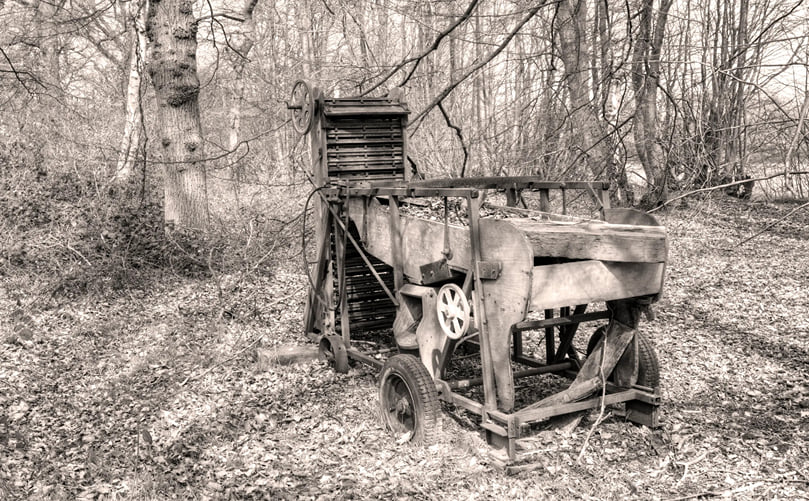
Smithsonian Spotlight: The World’s Oldest Potato Sorting Machine (Source: Pepper Equipment)
A Deeper Dive into the Evolution of Potato Sorting and Packing Automation
The journey of potato sorting and packing automation stretches back to the late 19th century, when post-harvest handling relied almost entirely on manual labor. In dimly lit storage cellars, workers hand-picked tubers from large heaps, judging defects solely by eye and touch a slow, inconsistent and physically exhausting process.
The first major breakthrough came in 1910, when Heinrich Dreyer introduced the “Batate”, a spring mounted flat sieve sorter. This machine vibrated potatoes over graded screens, enabling the first semi-mechanized sizing system and marking the transition from purely manual sorting to structured mechanical handling.
By the 1930s, the adoption of conveyor belts transformed workflows. Tubers could now move linearly while laborers inspected them in motion, increasing throughput from 1–2 tons per shift to 5–10 tons. Post-World War II labor shortages and rising demand for processed foods accelerated innovation. During the 1950s–1960s, hydraulic dumpers, drum washers and early mechanized cleaning units entered the market, significantly reducing manual handling.
The 1960s also saw companies like Vanhemens pioneer semi automated bagging systems using paper sacks, eliminating the need for hand tying. By the 1970s, patented automatic weighing and bag-packing machines emerged, enabling accurate portioning and greater consistency.
The digital revolution began in the 1980s with the introduction of optical sorting, using basic color cameras to identify visual defects. This evolved in the 1990s into laser based detection systems, capable of identifying subtle blemishes and diseases. The 2000s brought near-infrared (NIR) spectroscopy for internal quality analysis detecting sugar levels, dry matter or internal bruising without cutting a single potato.
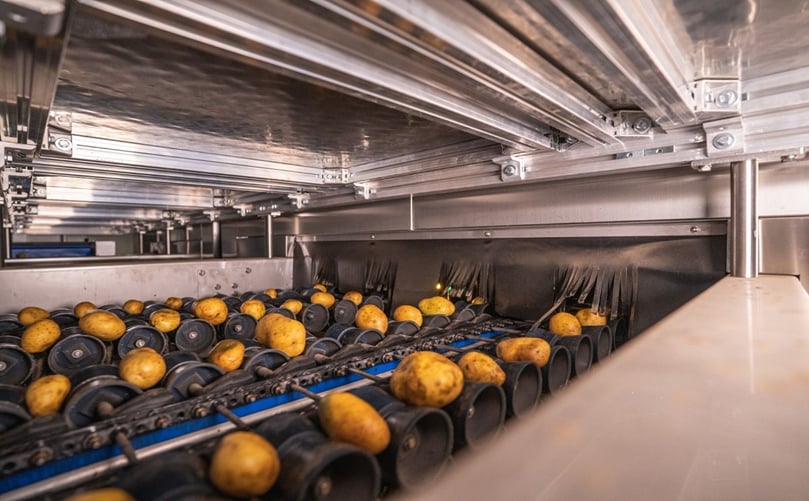
The 2010s marked the leap to AI-driven sorting, with platforms like Key Technologys Sort to Grade analyzing fry strip lengths and defect types in real time. Today, full turnkey solutions from leaders such as TOMRA, Key Technology, and Tong Engineering integrate all these advancements washing, grading, defect removal, weighing and packing into seamless workflows. Modern automated lines reduce sorting time by 70–80% compared to early mechanical graders while ensuring consistency that meets HACCP driven food safety and global trade standards.
This evolution mirrors the broader mechanization of agriculture, shaped by labor dynamics, consumer demand, food safety regulations and the growing need for sustainability in post-harvest operations.
Evolution of Potato Sorting and Packing Automation: From Manual to AI Systems
The Comprehensive Step-by-Step Process: From Field to Finished Pack
Modern Potato packing lines are engineered as seamless, modular assemblies, often spanning 50-100 meters and processing 20-150 tons hourly. They accommodate wet or dry harvests, minimizing bruising (a top cause of 10-15% post-harvest loss) through gentle handling via padded conveyors and vibration dampeners. Below is an expanded breakdown, incorporating best practices for efficiency.
Receiving and Unloading:Controlled Intake to Prevent Damage
Bulk deliveries in 1-2 ton bins or trucks are tipped hydraulically into elevated hoppers (capacity: 5-20 tons) to regulate flow and avoid free falls that could dent skins. Destoners use water flumes and vibrating screens to separate rocks (density >2.5 g/cm³) via gravity, recovering 99% of tubers. Sensors monitor bin weights for inventory tracking, integrating with ERP systems for traceability from farm to pack.
Cleaning and Washing: Thorough Yet Gentle Preparation
Initial de-soiling employs rotary drums (10-20m long) with adjustable brushes or high pressure sprays, recirculating 80-90% of water to cut usage by 50% versus open systems. For heavily soiled crops, immersion washers agitate in 20-30°C baths with mild detergents, followed by air knockers or sponge rollers to remove 95% of soil without abrading flesh. Drying tunnels with heated air (40-50°C) or vacuum belts ensure <5% moisture, preventing microbial growth during sorting. This stage alone can eliminate 70-80% of foreign matter, reducing downstream contamination risks.
Grading and Sorting: Precision Assessment for Quality Assurance
The core innovation hub, grading combines mechanical and optical methods. Mechanical sizers shake (vibrating mesh sieves, 0.5-5cm apertures) or roll (rotating bars with expanding gaps) pre-size by diameter/length at 20-50 tons/hour, but accuracy hovers at 85-90% due to shape variability.
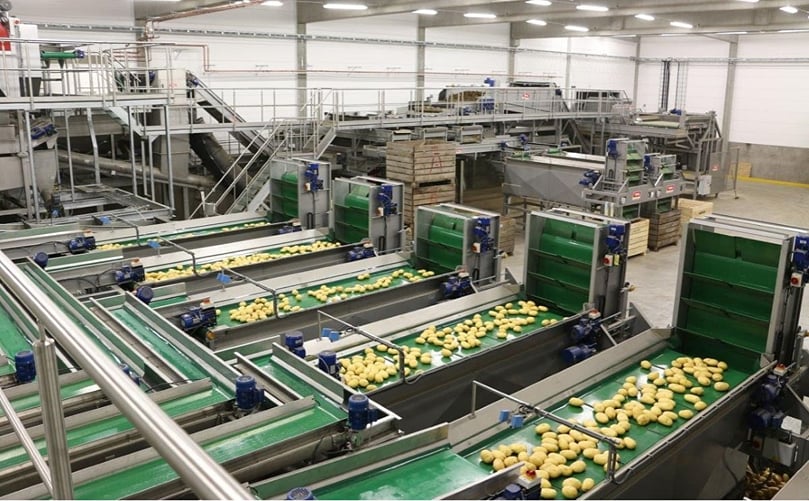
Potato processors using its advanced grading and handling equipment a Diagnostics module as part of its latest pro-series Auto-Touch HMI touch screen control.
Optical sorters elevate this to 98-99% precision using multi-spectral cameras (visible, NIR, hyperspectral) capturing 1,000+ images/second per lane. Tubers singulate on high-speed belts (1-2m/s) or free-fall chutes, where pulsed LEDs illuminate for shadow-free scans. AI algorithms process data for:
- External Defects: Blemishes, cuts, greening (chlorophyll detection at 680nm wavelength).
- Internal Flaws: NIR penetrates 1-2cm to flag rot, hollow heart, or sugar ends via density mapping.
- Foreign Objects: Metals, plastics via X-ray or electromagnetic induction.
Ejectors pneumatic jets (0.1-0.5 bar) or servo-driven paddlesdivert rejects to recovery lanes, reclaiming 10-20% of "near-miss" tubers. Multi-lane systems (4-12 lanes) grade by up to 10 criteria simultaneously, adapting to varieties like oblong burbank or round yukon gold.
Final Packaging: Versatile, Hygienic Sealing for Market
Sorted potatoes feed into automated fillers: net baggers for 1-5kg retail packs use vibratory chutes for even distribution, sealing at 50-100 packs/minute. Bulk lines employ automatic box formers, layering via oscillating fillers to prevent compression (max pressure <0.5 psi). For processed prep, vacuum sealers or flow wrappers apply modified atmosphere packaging (MAP) with 5-10% O₂ to extend shelf life by 20-30%. Labeling integrates QR codes for blockchain traceability, while palletizers stack 50-100 units/hour.
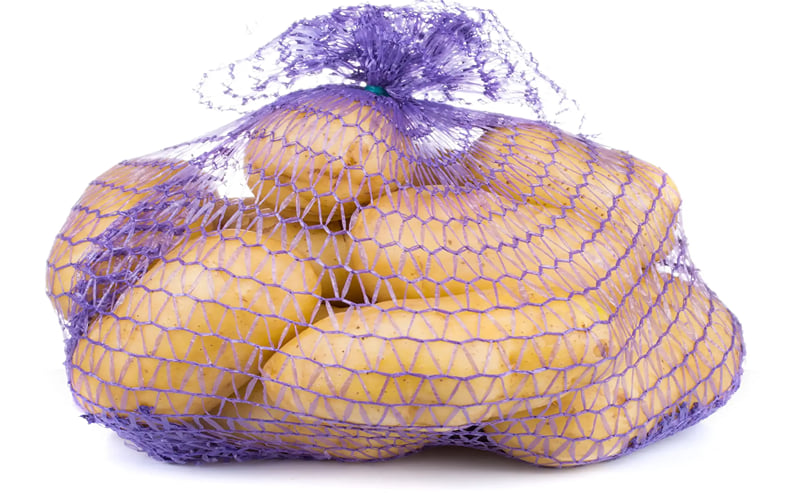
Efficient Net Bagging for Market-Ready Potatoes
Hygiene is paramount: stainless-steel construction, CIP (clean-in-place) cycles and UV sanitization ensure <10 CFU/g microbial loads.
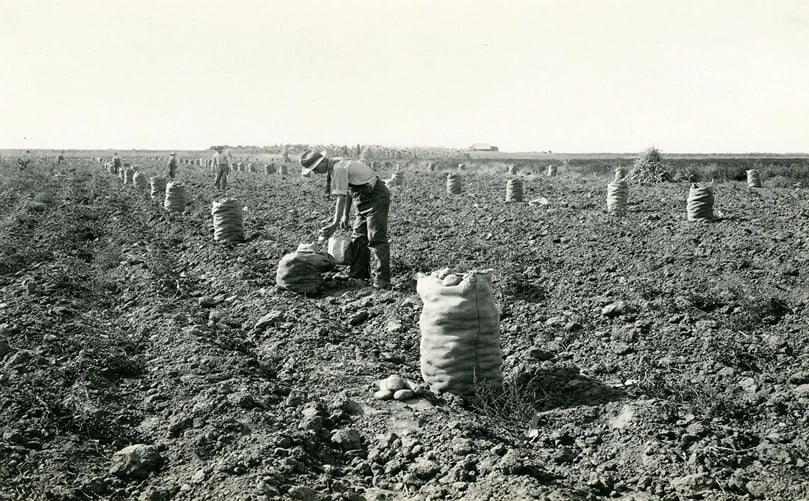
Pre-agricultural revolution farmhand manually harvesting and bagging potatoes in Idaho (Photo credit: waterarchives.org).
Advanced Technologies Driving Potato Packers
Potato packers thrive on a fusion of hardware and software, evolving from rigid mechanics to adaptive intelligence.
- Imaging and Sensing: High-res UHD cameras (12-20MP) paired with NIR (700-2500nm) and hyperspectral sensors "virtually slice" tubers into 20+ layers, detecting 0.5mm defects invisible to the eye. Systems like TOMRA or Key Oculus use 360° rotation for comprehensive views.
- AI and Machine Learning: Platforms like Ellips AI or Key Discovery™ employ convolutional neural networks (CNNs) trained on 1M+ images, auto-calibrating for lighting/seasonal variances and predicting rot risks with 95% accuracy. They enable "sort to grade" for dynamic lane allocation.
- Robotics and Conveyance: Gentle touch grippers for odd shapes and variable-speed belts (0.5-3m/s) minimize 2-5% damage rates. IoT connectivity allows remote monitoring, with predictive maintenance slashing downtime by 40%.
- Integration Software: Web-based dashboards track KPIs like yield (target: 90%+), energy use and OEE (overall equipment effectiveness >85%).
These tech stacks handle 24/7 operations with minimal recalibration, scaling from 10-ton boutique lines to mega factories.
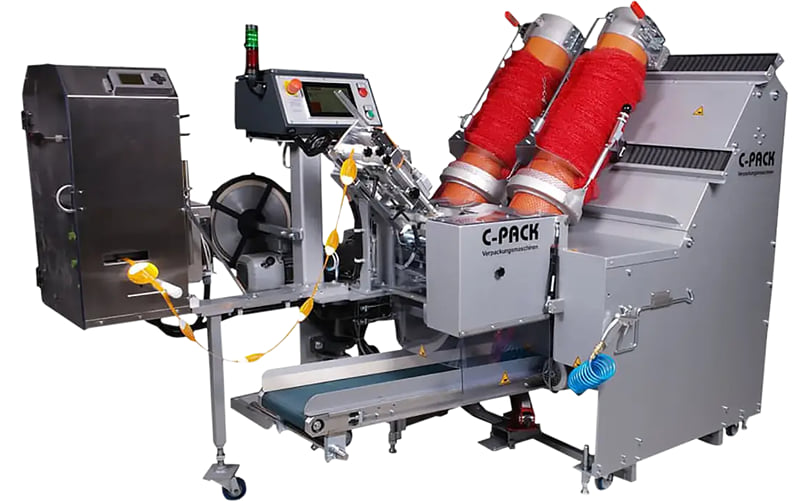
The C-Pack VAC 929 Automatic Net Packaging Machine is an outstanding example of a fully automatic net packing system.
Overcoming Key Challenges in Potato Grading and Packing
Modern potato grading and packing lines face several recurring challenges caused by biological variability, equipment limitations, and operational pressures. Advances in automation, AI and optical technologies now offer reliable solutions. The following section explains each challenge along with its technological remedy and measurable impact without using a table format.
Internal Quality Detection
One of the biggest challenges is identifying hidden internal defects such as black heart, hollow heart or wireworm damage. These flaws are not visible on the surface and can lead to 5–15% spoilage after packaging.
Solution: Near-infrared (NIR) and light transmittance spectroscopy enable complete 360° internal profiling of each tuber by analyzing density and light absorption patterns. These systems accurately eject up to 95% of damaged potatoes.
Impact: Waste is reduced by 20–30% and storage life increases by 2–4 weeks, improving overall pack quality.
Contamination Spread
Diseased potatoes, especially those affected by blight or soft rot, can infect neighboring tubers during transport or storage.
Solution: AI-enabled sorting platforms detect early signs of disease and remove infected potatoes before they enter the packing line. Secondary recovery lanes allow reprocessing of borderline quality tubers.
Impact: Rot incidence falls by 50–70%, and food safety compliance improves significantly.
Variable Shapes and Sizes
Potato batches often include multiple shapes from round to elongated making uniform grading difficult, especially in mixed-variety harvests.
Solution: Multi-angle camera systems capture 90+ images per tuber and adaptive software evaluates volume, shape and weight without relying solely on diameter.
Impact: Sorting accuracy reaches 98% and the system handles more than 20 varieties without needing adjustments.
Capacity and Speed Limitations
During peak seasons, some lines slow to below 10 tons per hour, causing bottlenecks and increased operational costs.
Solution: Multi-lane sorters and flow optimization AI maintain continuous performance ranging from 4 to 36 tons per hour, even with variable loads.
Impact: Throughput increases by 50–100%, enabling consistent 24/7 high demand operation.
Labor Shortages and High Costs
Manual sorting typically requires 10–20 workers per shift, resulting in fatigue, higher errors and difficulty maintaining consistent quality.
Solution: Full automation, including AI-based defect analysis, reduces the workforce requirement to 2–4 trained operators.
Impact: Labor costs drop by 70–90%, and most facilities achieve return on investment within 1–2 years, thanks to 15–25% operational savings.
Environmental Variability
Weather fluctuations cause problems such as greening, sprouting, or uneven skin set, affecting 10–20% of harvested potatoes.
Solution: Sensor-fusion systems detect chlorophyll spikes and physiological changes early, automatically adjusting defect thresholds as seasons change.
Impact: Reject rates decrease by 25%, and the system provides better support for organic and sustainability certifications.
(Click picture to watch video)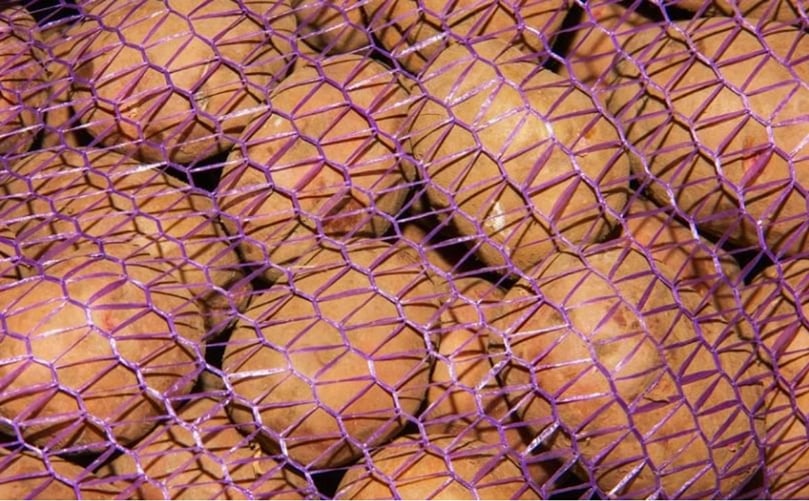
Watch the Complete Guide to Potato Packers: How Modern Packing Lines Work
Sustainability and Environmental Impact: Greener Packing Practices
Automation in potato packing aligns with global sustainability imperatives, curbing the industrys 1-2% contribution to agricultural GHG emissions. Key benefits include:
- Resource Efficiency: Recirculating wash water saves 40-60% (up to 100,000 liters/day/line), while precise sorting diverts 85-95% of waste to compost or biogas, reducing landfill use by 30%.
- Energy Optimization: LED lighting and variable-frequency drives cut power by 20-40%; AI predictive controls idle unused modules, lowering footprints.
- Reduced Chemical Use: Early defect removal minimizes post-pack fungicide needs by 15-25%, protecting soil/water. Bio-based packaging (e.g., PLA nets from cooking oil) shrinks plastic by 30% carbon wise.
- Broader Ecosystem Gains: Traceability enables carbon auditing, with lines achieving ISO 14001 certification. In processing hotspots like Idaho or Flanders, automated packs extend shelf life, cutting food waste (global potato loss: 15-20%) and transport emissions.
These practices not only comply with regulations like the EU Farm to Fork strategy but foster resilience against climate shifts.
Economic Importance, ROI and Future-Proofing
Potato packing systems deliver exceptionally strong economic value, offering one of the fastest returns on investment in post-harvest infrastructure. Full integrated lines ranging from USD 500,000 to USD 5 million depending on capacity and automation typically achieve ROI within 1–3 years. This rapid payback is driven by a combination of 10–20% yield improvements, 30–50% labor cost reductions, and significantly lower losses due to mechanical damage or poor grading.
Beyond efficiency gains, modern packers unlock access to premium retail segments. Uniform, defect-free potatoes consistently secure 5–15% price premiums, while automation enables processors to diversify into high value categories such as pre-washed minis, tray-ready packs and portion controlled convenience formats. These innovations enhance both market reach and brand differentiation.
Operationally, today systems are engineered for reliability. Routine maintenance such as daily clean-in-place (CIP) cycles and quarterly calibration of optical and NIR sensors supports up to 95% machine uptime, minimizing disruptions during peak harvest periods. This stability ensures consistent supply performance across large retail and processing networks.
Looking ahead, potato packing technology is rapidly evolving. AI-driven quality analytics, predictive maintenance, and machine learning workflow optimization are becoming standard. Integration with blockchain traceability will soon provide transparent end to end product histories, while robotic arms will enable more precise, variety-specific and even customer-personalized packing. These trends position packers as essential assets in an industry valued at over USD 100 billion globally.
In essence, potato packers are far more than mechanical systems they are catalysts for quality assurance, sustainability, and profitability. By automating the complex journey from soil to supermarket shelf, they protect margins, elevate product standards, and future proof operations. As consumer expectations rise and supply chains grow more demanding, packers will remain central to ensuring that this staple crop reaches kitchens worldwide in optimal condition.