

Freeze Dried Potato Products: The Gold Standard in Quality, Nutrition and Convenience
Freeze dried potato products represent a premium segment of the dehydrated potato market. They are produced through lyophilization, a gentle, low temperature dehydration process that removes nearly all water (reducing moisture to about 2–4%) while preserving the potato’s cellular structure, natural color, flavor, aroma, nutrients and texture far more effectively than conventional methods such as hot air, drum or microwave drying.
Potatoes (Solanum tuberosum L.) with their high water content (typically 80–95%) are ideally suited for freeze drying. As a globally important staple crop (with approximately 375 million tons produced worldwide in 2022), potatoes are highly versatile in culinary applications. Freeze drying transforms them into a porous, sponge like matrix through ice sublimation, enabling rapid and near complete rehydration to a fresh like state.
In contrast, air dried potatoes often experience shrinkage, enzymatic browning, nutrient loss (particularly vitamin C degradation) and structural collapse due to heat exposure and liquid phase water removal. Freeze drying effectively avoids these issues resulting in lightweight, shelf stable products that typically require minimal or no additives.
These characteristics make freeze dried potato products highly suitable for a wide range of applications, including convenience foods, retail meal kits, foodservice quick preparation items, military and space rations and outdoor or camping foods. Additionally, in remote and extreme regions such as Arctic and northern areas freeze drying can reduce transport weight by up to 80%, significantly improving logistics efficiency while maintaining nutritional value and product stability under harsh conditions.
Research from institutions such as the Russian Potato Research Centre and the University of Debrecen has demonstrated that freeze drying preserves higher levels of antioxidants, phenols and flavonoids, while maintaining structural integrity. This position freezes dried potato products as a high quality, clean label solution aligned with modern consumer demands for nutrition, convenience and sustainability.
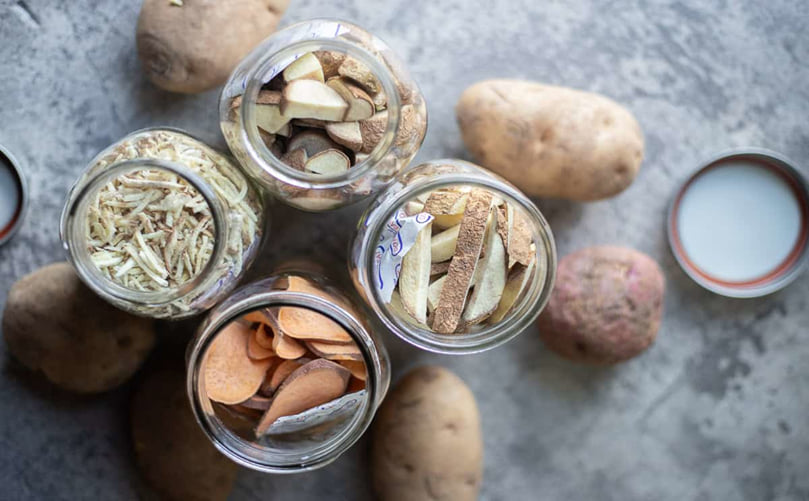
Freeze-Dried Potato Products – Preserving Freshness Through Advanced Lyophilization
What is Freeze Drying (Lyophilization)?
Freeze drying or lyophilization is a three-stage preservation process used to remove water from potatoes and other foods. The process begins by freezing the water into ice and then converting it directly from solid to vapor under vacuum through sublimation, bypassing the liquid phase. This approach minimizes structural damage and makes it particularly suitable for heat sensitive, high moisture foods such as potatoes. As a result, it preserves cellular integrity, nutrients, color, flavor and bioactive compounds while creating a highly porous structure that enables rapid rehydration.
The process consists of three key stages:
Freezing Phase: Potatoes, whether in the form of raw slices, dices or pre-cooked mash are rapidly frozen commonly at around –40°C in industrial settings. In some cases, shock freezing at –30°C for several hours or ultra-low temperatures such as –80°C for shorter durations may be used in research. Rapid freezing promotes the formation of small, uniform ice crystals, which help maintain cellular structure and enhance final product quality. Slower freezing, on the other hand produces larger ice crystals that may reduce resistance to mass transfer during drying but can damage cell walls.
Primary Drying (Sublimation): During this stage, the frozen product is placed under high vacuum conditions (typically between 1.1 and 100 Pa) and exposed to controlled low temperatures. Ice sublimates directly into vapor without melting, removing approximately 90–95% of the free water. The required energy for sublimation is supplied gradually through conduction or radiation, while the vapor is captured on a condenser maintained at very low temperatures (around –60°C or lower). This step preserves the product’s porous, sponge-like structure. Studies on potatoes show that processing conditions influence properties such as density and porosity with higher shelf temperatures leading to slightly denser structures.
Secondary Drying (Desorption): In the final stage, the temperature is gradually increased (typically between +20°C and +70°C) under continued vacuum to remove residual bound water. This reduces moisture content to about 2–4% and lowers water activity to below 0.2, ensuring microbial stability and extended shelf life. Depending on the product size and process parameters, the total drying cycle may range from 24 to over 72 hours.
By enabling water to transition directly from solid to vapor, freeze drying prevents shrinkage, oxidation and structural collapse critical factors for maintaining potato quality. Research consistently shows that this method preserves taste, aroma and nutritional value while producing a highly porous structure that allows rehydration to a near original state within minutes. Advanced techniques, such as electrical pretreatment can further enhance drying efficiency and porosity. Overall, freeze drying remains one of the most effective methods for producing high quality dehydrated potato products.
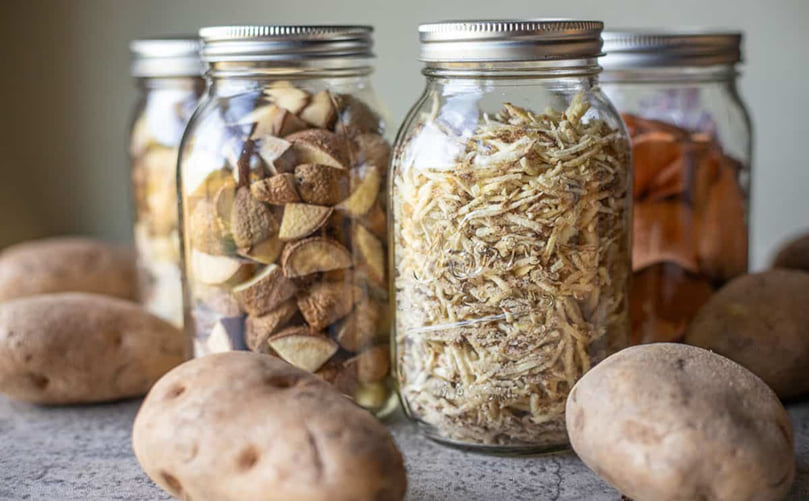
Freeze-Drying Process of Potatoes: From Freezing to Final Dehydration
Types of Freeze-Dried Potato Products: Versatile Formats for Every Application
Freeze dried potatoes are available in a variety of forms, each designed to suit specific end uses. These products can be made from either raw or pre-cooked potatoes and all benefit from the characteristic porous structure created during freeze drying, which allows rapid rehydration while preserving shape and texture. Commercial and research sources commonly classify the main types as follows:
Diced or Cubed Potatoes: These are small, uniformly cut pieces, often used in soups, stews, casseroles, potato salads, breakfast dishes and ready meals. They rehydrate quickly while maintaining their structure and a firm texture making them suitable for both retail meal kits and bulk foodservice applications. Research indicates that selecting appropriate varieties, such as those with higher protein content can improve structural stability during storage and rehydration.
Sliced Potatoes: Freeze dried slices, ranging from thin cuts to larger plates are commonly used in dishes such as scalloped potatoes, gratins and layered preparations. They rehydrate efficiently and retain their structure during cooking making them suitable for baking or frying applications.
Shredded Potatoes: These are grated or processed into a hash brown style format. They are widely used for breakfast items and side dishes, as they rehydrate quickly and can be easily crisped during cooking. This form is particularly popular in outdoor, camping and foodservice settings due to its convenience.
Mashed Potatoes, Flakes and Powders: Produced from cooked and mashed potatoes that are then freeze dried and processed into flakes or fine powders, these products are widely used for instant mashed potatoes. They can be reconstituted rapidly with hot water or milk to produce a smooth, creamy texture. Flakes are also used as thickeners in soups and sauces, while powders are incorporated into bakery products, snack formulations, seasonings and coatings. This category is highly востребована in both retail and industrial applications.
Hash Browns: These are typically pre-cooked shredded or diced potatoes that are freeze dried for convenience. After rehydration, they can be directly pan fried to achieve a crispy texture making them a popular ready-to-cook breakfast option.
Crumbles and Specialty Forms: This category includes smaller or irregular pieces used in soups, snack mixes or specialty products. Some premium variants are produced from pigmented potato varieties, such as purple or blue potatoes, which offer higher levels of retained antioxidants and enhanced visual appeal.
Each type can be further customized in terms of size, thickness and potato variety. For example, certain varieties are selected for improved structural integrity, while others are chosen for their higher content of phenolic compounds and flavonoids. Applications span across retail (instant meals, soups and outdoor foods), foodservice (quick preparation dishes), industrial processing (snacks, thickeners and ingredients) and specialized sectors such as military rations, emergency supplies and space food systems.
Overall, freeze dried potato products stand out in premium applications due to their superior rehydration capacity, near fresh quality recovery and clean label appeal compared to conventional dehydrated alternatives.
Processing Flow of Freeze-Dried Potatoes: From Raw Tubers to Premium Quality Products
The industrial processing workflow for freeze dried potato products is carefully designed to maximize product quality, minimize enzymatic activity and develop the porous structure essential for superior rehydration. The process begins with the selection of suitable raw potatoes. Varieties with high dry matter and relatively higher protein content (on a dry-matter basis) are preferred, as these characteristics contribute to better structural stability during storage and improved rehydration performance. Potatoes with a waxy structure and smaller starch granules generally perform better, while floury types tend to disintegrate more easily during processing.
The process then proceeds through several key stages:
Washing and Peeling: Fresh potatoes are thoroughly washed to remove soil, debris and contaminants. This is followed by peeling, typically carried out using mechanical or abrasion methods to ensure efficiency and uniformity.
Cutting: The peeled potatoes are cut into uniform shapes such as slices, dices (for example, approximately 1.5 × 1.5 × 0.5 cm or 9–11 mm cubes) or shreds. Uniform sizing is essential to ensure consistent heat and mass transfer during subsequent processing steps.
Rinsing: Cut potato pieces are rinsed to remove excess surface starch. This step helps prevent sticking or clumping and contributes to improved final texture and appearance.
Pre-treatments and Blanching: This is a critical stage for enzyme inactivation and color preservation. Potato pieces are often soaked briefly in a dilute solution of anti-browning agents, such as sodium bisulfite (around 0.03%) to inhibit enzymatic discoloration. Blanching is then carried out using hot water or steam, typically at 71–82°C for several minutes, depending on the product size and process design. In some cases, additives such as sodium acid pyrophosphate (SAPP) or glucose-based compounds are included to enhance color retention and texture.
Advanced processing may involve a double blanching technique, where blanching is followed by intermediate cooling (using air or water at 1–27°C) before a second blanching step. This approach helps reduce the loss of soluble solids while ensuring complete inactivation of enzymes such as polyphenol oxidase (PPO). After blanching, cooling is essential to stop the cooking process and stabilize the product before freezing.
Freezing: The treated potato pieces are rapidly frozen using blast freezing or individually quick freezing (IQF) methods, typically at temperatures ranging from –10°C to –40°C or lower. Rapid freezing promotes the formation of small ice crystals, which helps preserve cellular structure and contributes to the development of a porous matrix during drying.
Freeze Drying (Lyophilization): The frozen product is transferred to a freeze dryer. During primary drying, water is removed through sublimation under vacuum conditions (approximately 1.1–100 Pa) at controlled low temperatures, removing up to 90–95% of free moisture. In the secondary drying phase, the temperature is gradually increased (typically between +20°C and +70°C) to remove residual bound moisture, reducing total moisture content to below 4% and water activity to less than 0.2. The total drying cycle may range from 24 to over 72 hours, depending on product size and processing parameters.
Packaging: Immediately after drying, the products are packaged under controlled conditions to prevent moisture uptake and oxidation. Common methods include vacuum packaging, nitrogen flushing or sealing in moisture and oxygen barrier materials such as laminated pouches or cans. Desiccants or oxygen absorbers are often included to extend shelf life and maintain product quality.
Overall, this carefully controlled processing sequence combined with the use of anti-browning agents, optimized blanching and rapid freezing ensures minimal shrinkage, excellent color retention, high nutritional quality and rapid rehydration, while also preventing microbial growth and oxidative deterioration.
Nutritional Superiority of Freeze-Dried Potatoes: Maximum Retention, Minimal Loss
Freeze drying is widely regarded as superior to conventional drying methods such as hot air drying (HAD) because it operates at low temperatures and eliminates the liquid phase during water removal. This significantly reduces oxidation, thermal degradation and structural damage. As a result, nutrient retention remains exceptionally high. Essential components such as vitamins (particularly heat sensitive vitamin C), minerals, antioxidants, total phenolic content (TPC), carotenoids and flavonoids are preserved at levels often exceeding 90% of those found in fresh potatoes. In contrast, hot air drying can lead to substantial nutrient losses with reductions of 40–60% or more in vitamin C and certain B vitamins due to prolonged heat exposure and oxidative stress.
Studies on plant-based foods further highlight that freeze drying can retain significantly higher levels of bioactive compounds including notably greater preservation of vitamin C and carotenoids compared to conventional drying techniques. Similar trends are observed for phenolic compounds and other functional metabolites.
In potatoes specifically, several quality advantages are evident. Protein content, particularly on a dry matter basis, plays an important role in maintaining structural stability during storage and rehydration. Higher protein levels are positively associated with improved product integrity including a greater proportion of intact pieces after storage under vacuum conditions.
Freeze drying also has minimal impact on key compositional attributes such as starch, reducing sugars and overall dry matter. This helps preserve the natural flavor profile and volatile compounds along with desirable color characteristics often resulting in brighter and more appealing visual quality compared to conventionally dried products.
From a physical standpoint, freeze dried potatoes exhibit negligible shrinkage, high porosity and excellent texture retention. The absence of high-temperature processing prevents non-enzymatic browning reactions, such as Maillard reactions, ensuring that the product maintains its natural appearance and sensory quality.
Varietal selection further enhances these benefits. Potatoes with higher protein content and waxy starch structures tend to deliver superior nutritional retention and structural integrity. Overall, freeze drying preserves most of the original nutritional and functional properties while producing lightweight, shelf stable products that can be rapidly rehydrated to a near fresh state. These advantages make freeze dried potatoes particularly suitable for premium, health oriented and clean label food applications, despite the higher processing costs associated with the technology.
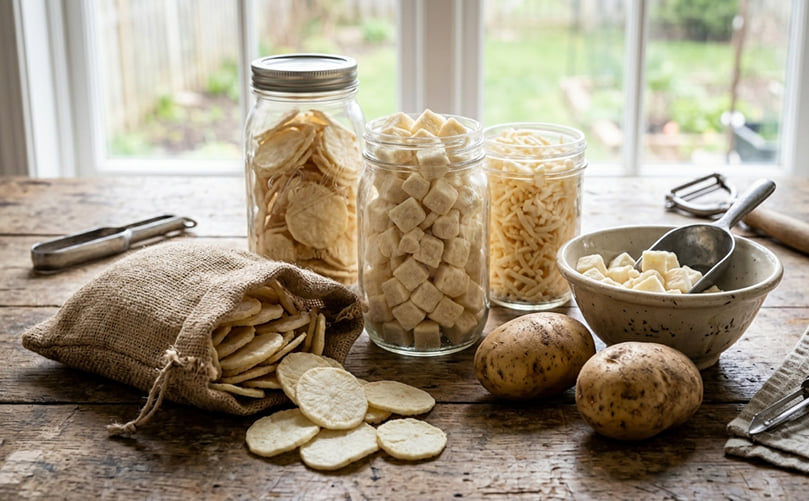
Freeze-Dried Potatoes Deliver Superior Nutrition and Quality
Controlling Browning in Freeze-Dried Potatoes: From Enzymes to Iron Reactions
Freeze drying inherently helps reduce browning due to its low temperature operation and vacuum conditions, which limit oxygen availability and slow down chemical reactions. However, pre-treatments remain essential to effectively control both enzymatic and non-enzymatic browning in potato products.
Enzymatic browning occurs when the enzyme polyphenol oxidase (PPO) catalyzes the oxidation of phenolic compounds, such as chlorogenic acid leading to undesirable discoloration. This is primarily controlled through blanching, where potato pieces are exposed to heat (typically around 71–82°C). This process denatures the enzyme and inactivates its copper containing active site, thereby preventing enzymatic browning during subsequent processing.
Non-enzymatic browning, particularly after cooking darkening (ACD) is another major concern in potatoes. This form of discoloration appears as a gray to black color and results from the reaction between iron (Fe²⁺/Fe³⁺) and chlorogenic acid in the presence of oxygen. It is especially noticeable after boiling, frying or rehydration.
To control ACD, sodium acid pyrophosphate (SAPP) is widely used as an effective sequestrant in the potato processing industry. SAPP binds with iron (and to a lesser extent copper), forming stable complexes that prevent the formation of dark colored compounds such as ferri-chlorogenic acid. Additionally, SAPP provides mild pH buffering typically around pH 5 which further slows down discoloration reactions.
In practical applications, SAPP is used in dilute solutions ranging from 0.1% to 1.5% with optimal effectiveness typically observed between 0.3% and 0.8%. It can be applied at various stages, including post-blanching dips, incorporation into blanching water, flume systems or directly into potato mash. Even at low iron concentrations, SAPP remains highly effective in maintaining product color.
In freeze dried potato processing, SAPP is commonly integrated into the blanching or pre-treatment stages to ensure color stability throughout drying, storage and rehydration. While blanching effectively addresses enzymatic browning, SAPP specifically targets non-enzymatic discoloration, making the combination of both treatments highly effective.
Compared to alternative approaches, such as citric acid (which may impart sourness or affect texture) or sulfites (which are restricted due to allergenic concerns), SAPP offers a balanced and industry preferred solution. Its use contributes to extended shelf life, reduced product losses, consistent color quality and improved texture in products such as flakes and diced potatoes.
Overall, the combined use of blanching, SAPP treatment and controlled freeze-drying conditions ensures that freeze dried potatoes retain a bright, uniform and appealing appearance while maintaining high product quality.
Rapid Rehydration Excellence: The Key Advantage of Freeze-Dried Potatoes
The hallmark commercial advantage of freeze-dried potato products lies in their exceptional rehydration capacity, driven by the highly porous, sponge like structure formed during ice crystal sublimation. This structure allows rapid water uptake through capillary action, enabling the product to regain its near original shape, texture, flavor and firmness within minutes even when rehydrated with cold or room temperature water.
Under typical conditions, untreated freeze-dried potatoes (cubes, slices or flakes) achieve a rehydration ratio of approximately 2.1 within 1.5 minutes, using a 1:50 mass-to-water ratio with gentle stirring. Diced and sliced forms retain their structural integrity well in soups and stews, while flakes and powders reconstitute almost instantly into smooth, creamy mashed potatoes when mixed with hot water or milk. Optimal rehydration is generally achieved at temperatures between 30–50°C. High protein potato varieties perform particularly well maintaining structural stability without disintegration and delivering sensory qualities comparable to freshly boiled potatoes.
Advanced processing techniques can further enhance rehydration performance. For example, low voltage DC electrical pre-treatment (up to 30 V/cm for 1 minute prior to freezing) significantly increases pore density and surface area, as confirmed by SEM imaging. This treatment can boost the rehydration ratio to approximately 4.1 within the same 1.5-minute period. Additionally, treated samples exhibit a softer and less elastic texture ideal for puree applications along with improved color characteristics including higher lightness (L* values) and reduced yellowing.
The highly porous structure ensures uniform water absorption, eliminating issues such as sloughing or hard centers, which are commonly observed in conventionally air dried products. In comparison, freeze dried potatoes can rehydrate up to 9–10 times faster than air dried alternatives.
These superior rehydration properties make freeze-dried potatoes highly suitable for a wide range of applications including instant soups, ready-to-eat meals, camping foods, military rations and foodservice operations. With minimal preparation often requiring only the addition of hot water these products deliver convenience while preserving the sensory and nutritional qualities of fresh potatoes.
Versatile Applications: Unlocking the Commercial Power of Freeze-Dried Potatoes
Freeze-dried potato products serve a broad spectrum of high value sectors where lightweight structure, rapid rehydration, long-term stability and superior sensory quality are critical. In the instant soup and ready meal industry, diced cubes, slices, flakes and powders are widely used in commercial formulations. They provide either distinct potato inclusions or smooth, creamy bases that reconstitute quickly with the addition of hot water.
In the snack industry, these products are utilized as base materials for extruded snacks, coatings and premium crisps. Their natural potato flavor, clean label appeal and consistent quality make them highly desirable for both traditional and innovative snack formulations.
In military and space nutrition, freeze dried potato products play a significant role due to their durability and efficiency. Diced potatoes and hash browns are commonly included in MREs (Meals Ready-to-Eat) and astronaut food systems. Large scale production includes fully cooked, shelf stable diced potatoes packaged in institutional formats such as #10 cans, offering extended shelf life (often exceeding 20–25 years). Their ultra lightweight nature significantly reduces transport load, while eliminating the need for refrigeration during long missions or field operations. Space programs have relied on freeze drying technology since the early 1960s to provide lightweight, nutrient dense food options.
Emergency food supply systems and disaster preparedness kits also represent a major application area. Freeze dried potatoes available as dices, shreds and mashed flakes are commonly packed in bulk containers such as cans or buckets for long-term storage, ranging from short term use to over two decades. Their stability, resistance to environmental stress and minimal storage requirements make them particularly suitable for remote locations, humanitarian aid programs and extreme climates.
The foodservice and HoReCa (Hotels, Restaurants and Catering) sector benefits greatly from the convenience of freeze-dried potato products. Items such as hash browns, mashed potatoes and soup bases allow for rapid preparation, reducing labor and kitchen time. These products can be quickly rehydrated and cooked, making them ideal for breakfast menus, large scale catering and institutional food operations such as hospitals and cafeterias.
Beyond direct food applications, freeze dried potatoes also find use in bakery formulations, where they contribute to improved texture and binding properties. They are incorporated into pet food products for nutritional enhancement and are sometimes used in lower grade forms as thickeners or in animal feed. Additionally, they provide a value added pathway for utilizing surplus or cosmetically imperfect potatoes, thereby reducing post-harvest losses.
Their lightweight nature often achieving up to 80% reduction in weight compared to fresh potatoes enhances transport efficiency and supports global trade making freeze dried potato products a strategically important component in modern food supply chains.
Long-Term Stability: The Extended Shelf Life Advantage of Freeze-Dried Potatoes
Freeze dried potatoes exhibit exceptional shelf life due to their very low final moisture content (typically 1–4%) and water activity below 0.2. These conditions effectively inhibit microbial growth, enzymatic activity, oxidation and most chemical reactions, thereby preserving product quality over extended periods.
To maintain this stability, proper packaging immediately after drying is critical. Moisture and oxygen barrier materials such as Mylar bags, vacuum-sealed pouches, nitrogen flushed #10 cans or airtight glass jars equipped with oxygen absorbers and desiccants are commonly used. When stored under these conditions, freeze dried potato products can remain stable for more than 25 years at ambient temperatures.
Optimal storage conditions involve keeping the products in a cool, dark and dry environment, ideally below 21°C. Lower storage temperatures can further extend shelf life. Conversely, exposure to heat, humidity, light or oxygen can significantly reduce product stability making airtight and light-resistant packaging essential.
Commercial grade products, particularly those designed for military and emergency use, often carry shelf-life claims of 25–30 years under recommended storage conditions. This longevity far exceeds that of conventionally dried potatoes, which typically remain stable for only 1–2 years.
Once opened, products should be properly resealed and if possible, stored under refrigeration to maintain quality during short term use. However, unopened packages do not require refrigeration or specialized temperature control. This long-term stability supports year-round availability, facilitates export to remote regions and enables reliable stockpiling without significant loss of color, flavor, texture or nutritional value.
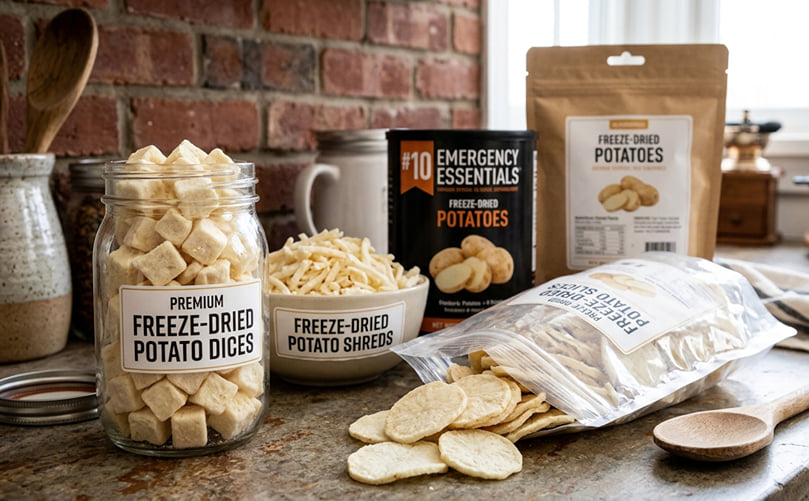
Ultra-Long Shelf Life of Freeze-Dried Potatoes: Stability Without Compromise
Balancing Performance and Cost: Advantages and Limitations of Freeze-Dried Potatoes
Freeze-dried potato products offer several compelling advantages, particularly in terms of quality and functionality. They provide near complete retention of nutrients, natural color, flavor and volatile compounds with minimal shrinkage or structural damage during processing. The resulting highly porous structure enables rapid rehydration, allowing the product to closely resemble fresh potatoes in texture and taste. Additionally, these products are extremely lightweight, significantly reducing transportation costs and contributing to a lower carbon footprint. They require no refrigeration, offer an extended shelf life exceeding 25 years and support clean label formulations with minimal or no additives. Their versatility across retail, foodservice, military, emergency and industrial applications, combined with superior sensory quality compared to conventionally air-dried products, supports premium pricing and strong consumer demand, especially in convenience driven and health-conscious markets.
However, freeze drying also presents notable limitations, primarily related to cost and operational complexity. The process is significantly more energy intensive typically 4 to 10 times higher than hot air or infrared drying and requires specialized, high cost equipment. Processing times are considerably longer, often ranging from 24 to over 72 hours per cycle, which can limit production throughput. High capital investment and energy consumption make it less suitable for low value or bulk commodity products. Furthermore, precise process control is essential to prevent structural collapse or incomplete drying, adding to operational challenges.
Despite these constraints, the limitations are often outweighed in premium market segments. The combination of superior product quality, extended shelf life and logistical advantages frequently results in a strong return on investment, particularly where product differentiation and long-term storage are critical.
Rising Demand and Future Growth: Market Trends Shaping Freeze-Dried Potatoes
Demand for freeze dried potato products continues to grow strongly, driven by the global expansion of convenience foods, ready-to-eat meals, meal kits, health-oriented snacking and emergency preparedness solutions. The broader dehydrated potato products market was valued at approximately $8.26 billion in 2024 and is projected to reach around $15.76 billion by 2034, reflecting a compound annual growth rate (CAGR) of about 7.5%. Within this category, freeze-dried products are steadily gaining a larger share of the premium segment due to their superior rehydration performance, nutritional retention and overall quality.
The global freeze-dried food market is also experiencing rapid expansion. It is estimated to grow from roughly $34.3 billion in 2026 to about $63.3 billion by 2036 with a CAGR of approximately 6.3%. Some market analysis suggests even higher growth potential with projections reaching up to $202 billion by 2032 at a CAGR of around 8.3%. This growth is fueled by increasing consumer preference for clean label products, plant-based diets and lightweight, portable food solutions.
Key industry trends include the dominance of the Asia Pacific region in both production and consumption along with strong export growth from major producing countries. The adoption of freeze-dried potato ingredients is increasing in quick service restaurants and the HoReCa (Hotels, Restaurants and Catering) sector, where labor efficiency and consistent quality are critical. Additionally, these products are being incorporated into functional snacks, instant beverages and innovative food formulations.
Clean label positioning and high nutritional density characterized by minimal processing and retention of bioactive compounds are attracting health-conscious consumers. At the same time, demand from emergency food supply chains, outdoor recreation and disaster preparedness markets has expanded significantly in the post-pandemic period. Innovations such as hybrid product formats and the use of pigmented potato varieties with enhanced antioxidant properties are further strengthening the premium appeal.
Overall, the industry outlook remains highly positive beyond 2030, supported by ongoing urbanization, increasingly busy lifestyles and the need for resilient, long-lasting food supply systems across global markets.
Sustainable Innovation and Future Potential of Freeze-Dried Potatoes
Freeze-drying contributes to sustainability by enabling the valorization of surplus and cosmetically imperfect potatoes, thereby significantly reducing post-harvest losses. The process also produces lightweight products achieving up to 80% weight reduction compared to fresh potatoes which lowers transportation requirements and associated emissions. Additionally, the extended shelf life eliminates the need for refrigeration during storage and distribution, reducing dependence on energy intensive cold chain systems.
Despite these advantages, freeze-drying remains an energy intensive process. To address this, ongoing technological advancements are focused on improving efficiency. Hybrid drying systems that combine freeze drying with technologies such as microwave, infrared, ultrasound or atmospheric drying have shown the potential to reduce drying time and energy consumption by approximately 30–40% while maintaining product quality. Furthermore, the integration of renewable energy sources including solar, wind and biomass, along with waste heat recovery from potato processing operations is helping to reduce the overall carbon footprint.
Looking ahead, the future scope of freeze-dried potato processing includes the development of advanced atmospheric freeze-drying systems designed to operate at lower energy inputs. Innovations such as AI-driven process optimization, phase change material-based thermal storage and pre-treatment techniques like pulsed electric fields or osmotic conditioning are expected to further enhance porosity, reduce drying time and improve overall efficiency.
Sustainability is also being strengthened through circular economy approaches. By-products such as potato peels and processing residues are increasingly being utilized for value added applications including animal feed and other co-products, supporting zero waste objectives. Ongoing research is emphasizing exergy analysis, green energy integration and scalable hybrid drying technologies to balance product quality with environmental impact.
As global priorities shift toward food security, resource efficiency and decarbonization, freeze-dried potato products are expected to play an increasingly important role in building resilient supply chains and supporting sustainable, clean label food systems.