

Sponsor of the month(Learn more)
December 15, 2024
AgriLife Research leads collaboration to address zebra chip disease
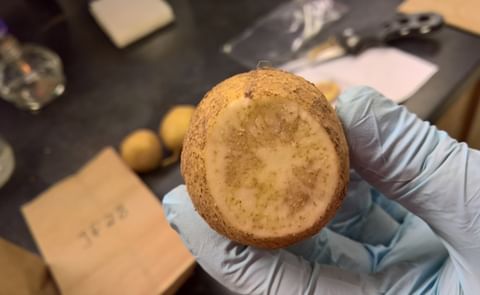
Texas A&M AgriLife Research scientists are working on a new research project to fight plant diseases transmitted by psyllid insects — particularly the zebra chip disease, which has impacted potato production for decades.
September 04, 2022
Texas A&M Potato Breeding Program targets french fry, chipping, fresh markets
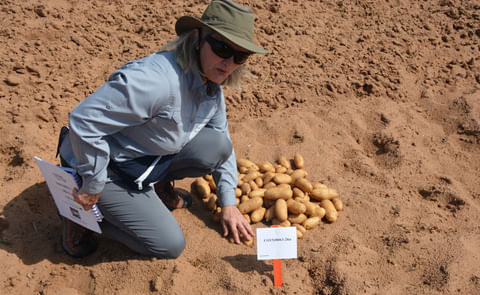
New potato varieties bred by the Texas A&M Potato Breeding Program could enter the french fry market before long, said Isabel Vales, Ph.D., Texas A&M AgriLife potato breeder in the Department of Horticultural Sciences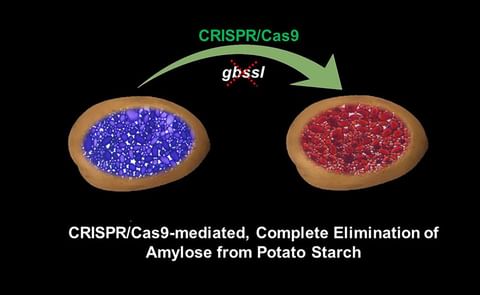
May 28, 2022
Texas A&M AgriLife researchers use CRISPR technology to modify starches in potatoes
Humble potatoes are a rich source not only of dietary carbohydrates for humans, but also of starches for numerous industrial applications. Texas A&M AgriLife scientists are learning how to alter the ratio of potatoes’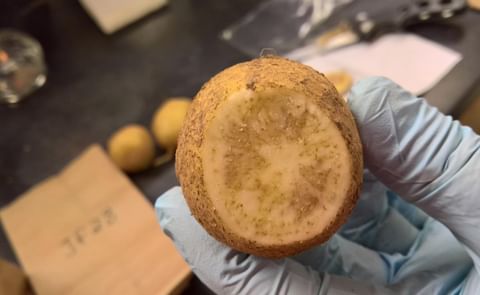
April 23, 2017
Variety screening reveals potatoes with resistance to zebrachip disease
The Texas A&M AgriLife Research plant pathology team intentionally infected potato plants with psyllids positive with the bacterium that causes zebra chip disease, in order to identify promising germplasm in the battle against the disease plaguing the US potato industry for the past 15 years.From the archive

April 02, 2017
Neonicotinoid insecticides losing efficiency in potato psyllid control
The potato industry may be losing a mainstay in the battle against psyllids, according to a recent Texas A&M AgriLife Research study.From the archive
August 01, 2016
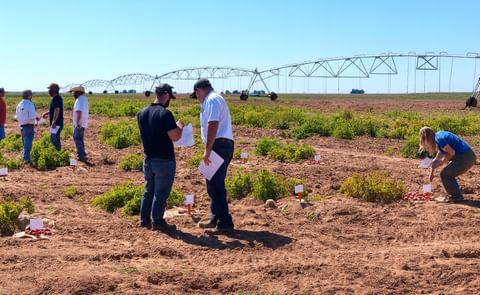
Harvest, psyllids & new varieties the hot topics at Texas potato field day
Participants at the 25th annual Texas Potato Breeding and Variety Development Program field day learned that the harvest is underway, that psyllids are threatening unharvested fields and that new varieties are showing lots of promise.From the archive
Sponsored Content
Sponsored Content
Sponsored Content

April 25, 2016
Growing Insecticide Resistance of Potato Psyllids investigated at AgriLife Research
Entomologist Ada Szczepaniec at Texas A&M AgriLife Research is addressing the concern of growing resistance of potato psyllids to the neonicotinoid classification of insecticides.From the archive

January 13, 2014
Bayer CropScience survey at Potato Expo digs up Potato Industry needs for 2014
According to United States Department of Agriculture’s crop production predictions, average potato yield per acre increased during the 2013 season.In an effort to propel this upward trend into the New Year, Bayer CropScience launched its Potato Perspectives Survey during Potato Expo in San Antonio, Texas, Jan. 8-10, 2014.
From the archive

July 02, 2012
AgriLife Research zeroes in on potato disease insect
Do potato psyllids migrate from one location to the next, starting in northern Mexico and moving northward as the potato season progresses, or are psyllid populations local?From the archive

November 01, 2011
Zebra chip research gains importance as disease spreads
Zebra chip, a disease that affects potatoes, was recently found in the potato-growing regions of Washington, Oregon and Idaho. The discovery brings to focus the growing need for scientific answers – something that will be discussed at the SCRI Zebra Ch...From the archive
Sponsored Content