

Meet the White Grub: A Hidden Threat to Potato Production
White grubs, the larval stage of scarab beetles (Family: Scarabaeidae), are among the most destructive soil dwelling pests affecting potato (Solanum tuberosum L.) production worldwide. These pests feed on roots, stolons and developing tubers beneath the soil surface, disrupting water and nutrient uptake and reducing plant vigor. Their feeding activity creates wounds that serve as entry points for secondary pathogens further increasing crop losses. Infested plants often exhibit wilting, yellowing, stunted growth and uneven crop stands, while damaged tubers develop holes and cavities that reduce marketability and storage quality.
White grub infestations are particularly severe in fields previously under grasses, pastures or other preferred host crops. Sandy and well drained soils often favor their development. Because larvae remain concealed underground for most of their life cycle, effective management can be challenging and requires an integrated pest management (IPM) approach that combines cultural, biological and chemical control measures.
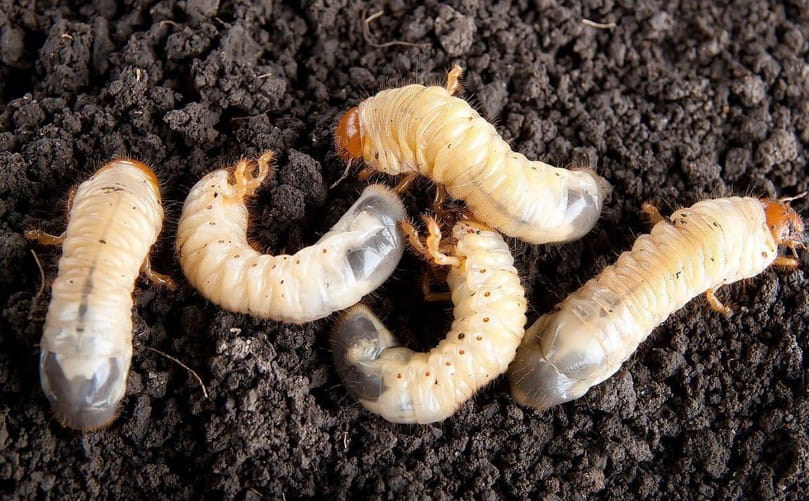
White Grubs: Major Soil Dwelling Pests of Potato
What Are White Grubs?
White grubs are the immature larval stage of various scarab beetles belonging to the order Coleoptera and family Scarabaeidae. Most economically important species belong to the subfamily Melolonthinae, including genera such as Holotrichia, Leucopholis and Phyllophaga. These larvae are commonly known as white grubs because of their creamy-white body color, brown head capsule and characteristic C-shaped posture.
White grubs undergo complete metamorphosis passing through four distinct developmental stages: egg, larva, pupa and adult beetle. The duration of the life cycle varies among species and environmental conditions. Most economically important species complete one generation per year, although some species, particularly certain Phyllophaga species may require two to three years to complete their development.
Understanding the White Grub Life Cycle and Biology
Egg Stage: Adult female beetles lay pearly white, oval shaped eggs in moist soil, typically at depths of 5–15 cm. Eggs are usually deposited singly or in small clusters near suitable host plants. Depending on soil temperature and moisture conditions, eggs hatch within a few weeks.
Larval Stage (White Grub): The larval stage consists of three instars and is responsible for nearly all economic damage in potato crops. Newly hatched larvae begin feeding on small roots before progressing to larger roots, stolons and developing tubers. The second and third instars are the most destructive, consuming substantial amounts of plant tissue and causing severe crop losses. Grubs remain underground throughout their development, feeding continuously and growing in size. During unfavorable conditions or winter periods in temperate regions, larvae may move deeper into the soil profile before returning to the root zone when conditions improve.
Pupal Stage: After completing larval development, mature grubs construct earthen chambers in the soil where pupation occurs. The pupal stage is inactive and non-feeding during which the larva transforms into an adult beetle. Depending on the species and environmental conditions, this stage may last from several weeks to over a month.
Adult Beetle Stage: Adult scarab beetles emerge from the soil during favorable environmental conditions, often following the onset of rains in tropical regions or during spring and summer in temperate areas. Adults feed on the foliage of various host plants, mate and subsequently lay eggs in the soil to begin a new generation. While adult feeding may cause some defoliation the damage is generally minor compared to that caused by the larval stage.
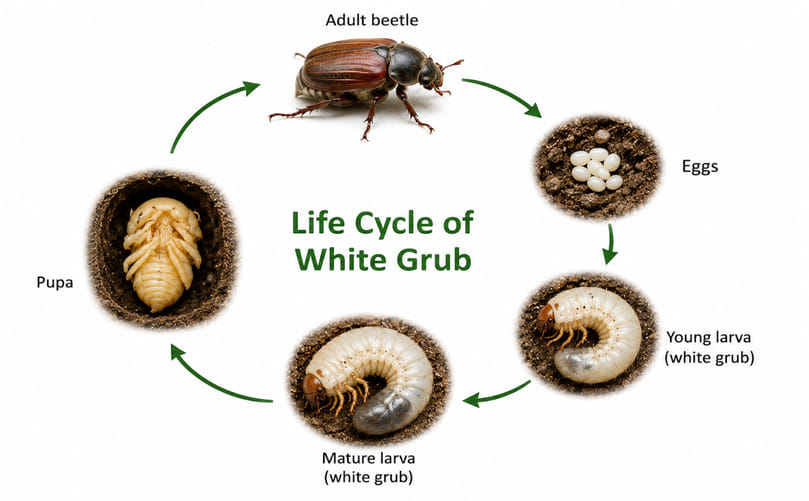
Life Cycle of White Grubs in Potato Fields
Why White Grubs Are Destructive to Potato Crops?
The larval stage is the most damaging because white grubs spend the majority of their life underground feeding on roots, stolons and tubers. Their feeding reduces water and nutrient uptake, weakens plant growth, causes wilting and stunting and creates wounds that facilitate infection by secondary pathogens. Since the larvae remain concealed beneath the soil surface, infestations often go unnoticed until significant crop damage has already occurred. As a result, white grubs are considered among the most economically important soil dwelling pests of potato production worldwide.
Important White Grub Species Affecting Potato
Several white grub species are important pests of potato production worldwide with their significance varying by region.
Holotrichia serrata: One of the most important white grub species in India, particularly in southern and western potato growing regions. The larvae attack roots and tubers of potato as well as several other agricultural crops.
Holotrichia consanguinea: A widely distributed species in South Asia that infests potato, groundnut and numerous field crops. It is considered a major agricultural pest in several regions.
Leucopholis lepidophora:An economically important species in parts of India, especially in areas where potato and sugarcane are cultivated. It is characterized by a relatively long developmental cycle compared to many other white grub species.
Other Important Species: Additional species associated with potato damage include Holotrichia reynaudi, Lepidiota mansueta, Brahmina coriacea, Anomala spp and various Phyllophaga species, commonly known as May or June beetles in North America.
Species identification is often based on adult morphological characteristics or the distinctive raster pattern located on the underside of the larval abdomen.
Distribution and Economic Importance of White Grubs
White grubs occur in potato growing regions throughout the world, including Asia, Europe, North America, Africa and Latin America. They are particularly problematic in tropical and subtropical regions where environmental conditions support large beetle populations.
In India, white grubs are among the most important soil insect pests affecting potato and several other crops. Significant infestations have also been reported in Nepal, China and other Asian countries. In North America and Europe, damage is often associated with potato crops planted after pasture, turfgrass or sod fields.
Economic losses result from both reduced yields and diminished tuber quality. Feeding damage creates holes and cavities in tubers making them unsuitable for fresh markets, processing, seed production and long-term storage. Severe infestations can cause substantial economic losses, particularly when pest populations remain unmanaged.
Host Range: Crops Vulnerable to White Grub Attack
White grubs are highly polyphagous pests and have been reported feeding on a wide range of cultivated and wild plant species.
Important host crops include potato, sweet potato, maize, sorghum, pearl millet, wheat, sugarcane, groundnut, soybean, pulses, cotton, tobacco and numerous vegetable crops such as brinjal, chilli, okra and cucurbits.
Larvae primarily feed on roots and underground plant parts, whereas adult beetles feed on foliage of trees, shrubs and agricultural crops. Fields previously planted with grasses or pasture vegetation often harbor high grub populations, increasing the risk of infestation in subsequent potato crops.
Recognizing White Grubs at Different Life Stages
Egg Stage: The eggs are small, smooth, oval and creamy white in color. They are deposited in moist soil near host plants and gradually increase in size as they absorb moisture.
Larval Stage: White grub larvae are easily recognized by their characteristic C-shaped body. They possess a creamy white abdomen, a distinct brown head capsule, strong chewing mandibles and three pairs of well-developed thoracic legs. Mature larvae may reach 2.5–5 cm in length depending on the species. The raster pattern on the terminal abdominal segment is an important diagnostic feature used for species identification.
Pupal Stage: Pupae are found inside earthen chambers within the soil. They are initially pale in color and gradually darken as adult structures develop.
Adult Beetle: Adult scarab beetles are stout bodied insects that vary in size and coloration among species. Most are brown to dark brown and emerge during the rainy season or warm spring and summer periods. Adults feed on foliage before mating and laying eggs in the soil.
Accurate species identification, particularly at the larval stage, often requires examination of raster patterns or rearing larvae to adulthood for confirmation.
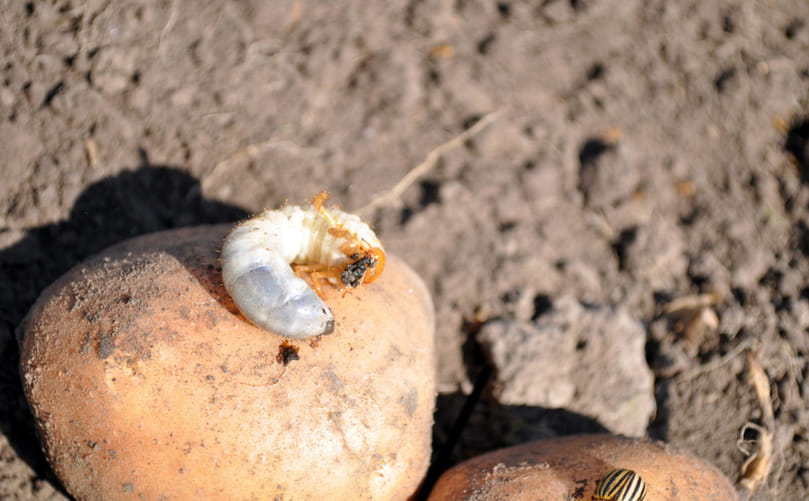
White Grub Larvae Feeding on Potato Tubers
Symptoms and Damage Caused by White Grubs in Potato
White grubs cause significant damage to potato crops through their subterranean feeding activity. The larvae feed on roots, stolons and developing tubers, reducing plant vigor and directly affecting tuber quality and yield. Damage is often more severe in fields with a history of grasses, pasture vegetation or continuous cultivation of susceptible host crops.
Above Ground Symptoms: The first signs of white grub infestation are often observed in the crop canopy. Affected plants may exhibit wilting despite adequate soil moisture because root feeding reduces the plant's ability to absorb water and nutrients. Infested plants commonly show yellowing (chlorosis), reduced vigor, stunted growth and poor overall development. As damage progresses, fields may develop patchy areas containing weak, dying or missing plants, symptoms that can easily be mistaken for drought stress, nutrient deficiencies or root diseases.
Under severe infestations, heavily damaged plants may dry out completely and can often be pulled from the soil with little resistance due to extensive root destruction. These symptoms typically become more noticeable as larvae grow and their feeding activity increases.
Below Ground Symptoms: Examination of the root zone reveals the characteristic damage caused by white grubs. Larvae feed on roots and stolons, reducing root mass and disrupting the plant's vascular system. Root pruning limits the uptake of water and nutrients, resulting in poor plant growth and reduced tuber development.
Feeding may also occur on underground stems and stolons, creating wounds that weaken plant health and increase susceptibility to secondary infections. However, the most economically significant damage occurs when larvae attack developing potato tubers.
Tuber Damage: White grubs feed directly on potato tubers, producing large, irregular holes, cavities and gouges that can extend deep into the flesh. These feeding injuries are generally larger and more irregular than those caused by wireworms. Damaged tubers often exhibit rough feeding scars and open wounds that significantly reduce their commercial value.
As tubers mature, feeding damage becomes increasingly severe because larger larvae preferentially attack the nutrient rich tubers. The resulting wounds provide entry points for bacterial and fungal pathogens leading to secondary rots and further quality deterioration.
Economic Impact of Tuber Damage: Tuber injury represents the most visible and economically important consequence of white grub infestations. Damaged potatoes are frequently rejected in fresh markets due to their poor appearance and reduced quality. Processing industries also reject heavily damaged tubers because feeding cavities affect product quality and processing efficiency.
During storage, wounded tubers are highly vulnerable to bacterial and fungal infections, resulting in increased storage losses. Damage to seed potatoes is particularly problematic because injured tubers may exhibit poor sprouting, reduced vigor and increased susceptibility to disease.
In areas where white grub populations are well established, infestations can cause substantial reductions in both yield and marketable production. Economic losses result not only from reduced tuber quantity but also from quality downgrading, storage losses and increased pest management costs. Consequently, white grubs are considered among the most important soil dwelling insect pests affecting potato production worldwide.
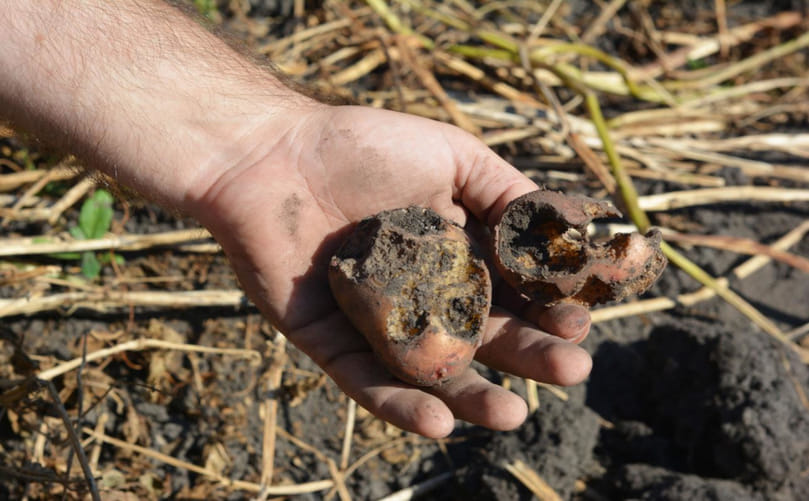
Potato Tuber Damaged by White Grub Feeding
Post-Harvest Impact of White Grub Damage on Potato Tubers
White grubs cause significant damage to potato tubers by feeding on developing underground tissues, creating large holes, cavities and gouges that reduce market quality and yield. These wounds serve as entry points for bacteria and fungi that cause soft rots, dry rots and other storage diseases. Damaged tubers also lose moisture more rapidly and deteriorate faster than healthy potatoes, resulting in reduced storage life and increased post-harvest losses.
Effective post-harvest management begins with careful sorting and grading immediately after harvest. Tubers showing feeding damage, wounds or signs of disease should be removed to prevent the spread of storage rots. Proper curing at 15–20°C and high relative humidity for 10–14 days promotes wound healing and skin suberization, reducing susceptibility to infection and moisture loss. Gentle handling during harvesting, transport and storage is equally important to minimize additional injuries.
Maintaining appropriate storage conditions is essential for preserving tuber quality. Potatoes should be stored at temperatures of 4–10°C, depending on their intended use with relative humidity maintained at approximately 90–95% and adequate ventilation. White grub damaged seed potatoes often show reduced germination and vigor, while marketable tubers may be rejected because of cosmetic and internal defects. Therefore, integrating effective field management with proper curing, grading and storage practices is critical for minimizing economic losses and maintaining potato quality throughout the post-harvest period.
Environmental Conditions Favoring White Grub Infestations
White grub infestations are strongly influenced by soil characteristics, climatic conditions, cropping history and the availability of suitable host plants. Understanding these factors is essential for predicting pest outbreaks and implementing effective management strategies.
Soil Type: White grubs are commonly associated with light textured soils, particularly sandy and sandy loam soils. These soils facilitate adult beetle oviposition, larval movement and access to plant roots and tubers. Well-drained soils with moderate levels of organic matter generally provide favorable conditions for egg survival and larval development.
Soil Moisture and Rainfall: Seasonal rainfall plays a critical role in the life cycle of white grubs. In many regions, adult beetle emergence coincides with the onset of monsoon rains or other periods of increased precipitation. Moist soil conditions promote egg laying, egg hatch, and the survival of newly emerged larvae. Moderate soil moisture is ideal, whereas prolonged waterlogged conditions can reduce egg and larval survival.
Host Availability and Cropping History: Fields with a history of grassy vegetation, pasture, turf or susceptible crops often harbor higher white grub populations. Crops such as maize, sorghum, pearl millet, sugarcane and groundnut can serve as important hosts allowing populations to build up before potato cultivation. Continuous cropping of susceptible hosts and limited crop rotation increase the risk of infestation.
Tillage Practices: Reduced tillage or no-till production systems generally favor white grub survival by minimizing soil disturbance. In contrast, deep ploughing can expose eggs, larvae and pupae to desiccation, predators and adverse environmental conditions helping to reduce pest populations.
Organic Matter and Soil Temperature: Soils rich in organic matter provide a favorable environment for white grub development by improving soil structure and moisture retention. Warm soil temperatures accelerate larval growth and development, often increasing pest activity during the growing season.
Landscape and Environmental Factors: White grub infestations are frequently more severe in fields located near trees and shrubs that serve as feeding sites for adult beetles. Sunny, well-drained areas may also support higher populations. Infestations often occur in patches because female beetles preferentially select specific sites for egg laying based on soil conditions, vegetation and moisture levels.
Climate Influence: Regions characterized by warm temperatures and distinct rainy seasons generally provide ideal conditions for white grub establishment and population growth. Favorable climatic conditions can enhance adult emergence, reproduction and larval survival, increasing the likelihood of economically significant infestations in potato crops.
Integrated Pest Management (IPM) for White Grubs in Potato
Integrated Pest Management (IPM) for white grubs is a sustainable, ecosystem-based approach that combines cultural, mechanical, biological, botanical and chemical control measures to maintain pest populations below economically damaging levels while minimizing environmental impacts, pesticide resistance and production costs. Successful management relies on prevention, regular monitoring and prioritizing non-chemical methods whenever possible.
Cultural Control: Cultural practices form the foundation of white grub management in potato production systems. Deep summer ploughing, preferably conducted multiple times during hot and dry periods, exposes eggs, larvae and pupae to desiccation, predation and solar radiation, thereby reducing pest survival. Crop rotation with non-host or less preferred crops can help break the pest life cycle, while continuous cultivation of crops such as maize, sugarcane, groundnut or other grasses should be avoided in heavily infested areas.
Good field sanitation, including the removal of crop residues and alternate host plants, reduces breeding and feeding sites. Planting certified, healthy seed potatoes promotes vigorous crop establishment and improves plant tolerance to pest damage. Proper irrigation and drainage management are also important as excessively moist soils can favor egg laying and larval survival.
Mechanical and Physical Control: Mechanical and physical methods can help suppress white grub populations, particularly during adult emergence periods. Adult beetles can be collected manually and destroyed when they congregate on host trees for feeding and mating. Light traps installed at approximately one trap per hectare and operated during evening hours can attract and capture adult beetles, reducing egg laying populations. In small scale production systems, soil disturbance and solarization may further reduce larval populations by exposing immature stages to unfavorable environmental conditions.
Biological Control: Biological control is a key component of sustainable white grub management and can provide long-term suppression when properly integrated into IPM programs. Entomopathogenic fungi such as Metarhizium anisopliae, Metarhizium brunneum and Beauveria bassiana have demonstrated effectiveness against white grub larvae when applied as soil treatments, granules or enriched organic amendments. These fungi infect and kill grubs and may persist in the soil, providing extended control.
Entomopathogenic nematodes (EPNs), including Heterorhabditis indica and various Steinernema species, actively seek out and infect white grubs in the soil making them valuable biological control agents. Natural predators such as birds, ground beetles, ants and other beneficial organisms should be conserved through habitat management and reduced use of broad-spectrum insecticides. In some regions, microbial agents such as Paenibacillus popilliae, the causative organism of milky spore disease may contribute to long-term suppression of susceptible white grub species.
Botanical Management: Botanical products can complement other IPM measures. Neem-based products containing azadirachtin as well as neem cake incorporated into the soil can reduce adult oviposition, deter larval feeding and suppress grub populations. Other plant derived repellents and antifeedants may provide supplementary protection when integrated with cultural and biological control measures.
Chemical Control: Chemical control should be considered only when monitoring indicates that white grub populations are approaching or exceeding economic thresholds. Soil applied insecticides registered for white grub management can provide targeted control when applied according to local recommendations. In high risk areas, seed treatments or granular formulations may be used as preventive measures where permitted. To minimize resistance development and environmental impacts, insecticides should be rotated among different modes of action and used as part of an integrated program rather than as a standalone solution. All applications should follow local label recommendations and observe applicable pre-harvest intervals.
Monitoring and Decision Making: Regular field scouting is essential for successful IPM implementation. Monitoring should include inspection for wilting plants, root feeding damage and the presence of larvae in the root zone. Adult beetle activity should also be monitored during emergence periods using light traps and field observations. Accurate monitoring data help growers make informed management decisions and avoid unnecessary pesticide applications.
Practical White Grub Management Strategies for Potato Farmers
Effective management of white grubs in potato requires a preventive and integrated approach that combines cultural, biological, mechanical and chemical control measures. The following best management practices can help growers minimize infestations and reduce economic losses.
Prevention and Crop Rotation: Prevention is the most effective strategy for managing white grubs. Avoid planting potatoes immediately after grasses, pasture, turf or sod fields, as these environments often harbor high white grub populations. Implementing a crop rotation program of at least 2–3 years with non-preferred host crops can help break the pest's life cycle and reduce infestation levels.
Soil and Field Preparation: Deep summer ploughing performed two to three times before planting exposes eggs, larvae and pupae to predators, sunlight and desiccation, reducing their survival. Maintaining good soil drainage is equally important as poorly managed fields may create favorable conditions for pest development. Proper field sanitation and the removal of weeds and alternate host plants can further limit population buildup.
Regular Monitoring and Early Detection: Routine field scouting is essential for identifying infestations before economic damage occurs. Farmers should periodically inspect fields by digging soil samples or pits approximately 30 × 30 cm around potato plants to detect the presence of larvae. Monitoring adult beetle activity using light traps during seasonal emergence periods can also provide valuable information on potential infestation risks. Early detection allows timely implementation of control measures before severe damage develops.
Optimum Crop Management: Timely planting, the use of healthy seed tubers, balanced fertilization and proper irrigation contribute to vigorous crop growth and improved tolerance to pest injury. Healthy root systems are better able to withstand moderate feeding damage and recover from early infestations.
Biological and Botanical Management: Preventive applications of neem-based products, particularly neem cake, can help suppress white grub populations in high-risk fields. Biological control agents such as Metarhizium anisopliae and Beauveria bassiana can be incorporated into soil management programs to reduce larval survival. Entomopathogenic nematodes may also provide effective control when soil moisture and temperature conditions are favorable for their activity.
Mechanical Control: Mechanical management focuses primarily on reducing adult beetle populations. Light traps can be installed during peak beetle emergence periods, particularly following seasonal rains. Adult beetles collected from traps or host trees can be destroyed to reduce egg-laying and subsequent larval populations.
Judicious Chemical Control: Chemical control should be used only when pest populations exceed economic thresholds and should always follow local agricultural recommendations and label instructions. Targeted soil applications are generally more effective than foliar sprays because white grubs feed below ground. Excessive reliance on broad-spectrum insecticides should be avoided to preserve beneficial organisms and maintain long-term sustainability.
Post-Harvest Management: After harvest, damaged tubers should be separated and removed to prevent quality deterioration during storage. Healthy potatoes should be properly cured and stored under well-ventilated conditions to minimize losses from secondary infections. Tubers showing signs of white grub damage should not be used as seed potatoes because they may exhibit poor sprouting and reduced vigor.
Record Keeping and Adaptive Management: Maintaining detailed records of field history, infestation levels, crop rotations and management practices can help farmers identify recurring problem areas and improve future control strategies. Since white grub populations are influenced by local environmental conditions and climatic factors, growers should regularly consult agricultural extension services and adapt management programs to regional recommendations.
When these practices are integrated into a comprehensive pest management strategy, farmers can significantly reduce white grub infestations, protect tuber quality, improve yields and lower long-term production costs. Such an approach is suitable for both smallholder and commercial potato production systems.
Climate Change and the Emerging Threat of White Grubs in Potato Production
Climate change is expected to significantly influence white grub populations by altering temperature patterns, rainfall distribution and the frequency of extreme weather events. Rising temperatures and milder winters may advance adult beetle emergence, extend their period of activity and increase synchronization with host crops. In some regions, warmer conditions may accelerate larval development and potentially increase the number of generations completed per year leading to greater pest pressure.
Higher temperatures can also improve the survival of overwintering stages and enhance reproductive success, contributing to increased population densities and more frequent outbreaks. In addition, climate change may facilitate the expansion of white grub populations into previously unsuitable areas, including higher elevations and cooler regions. Changes in rainfall patterns may create favorable soil moisture conditions for egg laying and larval survival, while drought stressed potato plants may become more susceptible to root and tuber damage.
Climate driven changes in cropping systems, planting dates and growing seasons may further influence white grub incidence and severity. Although extreme heat and prolonged drought may reduce survival in some locations, most projections indicate an increased risk of white grub infestations in many potato growing regions. These challenges highlight the importance of adaptive Integrated Pest Management (IPM) strategies, continuous monitoring and climate resilient crop production practices to minimize future losses.
Economic Impact of White Grubs on Potato Production
White grubs cause substantial economic losses in potato production through root pruning, stolon severance and direct feeding on developing tubers. Damage to the root system reduces the plant's ability to absorb water and nutrients, resulting in poor plant vigor, reduced tuber development and lower yields. In endemic regions, particularly in India and other parts of Asia, yield losses typically range from 10–20% under moderate infestations and may reach 40–80% during severe outbreaks. Such losses are especially common in fields with a history of grassy vegetation, pasture or reduced tillage practices that favor white grub survival and population buildup.
Yield reductions are caused by both decreased tuber numbers and lower tuber weights. Severe infestations often result in patchy crop stands, plant mortality and uneven crop development, further reducing overall productivity.
Beyond yield losses, white grubs significantly affect tuber quality and marketability. Larval feeding creates large holes, scars, cavities and gouges in potato tubers, making them unsuitable for fresh consumption, processing or seed purposes. Damaged tubers are frequently downgraded or rejected by buyers, resulting in lower market prices and reduced farm income.
Feeding wounds also provide entry points for secondary pathogens, including bacteria and fungi responsible for storage rots. Consequently, losses continue after harvest as infected tubers deteriorate during storage and transportation. Seed potatoes damaged by white grubs may exhibit poor sprouting, reduced vigor and increased susceptibility to disease, negatively affecting crop establishment in subsequent seasons.
Additional economic burdens arise from the costs associated with monitoring, cultural practices, biological control agents, insecticide applications and field sanitation measures. In heavily infested fields, growers may incur expenses related to replanting and intensified pest management programs, further reducing profitability.
The cumulative impact of white grub infestations extends beyond individual farms. At regional and national levels, significant production losses can affect potato supply chains, threaten food security in potato dependent areas and contribute to increased production costs. Smallholder farmers are particularly vulnerable because yield losses, quality degradation and higher management expenses can substantially reduce household income.
Climate variability and changing weather patterns may further influence white grub distribution, survival and population dynamics, potentially increasing the frequency and severity of infestations in some potato growing regions. Therefore, the adoption of Integrated Pest Management (IPM) strategies is essential to minimize economic losses, protect tuber quality and ensure sustainable potato production.
Future Research Directions and Sustainable Management of White Grubs in Potato
As concerns over pesticide resistance, environmental sustainability and climate change continue to grow, future research on white grub management should focus on developing resilient, environmentally friendly and economically viable solutions for potato production systems. Advancing integrated approaches will be essential for reducing reliance on chemical insecticides while maintaining effective pest control.
Biological Control Innovations: Further research is needed to improve the effectiveness, persistence, and commercial viability of biological control agents such as Metarhizium anisopliae, Beauveria bassiana and entomopathogenic nematodes (EPNs). Efforts should focus on strain selection, formulation improvements, enhanced shelf life and better field performance under diverse environmental conditions. Novel delivery systems, including microsclerotial granules and other soil applied formulations may improve establishment and persistence in the rhizosphere. The potential for combining beneficial fungi and nematodes in integrated biological control programs also warrants further investigation.
Precision Pest Monitoring and Forecasting: The development of precision agriculture technologies offers significant opportunities for improving white grub management. Future research should explore automated light traps, smart soil sensors, remote sensing technologies, drone-based field monitoring and artificial intelligence (AI)-driven forecasting models. By integrating weather data, soil conditions, cropping history and historical infestation records, predictive systems could provide early warnings and support timely management decisions. Molecular tools and genetic markers may also facilitate rapid and accurate species identification, improving pest surveillance and management planning.
Host Plant Resistance: Developing potato varieties with improved tolerance or resistance to white grub feeding represents a promising long-term management strategy. Breeding programs can focus on identifying traits associated with root resilience, enhanced recovery capacity or natural defense mechanisms that reduce larval feeding and survival. Advances in molecular breeding and biotechnology may further accelerate the development of resistant cultivars suitable for different potato growing regions.
Sustainable Integrated Pest Management (IPM): Future research should strengthen sustainable IPM programs by evaluating agroecological approaches that enhance natural pest suppression. Studies on crop rotation systems, cover crops, habitat management, conservation agriculture and landscape level biodiversity can help improve the abundance and effectiveness of natural enemies. Research is also needed to understand how different cultivation practices influence white grub populations and their interactions with beneficial organisms.
Climate Change and Pest Adaptation: Climate change is expected to influence the distribution, abundance and seasonal activity of white grub species. Future studies should focus on developing climate adaptive models that predict changes in pest distribution, life cycle timing and outbreak risk under different environmental scenarios. Such information will be critical for designing proactive management strategies and supporting long-term agricultural resilience.
Eco-Friendly Pest Management Alternatives: The search for environmentally sustainable alternatives should continue through the evaluation of plant-based insecticides, microbial consortia, semio-chemicals and other biologically derived products. Research into pheromone-based technologies and behavioral manipulation strategies may provide innovative methods for disrupting adult mating, aggregation or oviposition. Long-term studies examining the effects of organic farming systems on white grub populations and soil biodiversity can further support sustainable production practices.
Socio-Economic and Adoption Research: The success of future management strategies will depend not only on technological innovation but also on farmer adoption. Participatory research involving farmers, researchers and extension specialists can help develop practical and locally adapted solutions. Additional studies on the economic feasibility of IPM programs, cost benefit analyses of biological control technologies and policy frameworks supporting biocontrol commercialization are particularly important for potato growing regions in Asia and other developing agricultural economies.
Sustainable White Grub Management: Future advances in biological control, precision monitoring, host plant resistance and climate smart pest management have the potential to transform white grub control in potato production. By integrating scientific innovation with farmer centered approaches, the potato industry can reduce dependence on chemical insecticides, promote biodiversity, improve environmental sustainability and enhance the long-term resilience of potato farming systems under changing global conditions.