
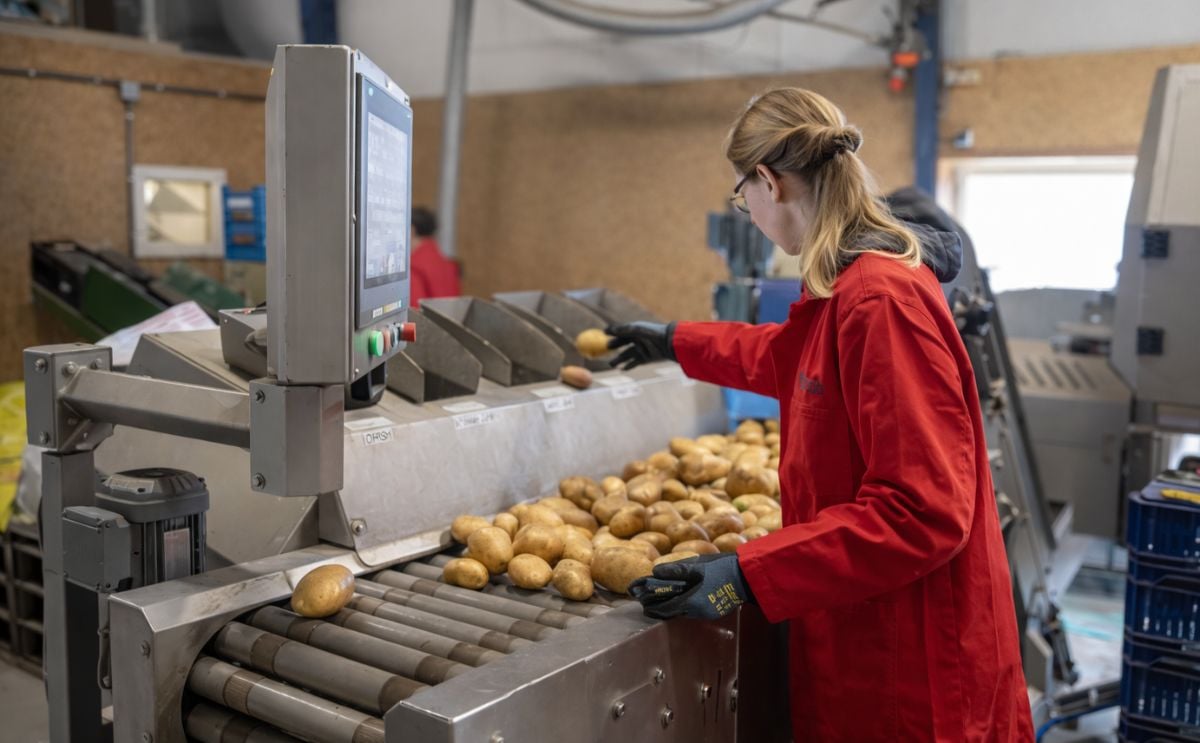
Clara operates sorting equipment to assess potato clones during the breeding process at HZPC
HZPC senior breeder Clara Polzer focuses on development of new potato varieties
Clara Polzer moved from Munich to Friesland this summer for her new position as Head of Breeding Fresh Markets at HZPC Research. During the interview, the German thirty-something already speaks Dutch well. The Netherlands is not entirely new to Clara. After studying agricultural sciences at the Technical University of Munich, she completed a master's degree in Plant Sciences at Wageningen University, specialising in Plant Breeding.
She started her career with a year and a half of work experience in hybrid potato breeding at Aardevo, located in the Dutch polder. Clara then embarked on a multi-year PhD research project in maize breeding at the University of Munich. In the final phase of that research, she applied for a position at HZPC, because her preference is to develop new potato varieties.
Right decision
Clara, Senior Breeder at HZPC:
"My first introduction to HZPC was a few years ago, during the Potato Days. Back then I got a positive impression of the company, and now that I’ve been working here since August, that impression has been confirmed. Here in Metslawier I’m in one of the most innovative places in this sector, surrounded by great colleagues and all the facilities needed to develop the varieties of the future."
"Why am I so passionate about this? It all started with my studies in agricultural sciences. I chose that path because I find the intersection of food production, economics and science very interesting—especially the question of how we can produce food sustainably in a time of climate change. Potatoes play an essential role in that: they are a crucial staple food for people all over the world."
"The very first plant breeding course I took during my degree immediately clicked. I knew: this is what I want to pursue, so I went to Wageningen to specialise in it. It’s a fascinating and dynamic field where knowledge, data and hands-on practice come together. And that’s certainly true here at HZPC. During my PhD research I travelled a lot to collect data in the fields. I see that same interplay here. Being among the plants, getting your hands dirty—that helps you really understand the practical side."
"I was trained to work with data, and with knowledge of genetics and technological selection methods you can determine a lot, but it doesn’t tell you everything. Field conditions and real-life situations matter too. That’s why it’s important to visit trial fields, gather input everywhere, and bring those practical insights into the selection process."
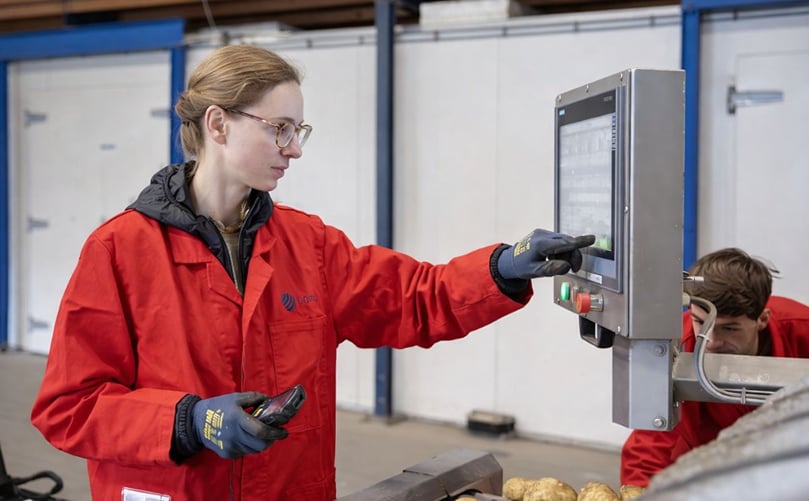
Clara Polzer inspects potatoes on the grading line as part of selection work for new variety development at HZPC
Visible development
Clara Polzer:
"Yes, breeding trajectories take a long time, but those future varieties already exist during all those years. They’re hidden among the 750,000 seedlings we see emerge each year after selecting the best crossings. We just don’t yet know which clones will be successful. Breeding is about defining good crossings, but even more about the search itself—filtering out the ones with the highest potential."
"I’m stepping into work that the breeding team at HZPC has been engaged in for many years. In the batches I now help to assess, I see an enormous diversity of potatoes and big differences between the first-year clones and the generations that are already six to eight years in. Through that, I see the development that’s underway and how, over the course of such a long process, you’re left with the very best varieties."
"It was incredibly valuable, because Jeroen has a lot of experience and a different background than I do. It’s great to be surrounded by experts I can spar with. That interaction is where the strength lies, because we all see and contribute something different. In my role, I’m responsible for developing varieties for Retail Fresh and Traditional Fresh."
"We continue to innovate, and based on changing insights and market needs we search for the ultimate crossings that bring all the desired traits together in one variety. We know it’s possible—just look at the current portfolio, which already offers so much. But it can always be improved, and with a world and climate in motion, new varieties will always be needed."
Music and breeding
Clara Polzer:
"The fact that HZPC’s varieties are shipped all over the world makes this job even more diverse. I work with product specialists, marketing specialists and sales agents, and I regularly travel to visit trial fields across the globe. That connection to practice gives me energy, because as soon as I’m in the field with the plants, I realise: it is about food and that is what makes this work so important."
"Yes, it requires patience, but we are building something of great value. I compare it to developing musicality. As a child, I learned to sing and speak at the same time, and for most of my life I’ve played the cello and the piano. Classical music demands endless practice, and it takes many years before you can really reap the rewards of all that studying, but with that effort you can create something truly beautiful, especially when playing together. And that’s how I see breeding as well."
"Perhaps. If the brain learns languages more easily through classical music, maybe that helps me in breeding too. Classical singing and playing require technical training as a foundation, yet in the end it’s about the combination of precision, creativity, technique and intuition. I do see parallels with breeding. In music you need a certain relaxation, but always combined with focus and the willingness to work hard. That’s exactly how I approach my new role at HZPC: full commitment with a clear goal in mind, to develop the varieties we aim for."
¿Te gustaría recibir noticias como esta por correo electrónico? ¡Únete y suscríbete!
Get the latest potato industry news straight to your WhatsApp. Join the PotatoPro WhatsApp Community!
Empresa Destacada
Noticias relacionadas

Octubre 11, 2026
EarthFresh Butter Potatoes llega a más de 4 millones de hogares ante el fuerte aumento de la demanda minorista
EarthFresh Butter Potatoes gana impulso en Norteamérica y llega a más de 4 millones de hogares. Con un aumento del 40 % de la superficie cultivada y un 100 % de ventas incrementales, la gama premium ofrece a los distribuidores nuevas oportunidades para hacer crecer la categoría de patata.
Octubre 11, 2026
El Simposio Internacional de la Patata en Madrid destaca los principales retos y oportunidades del sector europeo de la patata
El primer Simposio Internacional de la Patata en Madrid reunió a 250 profesionales para debatir los principales retos y oportunidades de la cadena de valor de la patata.

Septiembre 28, 2026
México: menor oferta de papa podría impulsar los precios durante el invierno
En México, el cierre de cosechas, los menores rendimientos y la reducción de la superficie sembrada podrían restringir la oferta de papa y generar presión al alza sobre los precios entre diciembre de 2026 y febrero de 2027.