Royal HZPC Group highlights plant breeding and Integrated Crop Management as key foundations for more resilient, sustainable and reliable potato production.
Royal HZPC Group: Potato Breeding Is the First Step Towards More Resilient and Sustainable Production

Public discussions about crop protection often focus on reducing the use of crop protection products. But what if the first step towards reducing inputs is not taken in the field at all? What if the solution begins years earlier, during the development of a new variety?
According to Robert Graveland, Head of R&D at Royal HZPC Group, plant breeding forms the foundation for stronger, more sustainable and future-proof potato production systems. Frank van der Werff, Head of Production at Royal HZPC Group, emphasizes that a good variety alone is not enough. It is the combination of genetics, crop management and practical knowledge, from soil health to disease management, that makes a cropping system truly resilient and sustainable.
The solution starts before the crop is planted
Discussions about crop protection often revolve around the use of crop protection products. Graveland says that while this is understandable, it is not where the story begins.
Robert Graveland, Head of R&D at Royal HZPC Group:
"With breeding, you prevent a problem instead of having to control it later."
If action is delayed until a disease appears in the field, growers are constantly trying to solve something that could potentially have been addressed at its source.
Robert Graveland:
"Everything you solve through breeding no longer needs to be controlled later, or only to a much lesser extent."
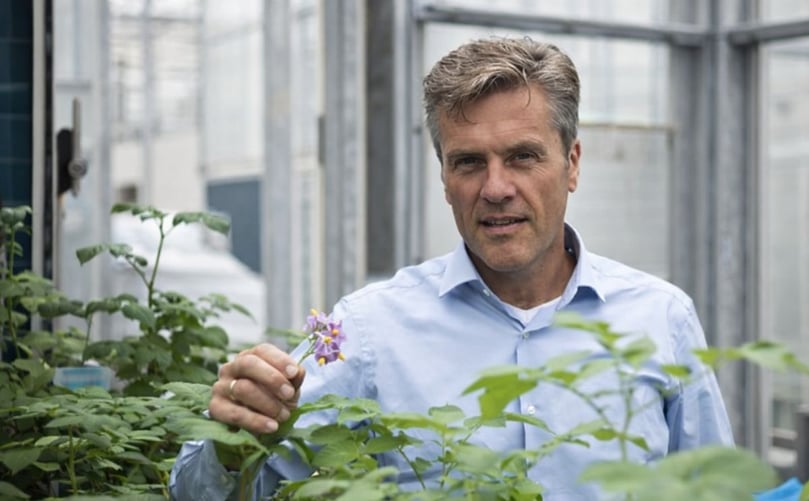
Robert Graveland, R&D manager at HZPC
According to Graveland, breeding forms the foundation of the entire chain.
Robert Graveland:
"Anything that does not meet the highest standards in breeding must be managed somewhere else in the chain later on. If you solve it in breeding, the rest of the chain can build on that."
This highlights a fundamental difference in thinking. Crop protection is often focused on managing problems, while breeding focuses on preventing them.
A resilient variety is, above all, a reliable variety
The term resilience is increasingly used throughout the industry. According to Graveland, however, resilience is about much more than disease resistance alone.
Robert Graveland:
"Ultimately, a resilient variety is a reliable variety."
A variety must perform consistently under a wide range of conditions, not only when the season is favourable, but also when weather patterns become less predictable.
Dry years, wet years, heat stress and changing disease pressure mean breeders are constantly faced with new challenges and trade-offs, including in the Netherlands.
Robert Graveland:
"We are seeing more extremes. That affects the resilience of the plant. A variety must be able to cope not only with diseases and pests, but also with changing environmental conditions."
For growers, that reliability translates into confidence. According to van der Werff, growers want to know exactly what a variety will deliver.
Frank van der Werff, Head of Production at Royal HZPC Group:
"They want a variety that provides yield, quality and performs as expected."
Why resistance alone is not enough
Resistant varieties are often seen as a simple solution that could eliminate the need for crop protection altogether. According to Graveland and van der Werff, reality is more nuanced. Some resistances, such as certain virus resistances, are highly stable. Others, including resistance to Phytophthora, can eventually be overcome as pathogens adapt over time.
This means a resistant variety is not the finish line, but rather a head start that must be carefully managed. Resistance management therefore remains essential alongside breeding strategies.
Robert Graveland:
"With certain resistances, you still need targeted protection to prevent the pathogen from adapting. In doing so, you protect the long-term effectiveness of the variety itself."
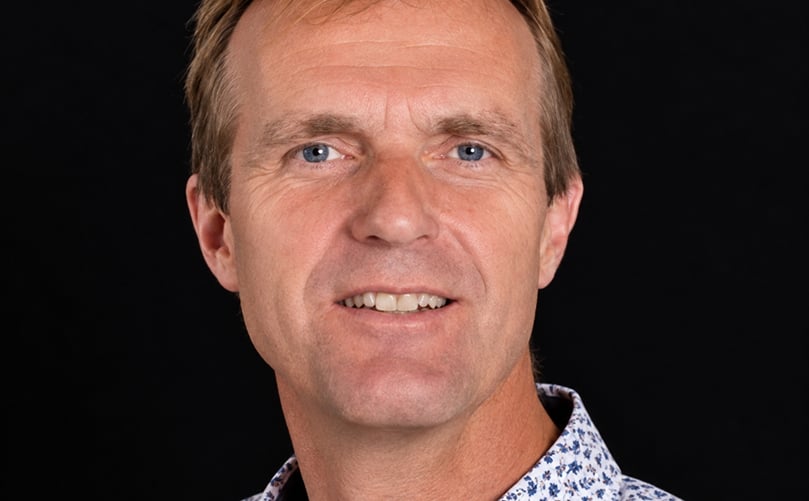
Frank van der Werff Occupation, Head of Production of Royal HZPC Group
Even a highly resistant variety does not immediately change an entire farm operation. As long as not all varieties in a grower's portfolio are virus resistant, aphid control, for example, remains necessary for the others.
Frank van der Werff:
"A resistant variety does not mean a grower can sit back and relax. Growers always have choices and opportunities to reduce disease pressure. By combining multiple measures, you can achieve a great deal."
Ultimately, it is the combination of genetics, crop management practices, crop rotation and professional expertise that determines how resilient a cropping system really becomes.
From strong varieties to resilient cropping systems
This is where Integrated Crop Management (ICM) comes into play. The Dutch Crop Protection Covenant places strong emphasis on ICM, an approach fully supported by Royal HZPC Group.
Frank van der Werff:
"It is a combination of genetics, crop management measures and crop protection. One cannot exist without the other."
In addition to choosing the right variety, many other factors influence crop resilience, including soil health, water management, fertilisation, monitoring and crop rotation.
Frank van der Werff:
"Growers always have options to reduce disease pressure. By combining different measures, you can achieve a lot."
What the industry has learned in recent years
Knowledge of resistance and resilience has increased significantly in recent years. Breeders now have a better understanding not only of how resistance works, but also of how pathogens behave and adapt.
Robert Graveland:
"We have learned that diseases do not only adapt to resistances, but also to crop protection products. As a result, we increasingly understand what is required to keep solutions effective over the long term."
At the same time, the impact of climate change has become increasingly clear. A variety responds differently in a dry year than in a wet one, and this growing unpredictability requires varieties that are resilient on multiple fronts, against fungal diseases as well as drought, heat and other abiotic stresses. Van der Werff also sees new challenges emerging in practice.
Frank van der Werff:
"Some diseases that were barely visible for years are reappearing. At the same time, new threats are emerging. Stolbur, for example, is becoming an increasing problem in parts of Southern Europe. The disease is spread by leafhoppers, insects that move after periods of warm weather."
According to van der Werff, this reinforces the need to view resilience more broadly than crop protection alone.
Looking ahead: from soil to data
Looking to the future, Graveland and van der Werff see significant opportunities for improvement, not only in the acceptance of new varieties throughout the chain, but across entire cropping systems.
Robert Graveland:
"Sometimes less can actually be more. A slightly lower nitrogen input can make a plant less susceptible. In some countries, irrigation is still overused. The data generated from these systems enables us to develop increasingly sophisticated crop management models."
Growers and breeders are also learning to think proactively rather than reactively.
Robert Graveland:
"What you grow in the summer determines how well it can be stored during the winter. Ultimately, it comes down to learning which measures are most effective at which moment."
According to van der Werff, these decisions often begin with selecting the right variety for the right field.
Frank van der Werff:
"Growers are increasingly looking at the specific conditions on their farms. Soil type, disease pressure and field history all influence decisions that contribute to a more resilient crop."
He also notes that some growers deliberately choose earlier varieties so crops can stay ahead of certain diseases.
Sustainability requires more than innovation alone
Graveland does not see the development of new varieties as the only challenge. The speed at which innovations are adopted in practice is equally important.
Robert Graveland:
"The challenge is not only breeding itself. It is also achieving acceptance throughout the chain for new sustainable varieties that add value through yield and quality."
A new variety requires approximately seven years of development and testing before large-scale cultivation becomes possible. After that, a second phase begins, during which growers and customers learn how to grow, store and use the variety effectively.
Robert Graveland:
"We need to introduce a variety reliably. Then customers and growers need to learn how to grow it. That takes time, but it is essential."
The need to develop and successfully introduce future-proof varieties using the latest breeding technologies therefore remains significant.
Working towards food security in a changing climate
For Graveland and van der Werff, these developments ultimately come together around one central question: how to ensure reliable food production in a changing world. Graveland sees breeding as making a crucial contribution.
Robert Graveland:
"Through breeding, we enable reliable food production on the same amount of land, or even less land than is available today."
That requires adaptation to changing climate conditions, emerging diseases and pests, and growing societal expectations around sustainability. For Graveland, it is not a choice between sustainability and production, but about achieving both simultaneously.
Robert Graveland:
"We need to adapt to the climate challenges ahead of us within economically viable cropping systems that society supports. That is what we work on every day."
The debate around crop protection is often focused on inputs and product use. Graveland and van der Werff demonstrate that the solution starts much earlier: with the development of strong varieties, intelligent cropping systems, and knowledge, acceptance and collaboration throughout the value chain. That is the approach Royal HZPC Group will continue to pursue in the years ahead.
Like to receive news like this by email? Join and Subscribe!
Get the latest potato industry news straight to your WhatsApp. Join the PotatoPro WhatsApp Community!
Highlighted Company
Related News

October 08, 2026
ICAR-CPRI Potato Varieties Cover Nearly 75% of India’s Potato Area
ICAR-CPRI's Kufri Jyoti, Kufri Bahar, Kufri Pukhraj and Kufri Chipsona-1 together cover nearly 75% of India's potato cultivation area. The varieties have boosted productivity, farmer incomes and the potato processing sector.

October 06, 2026
Dutch Potato Organisation Celebrated Potato Tuesday at Utrecht Central Station on October 6
The Dutch Potato Organisation celebrated Potato Tuesday on October 6 at Utrecht Central Station during the Week of Our Food. Visitors can enjoy free recipe booklets and discover the people behind the Dutch potato industry.

October 05, 2026
Punjab Agricultural University Introduces Four Potato Varieties for Higher Yield and Disease Resistance
PAU Ludhiana has released four potato varieties—PP-101, PP-102, PP-103 and PP-104. Yields range from 142–184 quintals/acre, with PP-103 offering early harvest and PP-104 moderate late-blight resistance. Seed is now available.