Primary tabs

TNA solutions Pty Ltd.

Company Description

TNA Solutions is a global provider of integrated food processing and packaging solutions, offering whole production lines to the food and snack industries. The firm provides manufacturers with technology that increase operational performance, product uniformity, and efficiency throughout processing and packaging activities.

TNA Solutions has over 40 years of expertise and over 16,000 systems deployed in 137 countries. It works through a global network of offices and service teams. The firm assists customers at all phases of development, providing technical knowledge and regional support for industrial food processing operations.

Products & Processing Solutions

TNA Solutions offers a comprehensive portfolio covering the full food processing and packaging cycle, including:

  • Receiving, destoning, and washing systems

  • Peeling, inspection, and slicing equipment

  • Blanching, dewatering, and frying systems (continuous vacuum and batch frying)

  • Deoiling, sorting, and distribution solutions

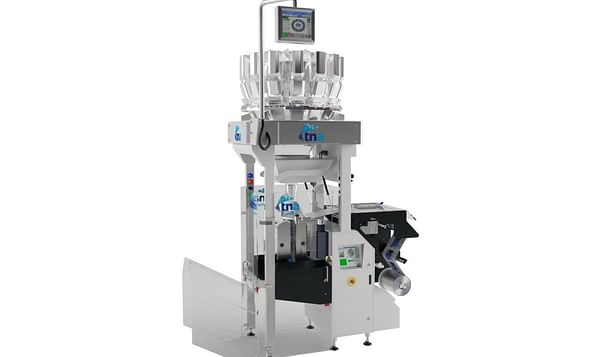
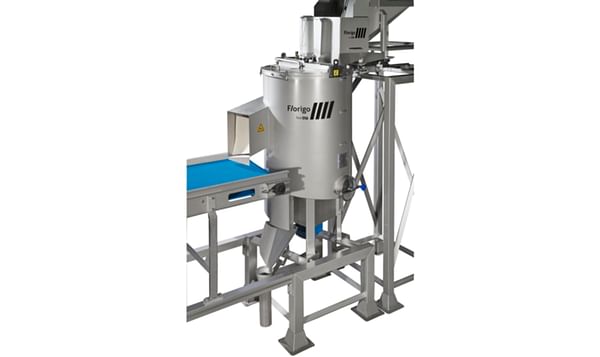
  • Seasoning and packaging systems

TNA systems use sophisticated automation, SCADA reporting, and line integration technologies to provide efficient and consistent output. These technologies are intended to increase uptime, improve product quality, and simplify processing operations in industrial contexts.
TNA Solutions is a family-owned firm that supports humanitarian projects through the Nadia and Alf Taylor Foundation, with an emphasis on education, healthcare, and community development activities.
Subsidiaries and Factory Locations
Products Offered
Product Types offered by this company
Brands
Trade Show Participation
News for this Company
TNA demonstrates project management capabilities, delivering two high-capacity potato lines to Egypt’s premier national organisation NSPO: one for Hash Browns and Rosti, another for French Fries and wedges.
September 26, 2023
TNA supplies two complete lines for the production of French Fries and Potato Specialties to the Egyptian Army
TNA solutions, a global leader in integrated food processing and packaging solutions, has implemented a ground-breaking project for the Egyptian Army.
As a contract confectionery packing company, Kingsway Confectionery required a packaging solution for a wide range of products. TNA solutions met this need exceptionally
August 08, 2023
TNA feeding ambitions: Increasing capacity by adding extra packaging machine
Kingsway Confectionery, a renowned family-owned company specialising in packaging retail-ready products for over 30 years, has strengthened its position as a leading confectionery packaging company in Australia through its longstanding partnership with TNA solutions.
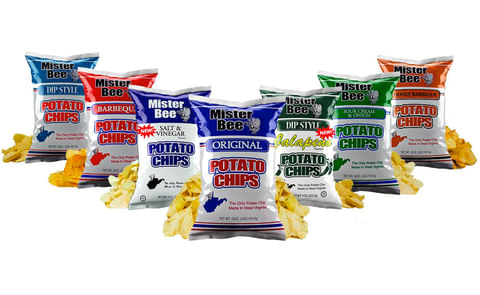
Mister Bee is the only potato chip made in West Virginia
June 28, 2023
TNA Solutions helps Mister Bee Potato Chips increase production capacity by 400%
TNA Solutions, a global supplier of integrated food processing and packaging solutions, has partnered with Mister Bee Potato Chips, an iconic American brand founded in 1951, to revolutionise its snack production and enable it to realise its ambitious goals going forward.
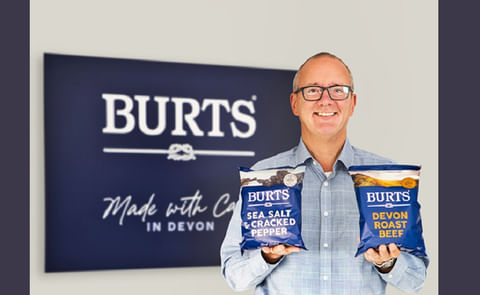
Burts has more than two decades of experience crafting premium, hand cooked British potato chips
May 19, 2023
tna's long-term partnership with Burts Snacks delivers premium snack production with outstanding quality
tna solutions has partnered with a premium snack manufacturer, Burts Snacks Ltd, to increase production capacity at its Plymouth, UK, manufacturing site.

Frequently Asked Questions

Does offering complete production lines create dependency risks for customers?

Yes, but TNA mitigates this through global service networks and lifecycle support. While customers rely on TNA for integrated systems, they benefit from reduced compatibility issues, unified maintenance protocols, and centralized troubleshooting often leading to lower long-term operational risk compared to multi-vendor setups.

How does TNA adapt its solutions for emerging markets versus developed markets?

In emerging markets, TNA emphasizes scalability, cost efficiency, and robustness under variable conditions (power, labor skill levels). In developed markets, the focus shifts toward automation, data analytics and premium product consistency. This dual strategy allows global relevance without a one-size-fits-all approach.

Can TNA’s integrated systems support sustainability goals in food processing?

Yes, particularly through energy-efficient frying, reduced oil usage, minimized waste and optimized throughput. Integrated systems inherently reduce inefficiencies between stages, contributing to lower resource consumption per unit of output a key sustainability metric.

How does TNA maintain innovation while being a family-owned company?

Family ownership often allows long-term strategic thinking rather than short-term profit pressure. TNA leverages this by investing in R&D, maintaining customer relationships and supporting innovation cycles that may not yield immediate returns but strengthen long-term market position.

How does TNA ensure product uniformity across different geographies and raw material variations?

Through precise process control systems, sensor-based adjustments and standardized equipment performance. However, true uniformity also depends on raw material quality so TNA’s systems are designed to adapt parameters dynamically rather than assume consistent inputs.

How is the adoption of GLP-1 drugs in the US affecting the snack sector, and what challenges does this create for manufacturers in your view?

“Medications like Ozempic and Mounjaro are changing not just how much people eat, but how they think about food. These drugs work by slowing digestion and reducing what’s sometimes called “food noise” — that constant background urge to snack. As a result, people are eating less often, but when they do reach for a snack, it has to count. 

“That’s creating a new kind of demand. There’s demand for smaller portions, yes, but with higher sensory quality and clearer nutritional value. Consumers are looking for products that justify the decision to snack, such as high-protein, clean-label, and flavour-rich options that feel satisfying without excess.

“For manufacturers, that translates into two challenges. First, it creates a need for more sophisticated product design that prioritises the right texture, seasoning, and portion delivery. Second, there’s the matter of achieving the operational ability to make these smaller, premium packs profitably. Integrated systems help on both fronts: they support precise seasoning control and portion accuracy, while keeping waste and labour low even as pack sizes shrink.

“So while the consumer side is changing, the opportunity for manufacturers is to lean into flexibility and precision. These new medications are redefining what healthy snacking means. It now doesn’t mean less frequent snacking, it means more mindful snacking.”

How can integrated systems be scaled over time — for example, to add new product types or packaging formats without major reinvestment?

“Integration doesn’t lock you in; it future-proofs your investment. If we look to our systems as an example, they are modular by design, meaning you can start with one product type or pack format and expand later without rebuilding the line.

“For example, a customer may begin with dry seasoning and later add wet or dual-mode capability in the same drum. The same control system and interface handle both — no new software or operators required.

“On the packaging side, the same robag platform can move from 11g single-serve packs to larger formats just by swapping formers and updating parameters. The line remains connected, efficient, and scalable. That’s what we mean by being future-ready: your system grows with your product portfolio, not against it.”

How can we evaluate whether our existing equipment is adaptable enough, or if we need to invest in an integrated system?

“A good starting point is to ask how many manual interventions it takes to run a new product. If your operators are constantly adjusting parameters, moving conveyors, or manually coordinating between systems, that’s a sign your line isn’t integrated enough.

“True adaptability is about communication between machines. In an integrated system, when you select a recipe on the bagger, the seasoning and distribution systems automatically recalibrate to adjust feed rate, vibration amplitude, and drum rotation in real time. That ensures precision seasoning and perfect scale feed at any speed.

“If your current set-up can’t achieve that level of synchronisation or you still see giveaway, downtime, or waste when changing SKUs, that’s when an integrated approach delivers a measurable return on investment.”

What practical steps can snack producers take today to manage more SKUs and shorter runs without adding extra footprint?

The first thing producers can do is look at where they’re losing time — not just in production, but in changeovers, cleaning, and material handling. You don’t necessarily need more machines or floor space to handle more SKUs. Often, you need smarter systems that use what you already have more effectively.

Modern integrated lines can handle multiple flavours, formats, and pack sizes without physically expanding the footprint. With technologies like our Switcheroo and Lifteroo functions, for example, you can dynamically redirect product flow on the same line. This allows two flavour streams to run in parallel, or a new SKU can start while another is still finishing.

Combined with automated cleaning functions and harmonised controls, it means any bag and any product can be efficiently managed at any time, so you can respond to seasonal launches or retailer demands instantly without adding new lines or operators.

Make This Page Even Better!

This content was last updated on March 28, 2026

Have a helpful detail to contribute? Catch something that should be corrected?