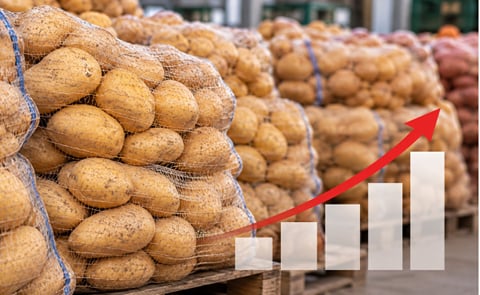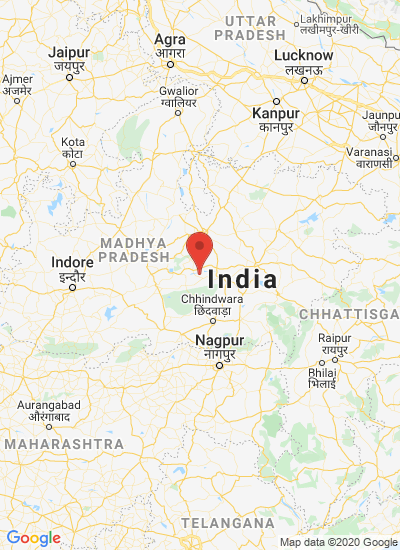

Madhya Pradesh is emerging as India’s next French fry potato powerhouse — driven by scale, quality, and early harvest advantage.
Madhya Pradesh Is Emerging as India’s Next Strategic Hub for French Fry Potatoes

India’s potato economy has long been anchored in volume. For decades, regions have been evaluated by how much they produce, not necessarily by how well that production aligns with evolving market demand.
But that equation is beginning to change.
Today, one of the most interesting shifts is unfolding in Madhya Pradesh, a state historically known for its strength in the potato crisps segment, now steadily positioning itself as a serious contender in the French fry processing landscape.
What we are witnessing is not just incremental growth, but the early signs of a structural transition.
With an annual potato production estimated between 35 to 39 lakh tonnes, Madhya Pradesh already has the scale. What is new, however, is the state’s growing ability to convert that scale into processor grade output. This marks a clear movement from latent potential to realized capability.
Across regions like Indore, Dewas, Ujjain, Shajapur, and extending into Chhindwara and parts of the Satpura belt, there is a visible shift underway. Farmers are no longer cultivating only for volume or traditional mandi markets. Increasingly, they are aligning with the specific requirements of processors. Parameters such as dry matter content, tuber uniformity, and sugar levels are beginning to influence on ground decisions.
This transformation, in many ways, rests on three pillars: Scale, Suitability, and Timing.
The first is straightforward. With approximately 1.7 to 1.8 lakh hectares under potato cultivation, even a modest shift, say 10 to 15 percent of acreage transitioning to processing grade varieties, can unlock substantial volumes for the French fry industry. In a market where processors are constantly seeking reliability, this incremental supply can significantly reduce sourcing concentration risks.
The second pillar, suitability, is where Madhya Pradesh holds a distinct advantage. The Malwa Plateau, spanning districts such as Indore, Ujjain, Dewas, and Shajapur, offers deep black cotton soils that retain moisture effectively while providing essential mineral balance. These conditions are particularly conducive for producing potatoes with higher dry matter and uniform tuber development, both critical for French fry processing. Equally important is the reduction in physiological defects, which directly impacts processing efficiency and output quality.
Then comes the third, and perhaps the most strategic factor, timing.
Madhya Pradesh is among the earliest Rabi harvest regions in India. This gives processors a critical edge. Early harvests enable factories to begin operations sooner, extend their processing windows, and optimize capacity utilization. In an industry where seasonality can constrain throughput, this advantage is not marginal, it is structural.
In regions like Chhindwara, early season harvesting also brings quality benefits. Lower reducing sugar levels translate into lighter fry colour, better texture, and more consistent processing outcomes. At the same time, reduced dependence on prolonged cold storage helps preserve quality while lowering storage related costs. Early sourcing, therefore, becomes both a quality lever and an efficiency driver.
What is equally encouraging is the pace at which the broader ecosystem is aligning to support this shift.
Policy momentum around agro processing and value addition in Madhya Pradesh is creating a conducive environment for processing grade cultivation. The state already has over 13 lakh metric tonnes of cold storage capacity. While much of this infrastructure has historically supported table and chips segments, it is increasingly being leveraged for French fry supply chains, where temperature management and sugar stability are critical.
At the same time, improvements in aggregation, procurement systems, and private sector engagement are beginning to bridge the long standing gap between farm production and industrial processing. These developments are not just incremental, they are foundational to building a processing oriented ecosystem.
At the farm level, the shift is equally visible. There is a gradual but clear movement from yield centric thinking to specification driven cultivation. Farmers are beginning to understand that value lies not just in how much is produced, but in how well it meets end use requirements.
Structured sourcing models are playing an important role here. By improving predictability and reducing market uncertainty, they are accelerating the adoption of processing grade varieties over traditional, mandi driven systems.
Of course, this transformation is still evolving. Critical elements such as seed systems, agronomic standardization, and stronger processor linkages will need to scale further. But the direction is clear, and the momentum is real.
If this trajectory continues, Madhya Pradesh is well positioned to emerge not just as a supplementary sourcing region, but as a central pillar in India’s French fry potato supply chain.
The future of India’s potato industry will not be defined by production alone. It will be defined by alignment between what is grown and what the market demands.
And in that shift, Madhya Pradesh is quietly moving to the center of the conversation.
¿Te gustaría recibir noticias como esta por correo electrónico? ¡Únete y suscríbete!
Get the latest potato industry news straight to your WhatsApp. Join the PotatoPro WhatsApp Community!
Empresa Destacada


Noticias relacionadas

Octubre 06, 2026
Europa: las exportaciones de papas fritas congeladas rozan un récord pese a la creciente competencia asiática
Las exportaciones europeas de papas fritas congeladas alcanzaron 564.500 toneladas en junio, un 6,1% más interanual, impulsadas por menores precios y una mayor demanda fuera de la UE, especialmente en Sudamérica.
Septiembre 23, 2026
Argentina: Jujuy busca agregar valor a la papa andina mediante nuevos alimentos industrializados
En Jujuy, la UNJu desarrolla puré deshidratado y papas fritas a partir de variedades andinas para agregar valor en origen, aunque la falta de volumen constante de materia prima e inversión industrial sigue limitando el salto a escala comercial.
Septiembre 16, 2026
Bélgica: cae la producción de papas fritas congeladas ante una competencia mundial cada vez mayor
La producción belga de papas fritas congeladas se situó en 3,432 millones de toneladas en 2025 y las exportaciones cayeron 2,6%, mientras otros productos de patata ganaron volumen y la competencia internacional continúa intensificándose.