

Early Blight in Potato: A Major Threat to Yield and Tuber Quality
What Is Early Blight?
Early blight is a common fungal disease of potato (Solanum tuberosum) and other solanaceous crops, primarily caused by the fungus Alternaria solani. The disease is characterized by necrotic lesions on leaves, stems and tubers, often displaying distinctive concentric rings that create a “target spot” appearance. Despite its name, early blight does not necessarily occur early in the crop cycle; it commonly develops on physiologically mature or stressed plants, particularly under favorable environmental conditions.
Why Early Blight Is Important in Potato Cultivation
Early blight is one of the most widespread and economically important foliar diseases affecting potato production worldwide. The disease causes premature defoliation, which reduces the plant’s photosynthetic capacity and limits carbohydrate accumulation in developing tubers. As a result, infected plants produce smaller tubers and lower overall yields. In addition to yield reduction, early blight negatively affects tuber quality, reducing marketability and storage potential.
Economic Significance: The economic impact of early blight can be substantial, particularly under severe disease pressure. Yield losses commonly range between 20–50%, depending on disease severity, cultivar susceptibility and environmental conditions. Long-term studies have also reported an average reduction in starch yield of approximately 14% in some production systems. Furthermore, growers face additional costs associated with fungicide applications and crop management practices. Quality deterioration and storage losses caused by tuber infection may also result in market rejection and financial losses, particularly in major potato producing regions such as India and the United States.
Global Prevalence: Early blight occurs annually in most potato growing regions across the world including North America, Europe, Asia and Africa. The disease is especially prevalent in regions experiencing warm temperatures combined with high humidity or intermittent rainfall during the growing season. Environmental stress, nutrient imbalance and aging plants further increase disease susceptibility.
Impact on Yield and Quality: Severe early blight infections lead to extensive defoliation, significantly reducing the photosynthetic leaf area required for tuber bulking. This results in fewer and smaller tubers, ultimately lowering total yield. Infected tubers may develop dark, sunken lesions accompanied by corky dry rot, which adversely affects processing quality, appearance and dry matter content. In severe outbreaks, premature vine death may occur causing major reductions in both yield and tuber quality.
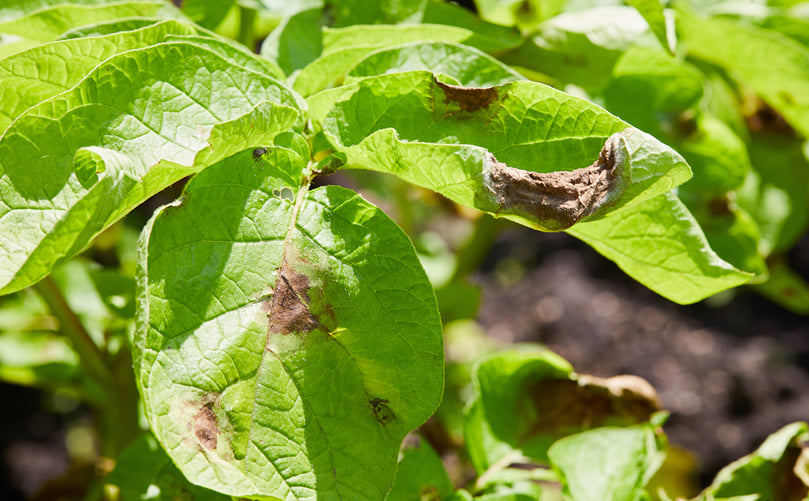
Early Blight in Potato: A Global Challenge for Yield and Tuber Quality
What Causes Early Blight in Potato? Understanding the Causal Organism
Main Pathogen: Alternaria solani: The primary causal agent of early blight in potato (Solanum tuberosum) is the fungus Alternaria solani Sorauer. It is a necrotrophic pathogen, meaning it kills host tissue before feeding on it. In many potato growing regions, A. solani forms part of a disease complex involving other Alternaria species.
Other Associated Alternaria Species: Although A. solani is the principal pathogen responsible for classic early blight symptoms, other Alternaria species may also contribute to disease development.
Alternaria alternata is commonly isolated from infected potato foliage and is often associated with brown spot, sometimes referred to as “the other early blight.” Compared with A. solani, it generally produces smaller lesions and is considered less aggressive on potato. However, under favorable environmental conditions, it can intensify disease severity as part of the broader Alternaria disease complex. Other species, such as A. grandis and A. protenta, may occasionally be detected, but A. solani remains the dominant pathogen associated with typical early blight symptoms.
Taxonomic Classification of Alternaria solani
Alternaria solani, the fungal pathogen responsible for early blight in potato belongs to the Kingdom - Fungi, Phylum - Ascomycota, Class - Dothideomycetes, Order - Pleosporales, Family - Pleosporaceae and Genus - Alternaria. The species is scientifically classified as Alternaria solani.
Historically, the fungus was grouped under Deuteromycetes (fungi imperfecti) because no sexual (teleomorph) stage had been identified. Reproduction in A. solani occurs primarily through asexual spores known as conidia.
Morphology of the Fungus and Spores
The fungal mycelium of A. solani is septate and branched, appearing hyaline (colorless) during early growth but gradually becoming darkly pigmented, ranging from olive-brown to black as it matures.
Conidiophores are erect, dark colored structures that arise from infected plant tissue or fungal mycelium. These structures produce conidia, the asexual spores responsible for disease spread.
The conidia of A. solani are large, dark brown and muriform, meaning they possess both transverse and longitudinal septa. They are typically inverted club shaped or pear shaped and possess a distinctive elongated, tapering beak, which is often as long as or longer than the spore body itself. Conidia are usually borne singly or occasionally in short chains of two spores. They commonly contain 3–11 transverse septa and 0–4 longitudinal septa with considerable variation in size, generally ranging from approximately 37–152 μm in length and 4–23 μm in width.
In artificial culture media such as potato dextrose agar (PDA), A. solani colonies appear grayish brown to black with a cottony to velvety texture. Light exposure often stimulates sporulation, while thick walled chlamydospores are rarely observed.
Disease Causing Mechanism of Alternaria solani
As a necrotrophic fungus, A. solani infects potato plants by killing host cells before colonizing the tissue. The pathogen employs multiple infection mechanisms to establish disease.
It produces phytotoxins such as alternaric acid, altersolanol, zinniol and other toxic metabolites that damage plant cells and promote tissue death ahead of fungal invasion. In addition, the fungus secretes cell wall degrading enzymes, including pectinases, cellulases, cutinases and proteases, which break down plant cell structures and facilitate tissue maceration.
The pathogen can penetrate plant tissue directly through the cuticle and epidermis or enter through natural openings such as stomata and wounds. A. solani also develops appressoria, specialized infection structures that enhance attachment and improve penetration efficiency.
The fungus thrives particularly well on physiologically stressed or senescing plant tissue, which explains why early blight symptoms commonly appear first on older leaves before progressing to younger foliage.
History and Global Importance of Early Blight in Potato
Historical Background and Discovery of Early Blight
Early blight of potato was first reported in Australia in 1891, where the pathogen was initially described as Macrosporium solani. In the United States, the disease was reported in 1892 on potato and other solanaceous crops. Later in 1896, the pathogen was formally reclassified and named Alternaria solani. Since the late nineteenth century, early blight has been recognized as an economically important disease of potato with extensive pathological studies conducted during the early twentieth century. Research during this period significantly improved understanding of pathogen biology, disease epidemiology and control measures.
Global Distribution and Major Potato Growing Regions Affected
Early blight occurs worldwide wherever potatoes and other solanaceous crops are cultivated, particularly in regions with warm temperatures and moderate to high humidity. The disease is common across major potato producing regions in North America, Europe, Asia, Africa, Australia and South America. Countries such as the United States, Canada, Germany, Sweden, Poland, India, China, South Korea, South Africa, Kenya and Ethiopia frequently report the disease. In India, early blight is often considered more prevalent than late blight during certain growing seasons, particularly under warm weather conditions combined with intermittent rainfall or crop stress.
Economic Impact and Yield Losses Caused by Early Blight
Early blight causes substantial economic damage to potato production globally. Yield losses generally range from 5% to 50% depending on disease severity, environmental conditions, cultivar susceptibility and crop management practices. Under severe epidemics, losses may exceed 50% if effective disease management is not implemented.
Studies have shown that fungicide treated crops often achieve yield increases of 10–30% with some long-term starch potato trials reporting average improvements of approximately 11.9%. Besides yield reduction, early blight also decreases tuber quality, storage life and marketability, leading to financial losses due to poor appearance and market rejection. Annual global expenditure on fungicides for Alternaria control in potatoes is estimated at approximately USD 45 million, highlighting the economic significance of the disease.
Factors Driving the Increasing Importance of Early Blight
The increasing importance of early blight in potato production is associated with several agronomic and environmental factors. Intensive monoculture and shorter crop rotations contribute to increased pathogen inoculum in crop residues and soil, resulting in greater disease pressure. The emergence of fungicide resistance, particularly against QoI (strobilurin) fungicides and some SDHI fungicides has reduced disease control effectiveness in several regions.
Climate change is also playing a significant role, as rising temperatures favor pathogen development with Alternaria solani growing optimally between 24–29°C. In addition, potato cultivation is expanding into new agroecological regions where favorable microclimatic conditions may support disease establishment. Increasing environmental regulations restricting broad-spectrum fungicides have further emphasized the need for integrated disease management strategies.
Host Range and Alternate Hosts of Early Blight (Alternaria solani) in Potato
Potato as the Primary Economic Host of Early Blight
The cultivated potato (Solanum tuberosum) is the principal and most economically important host of early blight caused by Alternaria solani. The pathogen infects both foliage and tubers, resulting in significant reductions in yield and market quality.
On foliage, the disease causes characteristic necrotic lesions with concentric rings leading to premature defoliation and reduced photosynthetic activity. Severe foliar infection weakens plants and limits tuber bulking. Tubers may also become infected, developing dark, sunken lesions that reduce storage quality and market acceptance.
Susceptibility of Other Solanaceous Crops to Early Blight
In addition to potato, Alternaria solani infects several other crops belonging to the Solanaceae family, which serve as important hosts and contribute to pathogen survival and spread. Tomato (Solanum lycopersicum) is considered one of the most susceptible alternate hosts, where the disease causes leaf spots, stem lesions, collar rot and fruit infection, significantly reducing crop productivity and fruit quality.
Eggplant (Solanum melongena) is also a recognized host and commonly develops foliar blight symptoms under favorable environmental conditions. Peppers (Capsicum spp.), including bell peppers and hot peppers may also be infected although disease severity is generally lower compared with potato and tomato. Other cultivated and wild solanaceous species may occasionally support pathogen growth and survival.
Weed Hosts as Reservoirs for Pathogen Survival
Several weed species belonging to the Solanaceae family act as alternate hosts and play an important role in the survival and carryover of the pathogen between cropping seasons. Important weed hosts include hairy nightshade (Solanum sarrachoides), black nightshade (Solanum nigrum), and horsenettle (Solanum carolinense).
These weeds function as reservoirs for Alternaria solani, allowing the fungus to survive, multiply and persist during periods when potato crops are absent. Infected weeds growing near production fields can provide a continuous source of inoculum, increasing the risk of early disease establishment in newly planted potato crops.
Role of Alternate Hosts in Disease Carryover and Seasonal Recurrence
Alternate hosts, especially weed species and volunteer potato plants play a crucial role in disease carryover and the recurrence of early blight from one season to the next. The pathogen survives as mycelium, conidia and resistant fungal structures in infected crop debris, soil, volunteer plants and living alternate hosts.
Crop residues are considered one of the primary sources of inoculum, while weeds and infected seed tubers also contribute significantly to disease initiation. Under favorable environmental conditions, spores produced from these sources are dispersed by wind, rain splash and irrigation water, leading to early infections and sustaining the polycyclic disease cycle. Consequently, effective weed management, destruction of infected crop residues, elimination of volunteer potato plants and field sanitation are essential strategies for reducing inoculum pressure and minimizing early blight outbreaks.
Symptoms and Diagnostic Characteristics of Early Blight in Potato
General Pattern of Symptom Development in Early Blight: The symptoms of early blight in potato are distinctive and usually develop first on older, lower leaves before progressing upward to younger plant parts. The disease primarily affects foliage but may also infect stems, petioles and tubers under favorable environmental conditions. Disease severity generally increases as plants mature or experience physiological stress, ultimately reducing photosynthetic capacity, accelerating senescence and decreasing tuber yield and quality.
Characteristic Leaf Symptoms and Target Spot Formation: Leaf symptoms are among the earliest and most recognizable indicators of early blight infection. Initial lesions appear as small, circular to irregular dark brown or black spots, usually measuring 3–4 mm in diameter and are first observed on older, lower leaves. As the disease advances, lesions enlarge and may reach up to 12 mm or more under favorable conditions.
A defining feature of early blight is the formation of concentric rings composed of alternating dark and light brown zones, creating the characteristic “target spot,” “bull’s-eye” or “target-board” appearance. Lesions may become angular when their expansion is restricted by leaf veins. A yellow chlorotic halo frequently surrounds infected tissue, particularly during active disease development.
Under severe infection, lesions merge to form extensive necrotic areas, causing leaves to yellow, brown and die prematurely. Severely infected foliage may remain attached as dry tissue or fall from the plant, resulting in premature defoliation and a major reduction in photosynthetic area.
Stem Lesions and Collar Rot Symptoms: Early blight also affects stems, where symptoms appear as elongated, dark brown to black lesions that are dry, sunken and slightly depressed. In young seedlings, infection near the stem base may lead to collar rot, causing stem girdling, wilting and eventual seedling death. In mature plants, stem lesions contribute to reduced plant vigor and increased disease severity.
Petiole Infection and Its Role in Premature Senescence: Petiole infection is often overlooked but can significantly influence disease progression. Dark, elongated lesions develop along petioles, interfering with the movement of water and nutrients between leaves and stems. This disruption accelerates leaf yellowing, senescence and premature defoliation, even when visible leaf lesions appear moderate.
Tuber Symptoms, Internal Damage and Storage Losses: Although early blight is primarily considered a foliar disease, tubers may also become infected under favorable conditions or during harvest. Tuber symptoms appear as dark, sunken, circular to irregular lesions on the surface, often surrounded by a slightly raised dark brown to purplish border.
Internally, infected tissues develop a dry, leathery or corky texture accompanied by brown discoloration, commonly referred to as dry rot. Unlike bacterial soft rots, these lesions remain relatively dry and are less prone to secondary bacterial invasion. Symptoms may initially appear minor at harvest but often become more severe during storage, reducing tuber quality, marketability and shelf life while increasing postharvest losses.
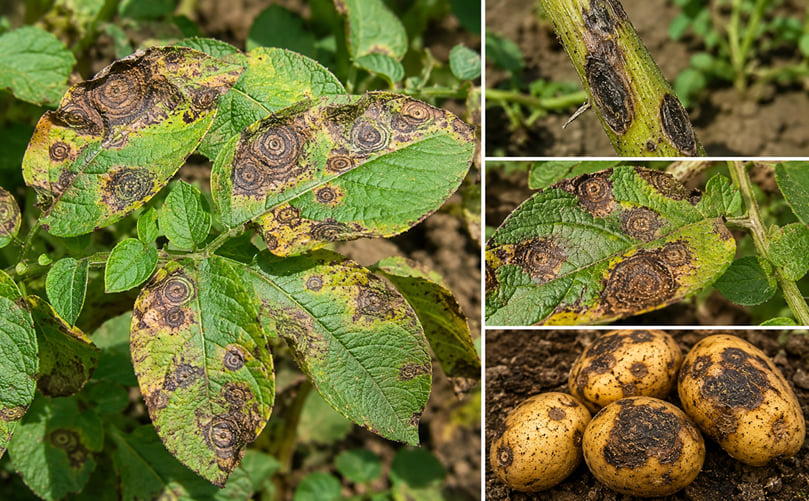
Concentric Ring “Target Spot” Symptoms of Early Blight in Potato
Disease Cycle and Seasonal Development of Early Blight in Potato
Polycyclic Nature and Seasonal Progression of Early Blight: Early blight is considered a polycyclic disease, meaning that several infection cycles can occur within a single growing season. Once established, the pathogen repeatedly produces spores that infect new plant tissues leading to rapid disease escalation under favorable environmental conditions. The disease cycle includes pathogen survival between seasons, spore production, dissemination, infection, lesion development and repeated secondary spread throughout the crop cycle.
Primary Inoculum Sources and Overwintering Mechanisms: The fungus Alternaria solani survives between cropping seasons primarily as melanized (dark-pigmented) mycelium and conidia in infected crop debris, soil, infected seed tubers, volunteer potato plants and alternate weed hosts. In some cases, thick walled chlamydospore-like structures have also been reported although their contribution to disease survival is generally considered secondary.
In regions with mild climatic conditions, the pathogen may survive on living host plants including volunteer potatoes and solanaceous weeds. Crop residues remaining in the field after harvest are among the most important sources of primary inoculum, serving as reservoirs for disease initiation during the next potato growing season.
Survival Adaptations and Persistence of the Pathogen: The survival ability of Alternaria solani is greatly enhanced by the dark pigmentation of its fungal structures a characteristic known as melanization. This protective feature enables spores and mycelium to withstand adverse environmental conditions such as drying, freezing and thawing, ultraviolet radiation and fluctuating temperatures. Consequently, the pathogen can remain viable for extended periods in infected debris and soil allowing disease recurrence across multiple seasons.
Spore Production and Favorable Environmental Conditions: When environmental conditions become favorable, particularly during spring or periods of warm and moist weather, Alternaria solani begins producing conidia (asexual spores) on overwintered plant debris and infected tissues. Moisture from rainfall, irrigation or dew combined with warm temperatures encourages spore development and increases the likelihood of primary infection in potato crops.
Dispersal Mechanisms and Movement of Conidia: Conidia are spread through several mechanisms with wind acting as the primary dispersal agent. Spores may also spread through rain splash, irrigation water, contaminated soil particles and farm equipment. Airborne spore release frequently peaks during mid-morning hours when dew evaporates and air movement increases allowing spores to disperse efficiently to healthy plant tissues both within and between fields.
Secondary Infection Cycle and Exponential Disease Build-Up: Following primary infection, newly formed lesions on leaves, stems and petioles begin producing additional conidia, initiating repeated cycles of secondary infection throughout the growing season. These repeated infection cycles enable the disease to spread rapidly, particularly under warm and humid conditions. Disease severity often increases substantially after flowering and during tuber bulking stages, when physiological aging and crop stress increase plant susceptibility. The repeated production and spread of spores ultimately result in extensive defoliation, reduced photosynthetic activity, poor tuber development and significant yield losses if proper management measures are not adopted.
Epidemiology and Disease Development of Early Blight in Potato
Infection Process and Initial Disease Establishment: The infection process of early blight begins when conidia (asexual spores) of Alternaria solani land on susceptible potato plant surfaces. For successful infection, spores require the presence of free moisture such as dew, rainfall or irrigation water to germinate. Under favorable environmental conditions, germ tubes emerge from the spores and penetrate plant tissues either directly through the cuticle and epidermis or through natural openings such as stomata and wounds.
Following penetration, fungal colonization begins rapidly leading to lesion development within 2–3 days under optimal conditions. The pathogen produces toxins and enzymes that destroy plant tissues, enabling further colonization and symptom development.
Disease Progression and Spread Within the Crop Canopy: Early blight symptoms typically begin on older, lower leaves before gradually progressing upward to younger foliage. This pattern occurs because lower leaves are closer to soilborne inoculum sources and are naturally more susceptible due to physiological aging and senescence.
As lesions develop, new spores are continuously produced and dispersed, initiating repeated infection cycles throughout the growing season. Since early blight is a polycyclic disease, multiple rounds of sporulation and lesion formation occur allowing disease intensity to increase rapidly under favorable environmental conditions.
Spore Germination and Environmental Requirements: The germination of Alternaria solani spores occurs across a relatively broad temperature range of approximately 8–32°C, although disease development is most favorable under warm conditions. High relative humidity, generally above 90% or the presence of free moisture on leaf surfaces is essential for spore germination and successful infection.
Extended periods of leaf wetness caused by dew, rainfall, overhead irrigation or dense canopies significantly increase disease risk. Warm temperatures combined with moisture create ideal conditions for rapid disease development and repeated infection cycles.
Influence of Plant Growth Stage on Host Susceptibility: The susceptibility of potato plants to early blight is strongly influenced by plant age and physiological condition. Alternaria solani is a necrotrophic pathogen meaning it thrives on dead or dying tissue and preferentially infects senescing or physiologically weakened plant parts.
Young, actively growing potato plants generally exhibit greater resistance to infection, whereas susceptibility increases as plants mature. Older leaves become progressively more vulnerable due to natural aging processes. Disease severity often increases significantly after flowering and during the tuber bulking stage, when physiological stress and senescence become more pronounced.
Role of Plant Stress in Disease Development: Early blight is commonly regarded as a disease of mature or stressed potato plants. Various environmental and nutritional stresses predispose plants to infection by accelerating senescence and weakening host defense mechanisms. Nutrient deficiencies, particularly nitrogen deficiency are known to increase susceptibility. Other contributing stress factors include drought, poor soil fertility, excessive canopy density, inadequate aeration and unfavorable growing conditions.
These stress related factors create conditions favorable for pathogen establishment and disease progression making balanced nutrition, proper irrigation and good crop management essential components of early blight prevention and control.
Favorable Environmental Conditions for Early Blight Development
Temperature Requirements for Disease Development: The optimum temperature for spore germination, infection and disease development of early blight is 24–29°C, while pathogen activity may occur between approximately 15–30°C. Sporulation is generally favored at temperatures ranging from 22–26°C, which supports rapid disease development under suitable environmental conditions.
Role of Relative Humidity in Infection: High relative humidity is essential for successful infection by Alternaria solani. Relative humidity levels above 90%, or the presence of free moisture on leaves are critical for spore germination and penetration into plant tissues.
Importance of Leaf Wetness in Disease Progression: Prolonged periods of leaf wetness resulting from dew, rainfall, fog or overhead irrigation are essential for disease development. Alternating wet and dry cycles strongly promote both sporulation and spore dissemination, increasing disease spread within the crop.
Influence of Weather Conditions on Disease Development: Warm days followed by humid nights, frequent rainfall and moderate to high humidity favor rapid disease progression. Spore release often reaches its peak during drying periods following nighttime leaf wetness, enhancing pathogen dispersal.
Host and Agronomic Factors Favoring Disease Severity: Several host and agronomic factors contribute to increased early blight severity. Nutrient stress, particularly nitrogen deficiency and potassium imbalance along with drought stress can increase plant susceptibility. Excessive nitrogen application may also favor disease development by promoting dense canopies and reducing airflow. Poor field sanitation further increases disease pressure, while canopy closure prolongs leaf wetness duration and creates favorable conditions for pathogen infection.
Risk Factors Contributing to Early Blight Outbreak in Potato
Agronomic and Cultural Practices Increasing Disease Risk: Several interconnected agronomic and cultural factors increase the likelihood and severity of early blight outbreaks in potato. The disease primarily affects stressed, mature or senescing plants. Continuous potato cultivation or short crop rotations of less than 2–3 years favor inoculum buildup in soil and infected crop debris, increasing disease pressure. The use of infected seed tubers can introduce the pathogen into new fields and initiate infection early in the season.
Poor field sanitation, including failure to remove, destroy or properly bury infected crop residues, contributes significantly to pathogen survival between seasons. Excessive canopy density resulting from high nitrogen fertilization reduces airflow within the crop and prolongs leaf wetness duration, creating favorable conditions for disease development. Nutrient imbalances, particularly nitrogen deficiency, which accelerates senescence and potassium deficiency, which weakens plant defense mechanisms, further increase susceptibility.
Poor irrigation practices, especially overhead sprinkler systems can prolong leaf wetness periods and favor pathogen infection. Additionally, the use of susceptible early-maturing cultivars increases disease risk as plant susceptibility generally rises with crop maturity.
Environmental and Biotic Factors Favoring Disease Development: Environmental and biological factors also play a major role in early blight outbreaks. Warm temperatures combined with frequent leaf wetness caused by dew, rainfall or irrigation strongly favor infection and disease progression. Volunteer potato plants and weed hosts, particularly nightshade species, serve as green bridges for pathogen survival between cropping seasons.
Plant stress caused by drought, insect damage, other diseases such as viruses or mechanical injury can further increase susceptibility to early blight. Fields with a previous history of the disease are especially vulnerable because overwintering inoculum levels remain high.
Emerging Factors Increasing Early Blight Risk: Emerging factors are increasingly contributing to the severity of early blight outbreaks. Climate variability may increase periods of warm and humid weather favorable for disease development. Fungicide resistance in Alternaria solani populations has also reduced disease control effectiveness in some regions.
In some cases, soils with high sand content may show greater disease impact due to stress-related interactions although the relationship may vary depending on environmental and management conditions.
Influence of Physiological Plant Age on Disease Risk: The risk of early blight generally increases after approximately 300 physiological days (P-days) following crop emergence. This stage often corresponds with tuber bulking and the onset of natural plant senescence, when potato plants become more susceptible to infection and disease severity increases.
Disease Diagnosis and Identification of Early Blight in Potato
Field Identification and Visual Symptom Recognition: Early blight can be identified in the field by observing its characteristic symptoms, particularly the hallmark concentric “target-board” or “bull’s-eye” rings on lesions. Symptoms usually begin on older, lower leaves and gradually progress upward through the plant canopy. Lesions are typically dark brown to black and are often surrounded by a yellow chlorotic halo. As the disease progresses, lesions enlarge and generally reach 6–12 mm in diameter under favorable conditions.
Disease diagnosis in the field should also include observation of symptom progression, including stem and petiole lesions and the presence of dark, sunken lesions on tubers. Regular scouting should focus on lower leaves close to the soil surface, particularly after canopy closure or in stressed areas where disease development is more likely.
Laboratory-Based Identification of the Pathogen: Laboratory diagnosis provides more accurate confirmation of Alternaria solani infection. Under microscopic examination, the pathogen produces large, dark brown conidia that are muriform, meaning they contain both transverse and longitudinal septa. The conidia are typically obclavate in shape and possess a characteristic beak-like appendage.
The pathogen can also be isolated and cultured on media such as potato dextrose agar (PDA) or V8 juice agar, where colonies generally appear dark and velvety in texture. Molecular detection methods, including PCR-based assays are increasingly used for rapid and precise identification of Alternaria solani, particularly when differentiation from closely related Alternaria species is required.
Emerging Technologies for Early Disease Detection: Advanced diagnostic approaches are emerging for the early and non-destructive detection of early blight. Technologies such as hyperspectral imaging and AI-based leaf scanning systems are being explored to identify disease symptoms at early stages before visible damage becomes severe.
Importance of Accurate Disease Diagnosis: Accurate diagnosis is essential because early blight symptoms may overlap with those of other diseases and physiological disorders. Correct identification of the pathogen ensures appropriate disease management strategies and helps avoid ineffective control measures.
Differential Diagnosis and Distinguishing Features of Early Blight in Potato
Differentiating Early Blight from Late Blight: Early blight is frequently confused with late blight, but several important characteristics help distinguish the two diseases. Early blight, caused by Alternaria solani, produces characteristic concentric target board or bull’s-eye rings on lesions and generally starts on older, lower leaves. Disease development is favored by warm temperatures with an optimum range of 24–29°C, and lesions are typically dry and leathery.
In contrast, late blight caused by Phytophthora infestans produces water soaked, greasy lesions that expand rapidly under cool and wet conditions. White fungal growth is commonly visible on the underside of infected leaves, particularly during humid weather. Unlike early blight, late blight lesions do not develop concentric rings and may rapidly affect all plant parts.
Distinguishing Early Blight from Nutrient Deficiency Symptoms: Early blight symptoms may resemble nutrient deficiencies such as nitrogen, magnesium or potassium deficiency. However, nutrient related disorders usually cause uniform yellowing or interveinal chlorosis rather than distinct necrotic lesions with concentric rings. In nutrient deficiencies, fungal structures or spores are absent and the characteristic target-like lesion pattern does not develop.
Differences Between Early Blight and Brown Spot Disease: Brown spot disease caused by Alternaria alternata may appear similar to early blight but differs in lesion characteristics. Brown spot lesions are generally smaller, usually less than 3–4 mm in diameter and rarely develop the prominent concentric rings observed in early blight. Lesions caused by Alternaria solani are typically larger and more distinct.
Differentiation from Other Diseases and Physiological Disorders: Several other diseases and physiological disorders may also resemble early blight. Black dot disease caused by Colletotrichum coccodes produces tiny black microsclerotia on stems and leaves, but lesions generally lack the characteristic target pattern. Physiological aging or leaf scorch causes gradual yellowing and senescence without distinct spots or concentric rings.
Similarly, Verticillium wilt is characterized by vascular discoloration within stems and plant wilting but does not produce the target-like lesions typical of early blight.
Importance of Accurate Diagnosis for Effective Disease Management: Field diagnosis of early blight relies primarily on the presence of characteristic target-like concentric rings on lesions, particularly on older leaves. However, because symptoms can overlap with those of other diseases and physiological disorders, laboratory confirmation is recommended in uncertain cases to ensure accurate diagnosis and appropriate management practices.
Impact of Early Blight on Potato Growth, Yield and Tuber Quality
Effects of Early Blight on Plant Growth and Development: Early blight significantly affects potato plant growth by reducing the photosynthetic leaf area through lesion expansion, coalescence and premature defoliation. As infected leaves senesce and die, the plant’s ability to produce carbohydrates declines substantially. Stem and petiole lesions further restrict the movement of water and nutrients within the plant, reducing overall plant vigor. As disease severity increases, plants become weaker and experience accelerated senescence, particularly under environmental or nutritional stress conditions.
Yield Reduction Caused by Early Blight Infection: Early blight reduces tuber yield primarily by decreasing photosynthate production during the critical tuber bulking stage. Reduced foliage limits carbohydrate accumulation, resulting in fewer and smaller tubers.
Yield losses commonly range from 5–50%, depending on disease severity, environmental conditions, cultivar susceptibility and management practices. In severe cases, losses may range between 20–50% or even exceed this level with some untreated outbreaks reporting yield reductions of up to 75% in highly favorable disease conditions.
Long-term starch potato trials conducted in Sweden over a ten-year period reported average potential starch yield losses of approximately 14.3%, with losses ranging from 2.7–46.6%. In the same studies, fungicide application resulted in an average yield increase of 11.9%. Yield reductions are often more severe in stressed crops and early maturing potato cultivars.
Effect of Early Blight on Tuber Quality and Marketability: Early blight also affects tuber quality, reducing both market value and processing suitability. Infected tubers develop dark, sunken lesions with corky internal tissue, resulting in reduced visual quality and lower market acceptance. Tuber infection may also reduce dry matter content and negatively affect processing quality for potato products such as chips and fries.
During storage, infected tubers often experience greater shrinkage and may become more susceptible to secondary rots. Overall tuber quality may decline through reduced specific gravity, uneven tuber size and visible defects, leading to downgrading or market rejection.
Economic Importance of Early Blight in Potato Production
Yield Losses and Economic Damage Caused by Early Blight: Early blight causes substantial economic losses through direct reductions in potato yield and increased disease management costs. Yield losses in untreated fields commonly range from 5–50% or more depending on disease severity, environmental conditions, cultivar susceptibility and crop management practices. Long-term starch potato trials have reported average potential yield losses of approximately 14%, highlighting the significant economic impact of the disease even under moderate infection levels.
Cost of Fungicide Applications and Disease Management: The management of early blight often requires multiple fungicide applications during the growing season, resulting in increased production costs. Expenses associated with fungicides, labor, machinery and spray operations can significantly affect profitability. In one study an average yield increase of approximately 2.7% was required to recover fungicide costs alone emphasizing the importance of timely and economically effective disease management decisions.
Storage Losses and Market Quality Reduction: Early blight also contributes to economic losses through reduced tuber quality and storage performance. Infected tubers are more prone to shrinkage, quality deterioration and reduced storability, which can lower their market value. Visual defects, corky lesions and uneven tuber quality often result in downgrading or rejection in both fresh and processing markets, causing additional financial losses for growers.
Global Economic Importance and Regional Impact: Early blight is economically important across major potato producing regions worldwide, where yield losses and disease control costs contribute to millions of dollars in annual impact. In regions experiencing high disease pressure, such as parts of India and the Midwestern United States, the disease often necessitates intensive fungicide programs to maintain acceptable crop productivity and quality.
Importance in Processing and Starch Potato Production: The disease is particularly costly in starch and processing potato production systems, where quality parameters are critical for industrial use. Tuber quality characteristics such as dry matter content, specific gravity and visual appearance directly influence processing efficiency and product quality. Economic thresholds for early blight management vary depending on production purpose, market requirements and regional conditions; however, integrated disease management remains essential for maintaining profitability and sustainable potato production.
Integrated Management and Control Strategies for Early Blight in Potato
Importance of an Integrated Disease Management Approach: Effective management of early blight requires an Integrated Pest Management (IPM) approach that combines cultural, nutritional, irrigation, host resistance, biological and chemical management strategies. The main objective is to minimize pathogen inoculum, reduce plant stress and suppress disease development throughout the crop season.
Cultural Practices for Minimizing Disease Pressure: Crop rotation with non-host crops such as cereals, maize or soybean for at least 2–3 years, and ideally 3–4 years helps reduce overwintering inoculum in infected debris and soil. Infected crop residues should be removed and destroyed after harvest through burial or proper disposal to limit pathogen survival.
The use of certified, disease-free seed tubers is essential, while infected or damaged tubers should be avoided during planting. Proper plant spacing and hilling improve airflow within the crop canopy and reduce excessive humidity. Timely weed control, especially of solanaceous weeds such as nightshades helps eliminate alternate hosts that support pathogen survival. Avoiding fields with a recent history of early blight and maintaining a distance of approximately 225–450 yards from previous potato or tomato fields can further reduce disease risk.
Nutrient Management for Improved Plant Health: Balanced fertilization plays an important role in reducing susceptibility to early blight and is often overlooked in disease management programs. Adequate nitrogen should be maintained because nitrogen deficiency accelerates plant senescence, while excessive nitrogen promotes dense canopies and prolonged leaf wetness. Sufficient potassium and calcium nutrition strengthen plant tissues and help reduce stress related susceptibility.
In some situations, lower phosphorus levels may contribute to reduced disease severity. Maintaining overall plant health through balanced nutrition helps minimize predisposition to infection.
Irrigation Management to Reduce Disease Development: Proper irrigation practices are important for minimizing leaf wetness duration and reducing disease severity. Drip or furrow irrigation is generally preferred over overhead sprinkler systems because it limits moisture accumulation on foliage. Irrigation should ideally be performed during morning hours so leaves dry rapidly, while late-day irrigation should be avoided. Consistent soil moisture should also be maintained to minimize drought stress.
Resistant and Tolerant Potato Varieties: Although complete resistance to early blight is not currently available, some potato cultivars show partial tolerance to the disease. Late maturing and longer season varieties are generally less susceptible, as resistance is often associated with plant maturity. Breeding programs continue to focus on developing quantitative resistance and selecting varieties suited to local growing conditions can improve disease management outcomes.
Biological Approaches for Pathogen Suppression: Biological control agents such as Trichoderma viride, Bacillus subtilis and other biofungicides have shown promise in suppressing early blight, especially when integrated with reduced fungicide programs or botanical treatments. These biological agents suppress the pathogen through mechanisms including competition, antibiosis and induced systemic resistance.
Chemical Management and Fungicide Strategies: Chemical management remains an important component of integrated disease control. Protectant or contact fungicides such as chlorothalonil and M5 group fungicides are commonly used as foundational treatments and are often combined with systemic fungicides for improved effectiveness. Fungicides should be applied preventively or immediately after the appearance of initial symptoms, following weather-based disease thresholds.
Tank mixing and rotation of fungicides with different modes of action are essential to reduce the development of fungicide resistance and maintain long-term control effectiveness.
Fungicide Resistance Management Strategies for Early Blight in Potato
Development and Significance of Fungicide Resistance: Alternaria solani has developed widespread resistance to several fungicide groups, particularly high-risk fungicides making resistance management an essential part of early blight control. Continuous and repeated use of fungicides with the same mode of action increases selection pressure on pathogen populations and reduces fungicide effectiveness over time.
Major Resistance Issues in Early Blight Pathogen Populations: Resistance to QoI fungicides (FRAC 11, strobilurins) has become very common in many potato growing regions, including the United States and Canada. This resistance is commonly associated with the G143A mutation, which significantly reduces fungicide efficacy.
Resistance to SDHI fungicides (FRAC 7) is also increasing, including reduced sensitivity to active ingredients such as boscalid. These fungicides are considered to have a medium-to-high resistance risk. Seed and soil applications from the same fungicide group should also be included within total seasonal application limits.
In addition, shifts in pathogen sensitivity have been reported in other fungicide groups including FRAC 9, indicating the need for careful fungicide resistance monitoring and management.
Resistance Management Practices Based on FRAC Guidelines: Effective resistance management requires following FRAC (Fungicide Resistance Action Committee) guidelines. Fungicides with different modes of action should be rotated throughout the season and repeated consecutive applications of the same high-risk fungicide group should be avoided.
The number of applications from a single fungicide group should be limited during the growing season. For example, FRAC Group 7 fungicides are often restricted to a maximum number of applications in longer spray programs, while seed and soil treatments should also be counted toward total seasonal limits.
The use of fungicide mixtures or premixes combined with effective multi-site fungicides, such as chlorothalonil, is recommended to reduce resistance pressure. Fungicides should be applied at full labeled rates and according to recommended spray schedules to maintain effectiveness.
Importance of Integrated Disease Management in Resistance Prevention: Integrating cultural management practices with fungicide programs helps reduce reliance on chemical control and slows resistance development in Alternaria solani populations. Regular scouting, resistance monitoring and laboratory testing are important for selecting effective fungicide programs and maintaining long-term disease control.
Early Blight in Storage: Symptoms, Impact and Post-Harvest Management
Symptoms and Effects of Early Blight on Stored Tubers: Tuber infections caused by early blight often remain unnoticed at harvest but can result in significant post-harvest losses during storage. Infected tubers develop dark, sunken, circular lesions with raised borders, while the internal tissue becomes dry, leathery and corky in texture.
During storage, lesions enlarge slowly leading to tuber shrinkage, reduced marketability and deterioration in quality, particularly in processing potatoes. Unlike late blight, secondary bacterial spread is generally limited; however, infected tubers commonly undergo water loss and shriveling, reducing overall storage quality.
Harvest and Wound Healing Practices for Disease Reduction: Effective storage management begins with harvesting mature tubers that have achieved good skin set while minimizing mechanical injury and wounding. Proper post-harvest handling helps reduce disease severity and storage losses.
Rapid suberization or wound healing should be promoted immediately after harvest by maintaining temperatures of approximately 13–16°C, relative humidity levels of 95–99% and good ventilation for 2–3 weeks.
Storage Management to Minimize Post-Harvest Losses: Tubers should be stored under appropriate cool and dry conditions with adequate airflow to slow disease progression and maintain quality. Infected tubers should be removed before storage to prevent quality deterioration.
Effective field management practices that reduce foliar and tuber infection during crop growth also help lower the risk of early blight related losses during storage.
Role of Climate Change in Early Blight Development and Spread
Influence of Rising Temperatures on Disease Severity: Climate change is altering the epidemiology of early blight and in some regions, increasing its importance relative to late blight. Warmer temperatures that approach the optimum range of 24–29°C favor pathogen growth, infection and disease development. Rising temperatures may extend the period favorable for disease, promote earlier disease onset and increase severity, particularly in temperate and highland potato growing regions.
Effect of Changing Weather Patterns on Disease Development: Changes in weather patterns associated with climate change can create environmental conditions favorable for early blight outbreaks. More frequent alternating wet and dry cycles along with humid nights, support spore production, germination and infection. These conditions enhance disease establishment and repeated infection cycles during the growing season.
Interaction Between Climate Stress and Plant Susceptibility: Climate related plant stresses such as drought, heat stress and nutrient imbalances can increase potato susceptibility to early blight. Stress conditions accelerate plant aging and weaken natural defense mechanisms making crops more vulnerable to infection and severe disease outbreaks.
Expansion of Disease Risk into New Growing Regions: Climate change may contribute to the expansion of early blight into new potato-growing regions including higher elevation and previously less affected areas. In some locations, early blight is increasingly becoming as important as or more important than late blight leading to shifts in disease priorities for potato production systems.
Need for Adaptive Disease Management Strategies: Longer growing seasons and changing environmental conditions may require adjustments in planting dates, cultivar selection and disease management intensity. Adapting crop management practices to changing climatic conditions will become increasingly important for minimizing early blight losses and maintaining potato productivity.
Monitoring and Disease Forecasting for Early Blight in Potato
Field Monitoring and Disease Surveillance: Regular field monitoring is essential for the early detection and effective management of early blight. Scouting should focus particularly on lower leaves, where symptoms usually appear first, especially after canopy closure and approximately 300 physiological days (P-days) after crop emergence.
Disease monitoring should include recording symptom incidence and severity across the field. These observations can be used to determine disease thresholds and support timely fungicide applications when disease risk becomes significant.
Disease Forecasting Models for Early Blight Management: Disease forecasting models are increasingly used to improve the timing and efficiency of early blight management. Models such as TOMCAST (Tomato Early Blight Forecaster), which has been adapted for potato production, use environmental parameters such as temperature and leaf wetness duration to calculate Disease Severity Values (DSV). Fungicide applications are then timed when established threshold values are reached.
Other forecasting approaches incorporate Growing Degree Days (GDD), physiological days (P-days) and weather-related factors including humidity and rainfall to predict disease risk and infection periods.
Role of Decision Support Systems in Spray Scheduling: Decision Support Systems (DSS) integrate local weather information to support precise fungicide timing and disease management decisions. By using real-time environmental data, these systems help optimize spray schedules and reduce unnecessary fungicide applications while maintaining effective disease control.
Importance of Weather-Based Tools and Regional Advisories: Weather stations, mobile applications and regional disease advisories improve the accuracy of early blight forecasting by providing location specific environmental data and management recommendations. These tools help growers make timely decisions and improve overall disease management efficiency.
Advances in Early Blight Research and Future Perspectives in Potato Disease Management
Breeding Innovations for Early Blight Resistance in Potato: Recent advances in potato breeding are focused on improving resistance to early blight through marker assisted selection and genomic technologies. Since complete resistance to early blight is not yet available, breeding programs are concentrating on developing potato varieties with stronger quantitative resistance and improved tolerance to Alternaria solani. The development of more tolerant cultivars is expected to reduce disease severity, lower fungicide dependence and improve long-term crop productivity.
Advanced Technologies for Early Blight Detection and Diagnosis: Emerging technologies are transforming early blight detection in potato crops by enabling earlier and more accurate disease diagnosis. Tools such as hyperspectral imaging, drone-based crop monitoring and AI (Artificial Intelligence) and CNN-based disease detection applications are increasingly being used for identifying early blight symptoms before severe visual damage occurs. Digital platforms such as PlantVillage Nuru and DeepDetect are showing high accuracy in detecting disease symptoms including pre-symptomatic infections, improving early intervention strategies.
Precision Agriculture for Better Early Blight Management: Precision disease management is becoming increasingly important for sustainable potato production. Technologies such as drone-based field surveillance, variable rate fungicide application and AI-driven disease forecasting systems allow growers to optimize fungicide use and improve spray timing. These precision agriculture approaches help reduce unnecessary fungicide applications while improving control efficiency against early blight in potato.
Biological Control and Sustainable Alternatives to Fungicides: Research on biological control of early blight is expanding rapidly with enhanced formulations of beneficial microorganisms such as Trichoderma spp. and Bacillus spp. showing strong potential for disease suppression. Botanical products and biofungicides are also being explored as environmentally friendly alternatives to reduce chemical fungicide dependence while maintaining effective disease management in potato production systems.
Future Perspectives for Sustainable Early Blight Management: Future strategies for early blight disease management in potato are expected to integrate genomics, remote sensing technologies, climate modeling and advanced forecasting systems into resilient Integrated Pest Management (IPM) programs. These innovations aim to provide more precise, sustainable and environmentally responsible disease control while reducing production costs and minimizing environmental impact in potato farming.