

Potato Aphids: A Major Threat to Global Potato Production
Aphids are among the most economically important insect pests affecting potato production worldwide. Belonging to the family Aphididae, these small, soft bodied, sap feeding insects infest potato crops across temperate, subtropical and tropical growing regions. They colonize leaves, stems and young shoots, feeding on phloem sap, which weakens plants, reduces vigor and interferes with normal growth and development. Under favorable environmental conditions, aphids reproduce rapidly allowing populations to increase within a short period and causing severe infestations if left unmanaged.
The greatest threat posed by potato aphids extends beyond direct feeding damage. They are highly efficient vectors of several economically important potato viruses making them one of the most significant pests in both commercial ware potato production and certified seed potato systems. Major species such as Myzus persicae (green peach aphid) and Macrosiphum euphorbiae (potato aphid) are particularly important because of their broad host ranges, widespread distribution and high capacity for transmitting viruses. In many potato growing regions, virus transmission causes greater economic losses than feeding injury alone, leading to reduced plant vigor, lower yields, poor tuber quality and the rejection of seed lots that fail certification standards.
The economic impact of aphid infestations includes direct yield losses from sap feeding, indirect losses associated with virus transmission, increased pest management costs and reduced marketability of both seed and table potatoes. Yield reductions can be substantial, particularly when virus infections occur early in the growing season. The movement of infected planting material and the global trade of seed potatoes further increase the importance of effective aphid management and strict phytosanitary measures.
Sustainable management of potato aphids requires a comprehensive understanding of their biology, ecology, population dynamics and interactions with host plants, natural enemies and plant viruses. Factors such as climate change, intensive cropping systems, insecticide resistance and changing pest distributions continue to complicate control efforts worldwide. Consequently, integrated pest management (IPM) strategies that combine cultural, biological, mechanical and chemical control methods, supported by advances in pest monitoring, resistant potato varieties, precision agriculture and digital surveillance technologies are becoming increasingly important for maintaining productive and sustainable potato production.
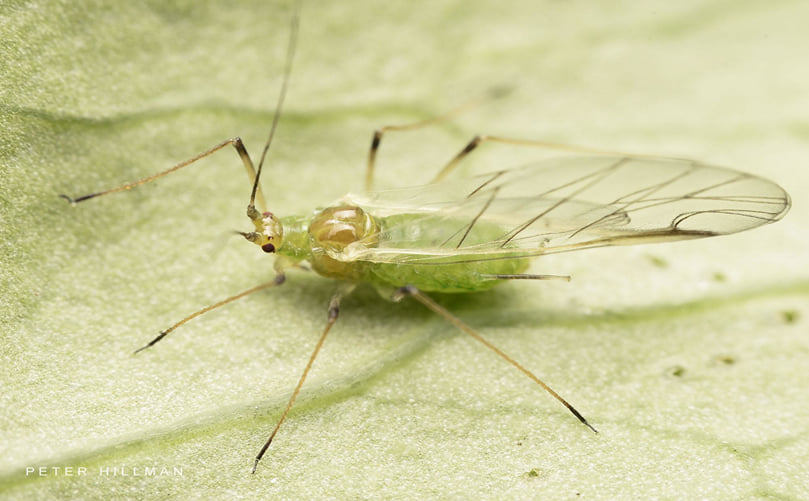
Potato Aphids Infesting Potato Plants (Credit: PETER HILLMAN)
Major Aphid Species Affecting Potato Crops
Potato aphid (Macrosiphum euphorbiae): Important in temperate regions; colonizes potatoes and many other crops and weeds. It is an efficient virus vector although generally less efficient than Myzus persicae for some viruses.
Green peach aphid (Myzus persicae): Highly polyphagous and one of the most efficient vectors of potato viruses (e.g., Potato virus Y and Potato leafroll virus) worldwide. It thrives in diverse climates and is a major pest in temperate to subtropical regions.
Foxglove aphid (Aulacorthum solani): Prefers cooler conditions and is significant in greenhouses and northern or temperate zones. It also transmits PLRV and other viruses.
Buckthorn aphid (Aphis nasturtii): More common in cooler temperate areas such as northern Europe and parts of North America, often appearing as an early-season pest.
Melon/cotton aphid (Aphis gossypii): Important in warmer, subtropical and tropical regions. It is highly polyphagous and can infest a wide range of crops.
Species importance varies by region due to climate, cropping systems and availability of alternate hosts. Myzus persicae is generally considered the most efficient virus transmitter overall.
Global Distribution of Potato Aphids
Aphids affecting potatoes occur on all continents where potatoes are cultivated, including Europe, North and South America, Asia, Africa and Australia/Oceania. They are most prevalent in temperate regions but also adapt to subtropical and tropical environments, particularly under protected cultivation such as greenhouses.
In temperate climates, populations typically build up during spring and summer with peaks occurring mid-season. In warmer regions, aphids may remain active throughout the year or complete multiple overlapping generations depending on environmental conditions.
Climate plays a major role in population dynamics: mild winters support survival and overwintering, while warm and dry conditions promote rapid reproduction and population outbreaks. The highest economic impact is observed in major potato producing regions such as Europe, North America (e.g., Idaho and Maine), China and India, where virus transmission significantly affects both seed and table potato production.
Host Range and Alternate Plant Hosts of Aphids in Potato Ecosystems
Primary host: Potato. Aphids are highly polyphagous insects and infest a wide range of cultivated and wild plants beyond potato. They commonly attack other Solanaceous crops such as tomato, pepper and eggplant, where they feed on phloem sap and contribute to both direct feeding damage and virus transmission. In addition, they are frequently found on brassicas, cucurbits, legumes, ornamentals (for example, roses in the case of Macrosiphum euphorbiae) and several fruit trees, depending on the aphid species and local agroecological conditions.
Weed hosts, particularly diverse broadleaf species, play a critical ecological role in aphid survival during non-cropping periods. These plants act as “green bridges” between potato growing seasons, allowing aphid populations to persist in the absence of potato crops. Such alternate hosts are especially important reservoirs for plant viruses like PVY and PLRV, enabling aphids to acquire and later transmit these pathogens when they move back into potato fields.
Overall, the presence of multiple host plants enhances aphid adaptability, supports continuous reproduction and migration and significantly increases the risk of virus spread across cropping systems and seasons.
Morphological Identification and Diagnostic Features
General Morphology: Aphids are small (1–4 mm), soft bodied, pear shaped insects with piercing sucking mouthparts. They have long antennae and a pair of cornicles (tube-like structures on the posterior abdomen), which are key diagnostic features that distinguish them from similar pests such as whiteflies, leafhoppers and psyllids.
Wingless Adults (Apterous Form): Wingless adults are the most commonly observed stage. Macrosiphum euphorbiae is relatively large (up to 3.5 mm or more), green or pink/red in colour, elongated and often shows a dark dorsal stripe with long legs and prominent cornicles. Myzus persicae is smaller (around 2.5 mm), variable in colour (green, pink or yellow) and typically has converging antennal tubercles. Aulacorthum solani is usually yellowish green and shiny with colour influenced by host plant and temperature.
Winged Adults (Alate Form): Winged adults develop under conditions of crowding, declining host quality or environmental stress. These forms are responsible for dispersal to new host plants. They are generally darker on the head and thorax and exhibit species specific wing venation and abdominal markings, such as the dark patch often seen in Myzus persicae.
Nymphs: Nymphs resemble smaller versions of adults but lack fully developed wings and mature cornicles in early instars. They undergo four molts before reaching adulthood. White cast skins on plants are a common sign of active infestation.
Eggs and Reproduction: Eggs are produced only during the sexual phase, typically on alternate hosts such as roses. However, in many mild climates and greenhouse conditions, aphids commonly reproduce parthenogenetically making eggs uncommon in continuous populations.
Diagnostic Features: Key identification features include the structure of cornicles, the shape of the cauda (tail-like structure) and the form of antennal tubercles, which help differentiate aphid species accurately.
Reproduction and Life Cycle of Potato Aphids
Reproduction: Potato aphids have a highly adaptable life cycle characterized by parthenogenesis (asexual reproduction) and viviparity (giving birth to live young) during the growing season. Wingless (apterous) females reproduce without mating and a single female can produce 50 or more nymphs during her lifetime. This reproductive strategy allows aphid populations to increase rapidly under favorable conditions.
Nymphal Development: Newly born nymphs resemble miniature adults and undergo four nymphal instars (molts) before becoming mature adults. White cast skins (exuviae) left on leaves after molting are a common sign of aphid infestation. Under optimal temperatures of 15–25°C, aphids can complete development from birth to adulthood in 7–10 days, resulting in overlapping generations and rapid colony expansion.
Winged (Alate) Stage: Winged adults (alates) develop in response to overcrowding, declining host plant quality, environmental stress or seasonal changes. These winged forms disperse to new potato fields or alternative host plants and play a major role in the spread of aphid-transmitted viruses over long distances.
Sexual Reproduction and Overwintering: In temperate regions, many potato aphid species switches to sexual reproduction during autumn. Males mate with females, which then lay cold hardy overwintering eggs on primary hosts, such as roses in the case of Macrosiphum euphorbiae. These eggs survive the winter and hatch in spring, initiating a new generation. Many aphid species are heteroecious, alternating between primary hosts for overwintering and secondary hosts including potato during the growing season.
Life Cycle in Warm Climates and Greenhouses: In tropical, subtropical and greenhouse environments, aphids often reproduce exclusively through parthenogenesis throughout the year. Because winter conditions are absent or mild, the sexual stage and egg production are usually bypassed allowing continuous reproduction and uninterrupted population growth.
Generations and Population Dynamics: Depending on climate, host availability and temperature, potato aphids may complete 10–20 or more generations per year. Population growth is strongly influenced by environmental conditions. Mild winters increase survival, while warm temperatures (within the optimum range) accelerate development and reproduction. Winged aphids migrating from alternate hosts or surrounding weeds often initiate early-season infestations in potato crops. Understanding these seasonal transitions is essential for effective monitoring, forecasting outbreaks and implementing timely integrated pest management (IPM) strategies.
Biology, Behavior and Ecology of Potato Aphids
Feeding Behavior and Colony Formation: Feeding behavior in potato aphids involves specialized piercing sucking mouthparts (stylets) that penetrate plant tissues to access nutrient rich phloem sap. During feeding, aphids inject saliva containing enzymes and other compounds that can interfere with plant physiology, alter hormone balance and facilitate virus transmission. They typically form dense colonies on the undersides of leaves, young shoots and tender stems, where they feed continuously and excrete excess sugars as sticky honeydew. Colony formation enhances survival through chemical alarm signals released from the cornicles when threatened and in some species, attracts ants that protect aphids from predators in exchange for honeydew.
Environmental Factors Influencing Aphid Ecology: Temperature is one of the most important factors influencing potato aphid ecology with species specific optimum ranges affecting development, reproduction and survival. Most potato aphid species develop and reproduce most rapidly under moderate temperatures of 15–25°C, where generation times are significantly shortened. Extremely high temperatures (above 30–35°C) or prolonged cold conditions reduce feeding activity, slow development, decrease reproduction and may increase mortality. Humidity influences aphid populations indirectly as high humidity favors the growth of entomopathogenic fungi that naturally infect aphids, whereas dry conditions often promote outbreaks by stressing host plants and reducing the effectiveness of some natural enemies. Wind also plays an important ecological role by dispersing winged aphids (alates) over long distances allowing rapid colonization of new potato fields and facilitating the spread of plant viruses.
Population Dynamics and Ecological Interactions: Potato aphid populations are characterized by rapid growth under favorable conditions but are naturally regulated by a range of biological and environmental factors. Important natural enemies include lady beetles, lacewings, hoverfly larvae, predatory bugs, parasitoid wasps and entomopathogenic fungi, all of which contribute to suppressing aphid populations. Agricultural practices also influence outbreak severity. Excessive nitrogen fertilization promotes lush, succulent plant growth that is highly attractive and nutritious for aphids, while reduced biodiversity and intensive pesticide use may diminish beneficial insect populations allowing aphid numbers to increase rapidly. Climate change is further altering aphid ecology by extending growing seasons, improving winter survival in many regions and changing migration patterns, resulting in earlier infestations, more generations per season and an increased risk of virus transmission in potato growing areas.
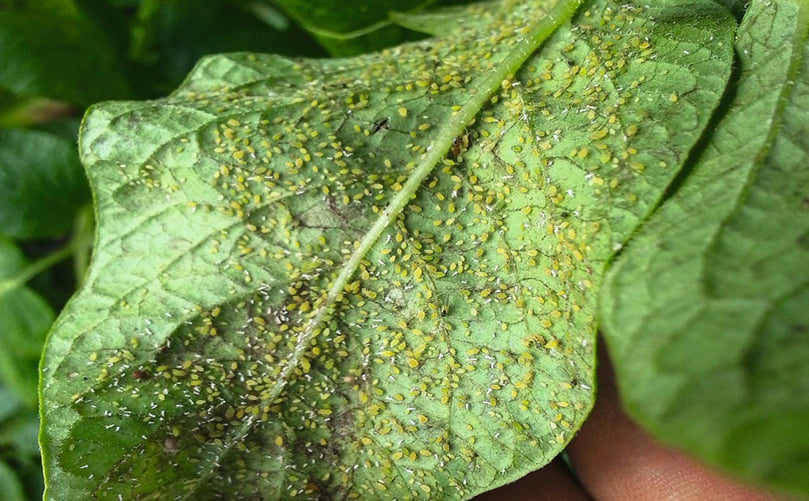
Potato Aphid Feeding Behavior and Colony Formation
Nature and Economic Impact of Potato Aphid Damage
Direct Feeding Damage and Physiological Effects: Direct damage from potato aphids results from continuous removal of phloem sap through their piercing sucking mouthparts. This depletes plant resources and interferes with growth regulators leading to retarded development, reduced vigor and overall stunting. Young plants are particularly susceptible as prolonged feeding limits normal physiological growth processes. Leaf distortion such as curling or rolling, chlorosis and general weakening of plant structure are commonly observed.
Heavy feeding reduces photosynthetic efficiency by damaging leaf tissues and diverting carbohydrates away from tuber development, resulting in smaller, lower quality yields. In severe cases, plants may wilt or exhibit premature senescence, particularly under additional stresses like drought.
Indirect Damage Through Honeydew and Sooty Mold Formation: Indirect damage compounds feeding injury through the accumulation of honeydew, a sugary excretion that coats leaves. This honeydew promotes the growth of black sooty mold fungi. Sooty mold blocks sunlight, further impairing photosynthesis and causing aesthetic defects that reduce the market value of fresh potatoes. Honeydew also creates a sticky environment that can interfere with field operations and attract other insects.
Virus Transmission as the Most Severe Damage: Virus transmission represents the most insidious form of indirect damage as even brief probing by viruliferous aphids can inoculate plants irreversibly. This makes aphids highly damaging even at low population levels because virus spread can occur before obvious feeding symptoms become severe.
Relative Importance of Damage Types: The relative importance of these damage types varies by context. In table stock production, direct symptoms and sooty mold may predominate, while in seed potato systems, virus spread dominates economic losses due to certification failures and downstream impacts on subsequent crops. Overall, the combination of feeding stress and pathogen transmission makes aphids a high priority target with low population densities sometimes sufficient to cause substantial harm through viruses.
Symptomatology and Field Diagnosis of Potato Aphid Infestation
Early Symptoms of Infestation: Early symptoms of aphid infestation on potatoes often appear as subtle leaf curling or downward rolling, particularly on younger leaves where colonies establish. As populations increase, leaves may yellow (chlorosis) or develop mottled patterns, especially when viruses are involved. Sticky honeydew droplets become visible on foliage and stems followed by the characteristic black coating of sooty mold, which gives plants a dirty appearance and reduces vigor.
Advanced Symptoms and Plant Damage: More advanced signs include distorted shoots, stunted growth and wilting under heavy pressure with plants showing reduced overall canopy development and poor tuber set. Cast skins from molting nymphs accumulate as white flecks and live aphids green, pink or yellowish clusters are observable on leaf undersides or tender terminals.
Virus Associated Symptoms: In virus infected plants, symptoms like leaf rolling (PLRV) or mosaic patterns (PVY) intensify leading to brittle leaves or necrosis.
Field Level Symptoms and Monitoring: Field level symptoms encompass uneven patches of affected plants with infestations often starting at field edges or near alternate hosts. Monitoring for these visual cues, combined with trap catches is vital for early detection as unchecked populations can rapidly escalate damage before obvious widespread decline occurs. Differentiating aphid induced symptoms from nutrient deficiencies or other stresses requires careful inspection of colonies and associated honeydew.
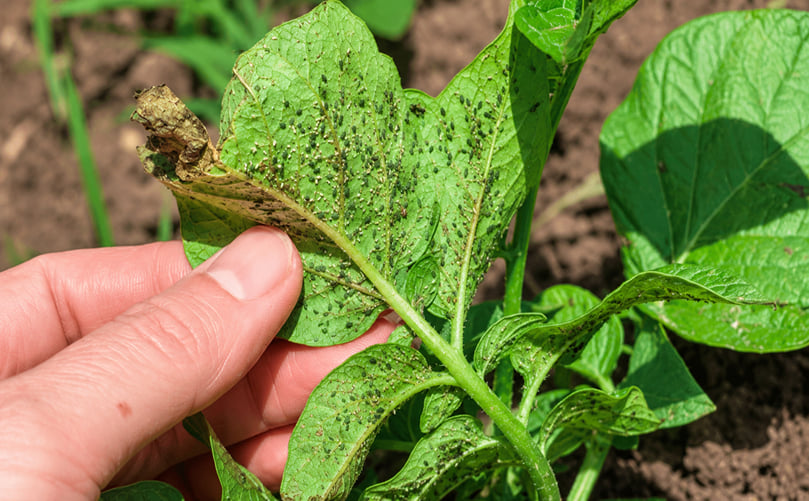
Potato Aphids Feeding on Potato Foliage
Potato Viruses Transmitted by Aphids
Potato aphids are among the most important vectors of potato viruses, transmitting several economically significant diseases that reduce crop yield, tuber quality and seed certification standards. Unlike direct feeding damage, virus transmission can cause irreversible systemic infections, making aphid management a critical component of potato production. Even low aphid populations can spread viruses rapidly, resulting in substantial economic losses.
Potato Virus Y (PVY): Potato Virus Y (PVY) a member of the Poty viridae family is one of the most destructive viruses affecting potato crops worldwide. It occurs in several strains, including necrotic variants responsible for Potato Tuber Necrotic Ringspot Disease (PTNRD). PVY is transmitted by aphids in a non-persistent (stylet-borne) manner, meaning aphids can acquire the virus within seconds to minutes during brief feeding probes and transmit it almost immediately to healthy plants. Because aphids lose the virus quickly, transient winged aphids that do not colonize potato plants can efficiently spread PVY across fields. Infected plants commonly develop mosaic mottling, chlorosis, leaf distortion, leaf drop, necrosis and tuber defects leading to significant reductions in both yield and market quality.
Potato Leafroll Virus (PLRV): Potato Leafroll Virus (PLRV), a member of the Polerovirus genus, is transmitted in a persistent circulative manner. Aphids acquire the virus only after prolonged phloem feeding, typically over several hours. Once inside the aphid, the virus passes through the gut, circulates within the body, reaches the salivary glands and remains transmissible for the insect's lifetime, which may range from several days to weeks. The Green Peach Aphid (Myzus persicae) is the most efficient vector of PLRV although the potato aphid (Macrosiphum euphorbiae) and the foxglove aphid (Aulacorthum solani) also contribute to disease spread. Plants infected with PLRV typically exhibit upward leaf rolling, stiff and leathery foliage, chlorosis, stunted growth, phloem necrosis, brittle leaves and poor tuber development, resulting in reduced yield and inferior seed quality.
Other Aphid-Transmitted Potato Viruses: In addition to PVY and PLRV, potato aphids transmit several other viruses that affect potato production. These include Potato Virus A (PVA), Potato Virus M (PVM), Potato Virus S (PVS) and Potato Aucuba Mosaic Virus (PAMV). These viruses differ in their transmission mechanisms with some being transmitted in a non-persistent manner and others in a semi-persistent manner. While PVS often causes mild or latent infections with limited visible symptoms, mixed infections involving multiple viruses can substantially increase disease severity and yield losses.
Economic Importance of Potato Aphids
Yield Losses and Quality Reduction: Potato aphids are economically important pests because both their feeding activity and virus transmission can cause substantial losses in potato production. Aphid infestations and the viruses they transmit frequently result in direct yield losses ranging from 20–50% or more, depending on the timing of infestation, potato variety, and virus strain. Continuous feeding reduces tuber size and number, while viruses such as Potato Virus Y (PVY) and Potato Leafroll Virus (PLRV) cause quality defects, including necrotic rings and internal rust spots, leading to the downgrading or rejection of potatoes for fresh, processing or seed markets. In seed potato production, even low levels of virus infection can cause entire seed lots to fail certification standards, resulting in market losses and increased replanting costs.
Increased Production Costs and Trade Impact: Beyond direct crop losses, potato aphids increase production costs through intensive field monitoring, insecticide applications and other cultural management practices. Virus incidence above acceptable tolerance levels may also lead to export restrictions, affecting the international trade of seed potatoes. In major potato producing regions, including parts of Europe, North America, China and India, the combined economic impact of aphid infestations and virus transmission amounts to millions of dollars annually. These losses are further increased by reduced tuber storability and lower market value caused by honeydew, sooty mold and tuber deformities. The development of insecticide resistance in aphid populations also increases production costs by forcing growers to adopt more expensive or less effective control options.
Long-Term Economic Importance: The broader economic importance of potato aphids lies in their threat to food security and the long-term sustainability of potato production. Virus induced seed degeneration necessitates the frequent replacement of seed stocks with certified material, increasing production costs. In addition, climate-driven changes may increase aphid populations and expand their distribution into new potato growing regions. Therefore, integrated management strategies that reduce both aphid feeding damage and virus transmission are essential for maintaining profitable potato production while minimizing the environmental impacts associated with pest control.
Integrated Pest Management (IPM) for Potato Aphids
Integrated Pest Management (IPM) for potato aphids combines multiple management strategies to keep aphid populations below economic injury levels while minimizing environmental and economic costs. It begins with preventive cultural practices and progresses to monitoring-based interventions giving priority to non-chemical control methods. The primary goal is the sustainable suppression of potato aphids while conserving natural enemies and reducing selection pressure for insecticide resistance.
Cultural Management: Cultural management includes planting certified virus-free seed tubers to reduce the initial source of virus infection, effective weed control and field sanitation to eliminate alternate hosts and virus reservoirs, crop rotation to avoid consecutive potato plantings, timely planting or appropriate variety selection to avoid peak aphid flights, the use of reflective mulches to deter winged aphids (alates) and balanced fertility management to prevent excessive succulent growth that attracts aphids. Habitat manipulation, such as maintaining border plantings can also enhance populations of beneficial insects.
Biological Control: Biological control relies on conserving or augmenting natural enemies, including predators such as lady beetles, lacewings, hoverflies, predatory midges, spiders, parasitoids (e.g., Aphidius species) and entomopathogenic fungi.
Mechanical and Physical Control: Mechanical and physical control options include high-pressure water sprays to dislodge aphids, insect proof netting in protected cultivation and vacuum removal in greenhouses.
Chemical Control: Chemical control serves as a targeted supplement through the use of selective insecticides applied at established economic thresholds. Effective chemical management requires rotating insecticides with different IRAC modes of action, applying products at the proper timing (e.g., targeting nymphs) and using application methods that conserve beneficial organisms. Scouting through sticky traps, leaf inspections and virus testing guides management decisions, ensuring that insecticides are used judiciously.
Monitoring and Scouting of Potato Aphids: Monitor potato aphid populations through regular field scouting by inspecting leaves, especially the lower leaves. Use yellow sticky traps, water traps or suction traps to monitor winged aphids. Also monitor for virus symptoms. Economic thresholds vary depending on the production system (e.g., aphids on 50% of plants in some systems). Sample fields systematically and integrate virus testing into monitoring programs for seed potato crops.
Insecticide Resistance in Potato Aphids
Development and Mechanisms of Resistance: Insecticide resistance in potato aphids, particularly the green peach aphid (Myzus persicae) has become a major challenge due to their short generation times, high reproductive rates and strong selection pressure resulting from repeated insecticide applications. Resistance mechanisms include enhanced detoxification by enzymes such as esterases and cytochrome P450 monooxygenases, target site mutations affecting acetylcholinesterase or sodium channels and reduced insecticide penetration. Cross resistance within and across chemical groups, including organophosphates, pyrethroids, neonicotinoids and carbamates is common rendering multiple modes of action ineffective in some aphid populations.
Resistance Monitoring and Field Impact: Resistance monitoring through bioassays and molecular diagnostics is essential for tracking the local resistance status of potato aphid populations. The historical overuse of broad-spectrum insecticides has accelerated the evolution of resistance, with resistant strains spreading through winged migrant aphids. In regions that rely heavily on chemical control, insecticide resistance has resulted in control failures, aphid resurgence and secondary pest outbreaks due to the harmful effects of broad-spectrum insecticides on natural enemies. Climate conditions and protected cultivation can further favor the development and persistence of resistant aphid populations by extending periods of insecticide exposure.
Insecticide Resistance Management (IRM): Effective management of insecticide resistance relies on Insecticide Resistance Management (IRM) strategies. These include rotating insecticides with different IRAC modes of action, applying products at the recommended label rates and proper timings, integrating non-chemical management practices and preserving susceptible refugia. Avoiding unnecessary insecticide applications and prioritizing selective or biological control options can help delay resistance development while maintaining the long-term effectiveness of available insecticides.
Research Advances and Emerging Technologies for Potato Aphid Management
Artificial Intelligence (AI) and Digital Monitoring: Research on potato aphid management is advancing rapidly through digital and biotechnological innovations. AI-based aphid detection uses machine learning algorithms trained on images to identify aphid colonies, feeding damage, damage symptoms or winged aphids automatically. These systems are often integrated with smartphone applications or farm management platforms to provide real-time monitoring and alerts. Drone (UAV) monitoring, combined with multispectral or hyperspectral remote sensing, enables large-scale field scouting, early detection of crop stress, including virus symptoms and mapping of infestation hotspots for precision management. Smart traps with automated aphid counting and species identification further improve monitoring efficiency.
Biotechnological Innovations: Biotechnological approaches include RNA interference (RNAi) in which double-stranded RNA targets essential aphid genes to provide species specific control with minimal non-target effects. Both sprayable and transgenic RNAi technologies are under development. Virus resistant potato varieties developed through conventional breeding, marker assisted selection or gene editing provide an important layer of protection by reducing virus inoculum and symptom severity. Biological pesticides, including enhanced entomopathogenic fungi and microbial consortia, together with climate-based forecasting models that predict aphid flights and virus risk using weather data and phenology models, support proactive pest management.
Future Directions: Digital pest surveillance platforms integrate data from traps, sensors, drones and satellites into comprehensive dashboards, facilitating area wide management and early warning systems. Ongoing research continues to address challenges such as RNAi delivery methods, the durability of resistance and the integration of emerging technologies into practical Integrated Pest Management (IPM) programs. These innovations offer more precise, sustainable and environmentally friendly potato aphid and virus management while helping potato production adapt to climate change and insecticide resistance and reducing reliance on chemical control.