
News on Zebra Chip disease

Sponsor of the month (Learn more)
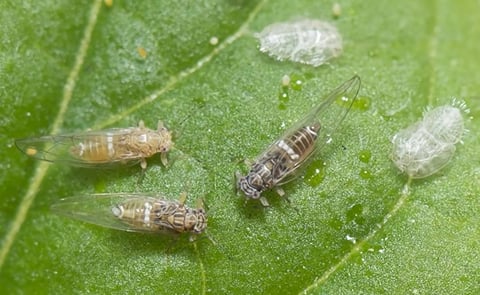
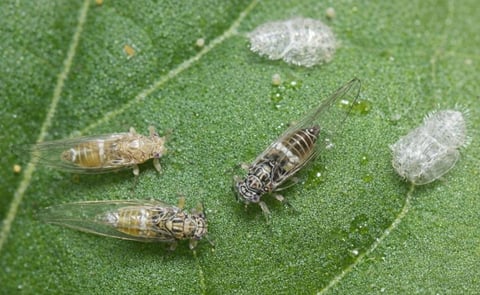
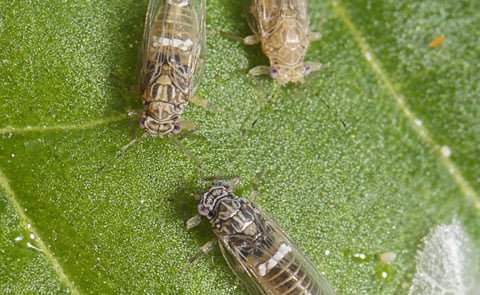
Potato Psyllids: Bactericera cockerelli, nymph cases, nymph and adult(Courtesy: Department of Agriculture and Food, Western Australia)
March 08, 2018
Psyllid tests could help potato market access in Western Australia
Potato farmers could see Eastern States markets reopen in the near future which are still closed to WA following the tomato potato psyllid outbreak last year.
From the archive
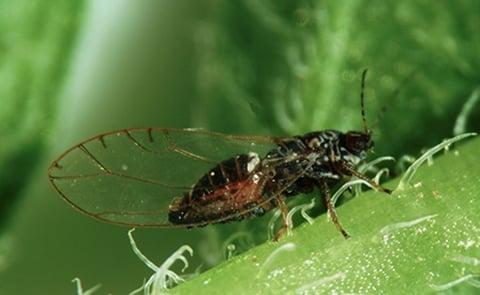
Adult Potato Psyllid (Bactericera (paratrioza) cockerelli) (Courtesy: Gary McDonald)
October 25, 2017
Tasmanian potato growers step up potato psyllid surveillance
In Tasmania, Australia, surveillance programs for the tomato potato psyllid (TPP) are being ramped up as growers try to delay any incursion of the pest for as long as possible.
From the archive
Potato psyllids that carry the Lso (Candidatus Liberibacter solanacearum) pathogen can cause zebra chip disease in potato crops.
October 23, 2017
Zebra chip pathogen found in Western Canada for the first time
For the first time, evidence of the zebra chip pathogen has been found in potato fields in southern Alberta, but the University of Lethbridge’s Dr. Dan Johnson cautions against panic.
From the archive
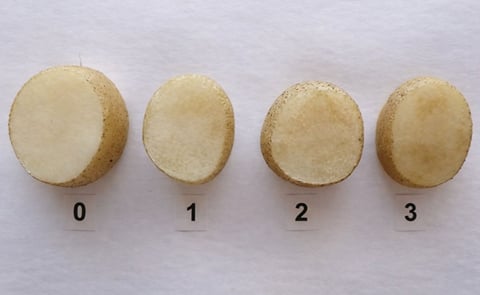
Zebra Chip symptoms 2 months after harvesting. From no symptoms (level 0) to compromised tuber (level 3).
September 21, 2017
Mexico: Zebra Chip-tolerant potatoes for the fresh market
Researchers from the University of California Riverside and INIFAP (Mexico) identify four potato lines with increased tolerance to Zebra Chip disease
From the archive
Potato Psyllids: Bactericera cockerelli, nymph cases, nymph and adult (Courtesy: Department of Agriculture and Food, Western Australia)
September 05, 2017
Only a matter of time before the potato psyllid arrives in Eastern Australia, says researcher
Raylea Rowbottom, a researcher of the Tasmanian Institute of Agriculture says it's inevitable that the potato psyllid, a destructive insect that has threatened tomato and potato crops in Western Australia will make it to the east coast.
From the archive
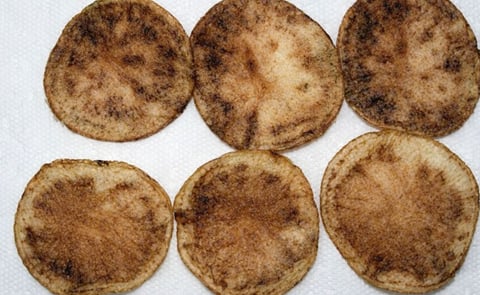
Zebra chip causes discolouration in potato tubers, and processed potatoes.
July 06, 2017
CRC develops new DNA methods to detect zebrachip bacteria in potato psyllids
Plant Biosecurity CRC scientists have identified stable regions in the genome of Candidatus Liberibacter solanacearum (CLso), which causes the serious disease Zebra Chip in potato and tomato crops. This research will provide new diagnostics that will significantly reduce uncertainty in biosecurity assessments.
From the archive
Sponsored Content
Sponsored Content
Sponsored Content
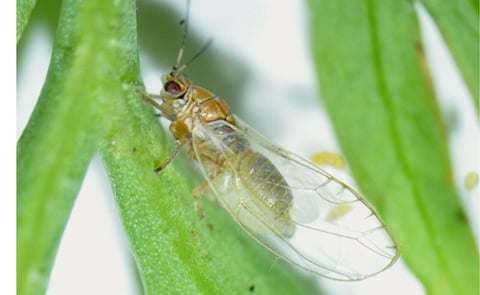
An adult potato psyllid, the insect responsible for the spread of Zebra Chip disease (Candidatus Liberibacter solanacearum) in potatoes
(Courtesy: Don Henne, Texas A&M AgriLife Research)
July 03, 2017
University of Idaho reports light potato psyllid pressure
Pressure from the tiny, winged insects that spread zebra chip disease in potatoes has been light in Idaho this season, emboldening some Idaho farmers to scale back on their pesticide programs.
From the archive
Despite the fact that the bacteria responsible for zebra chip disease occur in the Mediterranean and cause damage in leek and onions, the risk for transfer to potatoes is low, because of the feeding preferences of the transmitting psyllids in this area.
May 03, 2017
Potatoes in the Mediterranean at low risk for infection by Zebra Chip disease
Despite the fact that the bacteria responsible for zebra chip disease occur in the Mediterranean and cause damage in leek and onions, the risk for transfer to potatoes is low, because of the feeding preferences of the transmitting psyllids in this area.
From the archive
West Australian seed potato farmer Alan Parker, who may be forced to quit the seed potato industry as a result of the tomato potato psyllids found in Western Australia.
May 02, 2017
West Australian potato farmers prepare to leave industry because of psyllid outbreak
Alan Parker looked out onto the farm business he had spent his entire life establishing. The West Australian seed potato grower will know in the next six weeks whether his lifelong career will continue.
From the archive
Potato Psyllids
April 27, 2017
West Australia moves from Potato Psyllid Eradication to Control
Potato Psyllids, a destructive plant pest found for the first time in Australia in February cannot be eradicated, so the industry will seek to manage it, rather than destroy it, according to The Department of Food and Agriculture of West Australia.
From the archive
A potato infected with zebra chip presents with dark brown rings that are not harmful to humans, but do cause market losses.
(Texas A&M AgriLife photo by Dr. Fekede Workneh)
April 23, 2017
Variety screening reveals potatoes with resistance to zebrachip disease
The Texas A&M AgriLife Research plant pathology team intentionally infected potato plants with psyllids positive with the bacterium that causes zebra chip disease, in order to identify promising germplasm in the battle against the disease plaguing the US potato industry for the past 15 years.
From the archive
Dr. Ada Szczepaniec discusses her greenhouse study on potato psyllid resistance to neonicotinoid insecticides.
April 02, 2017
Neonicotinoid insecticides losing efficiency in potato psyllid control
The potato industry may be losing a mainstay in the battle against psyllids, according to a recent Texas A&M AgriLife Research study.
From the archive
Sponsored Content

Current Selection 95 items. Refine:
You May Also Like

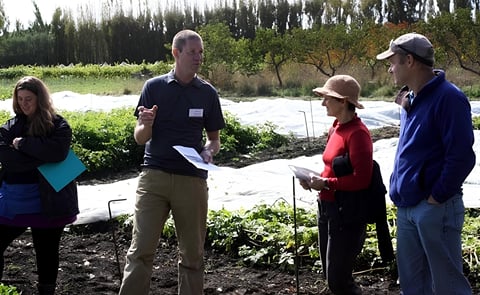
The Lincoln University Future Farming Centre head Charles Merfield, centre, among plots of mesh-covered potatoes. Using the mesh could be a way of stopping the psyllids, he says.
March 15, 2017
Mesh cover highly effective at keeping pests off potatoes, Lincoln University researchers find
In New Zealand, a team of Lincoln University researchers is impressed with the results from a trial of a mesh cover that is used to protect potato crops from insect pests.
From the archive
Bactericera cockerelli, nymph cases, nymph and adult (Courtesy: Department of Agriculture and Food, Western Australia)
February 14, 2017
Discovery of Potato Psyllids in Western Australia a serious blow to the industry
Potato producers in south-west Western Australia say the detection of the potato psyllid (Bactericera cockerelli) is a "serious blow" to their industry. The detection of the psyllid may put national and international exports in jeopardy.
From the archive
Among those in attendance at the signing ceremony were Stuart Wright, Potatoes New Zealand Chair (left) and Hon Nathan Guy - Minister for Primary Industries (right).
December 12, 2016
Potatoes New Zealand joins government biosecurity initiative
Potatoes New Zealand became the 14th partner organisation to join the Government Industry Agreement for Biosecurity Readiness and Response.
From the archive
Adult Potato Psyllid (Bactericera (paratrioza) cockerelli) (Courtesy: Gary McDonald)
August 11, 2016
Potato Psyllid Alert for North Dakota
Potato psyllids have been reported in specific fields in western and central North Dakota. At this point populations are not widespread.
From the archive
Participants at the 25th annual Texas Potato Breeding and Variety Development Program field day learned that the harvest is underway, that psyllids are threatening unharvested fields and that new varieties are showing lots of promise.(Courtesy: Texas A&
August 01, 2016
Harvest, psyllids & new varieties the hot topics at Texas potato field day
Participants at the 25th annual Texas Potato Breeding and Variety Development Program field day learned that the harvest is underway, that psyllids are threatening unharvested fields and that new varieties are showing lots of promise.
From the archive
[Potato Psyllid nymphs damage crops by feeding on foliage and by vectoring the bacterial pathogen Candidatus Liberibacter, resulting in the Zebra Chip disease (Courtesy : EPA)
June 20, 2016
Biological control of Potato Psyllids by Parasitic Wasp approved by New Zealand Authority
The Environmental Protection Authority (EPA) of New Zealand has approved a type of parasitic wasp as a biological control agent to combat the tomato potato psyllid (a plant louse), which attacks tomatoes, potatoes, capsicums and tamarillos in the country.
From the archive

Frequently Asked Questions

Will PotatoPro edit my article?

Yes. We edit almost all submitted articles for style and layout. If you notice a change you are not happy with, contact us and we will find a solution. If you submit news before its official publication date, you can review the item privately before it goes live.

How can I get more visibility for my company’s news?

Besides free news publishing, companies can list in the PotatoPro directories, become PotatoPro sponsors, or use targeted email blasts, the Event Promotion Package and social media exposure with analytics. Find out why companies advertise on PotatoPro.

Does PotatoPro delete old news? Can I add older news?

No, we do not delete old news. News on PotatoPro goes back to 2006, and we consider it a valuable historical record of developments in the industry. If we missed a key development in the history of your company, we can still add it.

What can I do after my news is published?

Share the article with your colleagues and on the social media channels where you are active, and add it to the “Company in the news” section of your website if you have one. You are also welcome to point other media to the PotatoPro article, as long as they include a clickable link to the item on PotatoPro.

I have created an account, but I am not receiving the newsletters. What should I do?

Log in to your profile and check that you have opted in to the newsletters you would like to receive. Also check your spam or promotions folder and make sure you registered with the right email address. If you still do not receive them, contact us at info@potatopro.com. For sign-in or password issues, see the PotatoPro Login & Account FAQs.

Is reading news on PotatoPro free?

Yes. All news articles on the PotatoPro website are free to read. The PotatoPro app is also free but requires a free PotatoPro account, which also works on PotatoPro AI.

Where is PotatoPro news published and how can I follow it?

News appears on the PotatoPro News page and in the PotatoPro weekly newsletter, which you can receive by creating a free PotatoPro account. It is also available in the PotatoPro app for iPhone and iPad and Android, and shared on LinkedIn, Facebook, Instagram, X, YouTube, Telegram and Bluesky.

My company is not in the PotatoPro directory. Can I still submit news?

Yes. Companies that are not yet listed can still submit news, and they are also welcome to contact PotatoPro to be added to the Company Directory.

In what languages can I submit news?

You can submit news in any language. PotatoPro publishes in English, Spanish, Dutch and Simplified Chinese, and plans to add German, French, Arabic, Hindi and Portuguese in 2027.

How long does it take for news to be published?

It depends on the timing of the news, the editorial workload and how much editing the article needs. News from PotatoPro sponsors may be given priority.

When should I submit my news?

As soon as possible, and ideally on the day the news becomes public, even if it is only a link to material published elsewhere. Extra material such as videos or illustrations can be added later. You can also send news before it is public, as long as you clearly state the embargo date and time, including the time zone.

Can I include links in my news article?

You can include one dofollow link to an external source in the body of the text. Links to your brands, your company profile, previous news and other content about your company on PotatoPro are mostly added automatically.

Can I include a video in my news article?

Yes. We can embed videos hosted on YouTube or Vimeo. For best results, use HD quality or better, include sound, and keep the video professionally edited, ideally 1.5 to 3 minutes long.

What images should I send with my news?

Every news item on PotatoPro must have an illustration at the top, which is also used in article summaries and social media posts. The best top images are closely related to the story, eye-catching and colorful, in landscape format and at least 1,200 pixels wide. Avoid logos, pictures with a prominent logo and images with a lot of text, because Google and Facebook may not display them. Send high-resolution JPG or PNG files that you own or have permission to use, each with a caption and photo credit, and mention if an image was made using AI. Extra images for the body of the article are welcome.

What are the guidelines for writing a news article?

There is no maximum length, but we recommend more than 300 words, and we do not accept articles of fewer than 200 words. An article cannot consist only of a list; it needs paragraphs of text. Provide factual, useful information, keep sentences short, and write in the third person or include quotes attributed to a named person. Self-praise full of superlatives is unlikely to be published without heavy editing. Keep abbreviations to a minimum, and if English is not your first language, we recommend having your text reviewed by a native English speaker.

What type of news does PotatoPro accept?

PotatoPro accepts industry and company news, product launches, new facilities, appointments, technology and research updates, and other developments in the potato and savory snack industries. Submissions should give industry professionals useful information rather than being purely promotional.

How can I submit news to PotatoPro?

Email your article, press release or company announcement to news@potatopro.com. Send the text in a Word or Google document, or in the body of the email, and attach images separately. We may also pick up stories shared on X that tag @PotatoPro.

Is it free to publish news on PotatoPro?

Yes. News about the potato and snack industries is published free of charge if we consider it relevant. All submissions are subject to editorial review and will be edited for style and layout.

Filters

Refine By Topics
Refine By Regions
Refine By Year
Language preferences