

Introduction: The Role of Frozen French Fries in Foodservice
Frozen French fries are industrially processed, par-fried potato strips designed for convenient and consistent preparation in commercial kitchens. The production process typically includes peeling, cutting, blanching, partial frying and rapid freezing, allowing operators to complete final cooking quickly while maintaining standardized quality. In modern foodservice, frozen French fries dominate due to their ability to deliver consistency, speed and scalability while minimizing the labor, waste and variability often associated with fresh-cut potatoes.
Foodservice operators rely heavily on frozen French fries for several operational advantages. They significantly improve labor efficiency by eliminating time consuming preparation steps such as peeling, cutting, soaking and pre-treatment. Their standardized production ensures consistency in taste, color, texture and portion size across different locations, kitchen shifts and service periods. In high volume environments, their quick preparation time supports faster kitchen throughput helping restaurants maintain service speed during peak demand. Additionally, frozen fries are widely recognized as a highly profitable menu item, often generating gross margins of approximately 70–90% due to relatively low food costs and strong consumer demand.
The global demand for frozen French fries continues to rise driven by the expansion of quick service restaurants (QSRs), growth in food delivery platforms and increasing consumer preference for convenience foods. Frozen products account for a substantial share of the broader French fries market and represent the dominant format within foodservice operations. In many markets, foodservice contributes the majority of frozen fry consumption, supported by the growing influence of restaurant chains, institutional catering and delivery focused dining models. Industry forecasts also indicate steady market expansion through the 2030s, supported by premiumization, product innovation, healthier formulations and sustainability initiatives.
Beyond convenience, frozen French fries play an important strategic role in menu engineering. They simplify kitchen operations, reduce preparation complexity and help maintain consistent menu quality while supporting upselling opportunities through meal combinations and bundled offers. As a result, frozen fries have evolved beyond a simple side dish to become an important profitability driver, enabling operators to focus more effectively on core menu items, customer experience and operational efficiency.
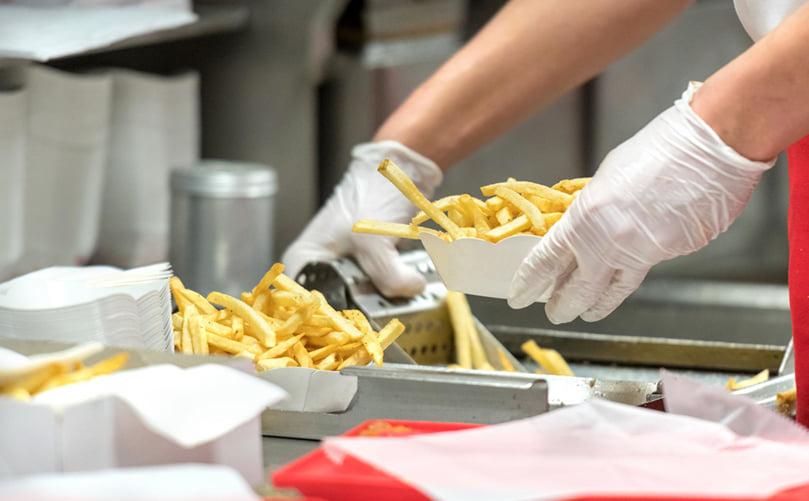
Frozen French Fries: Driving Efficiency and Profitability in Foodservice
What Are Foodservice Frozen French Fries?
Foodservice grade frozen French fries are par-fried, individually quick frozen (IQF) potato strips specifically designed for high volume commercial kitchens. Unlike retail frozen fries, which are generally packaged for home use and often feature simpler formulations, foodservice fries are engineered to deliver consistent performance, extended holding capability and operational efficiency under demanding kitchen conditions. Their production focuses on maximizing yield, maintaining texture and ensuring uniform cooking results across restaurant and institutional operations.
Designed for High Volume Foodservice Operations
One of the major differences between retail and foodservice frozen fries is packaging and operational design. Foodservice products are typically supplied in large institutional packs commonly packed as 5 lb bags within 30 lb cases or larger configurations suitable for bulk storage and continuous kitchen use. These fries are optimized for commercial deep fryers, combi ovens and other high throughput foodservice systems where speed and consistency are critical.
Foodservice frozen fries are specifically engineered to perform reliably during bulk preparation and extended service periods. Their uniform cut size helps ensure even cooking, controlled oil absorption and consistent texture across every serving. Many products are also designed to retain crispiness for longer periods under heat lamps in takeaway packaging or during food delivery operations. Coated and battered fries are particularly valued for their superior crisp retention and delivery performance.
Custom Specifications and Quality Standards
Many frozen fries are produced according to the operational requirements of restaurant chains and foodservice brands. Large quick service restaurant (QSR) operators often work closely with processors to develop proprietary specifications related to fry length, texture, color, flavor and cooking performance in order to maintain consistency across multiple locations.
Several technical specifications are commonly used to evaluate foodservice frozen French fries. Length uniformity is especially important as longer fries improve serving yield, plate coverage and perceived value. Fries are often categorized as extra-long, long, medium or short according to industry grading standards.
Potato dry matter or solids content is another critical quality factor. Higher dry matter levels generally contribute to lower oil absorption, improved crispiness, better potato flavor, stronger heat retention and reduced shrinkage during frying. Color consistency is also carefully monitored with high-quality fries expected to produce a light golden appearance after cooking while minimizing excessive browning.
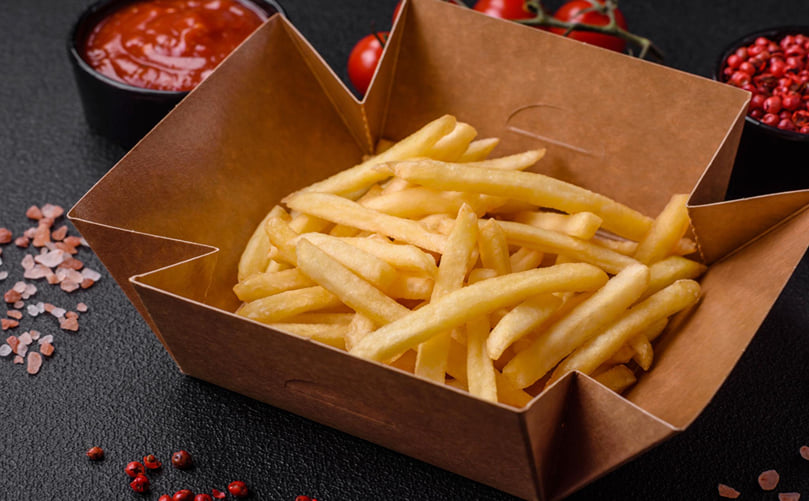
Extended Crispiness and Hold Time for Delivery and Takeaway Applications
Performance Factors in Commercial Kitchens
Oil absorption, texture retention and hold time are major operational considerations in foodservice environments. These characteristics are controlled through blanching, par-frying, coating technologies and freezing processes to ensure stable cooking performance and eating quality.
Standard frozen fries may retain acceptable crispness for approximately 5–15 minutes after cooking, while coated or delivery optimized fries can maintain texture and quality for 30–40 minutes or longer under heat lamps or in takeaway packaging. Product grading standards also emphasize uniform shape, minimal defects, proper texture and consistent color to ensure reliable kitchen performance and customer satisfaction.
Cross sectional dimensions vary depending on menu positioning and application with common sizes ranging from thin shoestring styles to thicker steak-cut formats. Strict control of slivers, broken pieces and clumping helps processors maintain product consistency while reducing waste in commercial kitchens.
Together, these specifications ensure that foodservice frozen French fries deliver dependable cooking performance, operational efficiency, minimal waste and strong profitability in fast paced foodservice operations.
Popular Frozen French Fry Formats in Foodservice
Foodservice operators select frozen French fry formats based on factors such as cooking speed, texture, sauce adhesion, hold time, menu positioning and target customer segment. To meet the diverse requirements of restaurants, hotels, institutional kitchens and delivery focused operations, major processors offer a wide range of frozen fry styles and specifications. Straight Cut Fries: Straight cut fries are the most widely used format in quick service restaurants (QSRs), institutional kitchens and large-scale foodservice operations. They provide a balanced combination of crisp exterior texture and fluffy interior consistency while delivering reliable cooking performance and strong serving yield. Their versatility and operational simplicity make them the standard choice for high volume commercial kitchens.
Crinkle Cut Fries: Crinkle cut fries feature a ridged surface that increases overall surface area, resulting in enhanced crispiness and improved sauce or dip adhesion. Their distinctive appearance and textured bite make them popular in casual dining restaurants, family dining chains and comfort-food menus where visual appeal and texture contrast are important.
Shoestring Fries: Shoestring fries are very thin cut fries, typically measuring around 1/8 inch in thickness. They cook rapidly and deliver maximum crispiness making them well suited for fast paced QSR environments where speed and crunch are prioritized. However, due to their thin structure, they require careful frying control to avoid overcooking.
Steak Fries: Steak fries are thicker cut fries that provide a hearty texture and more substantial mouthfeel compared to standard fries. Commonly served in casual dining restaurants, steakhouses and gourmet foodservice concepts, they are valued for their premium appearance and ability to complement high value menu items.
Wedge Fries: Wedge fries are thick potato wedges, often cut into 8–10 sections per potato and frequently prepared with the skin intact. Their rustic appearance and soft interior texture make them especially popular in pubs, casual restaurants and comfort food concepts.
Skin-On Fries: Skin-on fries retain the natural potato skin giving them a more rustic and artisanal appearance. They are commonly associated with premium or handcrafted menu positioning and offer a slightly earthy flavor profile that appeals to consumers seeking less processed, visually authentic products.
Coated and Battered Fries: Coated or battered fries are treated with starch-based coatings made from ingredients such as potato starch, rice flour or tapioca starch. These coatings create a protective layer that improves crispiness retention, reduces moisture migration and extends hold time after cooking. As a result, coated fries are particularly valuable for takeaway and food delivery applications, where maintaining texture during transport is critical.
Seasoned Fries: Seasoned fries are pre-flavored with ingredients such as salt, paprika, garlic, herbs or spice blends to create differentiated menu offerings. They help operators enhance flavor profiles, increase menu variety and position fries as premium sides or appetizer items.
Sweet Potato Fries: Sweet potato fries offer a naturally sweeter flavor, vibrant color and distinctive appearance compared to traditional potato fries. They are widely used in premium dining, health-oriented menus and children’s offerings where product differentiation and perceived nutritional value are important.
Air Fryer Compatible and Low-Oil Fries: Air fryer compatible and low oil frozen fries are specifically formulated for oven baking or air fryer preparation with reduced oil usage. These products are becoming increasingly important as foodservice operators respond to growing consumer demand for healthier menu options and lower fat preparation methods.
Specialty and Premium Fry Formats: In addition to traditional cuts, processors also offer specialty formats such as waffle fries, curly fries, lattice fries and loaded fry bases designed for premium toppings and customized menu concepts. These products help restaurants differentiate their offerings while enhancing visual appeal and menu innovation.
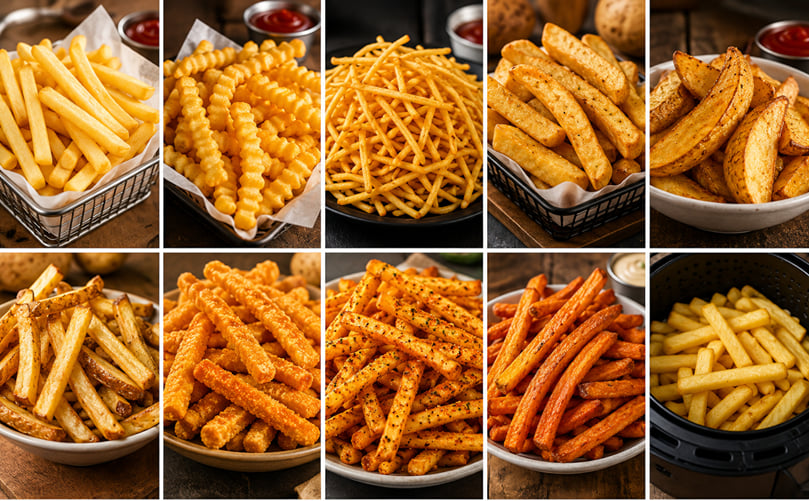
Types of Frozen French Fries Used in Foodservice
Why Foodservice Operators Prefer Frozen French Fries?
Frozen French fries address several major operational challenges more effectively than fresh cut potatoes in most commercial foodservice environments. Their ability to deliver consistency, efficiency and cost control has made them an essential product across quick service restaurants (QSRs), institutional catering, hotels, cloud kitchens and large-scale restaurant chains.
Labor Efficiency and Reduced Preparation Time: One of the primary advantages of frozen French fries is labor efficiency. They eliminate time-consuming preparation steps such as peeling, cutting, soaking, blanching, sorting and pre-treatment, significantly reducing kitchen workload. This allows foodservice operators to lower staffing requirements, reduce training complexity and improve kitchen productivity. In many operations, frozen fries can reduce side item preparation labor by approximately 25–40% compared to fresh cut potato processing.
Faster Service Speed in High Volume Operations: Frozen fries support rapid service by moving from freezer to plate within minutes. Their quick preparation time is especially valuable in high volume QSRs, delivery-focused kitchens, stadium concessions and institutional foodservice environments where speed and throughput are critical to operational success.
Consistency Across Locations and Service Periods: Consistency is another major reason why operators prefer frozen fries. Industrial processing ensures uniform size, color, texture and flavor across batches, locations and service shifts. This level of standardization is essential for restaurant chains and franchise systems that rely on strict brand consistency and predictable customer experiences.
Reduced Waste and Better Yield: Frozen fries help minimize food waste through extended frozen shelf life, precise portion control and higher serving yield. Longer fries and products with higher dry matter content generally experience less shrinkage during cooking while maintaining stronger texture and plate coverage. In addition, controlled processing helps reduce oil breakdown and improves frying efficiency over time.
Simplified Inventory Management: Foodservice operators also benefit from easier inventory planning and year-round product availability. Frozen fries can be stored efficiently in cold storage systems and are less affected by seasonal potato supply fluctuations. Their longer shelf life improves forecasting accuracy and reduces the risk of spoilage compared to fresh potatoes.
Improved Food Safety: Compared to handling raw potatoes, frozen fries reduce the risk of microbial contamination and simplify food safety management within commercial kitchens. Because much of the processing is completed in controlled industrial facilities operators can maintain more standardized preparation procedures and reduce handling related risks.
Scalability and Operational Standardization: Frozen fries support franchise scalability and multi-location standardization by allowing operators to replicate the same cooking performance and product quality across different kitchens and markets. This operational consistency is especially important for rapidly expanding restaurant brands and global foodservice chains.
Superior Hold Performance for Delivery and Buffets: Hold performance has become increasingly important with the growth of food delivery and takeaway services. Coated and battered frozen fries are specifically designed to retain crispiness and texture for extended periods under heat lamps, in delivery packaging or on buffet lines helping operators maintain product quality beyond the fryer.
Lower Overall Cost Per Serving: Although raw potatoes may initially appear less expensive, frozen fries often provide a lower total cost per serving once labor, waste, oil management, consistency and operational efficiency are considered. Their predictable performance and reduced kitchen complexity contribute to stronger long-term cost control and profitability.
Optimized Texture and Consumer Preference: Modern industrial processing technologies allow frozen fries to consistently deliver the crisp exterior and fluffy interior texture preferred by many consumers. Advanced blanching, par-frying, coating and freezing systems help maintain eating quality while enabling kitchen staff to focus on higher value menu preparation and customer service tasks.
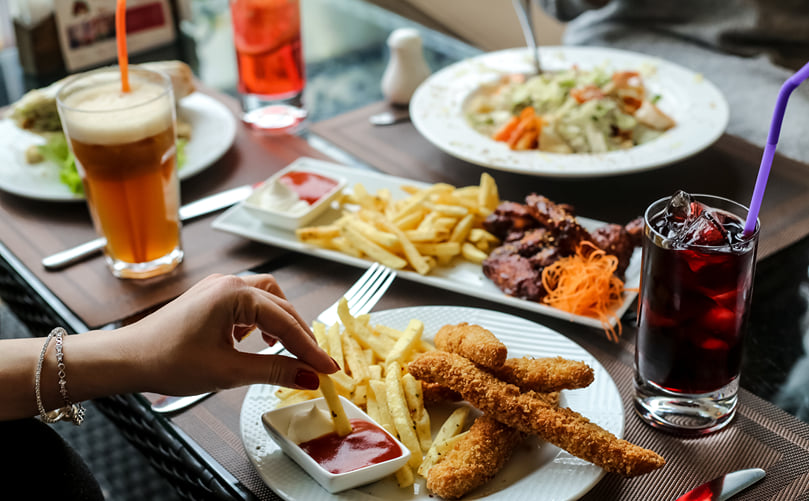
Frozen French Fries Supporting High-Volume Foodservice
How Frozen French Fries Drive Foodservice Profitability
Frozen French fries are among the highest margin items in foodservice menus, often generating gross profit margins of approximately 70–90% in quick-service restaurants (QSRs) and casual dining operations. Their strong profitability is driven by relatively low raw material costs, minimal preparation requirements, high consumer demand and strong perceived value among customers.
Low Food Cost and Strong Profit Margins: One of the key profitability advantages of frozen French fries is their low food cost per serving. A standard serving portion may cost operators only a fraction of its final selling price, even after accounting for frying oil, seasoning and preparation costs. Despite the relatively low production cost fries are commonly sold at premium retail prices allowing operators to achieve strong gross profit per serving.
In many foodservice operations, frozen fries generate substantially higher gross margins than core protein items such as burgers, chicken or sandwiches. As a result, fries often play an important role in balancing overall menu profitability and supporting restaurant financial performance.
Upselling and Combo Meal Opportunities: Frozen French fries are central to meal bundling and upselling strategies in foodservice. Combo meals featuring burgers, sandwiches or chicken products are frequently built around fries as the primary side item. Upselling techniques and value meal promotions help increase average transaction size while improving overall margin contribution.
Their popularity across dine-in, takeaway and delivery channels also make fries a reliable companion product for a wide range of menu categories.
Portion Control and Higher Yield: Foodservice frozen fries offer precise portion control helping operators reduce over serving and minimize waste. Products with longer cut lengths and higher dry matter content generally provide better plate coverage, stronger visual value and improved serving yield per pound of potatoes.
This consistency allows operators to maintain predictable food costs and improve inventory management across high volume operations.
Reduced Labor and Operational Costs: Frozen fries significantly reduce labor requirements by eliminating preparation steps such as peeling, cutting, soaking and blanching. This lowers the total cost per serving while simplifying kitchen operations and improving overall workflow efficiency.
Their standardized cooking performance also supports faster service times, better fryer utilization and increased throughput during peak operating hours.
Premiumization and Value-Added Menu Options: Foodservice operators increasingly use specialty fries to create premium menu offerings with higher selling prices and strong profit potential. Seasoned fries, coated fries, loaded fries and gourmet varieties such as truffle or garlic parmesan fries allow restaurants to differentiate their menus while maintaining attractive margins.
These value-added products often command premium pricing due to their enhanced flavor, texture and visual appeal.
Fries as a Menu Profit Engine: Frozen French fries serve as a major profitability driver across burgers, chicken meals, sandwiches, snack platters, appetizers and sharing menus. In delivery and takeaway operations, coated and delivery optimized fries help maintain texture and eating quality during transport supporting the continued growth of off-premises dining revenue.
In high-volume QSR operations, fries often contribute disproportionately to total profitability despite representing a smaller share of the overall menu. Major processors continue to invest in innovations such as delivery stable coatings, extended hold time technologies and improved frying efficiency to help operators maximize margins and operational performance.
Even as input costs for potatoes, frying oil, packaging and energy continue to rise, frozen French fries remain one of the most resilient and profitable categories in modern foodservice due to their strong consumer demand, pricing flexibility and high sales volume.
Foodservice Applications of Frozen French Fries Across Commercial Sectors
Frozen French fries are widely used across multiple foodservice sectors due to their versatility, consistency, scalability and operational efficiency. Their ability to perform reliably in different kitchen environments makes them one of the most adaptable potato products in commercial foodservice.
Quick Service Restaurants (QSRs): Quick service restaurants are the largest consumers of frozen French fries globally accounting for a significant share of total foodservice usage. In these high-volume environments, operators prioritize speed, consistency and rapid kitchen throughput. Straight-cut, shoestring and coated fries are commonly used for drive-thru, dine-in, takeaway and delivery operations.
Delivery optimized coated fries have become especially important in modern QSR systems because they can maintain crispness and texture for extended periods during transport and holding.
Full-Service Restaurants and Casual Dining: Full-service restaurants and casual dining chains often use premium fry formats to enhance menu differentiation and customer experience. Steak fries, crinkle cuts, wedges, skin-on fries and seasoned varieties are popular choices due to their visual appeal and distinctive texture profiles.
These fries are commonly served alongside burgers, grilled meats, sandwiches and gourmet entrées, while loaded fries and specialty seasoned fries are increasingly positioned as appetizers or sharing dishes.
Hotels and Hospitality: Hotels, resorts and hospitality operations use frozen fries across buffets, room service, banquet catering and breakfast menus. Their consistent quality and ease of large-scale preparation make them ideal for high-capacity foodservice environments.
Premium coated fries and rustic skin-on styles are often preferred in upscale hospitality settings where presentation and perceived quality are important.
Institutional Catering: Institutional foodservice sectors such as schools, hospitals, universities, military kitchens and corporate cafeterias rely on frozen fries for their cost effectiveness, operational simplicity and standardized preparation. Straight cut and crinkle cut fries are commonly supplied in large bulk packs for mass catering operations.
Many institutional kitchens increasingly use baked or low oil preparation methods to meet nutritional guidelines and health-focused menu standards.
Cloud Kitchens and Delivery-Focused Operations: Cloud kitchens and delivery-focused foodservice businesses represent one of the fastest-growing application areas for frozen French fries. Coated and battered fries are specifically designed to retain crispness and texture during delivery, helping operators maintain product quality even after extended transport times.
Their consistency, low preparation requirements and compatibility with high order volume systems make frozen fries especially valuable for delivery platforms and takeaway focused restaurant models.
Bars and Pubs: Bars, pubs and casual entertainment venues frequently use seasoned fries, loaded fries, crinkle cuts and wedges as appetizers and shareable snack items. In these applications, crispiness retention, sauce adhesion and flavor customization are particularly important for enhancing customer appeal and beverage pairings.
Sports and Entertainment Venues: Stadiums, arenas, cinemas, amusement parks and large entertainment venues depend on frozen fries for fast service during peak crowd periods. Shoestring and straight cut fries are commonly preferred because of their rapid cooking times and efficient serving capabilities.
In these environments, portability, heat retention and speed of preparation are critical factors for maintaining customer satisfaction during high volume service periods.
A Dominant Category in Commercial Foodservice: Across QSRs, hospitality, institutional catering, delivery operations and entertainment venues, frozen French fries remain one of the most important product categories in commercial foodservice. In many markets, foodservice channels account for the majority of frozen fry consumption due to the product’s ability to combine convenience, consistency, operational efficiency and strong consumer demand.
Cooking Methods and Preparation Techniques for Frozen Fries in Foodservice
Frozen fries offer excellent preparation flexibility allowing foodservice operators to adapt cooking methods based on equipment availability, operational scale, speed requirements and health preferences.
Deep Frying (Traditional Gold Standard): Deep frying delivers the best texture with a crisp exterior and fluffy interior. Preheat oil to 345–350°F (174–177°C), as higher temperatures accelerate oil breakdown. Fry in batches filling baskets only one-third to one-half full to maintain consistent oil temperature. Shake the basket after 30 seconds to prevent sticking and ensure even cooking. Drain fries for 10–15 seconds after frying. Cook according to manufacturer instructions, typically 2–4 minutes depending on cut size and coating. Avoid overcrowding the fryer or frying thawed products, as this reduces crispness and increases oil absorption.
Oven Baking: Oven baking provides a healthier alternative with lower oil usage. Preheat the oven and baking tray to 218°C. Spread fries in a single layer on a hot sheet pan for improved crispness. Bake for 15–25 minutes, turning halfway through cooking for even browning. Convection ovens can reduce cooking time and improve texture consistency.
Air Frying: Air frying is rapidly growing in popularity for low oil preparation. Preheat the air fryer to 360–400°F (182–204°C). Cook fries for 8–15 minutes depending on cut thickness and product type, shaking halfway through cooking. Arrange fries in a single layer to ensure proper airflow and even crisping. Combination microwave and air fry systems can produce textures comparable to deep frying.
Combination Ovens / Combi Ovens: Combination ovens use both steam and convection heat, improving cooking efficiency and consistency in large-scale operations. These systems are particularly suitable for institutional kitchens, catering services, hospitals and hotels.
Key Operational Practices for Quality, Crispness and Oil Management
Oil temperature management is critical for maintaining proper color, texture, oil absorption and fryer life. Hold time and crisp retention are increasingly important in takeaway and delivery operations. Coated fries can maintain crispness for more than 40 minutes when supported by heat lamps, holding cabinets or specialized delivery packaging.
Re-frying is generally avoided because it reduces product quality and increases oil absorption. Fries with higher dry matter content absorb less oil during cooking. Proper drying and par frying during industrial processing further minimize oil uptake and improve final texture.
Proper cooking methods ensure consistent quality, reduced waste and optimal sensory performance across foodservice applications.
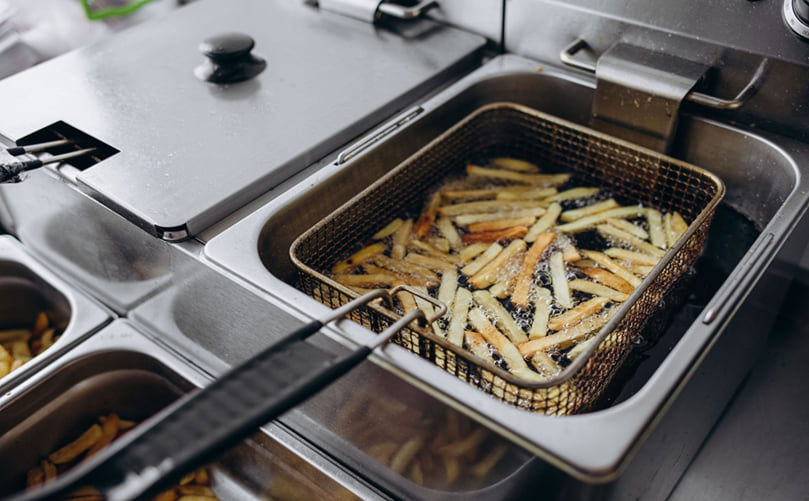
Professional Cooking Methods for Frozen Fries in Modern Foodservice
Quality Standards and Performance Parameters for Frozen Fries in Foodservice
Foodservice operators and processors use rigorous quality standards to ensure consistency, operational efficiency and consumer satisfaction. Length Uniformity: Length uniformity is an important quality factor affecting plate appearance, portion yield and customer perception. According to USDA classifications fries are categorized as Extra Long, Long, Medium or Short. Extra-long fries typically require at least 80% of strips to exceed 2 inches and at least 30% to exceed 3 inches. Longer fries are generally preferred in foodservice because they improve visual appeal and serving efficiency.
Color Consistency: Raw fries should exhibit a bright white or cream color, while finished fries are expected to achieve a light golden appearance within USDA color ranges 000 to 2. Low reducing sugar levels are critical to preventing excessive browning and acrylamide formation during frying. Color consistency is commonly evaluated using USDA Munsell color charts or electronic colorimeters.
Crispiness and Texture: High-quality fries should have a crisp exterior and a soft, fluffy, mealy interior. Potatoes with high dry matter content, typically 20–25% or higher provide the ideal balance between crispness and internal texture.
Internal Texture and Dry Matter: Higher solid content, often associated with a specific gravity above 1.080, reduces oil absorption and improves heat retention and holding performance. High dry matter fries also maintain crispness longer after cooking.
Oil Content: Oil absorption is carefully controlled during processing and final preparation. High solids potatoes and coated fries generally absorb less oil, resulting in improved texture and reduced greasiness.
Freezer Stability: Individually Quick Frozen (IQF) technology prevents fries from clumping during frozen storage. Properly processed frozen fries remain stable for 12 months or longer when stored at or below 0°F (-18°C) with minimal loss in texture, flavor or color.
Hold Time: Standard fries typically maintain acceptable quality for 5–15 minutes after cooking, while coated fries can retain crispness for 30–40 minutes or longer under heat lamps, warming cabinets or delivery conditions.
Flavor Consistency: Frozen fries should deliver a clean, characteristic potato flavor with minimal off-notes. Seasoned and flavored variants provide additional value and menu differentiation in foodservice operations.
Defects and Grade Standards: Premium frozen fries are commonly produced to USDA Grade A (Fancy) standards, which require good flavor and color, uniform size and symmetry, minimal defects and desirable texture characteristics. Grade A products generally achieve scores above 90. Grade B products may have more visual or textural imperfections. Quality control programs also minimize slivers, clumps, blemishes and broken strips.
Common Quality Issues: Several common defects must be controlled during processing and preparation. Dark fries are typically caused by excessive reducing sugars. Excess oiliness or greasiness may result from improper processing or frying conditions. Limp or soggy texture can occur due to overcrowded fryers, low dry matter potatoes or poor holding practices. Cold-end defects and freezer burn may develop if frozen storage conditions are inadequate.
These quality parameters are essential for ensuring product consistency, food safety, operational efficiency and consumer satisfaction across both large restaurant chains and independent foodservice operators.
Sustainability and Environmental Practices in Frozen French Fry Foodservice
Sustainability has become a core procurement criterion for restaurant chains, driven by consumer expectations, regulatory pressure and corporate ESG goals. Leading processors such as Lamb Weston and McCain Foods are embedding sustainability across the value chain.
Sustainable Potato Sourcing and Regenerative Agriculture: Processors work closely with growers to implement precision farming, cover cropping, reduced tillage and improved soil health management. These practices improve resilience to climate variability, enhance water retention and help reduce greenhouse gas emissions.
Water and Energy Efficiency in Processing: Modern processing plants increasingly reuse water and recover heat to improve operational efficiency. Advanced freezing technologies and energy optimization systems help reduce overall water and energy consumption.
Food Waste Reduction: Processors aim to maximize utilization of the entire potato. Byproducts are commonly converted into hash browns, starch ingredients for coatings or animal feed. Many companies also target significant reductions in production waste and landfill disposal.
Fry Oil Recycling: Closed loop recycling programs collect used cooking oil and convert it into biodiesel or bio-based packaging materials, supporting circular economy initiatives.
Sustainable Packaging: Packaging innovations include recycle ready materials, reduced plastic formats and bio-circular plastics derived from used cooking oil helping lower packaging related carbon footprints.
Carbon Footprint Reduction: Processors continue investing in renewable energy, efficient cold-chain logistics and lower emission transportation systems to reduce supply chain emissions.
Supply Chain Expectations: Major QSR and casual dining chains increasingly require traceable sourcing, third party sustainability certifications and Scope 3 emissions reporting from suppliers.
These sustainability efforts help operators strengthen guest loyalty while addressing environmental concerns. Foodservice buyers increasingly prioritize suppliers with strong sustainability credentials for long-term contracts.
Innovation and Premiumization in Frozen French Fry Foodservice
Innovation continues to drive product differentiation, operational efficiency and adaptation to delivery, health and convenience trends. Premiumization has shifted the market beyond standard straight cut fries toward higher value products with improved texture, flavor and presentation.
Extra Crispy and Delivery Stable Coatings: Proprietary coating systems including starch, rice flour and tapioca-based batters, create a moisture barrier that helps maintain crispness for extended periods. Products such as Lamb Weston Stealth Fries are designed to remain crispy for 30–40 minutes or longer making them well suited for delivery and takeaway applications. Coated fries often provide significantly longer hold times than standard fries.
Air Fryer and Low Oil Compatible Fries: Manufacturers increasingly develop fries optimized for air frying and low oil cooking systems while maintaining restaurant style texture and crispness in both home and foodservice applications.
Flavored and Seasoned Fries: Seasoned fries featuring flavors such as garlic parmesan, truffle, spicy blends and herb seasoning provide menu differentiation and support premium pricing opportunities in foodservice operations.
Rustic and Gourmet Cuts: Premium product formats include skin-on fries, wedges, Belgian style fries, steak fries and customized chain specific cuts designed to enhance visual appeal and eating experience.
Clean Label and Health-Focused Products: Growing demand for healthier options has increased interest in reduced sodium products, gluten-free coatings, non-GMO ingredients and sweet potato fries.
Processing and Technology Advancements: Advances in automation, precision cutting, smart fryer systems and AI-assisted frying optimization help improve consistency, production efficiency and product quality across large scale operations.
Packaging and Format Innovations: Packaging developments include nitrogen flushed systems for extended shelf life, resealable portion-controlled packs and more sustainable packaging materials.
Premium frozen fries generally require stricter quality specifications including longer cuts, fewer defects, improved texture and higher case yield. These characteristics enhance plate presentation, support premium menu pricing and improve operator margins.
Challenges in Frozen French Fries in Foodservice
While the category is highly resilient and globally scalable, it faces several operational and external pressures across the supply chain.
Potato Supply Fluctuations: Weather variability, drought conditions, crop diseases such as late blight and broader climate change impact potato yield and quality. These factors can lead to price volatility and occasional supply shortages. Processors typically use long-term contracts and multi-region sourcing strategies to reduce risk.
Rising Input and Energy Costs: Increasing costs of frying oil, energy used in freezing and processing, and transportation significantly affect overall production economics. Cold storage and refrigeration are particularly energy intensive and remain a major cost driver.
Cold Chain Dependence and Logistics Disruptions: Frozen fries require a continuous cold chain from production to end user. Any disruption in storage or transportation including port delays or extreme weather events can impact product availability and quality.
Acrylamide Regulations: Regulatory requirements, particularly in regions such as the European Union set benchmarks for acrylamide reduction. Compliance requires the use of low sugar potato varieties, controlled blanching and process optimization, which can increase production complexity and costs.
Quality Consistency: Maintaining uniform color, texture and frying performance across global supply chains remains a key challenge due to variations in raw material quality and processing conditions.
Health Perception and Market Competition: Growing consumer demand for lower carb and perceived healthier alternatives continues to challenge traditional fried potato consumption and influences product positioning.
Labor and Workforce Constraints: Labor shortages in both processing plants and foodservice kitchens affect operational efficiency and increase reliance on automation and process optimization.
Operators and suppliers address these challenges through diversification, technological improvements and long-term partnerships with growers and supply chain stakeholders.
Global Market Trends and Growth Outlook for Frozen French Fries in Foodservice
The frozen French fries segment dominates the broader fries market due to its convenience, consistency and extended shelf life. Foodservice remains the primary demand driver, accounting for approximately 60–75% of total consumption in many markets.
Market Size and Growth: The global French fries market is estimated in the range of USD 18–28 billion, depending on scope and segmentation definitions. Frozen products represent the majority share of this market. The category is projected to grow at a compound annual growth rate (CAGR) of around 5–6%+ through 2030–2034, reaching approximately USD 25–30+ billion over the forecast period. Growth is strongly supported by foodservice expansion worldwide.
QSR and Delivery Expansion: Quick service restaurants and food delivery platforms continue to be major growth drivers, particularly for coated and delivery optimized fries that maintain crispness during transit and extended holding times.
Premium and Health-Conscious Demand: There is increasing demand for premium and value-added products including seasoned fries, coated variants, air fryer compatible formats and specialty options such as sweet potato fries. These align with evolving consumer preferences for variety and perceived healthier choices.
Emerging Market Growth: Rapid expansion is observed in Asia including India and China as well as in the Middle East and Latin America. Growth is driven by Western fast food chain penetration alongside localized product adaptations.
Sustainability Driven Procurement: Foodservice chains are increasingly prioritizing suppliers with strong sustainability credentials including reduced environmental impact, responsible sourcing and transparent supply chains.
Convenience and Retail Crossover: Air fryer compatible products are strengthening the overlap between retail and foodservice segments by enabling consistent quality across home and commercial preparation.
North America remains the largest market followed by Europe, while Asia-Pacific represents the fastest growing region due to urbanization, rising incomes and expanding quick service restaurant infrastructure.
Future Outlook and Evolution of Frozen French Fries in Foodservice
Frozen French fries will remain a core profitability driver in foodservice while continuing to evolve in response to health, sustainability and technology-driven changes.
Smart and Automated Kitchens: Foodservice operations are increasingly adopting AI-optimized fryers, automation systems and real time energy management solutions to improve efficiency and consistency. In some processing environments, efficiency improvements of around 17% have been reported through smart system integration.
Deeper Sustainable Sourcing: The industry is moving toward broader adoption of regenerative agriculture, precision farming and net zero emission goals. Sustainability practices are becoming more integrated across the full supply chain.
Healthier Product Development: Manufacturers are expanding low oil, air fryer optimized, reduced fat and reduced sodium formulations while maintaining taste and texture performance to meet evolving consumer expectations.
Delivery Optimized Products: Advanced coating technologies and improved packaging systems are enabling fries to maintain crispness and temperature for 30–45 minutes or longer supporting the continued growth of delivery and takeaway channels.
Premium Customization: There is increasing demand for chain specific cuts, regional flavor profiles and localized adaptations, such as spiced variants tailored for markets like India.
Automation and Operational Efficiency: Advancements in processing lines, cold chain logistics and waste reduction systems are improving efficiency and consistency while lowering operational losses.
Innovation Pipeline: Future innovation is focused on plant-based coatings, enhanced nutritional profiles and circular economy-based packaging solutions.
Overall, the category is expected to benefit from continued QSR expansion, urbanization and convenience driven consumption patterns. While challenges such as climate variability and regulatory pressures will persist, they are also expected to accelerate innovation. Frozen French fries will remain essential to foodservice operations due to their efficiency, consistency and margin contribution, while gradually aligning with more sustainable and health-oriented market demands.


