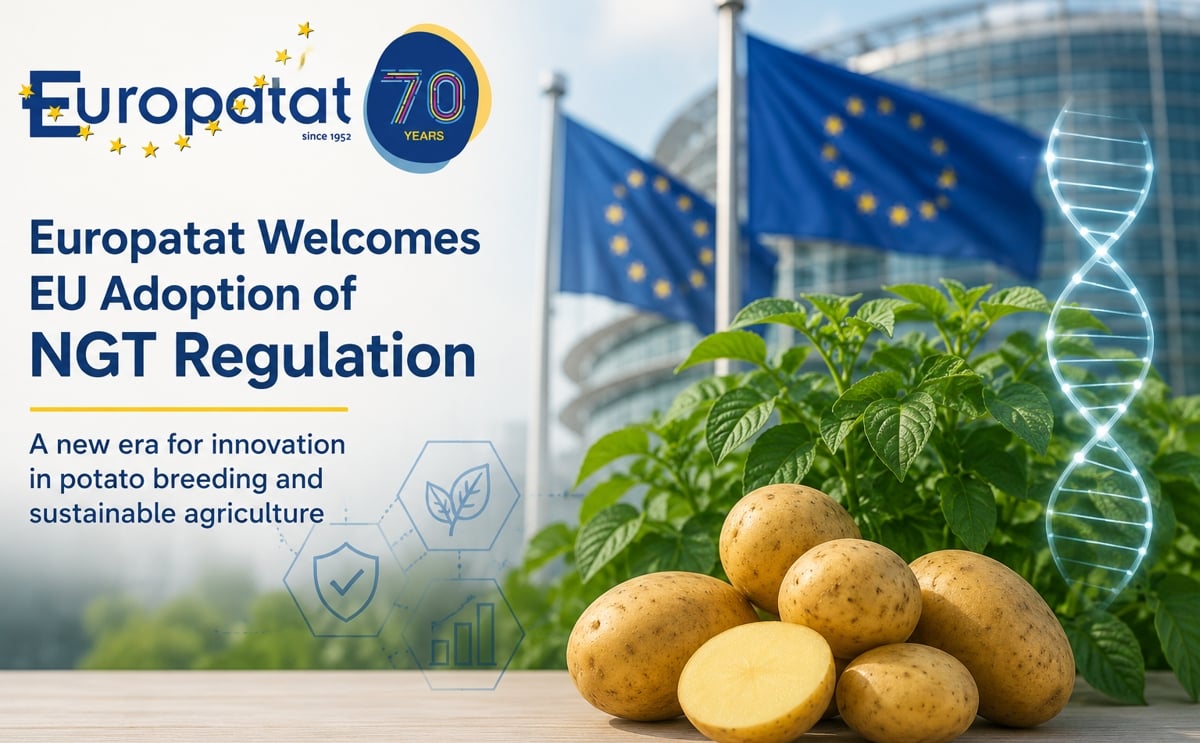
Europatat welcomes the EU’s adoption of the New Genomic Techniques (NGT) Regulation, a landmark decision expected to accelerate potato breeding innovation, strengthen crop resilience, enhance food security, and support the long-term sustainability of European agriculture.
Europatat Welcomes EU NGT Regulation, Opening New Opportunities for Potato Innovation
The European Potato Trade Association (Europatat) welcomes the adoption of the Regulation on New Genomic Techniques (NGTs), marking a significant milestone for European agriculture, plant breeding and food production.
The adoption of the Regulation concludes several years of scientific assessment, political debate and legislative negotiations between the European Parliament, the Council and the European Commission. The new framework establishes a dedicated regulatory pathway for NGT plants and provides greater clarity regarding their development, authorisation and marketing in the European Union.
Europatat welcomes the efforts of the European institutions and all stakeholders involved in bringing this complex legislative file to a successful conclusion. The Regulation is expected to strengthen Europe's capacity for agricultural innovation while contributing to food security and the long-term resilience of agricultural production.
For the potato sector, the new legislation opens new opportunities for the development of varieties with characteristics that are increasingly sought by growers and the value chain, including improved resistance to pests and diseases, or enhanced adaptability to storage and processing. The framework is also expected to facilitate research and investment in plant breeding, helping to accelerate the availability of innovative solutions for the sector.
Florimond Desprez, Chair of the Europatat Technical and Regulatory Commission:
"The adoption of the NGT Regulation is an important step for European agriculture and plant breeding. Policymakers are giving our sector the opportunity to benefit from a major scientific innovation to develop solutions to some of the challenges we are facing in a context of agricultural transition."
"It is a positive signal for breeders and researchers, although significant uncertainties remain around the IP of NGT technologies. Their development also leads to an increase in the number of patented genes which threatens the current operating model of the breeding sector."
Romans Vorss, Director for Technical Affairs at Europatat:
"Potato growers are facing increasing challenges linked to pest and disease pressure, changing weather patterns, the need to produce more with fewer available inputs and to reduce food waste. NGTs can help accelerate the development of potato varieties better suited to these realities."
Like to receive news like this by email? Join and Subscribe!
Get the latest potato industry news straight to your WhatsApp. Join the PotatoPro WhatsApp Community!
Highlighted Company

Related News

October 10, 2026
EarthFresh Butter Potatoes Reach More Than 4 Million Households as Retail Demand Surges
EarthFresh Butter Potatoes are gaining momentum across North America, reaching over 4 million households. With acreage up 40% and 100% incremental sales, the premium lineup offers retailers new opportunities to grow the potato category.

October 08, 2026
ICAR-CPRI Potato Varieties Cover Nearly 75% of India’s Potato Area
ICAR-CPRI's Kufri Jyoti, Kufri Bahar, Kufri Pukhraj and Kufri Chipsona-1 together cover nearly 75% of India's potato cultivation area. The varieties have boosted productivity, farmer incomes and the potato processing sector.

October 06, 2026
Dutch Potato Organisation Celebrated Potato Tuesday at Utrecht Central Station on October 6
The Dutch Potato Organisation celebrated Potato Tuesday on October 6 at Utrecht Central Station during the Week of Our Food. Visitors can enjoy free recipe booklets and discover the people behind the Dutch potato industry.