

Post-harvest technology solutions, including advanced sorting, storage, monitoring, and renewable energy systems, help reduce food losses, lower carbon emissions, and build more sustainable food supply chains.
Post-Harvest Technology Emerges as a Key Driver of Sustainable Food Systems and Climate Goals

Advanced post-harvest technologies are playing an increasingly important role in helping the global food industry reduce food waste, lower greenhouse gas emissions, improve resource efficiency, and support environmental sustainability across agricultural supply chains.
According to industry experts, nearly one-third of all food produced worldwide is lost or wasted before reaching consumers. While sustainability discussions often focus on crop production and farming practices, significant environmental gains can also be achieved after harvest through improved storage, handling, processing, monitoring, and distribution technologies.
Food loss not only represents an economic challenge but also contributes substantially to climate change. Every kilogram of wasted food embodies the water, fertilizer, fuel, electricity, labor, and transportation resources used during production. Global food loss is estimated to generate more than four gigatonnes of carbon dioxide equivalent (CO₂e) emissions annually, making it one of the world's largest—and most preventable—sources of greenhouse gas emissions.
Reducing Carbon Emissions Through Better Post-Harvest Management
One of the biggest environmental benefits of post-harvest technology is reducing methane emissions from decomposing organic waste. When spoiled food reaches landfills, it decomposes under oxygen-free conditions, producing methane—a greenhouse gas with more than 80 times the warming potential of carbon dioxide over a 20-year period.
By preventing spoilage earlier in the supply chain, modern post-harvest systems reduce the volume of food entering landfills while lowering overall emissions.
Metal Silos Improve Grain Protection
For cereal crops, hermetically sealed metal silos have become an effective storage solution for both commercial and smallholder farmers.
These airtight storage systems prevent insect infestations by limiting oxygen availability, allowing grain to maintain quality and germination capacity for much longer periods. Improved storage also gives farmers greater flexibility to market their crops instead of selling immediately after harvest when prices are often lowest.
Improved Handling Protects Produce Quality
Industry specialists also emphasize the importance of careful crop handling throughout the post-harvest process.
Poorly designed conveyors, excessive drop heights, and abrasive equipment can bruise or damage produce, accelerating spoilage before products even reach storage facilities.
Modern handling systems featuring padded surfaces, controlled product flow, and minimized transfer points significantly reduce mechanical damage while preserving product quality and nutritional value.
Precision Potato Processing Reduces Waste
The potato industry provides a clear example of how targeted post-harvest technologies can reduce food loss and environmental impact.
- Debris Elimination:
Before potatoes are graded or stored, specialised handling machinery removes soil clods, stones, and vines from the harvested batch. This preliminary step is far more consequential than it may appear. Stones and compacted soil travelling alongside produce exert pressure and abrasion during conveyance, causing subsurface bruising that accelerates cellular breakdown.
A bruised potato may appear unblemished at the point of sorting, only to succumb to bacterial rot days later and thus contaminating the surrounding stock. Mechanical debris elimination, therefore, protects the physical integrity of each tuber from the very first moment after harvest. Potato Sizer and Sorter
Automated potato sizers and potato sorters apply consistent, objective criteria to categorise each tuber by size, weight, and external condition at speeds no manual operation could replicate. Produce is directed to the appropriate market channel (e.g., processing, retail, or fresh consumption) with precision.
This targeted classification ensures that only sound, market-ready potatoes progress to crop storage or onward distribution, whilst compromised specimens are intercepted early.- Environmental Impact:
The environmental dividend of this precision approach is substantial. By removing damaged or ‘at-risk’ potatoes at the earliest opportunity, processors prevent the spread of fungal and bacterial rot to healthy batches, a cascade effect that, if left unchecked, can devastate an entire storage consignment.
Maximising the usable yield from every acre farmed means that less land, less water, and fewer agrochemical inputs are required to deliver an equivalent volume of food to market. Precision sorting, in this respect, is as much an ecological tool as it is a commercial one.
Energy Efficiency and Renewable Integration
Here are some renewable energy adoptions food producers can do today:
Green Cold Chains
Conventional refrigeration has long been the backbone of post-harvest preservation, yet its environmental cost is considerable. Energy-intensive compressor systems, refrigerants with high global warming potential, and the continuous power demands of large-scale cold storage collectively impose a significant carbon burden on the food supply chain.
The transition towards purpose-designed cool rooms (i.e., engineered with superior insulation, energy-efficient cooling units, and precise humidity regulation) represents a meaningful step in decarbonising the cold chain without compromising food safety or produce conditions.
Solar Power
Perhaps the most transformative development in decentralised Post?Harvest infrastructure is the integration of photovoltaic solar panels to power storage facilities in rural and peri-urban settings.
In regions where grid electricity is unreliable, prohibitively expensive, or entirely absent, solar-powered cold storage allows smallholder farmers to preserve their harvests at the point of production, which in turn eliminates the costly and emissions-heavy rush to market that so frequently results in distress selling and avoidable food loss.
By anchoring energy generation to the storage facility itself, this model removes a critical vulnerability from the supply chain whilst substantially reducing its carbon footprint.
Room Automation and Precision Ripening Rooms
The integration of room automation into modern storage facilities enables operators to monitor and adjust temperature, humidity, and atmospheric composition in real time, responding dynamically to the respiratory needs of the produce held within.
Ripening rooms, in particular, benefit enormously from this precision, allowing operators to synchronise the maturation of fruit to precise market windows, reducing energy waste from over-extended cooling cycles and minimising the proportion of produce that ripens prematurely or unevenly.
Reducing Chemical Preservatives Through Optimised Storage
One of the less-celebrated environmental dividends of improved storage conditions is the reduction in chemical preservative use. When temperature, humidity, and atmospheric composition are maintained within optimal parameters, the physiological deterioration of produce slows naturally.
This diminishes the commercial imperative to apply synthetic coatings, fungicidal treatments, or post-harvest chemical sprays. This not only lessens the chemical load entering ecosystems via runoff and waste streams, but also responds to growing consumer acceptance pressures, as markets increasingly favour produce handled with minimal chemical intervention.
Precision Preservation through Modified Atmospheres and Monitoring
At the heart of modern post-harvest science lies a deceptively elegant principle: slow the produce down. Every fruit and vegetable continues to respire after harvest, consuming its own sugars and structural compounds in a biological countdown towards senescence.
Modified atmosphere storage intervenes in this process by carefully adjusting the proportions of oxygen, carbon dioxide, and nitrogen within a sealed storage environment. By suppressing oxygen levels and elevating carbon dioxide concentrations, the respiration rate of organically produced fruits and vegetables is significantly reduced.
This extends marketable life, preserving nutritional density, and crucially, buys the supply chain the time it needs to move produce efficiently without resorting to excessive chemical intervention.
The Role of Ethylene
Ethylene (i.e., the colourless, odourless gas produced naturally by ripening fruit) is both a signal and an accelerant. Left unmanaged within a storage environment, elevated ethylene levels trigger a cascade of ripening responses across an entire consignment, compressing what should be a measured commercial window into an unmanageable surge of simultaneous maturation.
Atmospheric monitoring systems equipped with gas chromatography now allow operators to measure ethylene concentrations with laboratory-grade precision, directly within the storage environment and in real time. A gas chromatography machine integrated into the storage infrastructure can detect ethylene at parts-per-million concentrations. This provides operators with the earliest possible warning that intervention is required, whether through ethylene scrubbing, ventilation adjustment, or the expedited movement of affected stock.
Preventing Premature Spoilage Without Destructive Testing
Historically, assessing the condition of stored produce required physical sampling (e.g., cutting, pressing, or otherwise compromising individual specimens) to evaluate the batch.
Ethylene detection and atmospheric monitoring circumvent this entirely. By reading the gaseous signature of the storage environment itself, operators gain a continuous, non-invasive picture of produce conditions across the entire consignment. Spoilage trends are identified and addressed before they become visible, preserving the integrity of the batch without the sample losses that destructive testing inevitably incurs.
Innovative Evaluation
Beyond atmospheric monitoring, a new generation of sensor technologies is enabling operators to non-destructively evaluate individual items of produce for ripeness, internal quality, and structural integrity. Near-infrared spectroscopy, acoustic resonance sensors, and hyperspectral imaging can assess sugar content, firmness, and even the early signatures of internal bruising—all without breaking the skin of a single piece of fruit!
Digitalisation and the AG Technology Revolution
The digitalisation of post-harvest operations (AgTech) represents perhaps the most consequential shift in food supply chain management in a generation.
The Data-Driven Supply Chain
Through the Internet of Things, networks of interconnected sensors embedded across storage facilities, transport vehicles, and processing lines now generate continuous streams of data on temperature, humidity, atmospheric composition, and equipment performance. This granular, real-time intelligence allows operators to apply precision agriculture principles beyond the field and extends data-driven decision-making into every stage of the post-harvest journey.
Anomalies that would previously have gone undetected until physical inspection (e.g., cooling fluctuation in a remote storage cell, a humidity spike in a ripening bay) are now flagged automatically, enabling intervention before spoilage takes hold. Hosted on scalable cloud platforms and accessible via open APIs, these systems integrate seamlessly across the supply chain, connecting growers, processors, logistics providers, and retailers within a single, coherent data ecosystem.
Machine Learning and AI
The application of artificial intelligence and machine learning to post-harvest operations is accelerating rapidly, delivering capabilities that manual inspection and rule-based automation cannot replicate. In pest detection systems, machine learning models trained on vast image datasets can identify the early signatures of infestation (e.g., bore holes, frass deposits, surface lesions) at speeds and accuracy levels that far exceed human visual inspection.
In grading and sorting, AI-powered classification approaches assess produce against multiple quality parameters simultaneously, adapting their criteria dynamically as market specifications evolve. This capacity for continuous learning distinguishes modern AG technology from earlier generations of automation. The system does not merely execute fixed instructions but improves with every consignment it processes, progressively narrowing the margin between potential yield and marketable output.
Conclusion
A net-zero food system, one that nourishes a growing global population without irreversibly degrading the ecosystems upon which all food production ultimately depends, cannot be achieved by transforming only what happens in the field. The gains unlocked by renewable energy, precision agronomy, and regenerative land management will be substantially eroded if the harvest those practices yield is subsequently squandered through inadequate storage, careless handling, or the absence of intelligent monitoring.
Post-harvest technology is not the final chapter in the story of sustainable food production. It is the chapter without which all the others remain incomplete.
Key Takeaways
- Approximately one-third of all food produced globally is lost or wasted, squandering the embodied energy of its entire production cycle and generating methane emissions that make it one of the most significant—and most preventable—contributors to climate change.
- Automated sorting, debris elimination, and purpose-engineered handling machinery intercept damaged or at-risk produce early, preventing the spread of rot to healthy batches and ensuring that fewer natural resources are expended to deliver an equivalent volume of food to market.
- Solar-powered cool rooms driven by photovoltaic solar panels, combined with room automation and precision ripening rooms, are decarbonising post-harvest storage whilst reducing dependence on chemical preservatives and grid electricity.
- By managing ethylene levels through gas chromatography and atmospheric monitoring, operators can preserve produce conditions across entire consignments in real time, preventing premature spoilage before it becomes visible.
- The convergence of the Internet of Things, machine learning, and cloud platforms enables continuous, data-driven oversight of the supply chain, elevating pest detection systems, quality classification, and traceability to standards that manual processes cannot achieve.
Like to receive news like this by email? Join and Subscribe!
Get the latest potato industry news straight to your WhatsApp. Join the PotatoPro WhatsApp Community!
Related News

October 11, 2026
Agrico Shares Key Lessons for Building Strong, Sustainable Potato Sectors
Agrico's Michel de Bruin says strong potato sectors need more than quality seed, highlighting the importance of farmer knowledge, functioning markets, enabling regulations and flexible approaches tailored to local conditions.
October 11, 2026
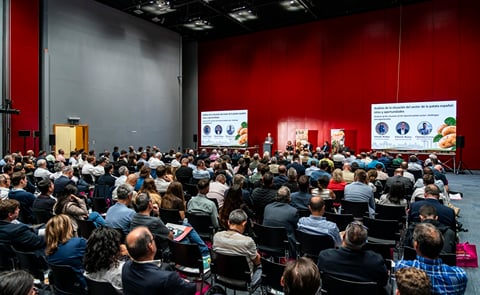
International Potato Symposium in Madrid Highlights Key Challenges and Opportunities for Europe’s Potato Sector
The 1st International Potato Symposium in Madrid brought together 250 professionals to discuss key challenges and opportunities in production, trade, plant health, innovation and sustainability, promoting stronger European cooperation.

October 10, 2026
India and Netherlands Strengthen Cooperation Through Seed Partnership
India and the Netherlands are strengthening cooperation in the seed sector through the India–Netherlands Seed Partnership. A recent mission included ministerial talks and a seed-sector business roundtable focused on future collaboration.