

The Hidden Enemy Beneath Your Potato Crop: Understanding Wireworms
Wireworms are the larval stage of click beetles (family Elateridae) and rank among the most destructive soil dwelling pests affecting potato production worldwide. These slender, hard bodied larvae feed on underground plant parts, including roots, stolons and tubers, causing direct physical damage and creating entry points for secondary infections, such as tuber rots.
Wireworms are highly damaging because they remain underground for 2–6 years depending on the species and climatic conditions allowing populations to persist across multiple growing seasons. During this extended larval period, they continuously feed on potato roots, stolons and developing tubers. Their feeding reduces plant stands, lowers yields and severely degrades tuber quality by producing tunnels and holes. Such damage frequently results in the rejection of potatoes intended for the fresh market, seed production, processing and export. Because wireworm injury often remains hidden until harvest, infestations are difficult to detect during the growing season making timely management particularly challenging.
Wireworms have been recognized as important agricultural pests for centuries with their occurrence commonly associated with the conversion of permanent grasslands into cultivated fields and cereal-based crop rotations. They affect potato production across temperate regions worldwide and are also found in some subtropical areas. The dominant wireworm species differ by region. In Europe, species belonging to the genus Agriotes are the most economically important, whereas in North America, Limonius species and several other genera are major pests. Their distribution, abundance and pest status are strongly influenced by climate, soil type, land-use history and farming practices.
The economic impact of wireworms is substantial and extends beyond direct yield losses. In Austria, approximately 10% of table potato production, equivalent to around 30,000 tons annually is lost due to wireworm damage. Under severe infestations, yield reductions typically range from 5% to 25% or more. Tuber quality losses can be even greater with up to 45% rejection reported in some fresh market potato production systems in the United States. Additional economic consequences include increased grading and sorting costs, higher processing expenses and greater investments in pest management. Because potato markets have very low tolerance for cosmetic defects, even relatively low wireworm populations can cause economically significant losses.
Wireworms are particularly difficult to control because of their multi-year underground life cycle, concealed feeding habit and patchy distribution within fields. Their soil dwelling nature makes detection difficult and limits the effectiveness of many control measures. In addition, the withdrawal or restriction of several traditional broad-spectrum insecticides has reduced available chemical control options, increasing reliance on Integrated Pest Management (IPM) strategies that combine monitoring, cultural practices, biological control and carefully targeted insecticide applications. These factors make wireworms one of the most persistent and challenging pests in potato production worldwide.
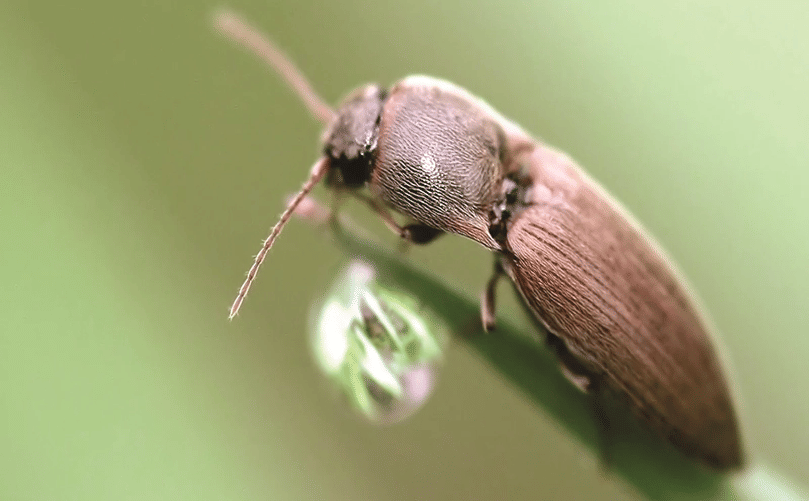
Wireworms: The Invisible Threat to Potato Yield and Quality
What Are Wireworms?
Wireworms are the larval (immature) stage of click beetles belonging to the family Elateridae. These soil dwelling larvae are slender, hard bodied, cylindrical and worm-like, giving them their common name because of their tough, wire-like appearance. Although adult click beetles cause little or no direct damage to potato crops, the larvae are highly destructive generalist herbivores. They feed on germinating seeds, roots, underground stems, stolons and tubers making them among the most economically important soil pests in potato production and many other agricultural crops.
Wireworms are characterized by their prolonged life cycle, typically lasting 2–6 years, depending on the species and environmental conditions. They spend the majority of this period underground as larvae allowing populations to persist for several growing seasons and making infestations difficult to eliminate once established. Wireworms are highly mobile within the soil profile and locate host plants by following carbon dioxide (CO₂) gradients released by plant roots. They can also survive on decaying organic matter, weed roots and other underground food sources when cultivated crops are unavailable, enabling them to withstand periods of food scarcity and recover from environmental stress.
History and Global Importance of Wireworms in Agriculture
Wireworms have been recognized as important agricultural pests for centuries, particularly in regions with extensive grasslands and long-established cereal production systems. Their economic importance increased significantly with the expansion of commercial agriculture, especially when permanent pastures, sod or weedy grasslands were converted into arable land for crops such as potatoes. These conditions often supported high wireworm populations that subsequently attacked newly planted crops.
In Europe and North America, wireworms became a major concern as potato cultivation expanded and intensified during the 19th and 20th centuries. During the mid-20th century, persistent organochlorine insecticides, particularly cyclodienes, provided highly effective control of wireworm populations. However, due to their persistence in the environment and adverse ecological impacts, these insecticides were progressively banned or withdrawn during the 1970s and 1980s. Since then, wireworm management has shifted toward Integrated Pest Management (IPM) approaches that combine monitoring, cultural practices, biological control and targeted insecticide applications.
The spread of introduced wireworm species, including certain Agriotes species in North America, has further increased management challenges in some regions. Today, wireworms remain a significant global pest of potato production because of their long-life cycle, underground habitat, broad host range and remarkable resilience. Changes in farming practices, such as reduced tillage, together with the effects of climate change are expected to increase wireworm survival and expand their distribution in some potato growing regions, making effective long-term management increasingly important.
Scientific Classification and Major Wireworm Species Affecting Potatoes
Wireworms are the larval stage of click beetles belonging to the family Elateridae. More than 10,000 species of click beetles have been described worldwide, but only a relatively small number are economically important agricultural pests. Several species attack potato crops by feeding on roots, stolons and tubers, causing significant yield and quality losses. The dominant wireworm species vary depending on the geographic region.
Scientific Classification: Kingdom: Animalia, Phylum: Arthropoda, Class: Insecta, Order: Coleoptera (Beetles), Family: Elateridae (Click beetles), Important Genera: Agriotes, Limonius, Melanotus, Conoderus, Selatosomus.
The species responsible for potato damage differ across continents and climatic regions.
Europe and Parts of North America: Agriotes lineatus (Lined click beetle), Agriotes obscurus (Dusky click beetle), Agriotes sputator (Common click beetle)
North America: Limonius californicus (Sugar beet wireworm), Limonius canus (Pacific coast wireworm)
Other Important Potato-Associated Genera: Melanotus spp. Conoderus spp. Selatosomus spp. (e.g., Selatosomus pruininus in drier regions) Species composition varies considerably between countries and even within regions, depending on climate, soil type, cropping history and local ecosystems.
Species Identification: Accurate identification of wireworm species is important because their biology, life cycle and pest status differ among genera and species. Identification is challenging since larvae of many species appear very similar. Traditional identification relies on detailed morphological characteristics, particularly the shape and structure of the 9th abdominal segment, head capsule and mouthparts. Increasingly, molecular techniques, such as DNA-based identification methods are being used to distinguish closely related species and improve the accuracy of pest monitoring and management.
Global Distribution and Habitat of Wireworms
Wireworms, the larval stage of click beetles (family Elateridae), occur on every continent except Antarctica. More than 10,000 click beetle species have been described worldwide although only a relatively small proportion are economically important crop pests. Wireworms are most abundant in temperate regions but are also found in many subtropical and high-altitude tropical agricultural areas, where they damage potatoes and numerous other crops.
Europe: Europe is one of the regions most heavily affected by wireworms, particularly species of the genus Agriotes. Major pest species such as Agriotes lineatus, A. obscurus and A. sputator are widespread in potato-growing regions. Infestations are especially common in fields with a history of permanent grassland or pasture.
North America: North America has a diverse complex of wireworm species. Limonius species, including L. californicus and L. canus are the primary pests in irrigated agricultural regions of the western United States and Canada, particularly the Pacific Northwest. Melanotus and Conoderus species are more common in southern and central regions, while introduced Agriotes species occur in parts of the Pacific Northwest, eastern Canada and the northeastern United States.
South America: Wireworms are present in both highland and lowland potato producing regions of South America. Although the pest species are less extensively documented than those in Europe and North America, they are known to damage potato tubers, roots and other underground plant parts.
Asia: Wireworms are widely distributed across Asia. Species of the genus Melanotus are particularly important in countries such as Japan, while several other genera occur throughout temperate agricultural regions. They are significant pests of potatoes, cereals and various vegetable crops.
Africa: Wireworms are common in North Africa, where Holarctic species occur naturally. They are also found in cooler, moist agricultural areas across sub-Saharan Africa although their economic importance varies by region.
Australia and New Zealand: Both native and introduced wireworm species occur in Australia and New Zealand. Several species damage potatoes and other field crops, particularly in temperate agricultural regions with suitable soil and climatic conditions.
Climatic and Habitat Preferences: Most economically important wireworm species thrive in cool, moist, well-structured soils that are rich in organic matter. They are commonly associated with fields that have a history of grasslands, pastures or cereal production, as these habitats provide favorable conditions for egg laying and larval development. Populations are generally higher in poorly drained soils, minimally tilled fields and irrigated agricultural systems.
Wireworm infestations are typically patchy with higher densities often found in low lying areas, field margins or locations previously covered by grass vegetation. While most species prefer moist environments, some, such as Selatosomus species can tolerate relatively drier conditions. Changes in climate, including rising temperatures and altered rainfall patterns, may influence the distribution, abundance and seasonal activity of wireworm populations, potentially expanding their range into new potato growing regions.
Wireworm Life Cycle: Development Stages and Seasonal Activity
Wireworms undergo complete metamorphosis (holometabolism), passing through four distinct life stages: egg, larva, pupa and adult (click beetle). Their life cycle is unusually long because the larval stage can persist for several years. Depending on the species and environmental conditions such as soil temperature, moisture and food availability, the complete life cycle lasts 1–6 years, although 3–5 years is most common. Adult (Click Beetle) Adult click beetles typically emerge from the soil in spring (April–June in temperate regions). They are slender, elongated beetles measuring 8–25 mm in length. After mating, females lay approximately 100–400 or more eggs in moist soil, usually near grasses, cereal crops or other vegetation. Adults generally feed very little or not at all on crop plants and live for several weeks to a few months. Depending on the species, they may overwinter as either adults or mature larvae.
Egg: Eggs are laid in the upper soil layer from the surface to several centimeters deep. They are small, smooth, white to translucent and are deposited singly or in small clusters. Egg development is strongly influenced by soil temperature and moisture with hatching occurring in approximately 3–10 weeks more rapidly under warm, moist conditions.
Larva (Wireworm): The larval stage is the longest and most economically important phase of the life cycle. Newly hatched larvae are small, soft-bodied and creamy white, gradually becoming hard bodied, cylindrical and yellow to reddish brown as they mature. Larvae initially feed on decaying organic matter, fine roots and germinating seeds before attacking larger roots, underground stems, bulbs and potato tubers. They migrate vertically within the soil profile, moving deeper during cold or dry periods and returning closer to the surface when soil conditions become warm and moist. Mature larvae commonly overwinter at depths of 30–45 cm (12–18 inches) or deeper and are most active during spring and autumn, when soil moisture and temperature are favorable.
Pupa: When fully developed, larvae construct an earthen chamber in the soil and pupate during late summer (typically July–September in temperate climates). The pupal stage usually lasts 3–5 weeks (approximately one month). Newly formed adults remain in the soil until the following spring before emerging.
Seasonal Activity: Wireworm larvae can remain active throughout the year whenever soil temperatures exceed approximately 10°C (50°F) and adequate moisture is available. Feeding activity generally peaks during spring and autumn, while larvae move deeper into the soil during hot, dry summers or freezing winter conditions. Because development is prolonged, eggs, larvae of different ages, pupae and adults may all be present simultaneously in established field populations making wireworms particularly difficult to manage.
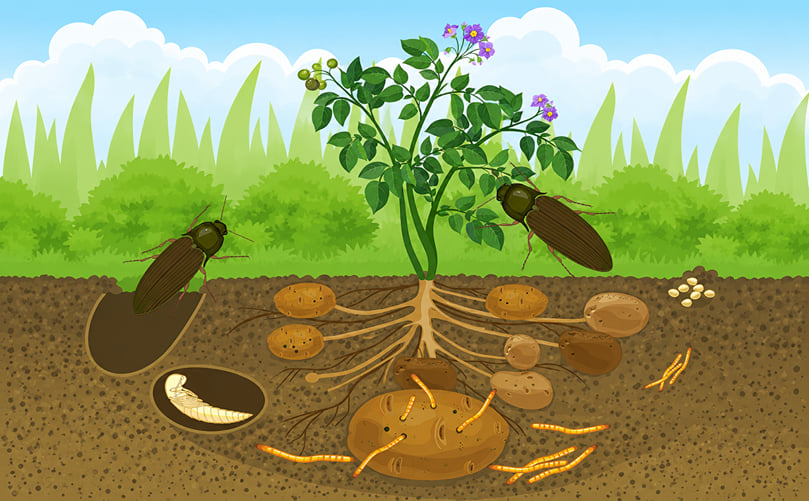
Potato Wireworm Life Cycle: From Egg to Larva, Pupa and Adult Beetle
How to Identify Wireworms at Different Life Stages
Adults (Click Beetles): Adult click beetles are elongated, slender and torpedo shaped, measuring 8–25 mm in length. Their coloration ranges from reddish-brown to black or tan. They possess a distinctive clicking mechanism, enabling them to flip into the air and right themselves when placed on their back by snapping a thoracic spine into a groove, producing an audible "click." Adults also have hard elytra (wing covers).
Eggs: Eggs are tiny, oval and white to creamy in color. They are laid in clusters in the soil.
Larvae (Wireworms): Wireworm larvae are slender, cylindrical and wire-like with the body being slightly flattened toward the head in some species. They have a hard, smooth and shiny exoskeleton with coloration ranging from creamy yellow and straw colored to orange brown or reddish brown. The head capsule is dark and well developed, bearing forward projecting biting mouthparts. They possess three pairs of short legs near the head and a segmented body. The last abdominal segment often has a characteristic shape, such as a notched or keyhole shaped tip with prongs or two dark spots (spiracles), which is useful for species identification. Newly hatched larvae measure approximately 1–2 mm, while mature larvae range from 15–40 mm or more (up to approximately 1.5 inches) depending on the species.
Pupae: Pupae are soft, pale and non-feeding and are found in soil cells.
Differentiation: Wireworms can be distinguished from other common soil dwelling pests. White grubs are C-shaped and thicker-bodied, whereas millipedes possess numerous pairs of legs along the length of the body.
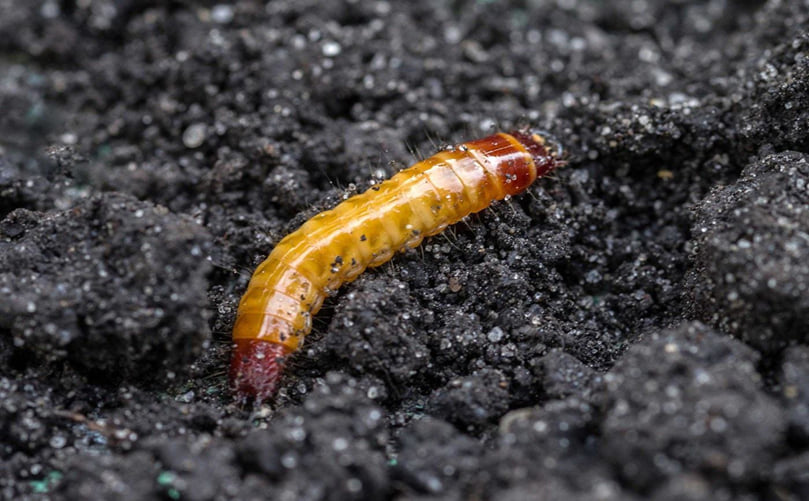
Wireworm Larva Identification: Key Features of Potato Wireworm Larvae
Host Plants of Wireworms: Major Crops and Weed Hosts
Wireworms are highly polyphagous (generalist feeders), attacking a wide range of cultivated crops and weeds, particularly grasses. They primarily feed on roots, seeds, tubers and other underground plant parts.
Major Hosts
- Root and Tuber Crops: Potato (the primary concern), sweet potato, carrot, sugar beet and onion.
- Cereals and Grains: Wheat, barley, maize (corn) and oats.
- Legumes: Beans, peas, clover and alfalfa.
- Vegetables: Lettuce, cabbage, rutabaga, tomato and cucurbits.
- Other Hosts: Grasslands, pastures, weedy areas, strawberries, flowers and numerous broadleaf weeds.
Wireworm Damage Symptoms in Potato: Identification and Field Diagnosis
Wireworm damage in potato is often subtle during the early stages of crop growth and usually becomes most apparent at harvest or during storage. The symptoms vary depending on the growth stage of the plant and the location of larval feeding. Because wireworm larvae are typically aggregated in the soil rather than uniformly distributed, damage frequently appears in patches within a field making infestations difficult to detect during the early stages.
Above Ground Symptoms: Above ground symptoms result from wireworm larvae feeding on seed pieces, roots and stolons, disrupting the uptake of water and nutrients. As a result, potato crops often exhibit poor or uneven emergence leading to missing plants or gaps in rows (stand reduction). Individual plants may show wilting, yellowing or stunted growth, while overall crop vigor is reduced, particularly in patchy areas of the field where larval populations are concentrated. These symptoms are indirect consequences of below ground feeding and are often mistaken for nutrient deficiency, drought stress or other root related problems.
Below Ground Symptoms: Below ground damage is the most characteristic sign of wireworm infestation in potato. Larvae produce small, round entry holes, typically 2–3 mm in diameter, that resemble holes made by a drill bit or BB gun shot. After penetrating the tuber, wireworms create narrow feeding tunnels or galleries extending into the tuber flesh. These tunnels are usually shallow, reaching up to approximately 0.5 inch (1.3 cm) deep and rarely pass completely through the tuber. Feeding on roots and stolons interferes with normal tuber development, often resulting in smaller or deformed tubers. As damaged tubers mature, many feeding tunnels heal over, leaving dark, corky scars or healed holes visible at harvest. In addition, feeding on seed pieces may cause seed-piece rot or failure to sprout leading to poor plant establishment and reduced crop stands.
Storage Symptoms: Although wireworms generally do not continue active feeding during storage, damage caused before harvest significantly affects tuber quality after harvest. Feeding wounds serve as entry points for secondary bacterial and fungal pathogens, resulting in rot and decay during storage. Consequently, affected tubers experience reduced marketability and many become shriveled or unpalatable as storage progresses, leading to substantial postharvest losses.
Damage Pattern and Differential Diagnosis: Wireworm damage is frequently patchy because larval populations occur in aggregated distributions within the soil rather than being evenly dispersed across the field. The characteristic feeding holes and tunnels may sometimes be confused with damage caused by potato tuber moth larvae, slugs, which typically create larger and more irregular cavities or mechanical injury sustained during harvesting and handling. Careful examination of the size, shape, depth and appearance of the feeding holes and tunnels, together with field history and larval presence is essential for accurate diagnosis.
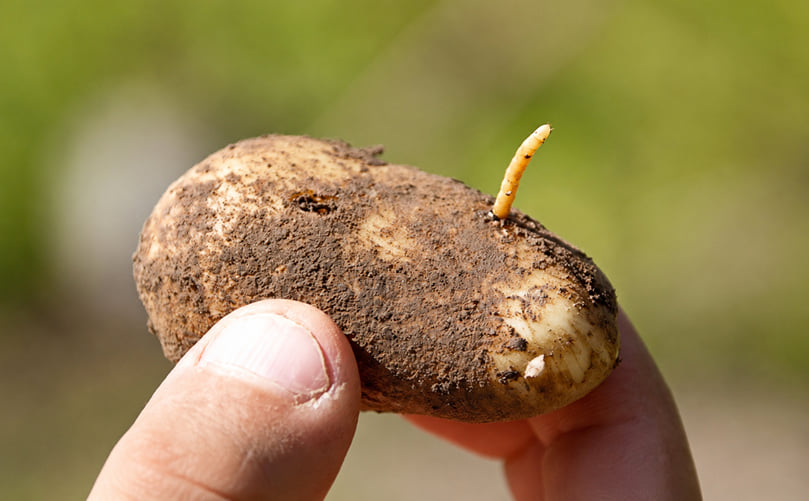
Common Symptoms of Wireworm Infestation in Potato Fields
Wireworm Damage in Potato: Direct and Indirect Effects
Wireworms cause both direct physical injury to potato plants and tubers and indirect damage that further increases economic losses. The severity of damage depends on wireworm population density, larval age, crop growth stage, soil conditions and the duration of tuber exposure in the soil.
Direct Damage: Direct damage occurs when wireworm larvae feed on developing tubers, seed pieces, roots and stolons. Tunneling into developing tubers and seed pieces reduces the marketable yield by creating feeding holes and internal galleries that lower tuber quality. Feeding on roots and stolons interferes with normal plant growth and development by reducing the plant's ability to absorb water and nutrients, ultimately affecting tuber formation.
Indirect Damage: The feeding wounds created by wireworms serve as entry points for soil borne pathogens, including bacteria that cause soft rot and various fungal pathogens accelerating tuber decay. Damaged plants and tubers also become more susceptible to other pests and diseases, while the additional stress caused by wireworm feeding can reduce overall tuber quality, size and marketability.
Specific Impacts on Potato Production: Wireworm infestations have significant economic consequences throughout the potato supply chain. Market losses occur because visible feeding holes, scars and blemishes result in tubers being downgraded or rejected, particularly in the fresh market and export sectors, where strict cosmetic quality standards apply. Processing losses are also substantial as feeding tunnels create defects in potato chips, French fries and canned potato products and processors generally maintain near zero tolerance for damaged tubers. Seed potato production is adversely affected because feeding damage to seed tubers reduces germination, plant vigor and stand establishment in subsequent crops. In addition, export quality issues arise when international quality standards lead to the rejection of shipments containing tubers with detectable wireworm damage, negatively affecting trade opportunities.
Late-Season Damage: Wireworm feeding often intensifies late in the growing season, particularly when potato vines have died but tubers remain in warm soil for several weeks before harvest. Under these conditions, larvae continue feeding on mature tubers, increasing the number of feeding holes and reducing market quality. Although wireworm injury does not always result in significant reductions in total yield, it can substantially reduce tuber quality, marketability and overall economic value making it one of the most economically important soil-dwelling pests of potato.
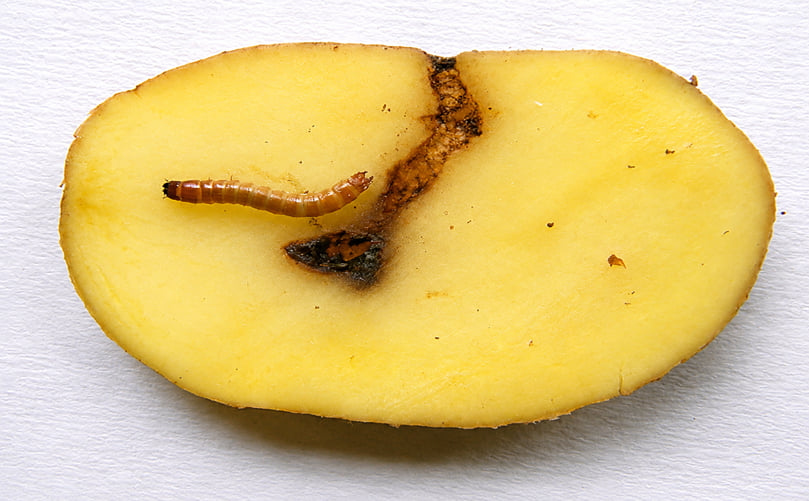
Wireworm Damage in Potato: Direct Tuber Feeding Injury and Indirect Disease Risks
Economic Importance of Wireworms in Potato Production
Wireworms are economically significant pests because even low population densities can render a large proportion of potato tubers unmarketable, particularly in quality driven fresh and export markets, where cosmetic standards are stringent.
Yield Reduction: Wireworm infestations cause variable yield losses. Direct yield reduction is often minimal under low to moderate infestations, but heavy infestations can result in noticeable losses through stand reduction and the production of smaller tubers.
Quality Reduction: The primary economic impact of wireworms is the reduction in tuber quality. Scarring, feeding tunnels and secondary rot significantly reduce the market value of potatoes and lead to substantial grading losses.
Grading and Processing Rejection: Wireworm damage increases the rejection of potatoes during grading and processing. In severe infestations, 30–50% of tubers may be affected with up to 45% rejection reported in some U.S. production scenarios because of quality defects.
Higher Production Costs: Wireworm infestations increase production costs by requiring field monitoring, control measures such as insecticides, entomopathogenic nematodes and tillage and in some cases, replanting to compensate for poor crop establishment.
Global Economic Impact: Wireworms cause substantial economic losses worldwide. In Austria, they are estimated to cause approximately 10% loss of table potato yields, equivalent to about 30,000 tons annually, resulting in multi-million-euro economic losses. Similar patterns have been reported across Europe, North America and other potato growing regions with increasing wireworm populations observed in recent years.
Economic Threshold and Future Importance: In North America, crop losses caused by wireworms typically range from 5–25% in affected fields. The economic threshold for potatoes is very low because market value depends heavily on tuber quality. Consequently, wireworm densities causing less than 10% visible tuber damage can still result in significant economic losses. Furthermore, climate change and changes in farming practices, such as reduced tillage may increase the future economic importance of wireworms by creating more favorable conditions for their survival and persistence.
Conditions Favoring Wireworm Infestations in Potato Fields
Several agronomic and environmental factors favor the development of wireworm populations and increase the risk of damage in potato crops. Because wireworms have a long-life cycle, their populations can persist in the soil for several years making infestations difficult to eliminate.
Grassland and Pasture History: Fields that have been recently converted from sod, pasture, weedy alfalfa or clover often develop high wireworm populations because grasses are preferred host plants. These habitats provide favorable conditions for egg laying and larval development allowing populations to build rapidly.
Poorly Cultivated or Weedy Fields: Poorly cultivated fields and areas with abundant grassy weeds favor wireworm survival by providing continuous food sources while minimizing soil disturbance. Limited cultivation allows larvae to survive and remain active for extended periods.
High Soil Moisture and Organic Matter: High soil moisture and organic rich soils favor many wireworm species, including Limonius species. Consequently, low-lying or poorly drained fields often support higher wireworm densities than well-drained areas.
Cool Soils and Climates: Wireworms are most active under cool soil temperatures and moderate soil moisture. During hot or dry conditions, larvae migrate deeper into the soil profile, where conditions are more favorable for survival.
Long-Term Cereal Cultivation: The continuous cultivation of small grain cereals, such as wheat and barley as well as maize (corn), supports the gradual buildup of wireworm populations because these crops serve as suitable hosts.
Minimal Tillage and No-Till Systems: Minimal tillage and no-till production systems favor wireworm survival by retaining crop residues and soil cover, which provide a suitable habitat for larvae. Reduced soil disturbance also decreases larval mortality that would otherwise occur through cultivation.
Other Favorable Conditions: Other factors that encourage wireworm infestations include organic rich soils, fields with a history of previous wireworm damage, indicating persistent populations and crop rotations, such as cereals followed by potato, that favor the continued survival and development of wireworms.
Population Persistence: Wireworm populations are typically patchy in distribution and can persist for several years because of their prolonged life cycle. In dry regions, the use of irrigation may alter the wireworm community by favoring moisture loving species potentially increasing the risk of infestation.
Wireworm Monitoring and Scouting: Detection Methods and Economic Thresholds
Effective monitoring is challenging because of the subterranean habits and patchy distribution of wireworms, but it is crucial for risk assessment and Integrated Pest Management (IPM) decisions. No single monitoring method is perfect; therefore, combining multiple approaches provides the best assessment.
Soil Sampling: Soil sampling involves digging soil cores (e.g., 10 cm in diameter) or using shovel sampling. Although labor-intensive, it provides useful estimates of wireworm density but may miss low density or patchy populations. As a general guideline, one wireworm in 20 soil cores (approximately 60,000/ha) indicates a risk for potato production.
Bait Traps: Bait traps are the most practical method for wireworm detection. Germinating seeds, such as corn, wheat, oats or seed mixtures or cut potato pieces are buried 6–8 inches (15–20 cm) deep and covered with soil or plastic to increase soil temperature and attract wireworms through CO₂. The traps are left in place for 7–14 days, after which they are excavated and the larvae counted. Bait traps are more sensitive than random soil sampling for detecting low density populations. They should be deployed before planting when the soil temperature exceeds 10°C (50°F) at trap depth.
Pheromone Traps: Pheromone traps are used to monitor adult click beetles, indicating potential future larval pressure.
Field History and Risk Assessment: Reviewing previous crops, grass presence and prior wireworm damage is the strongest predictor of future infestations.
Timing: Monitoring is best conducted in spring (before planting) or autumn and repeated as needed. Particular attention should be given to wetter areas of the field.
Thresholds (Guidance Only): Thresholds vary by region and wireworm species. No wireworms per bait trap indicate low risk. 0.5–1 wireworm per bait trap indicates moderate risk and control measures should be considered. 1–5 or more wireworms per bait trap indicate a higher risk of dam age with more than 80% loss potential under extreme infestation conditions.
Challenges: Monitoring is affected by the aggregated distribution of wireworms, soil type, and the variable attractiveness of bait traps. Results should be used to guide the avoidance of high-risk fields or targeted treatments. Consult local extension guidelines for calibrated thresholds.
Integrated Pest Management (IPM) Strategies for Effective Wireworm Management in Potato Production
Integrated Pest Management (IPM) is the cornerstone of sustainable wireworm management in potatoes, combining multiple tactics to keep populations below damaging levels while minimizing environmental impact and resistance risks. It emphasizes prevention, monitoring and non-chemical methods first.
Cultural Control: Crop rotation with less susceptible or suppressive crops (e.g., mustard, buckwheat and alfalfa) helps disrupt the wireworm life cycle. Deep plowing or tillage exposes and kills larvae. Field sanitation through the removal of crop residues and weeds along with effective weed and grass management, reduces host plants. Adjusting planting dates and harvesting early where appropriate can also help minimize damage. Flooding (where feasible) or improving field drainage may reduce wireworm survival. Summer fallow in some systems can dry the soil and lower wireworm populations.
Biological Control: Entomopathogenic fungi (Metarhizium spp. and Beauveria bassiana) and beneficial nematodes (Steinernema carpocapsae and Heterorhabditis bacteriophora) are effective biological control agents. Trials have shown up to 30% damage reduction in irrigated potatoes when beneficial nematodes are applied as a soil drench. Predatory beetles (e.g., ground beetles), birds and other natural enemies also contribute to natural wireworm suppression.
Chemical Control: Chemical control should be used as a last resort. Seed treatments, in-furrow insecticides or granular insecticides can be applied with timing being critical (pre-plant or at planting). Rotate insecticides with different modes of action to manage resistance. Always follow local label recommendations, regulations and resistance management guidelines.
Biological Products and Emerging Solutions: Biopesticides and microbial formulations, attract and kill strategies, trap crops and host plant resistance or tolerance breeding are emerging approaches for wireworm management. Some potato genotypes have shown lower levels of wireworm damage.
Overall IPM Principles: Regular monitoring, the use of economic thresholds, the integration of multiple management tactics and prioritizing sustainable practices are the key principles of IPM. Successful wireworm management depends on field history and adaptation to local conditions.
Preventive Strategies for Effective Wireworm Management in Potato Production
Prevention focuses on avoiding high risk situations and building resilient production systems. Field selection and risk mapping help identify and avoid fields with recent grass or pasture history or known infestations, while mapping high risk zones supports targeted management decisions. Crop history management involves breaking grass heavy rotations and incorporating suppressive crops. Effective grass and weed management help control grassy weeds and crop residues that may support wireworm populations.
Using clean seed and planting material, including certified and undamaged seed, reduces the risk of introducing problems into the field. Proper soil preparation, including appropriate tillage, drainage and organic matter management, supports healthier growing conditions. Proper irrigation practices and timing should be followed to avoid conditions that favor larval survival. Monitoring should be integrated into management decisions and based on regular scouting results.
Harvest and Storage Management for Wireworm-Damaged Potatoes
Timely and careful harvest management helps limit additional damage and preserve potato quality. Early harvest, such as lifting crops from July to mid-August in some regions can help avoid late-season feeding, especially in high-risk fields. Minimizing tuber injury through the use of gentle harvesting equipment reduces wounds that may invite infection. Damaged potatoes should be separated through in-field sorting or during harvest to isolate affected tubers. Prompt removal of tubers is important as leaving them in the soil for an extended period after vine kill or vine death can increase the risk of re-infestation.
Although wireworms rarely continue feeding during storage, pre-harvest damage contributes significantly to storage problems. Damaged tubers are more susceptible to secondary infections, including rot and decay during storage. Thorough grading and culling at harvest are essential to remove wounded tubers. Maintaining optimal storage conditions, including proper temperature, humidity and ventilation, helps slow pathogen development. Regular storage inspections should be carried out to detect early signs of rot. Good hygiene practices, including cleaning equipment and storage facilities help prevent cross-contamination.
Proper post-harvest handling and storage management help preserve marketable yield from already compromised potato lots.
Diagnosing Wireworm Damage in Potatoes: Identification and Differentiation from Other Causes
Accurate diagnosis prevents the misapplication of control measures. Wireworm damage has distinctive features but may overlap with damage caused by other pests and disorders.
Differentiation from Other Damage Causes: White grubs are larger, C-shaped and fatter larvae that typically cause broader damage. Cutworms cause surface feeding or stem-cutting damage and have a different larval appearance. Slug damage is characterized by larger, irregular cavities or hollowing compared with the narrow tunnels caused by wireworms and slime trails may be present. Root-knot nematodes cause root galls or swelling but do not create large holes in tubers. Rodent damage usually appears as larger chewing marks, often on the external surface of tubers. Mechanical injury results in clean cuts rather than irregular tunnels. Common scab and black scurf produce surface lesions without deep tunnels and have a different texture.
Confirmation of Wireworm Presence: Confirmation involves digging for larvae, which are hard, wire-like and yellow brown in appearance and examining tuber cross-sections for narrow galleries. Soil baiting or sampling methods can help verify the presence of wireworms.
Climate Change Impacts on Wireworm Dynamics and Potato Production Risks
Climate change is expected to influence wireworm dynamics through warmer temperatures, altered precipitation patterns and changing farming practices.
Changing pest distribution may result in expanded ranges into cooler regions, higher latitudes or higher elevations. Longer activity periods caused by milder winters and extended growing seasons may allow increased larval feeding and faster development in some species. Warmer winters can reduce overwintering mortality and increase larval survival.
For potato production, climate change may increase damage risks in new areas, create interactions with drought and irrigation changes and present challenges associated with regenerative practices, such as cover crops and reduced tillage, which may favor larval survival by providing additional food sources and warmer soil conditions.
Models suggest potential increases in severe wireworm damage in coming decades. Adaptive strategies, including diversified crop rotations and regular monitoring will be essential.
Future Outlook and Research Advances in Sustainable Wireworm Management
Wireworm management is evolving toward more sustainable, integrated pest management (IPM)-based solutions due to increasing regulatory pressures on chemical inputs and the challenges posed by climate change.
Promising research areas include breeding resistant or tolerant potato varieties, developing advanced biological control methods using fungi, nematodes and attract and kill approaches, improving monitoring tools and economic thresholds, optimizing biofumigant and cover crop systems (e.g., mustard and buckwheat), understanding species-specific ecology, rhizosphere interactions and developing integrated systems that combine cultural, genetic and biological control strategies.
Ongoing research emphasizes non-chemical management approaches, climate resilience and reducing environmental impacts. Growers should stay updated through local extension services as effective wireworm management strategies will continue to vary according to region and species. Collaborative efforts among researchers, farmers and industry stakeholders will drive innovations for long-term potato protection.