

Understanding Potato Cyst Nematodes (PCN): The Invisible Threat Beneath the Soil
Potato Cyst Nematodes (PCN), primarily Globodera rostochiensis (golden or yellow potato cyst nematode) and Globodera pallida (pale potato cyst nematode) are among the most destructive soil borne pests affecting potato (Solanum tuberosum) production worldwide. These sedentary endoparasitic nematodes can cause severe economic losses with average global yield reductions estimated at approximately 9%. In heavily infested fields, yield losses may range from 30% to 80% and in extreme cases, complete crop failure can occur. Besides reducing total yield PCN significantly affects tuber size, number and market quality.
PCN originated in the Andean region of South America, where they co-evolved with wild and cultivated Solanum species at altitudes reaching approximately 2,000 meters. Their global spread occurred mainly through the movement of infected seed tubers and contaminated soil, particularly following the introduction of potatoes into Europe during the 16th and 17th centuries. The large-scale dissemination of PCN accelerated in the 19th century through potato breeding materials developed for resistance to diseases such as late blight. Europe subsequently became a major secondary center of distribution, facilitating the spread of PCN to nearly all potato growing regions worldwide except Antarctica.
One of the greatest challenges in managing PCN is their exceptional persistence in soil. Female nematodes form protective cysts containing hundreds of eggs, which can remain viable for 10–30 years or longer in the absence of a host crop. This long-term survival, combined with limited natural movement but efficient human assisted dispersal makes eradication extremely difficult once infestations become established.
Beyond direct yield losses, PCN threaten food security in potato dependent regions, increase production costs and restrict international trade. Because of their serious economic impact, both G. rostochiensis and G. pallida are classified as quarantine pests in many countries. Even low levels of infestation may result in strict phytosanitary regulations, field quarantines and restricted market access. A third species, Globodera ellingtonae has also been identified in some regions, including parts of the United States and the Andes although it is generally considered less damaging to potato production than the two major PCN species.
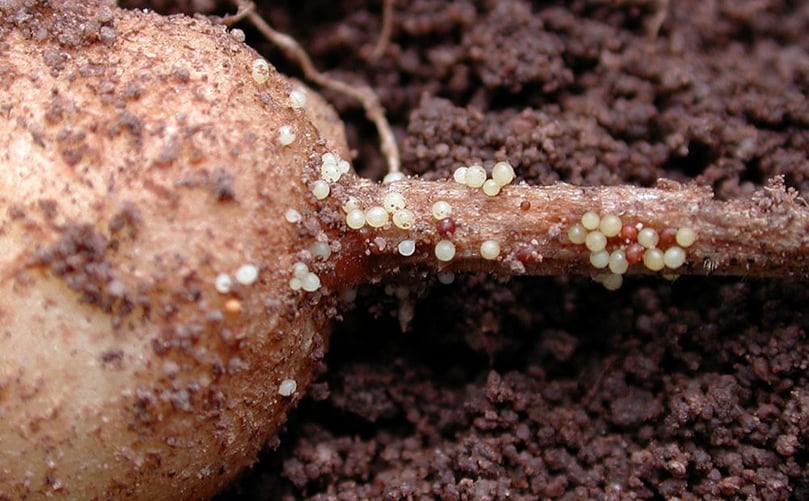
Visible Potato Cyst Nematode Cysts Attached to Potato Roots (Courtesy: DuPont; picture updated 2017)
What Are Potato Cyst Nematodes (PCN)?
Potato Cyst Nematodes (PCN) are microscopic, soil borne roundworms belonging to the cyst nematode group that parasitize potato roots and other host plants within the Solanaceae family. Adult nematodes are typically less than 1 mm in length and are not visible to the naked eye. PCN are classified as obligate biotrophic, sedentary endoparasites, meaning they survive and reproduce only by feeding on living host tissues while remaining embedded within plant roots.
The term “cyst” refers to the hardened body of a dead fertilized female nematode that serves as a protective structure enclosing hundreds of eggs. These cysts are highly durable and enable PCN to survive in soil for many years even in the absence of host crops. Their long-term persistence is one of the main reasons PCN are considered among the most difficult potato pests to manage effectively.
The Major Species of Potato Cyst Nematodes: Understanding Their Differences and Impact
The two economically important species of Potato Cyst Nematodes are Globodera rostochiensis and Globodera pallida, both of which cause significant damage to potato production worldwide.
Globodera rostochiensis (Golden or Yellow Potato Cyst Nematode): Globodera rostochiensis is the more widely distributed species globally and is commonly referred to as the golden or yellow potato cyst nematode. During development, females change color from white to golden yellow before eventually forming dark brown cysts. This species consists of several pathotypes (Ro1–Ro5) and resistance breaking populations have been reported in some potato growing regions. In many countries, G. rostochiensis is considered the dominant PCN species.
Globodera pallida (Pale Potato Cyst Nematode): Globodera pallida, commonly known as the pale potato cyst nematode, retains a pale white or cream coloration for a longer period before turning brown. Compared to G. rostochiensis, it often shows greater genetic diversity and can be more difficult to control using resistant potato varieties. It also differs in hatching behavior, temperature preferences and population dynamics, which can influence management strategies.
Although both species are morphologically very similar accurate identification often requires advanced laboratory techniques such as molecular diagnostics including polymerase chain reaction (PCR), particularly in mixed infestations.
Understanding the Taxonomic Classification of Potato Cyst Nematodes
Potato Cyst Nematodes (PCN) belong to the kingdom - Animalia, phylum - Nematoda and class - Chromadorea. They are classified under the order - Rhabditida, suborder - Tylenchina and infraorder - Tylenchomorpha, placing them among plant parasitic nematodes that infect crop roots. PCN further belong to the superfamily - Tylenchoidea, family - Heteroderidae and subfamily - Heteroderinae. Their genus - Globodera, includes the major economically important species Globodera rostochiensis (golden potato cyst nematode), Globodera pallida (pale potato cyst nematode) and Globodera ellingtonae, which is generally considered less damaging to potato crops.
Potato Cyst Nematodes are distinguished from other cyst nematodes, such as Heterodera species by several morphological features including their nearly spherical cyst shape, prominent neck region and species-specific perineal patterns. However, because visual differences can be subtle, molecular diagnostic tools such as polymerase chain reaction (PCR) are increasingly used for accurate species identification and confirmation.
Global Distribution and Economic Importance of Potato Cyst Nematodes (PCN)
Understanding the Global Distribution of Potato Cyst Nematodes
Potato Cyst Nematodes (PCN) are distributed across nearly all major potato growing regions of the world and have been reported on every continent except Antarctica. The two major species, Globodera rostochiensis and Globodera pallida, vary in their geographical distribution. G. rostochiensis is the more widely distributed species and has been reported in approximately 70–80 countries and territories, while G. pallida is documented in around 50–60 countries.
PCN are widespread across Europe and South America with South America representing their native center of origin. They are also found in several regions of North America, including G. rostochiensis in New York and G. pallida in Idaho in the United States as well as parts of Canada. In Africa, infestations have been reported in countries such as Kenya, Algeria, Morocco, Tunisia and other potato growing regions of East Africa. Across Asia, PCN occur in countries including India, Japan, Pakistan, China and neighboring potato-producing areas. In Oceania, both Australia and New Zealand maintain active monitoring and quarantine systems due to the threat posed by these nematodes.
The global spread of PCN is closely associated with the movement of infected seed potatoes, contaminated soil, farm machinery and planting materials. Because of their high persistence and severe economic impact, many countries classify PCN as quarantine pests under strict phytosanitary regulations. In Europe, they are designated as A2 quarantine pests by the European and Mediterranean Plant Protection Organization (EPPO), restricting the movement of potatoes, soil and agricultural equipment from infested regions. Climate suitability studies further suggest that a large proportion of the global land surface suitable for potato cultivation may also support the establishment of one or both PCN species.
Understanding the Economic Impact of Potato Cyst Nematodes
Potato Cyst Nematodes cause substantial direct and indirect economic losses to potato production systems worldwide by reducing yield, increasing management costs and disrupting trade.
Yield Losses and Reduced Productivity: PCN can significantly reduce potato yields with average global losses estimated at approximately 9–12%. In moderately to heavily infested fields, yield reductions commonly range from 30% to 50%, while severe infestations may result in losses of up to 80% or even render fields unsuitable for profitable potato cultivation. The extent of damage depends on infestation levels, potato cultivar susceptibility, environmental conditions and management practices.
Reduced Tuber Quality and Farm Profitability: Infected plants typically produce fewer and smaller tubers, reducing overall marketable yield and lowering profitability for growers. Poor crop vigor and uneven plant development can further increase production costs per unit harvested making potato cultivation less economically sustainable in infested areas.
Impact on Seed Potato Production and International Trade: PCN pose a major challenge to seed potato certification systems and international potato trade. Strict quarantine regulations require intensive testing, monitoring and certification, increasing production and compliance costs. In many countries, the detection of PCN can result in field quarantines and export restrictions, limiting access to international markets and affecting long-term farm profitability.
Long-Term Economic and Food Security Consequences: Beyond immediate crop losses, PCN contribute to long-term declines in soil productivity, increased pest management expenses and costly surveillance programs. Their persistence in soil for decades makes field recovery difficult and economically burdensome. In potato dependent regions, particularly in developing countries, unmanaged infestations may threaten food security and farmer livelihoods.
Even relatively low infestation levels can cause measurable economic losses. Research indicates that population densities as low as approximately 20 eggs per gram of soil may result in noticeable yield reductions. Since above ground symptoms are often subtle or mistaken for nutrient deficiencies or drought stress, infestations may remain undetected for several years allowing nematode populations to build and increasing long-term economic damage.
Understanding the Biology and Life Cycle of Potato Cyst Nematodes (PCN)
Potato Cyst Nematodes (PCN) are sedentary endo-parasitic nematodes with a complex and highly adapted life cycle that enables long-term survival in agricultural soils. Under temperate climatic conditions, PCN typically complete one generation per year although warmer environments may support a partial or second generation. Depending on soil temperature, moisture and host availability, the life cycle generally takes between 6 and 16 weeks to complete. PCN pass through six developmental stages: the egg stage, four juvenile stages (J1–J4) and the adult stage. Among these, the second stage juvenile (J2) is the infective stage responsible for root invasion and crop damage.
Understanding How Potato Cyst Nematodes Survive in Soil: One of the most important biological features of PCN is their extraordinary ability to persist in soil for many years. This survival mechanism depends on the formation of a protective cyst, which develops from the hardened outer body (cuticle) of a dead fertilized female nematode. Each cyst may contain approximately 200–500 eggs although numbers of up to 600 eggs have been reported.
These eggs remain dormant inside the cyst and can survive in soil for 10–30 years or even longer under favorable conditions with some studies reporting viability extending beyond 40 years. The cyst acts as a durable protective barrier allowing eggs to resist environmental stress, absence of host crops and certain nematicide treatments. Mature cysts are small, spherical, pinhead sized structures measuring approximately 0.5 mm and eventually detach from roots into the surrounding soil.
Understanding Egg Hatching in Potato Cyst Nematodes: Egg hatching in PCN is primarily stimulated by chemical compounds released from host plant roots, commonly referred to as root exudates or hatching factors. Potato roots are particularly effective at triggering egg hatch although suitable soil temperature and moisture are also essential for successful emergence.
The two major PCN species differ in their hatching behavior. Globodera rostochiensis generally hatches more rapidly, whereas Globodera pallida tend to hatch more slowly and is better adapted to cooler temperatures. Once stimulated, the infective second stage juveniles (J2) emerge from eggs. These microscopic, worm-like juveniles are typically around 500 µm in length and possess a specialized feeding structure called a stylet, which is used to penetrate plant cells. J2 larvae migrate through thin water films in the soil, usually traveling only short distances to locate potato roots.
Understanding Root Penetration and Feeding Behavior: After locating a suitable host root, second stage juveniles penetrate the root near the root tip or elongation zone using their stylet to pierce plant cells. Following entry, the juveniles migrate internally toward the vascular region of the root, where they establish a specialized feeding structure known as a syncytium.
A syncytium is a large, multinucleate feeding site formed through the fusion of neighboring plant cells. This structure functions as a continuous nutrient source, supplying water, carbohydrates, amino acids and minerals to the developing nematode. Because the syncytium acts as a nutrient sink, infected plants experience reduced nutrient transport and weakened growth contributing to yield losses.
Understanding Development and Reproduction in PCN: Once feeding begins, juveniles become sedentary and undergo three additional molts to develop into adults (J3, J4 and adult stages). Environmental conditions and nutrient availability influence sex determination with favorable conditions often leading to a greater proportion of females.
Male nematodes remain slender, worm shaped and motile, eventually leaving the root to locate females for reproduction. Female nematodes enlarge substantially during development, becoming rounded or sac-like in shape. As females mature, their swollen bodies protrude through the root surface, while their head region remains attached to the feeding site inside the root. Reproduction in PCN occurs mainly through sexual fertilization.
Understanding Cyst Formation and Dormancy: Following fertilization, female nematodes produce eggs within their bodies. After completing egg production, the female dies and her body wall gradually hardens and darkens to form a protective cyst. These cysts eventually detach from roots and remain dormant in the soil.
The ability of cysts to remain viable for decades enables PCN to survive long periods without host crops withstand unfavorable environmental conditions and persist despite crop rotation practices. This exceptional survival capacity is one of the primary reasons Potato Cyst Nematodes are extremely difficult to eradicate once established in agricultural fields.
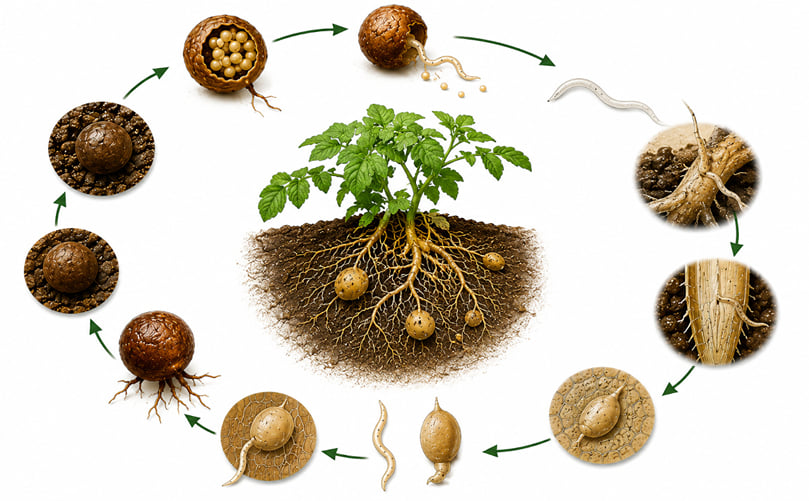
Life Cycle of Potato Cyst Nematodes (PCN) in Potato Crops
Understanding Symptoms and Crop Damage Caused by Potato Cyst Nematodes (PCN)
Potato Cyst Nematodes (PCN) damage potato crops by disrupting root function, reducing nutrient and water uptake and weakening overall plant growth. Because infestations develop below the soil surface, symptoms are often difficult to identify during the early stages and are frequently mistaken for nutrient deficiencies, drought stress, soil compaction or other root related problems. The severity of damage depends on nematode population density, potato variety, environmental conditions and crop management practices.
Understanding Above Ground Symptoms of Potato Cyst Nematodes: Above ground symptoms of PCN infestation are often subtle at low nematode populations and may remain unnoticed for several growing seasons. Infected areas typically appear as irregular patches of weak or uneven crop growth that gradually expand over time as nematode populations increase.
Affected potato plants commonly exhibit stunted growth, reduced vigor and chlorosis (yellowing) of leaves due to impaired nutrient uptake. Plants may also show wilting during periods of moisture stress, even when adequate soil moisture is present, because damaged root systems struggle to absorb water efficiently. In severe infestations, premature senescence can occur leading to early plant decline and in extreme cases, plant death before crop maturity.
Understanding Below Ground Symptoms and Root Damage: Below ground symptoms are more reliable indicators of PCN infestation and are most evident during root inspection. Infected plants typically develop poorly branched root systems with fewer feeder roots, reducing the plant’s ability to absorb water and nutrients efficiently.
One of the most distinctive diagnostic features of PCN is the presence of small, pinhead sized females or cysts attached to roots. These structures may appear white, cream, yellow or brown depending on species and developmental stage. They are most easily observed around flowering or later stages of crop growth. In addition to root damage, infected plants often produce fewer tubers and the tubers are generally smaller, reducing overall crop quality and marketability.
Understanding Yield and Quality Losses Caused by PCN: Potato Cyst Nematodes can cause significant economic damage by reducing both potato yield and tuber quality. Average global yield losses are estimated at approximately 9–12% although moderate to severe infestations may result in reductions ranging from 30% to 80%. In extreme situations, unmanaged infestations can lead to complete crop failure.
Even relatively low nematode populations may affect crop performance. Research suggests that infestation levels as low as approximately 20–55 eggs per gram of soil can result in measurable yield reductions. Higher nematode densities severely restrict tuber formation, reducing both tuber size and number.
Long-term infestations gradually reduce field productivity, increase pest management costs and lower farm profitability due to reduced marketable yield. Damage is often intensified under poor soil conditions, drought stress, nutrient deficiencies or when susceptible potato varieties are grown in infested fields.
Disease Development and Epidemiology of Potato Cyst Nematodes (PCN)
The development and spread of Potato Cyst Nematodes (PCN) are strongly influenced by host availability, soil movement, environmental conditions and agricultural practices. Because PCN survive for many years in soil and spread easily through contaminated materials, infestations can remain unnoticed while gradually increasing in severity. Once established, nematode populations may persist for decades making long-term management particularly challenging.
Understanding the Sources of Potato Cyst Nematode Infestation: Potato Cyst Nematode infestations primarily originate from contaminated soil and infected planting materials. One of the most common sources is infested seed potatoes, which may carry cysts or contaminated soil particles even when tubers appear healthy and symptomless. Since PCN can survive undetected, infected seed material plays a major role in introducing infestations into previously clean fields.
Volunteer potato plants, leftover tubers from previous crops and alternative host plants within the Solanaceae family can also contribute to nematode survival and population maintenance between cropping seasons. In some cases, certain weed species may support low level nematode multiplication, enabling PCN populations to persist even during crop rotation.
Understanding How Potato Cyst Nematodes Spread: Although PCN have limited natural mobility in soil, they spread highly efficiently through human activities and the movement of contaminated materials. Natural movement of juveniles is generally restricted to short distances within soil water films, but long-distance dispersal mainly occurs through mechanical transfer.
The most common pathways of spread include contaminated soil adhering to farm machinery, cultivation equipment, footwear, vehicles and agricultural tools. Infected seed tubers and nursery materials are also major contributors to regional and international dissemination. Additionally, water runoff, flooding and soil erosion can move infested soil particles between nearby fields, while wind may occasionally spread dry contaminated soil over short distances.
Human assisted movement remains the most significant factor in the global spread of PCN, particularly through shared farm equipment, potato trade and movement of planting materials. Once introduced into a field, infestations usually begin as localized patches and gradually expand outward over successive growing seasons.
Understanding Environmental Conditions Favoring PCN Development: Potato Cyst Nematodes generally thrive in cool temperate potato-growing environments although they can adapt to a wide range of climatic conditions. Soil moisture plays an essential role in egg hatching and juvenile movement as infective second stage juveniles (J2) depend on thin water films in the soil to locate host roots.
Temperature significantly influences nematode hatching, development and reproduction with optimum conditions varying between species. Globodera pallida generally perform better at cooler temperatures, whereas Globodera rostochiensis often develops more rapidly under relatively warmer conditions within temperate ranges.
Frequent potato cultivation or continuous potato cropping systems create ideal conditions for rapid nematode population buildup. Short crop rotations and repeated cultivation of susceptible potato varieties further increase infestation pressure. In addition, climate change may expand the geographical suitability of PCN, potentially altering development rates, survival patterns and generation times in emerging potato growing regions.
Understanding the Host Range of Potato Cyst Nematodes (PCN)
Potato Cyst Nematodes (PCN) are highly specialized plant parasitic nematodes that primarily infect species belonging to the Solanaceae family. The cultivated potato (Solanum tuberosum) is the most important economic host and serves as the principal crop affected by PCN infestations worldwide.
In addition to potato, PCN can infect several other cultivated solanaceous crops including tomato (Solanum lycopersicum) and eggplant or aubergine (Solanum melongena). The nematodes are also capable of parasitizing numerous wild and cultivated Solanum species with reports indicating susceptibility in more than 90–170 species including wild relatives, breeding materials and interspecific hybrids.
Beyond the Solanum genus, certain plant species belonging to other genera within the Solanaceae family may also serve as hosts or reservoir plants. These include Datura, Hyoscyamus, Nicotiana (tobacco) and Physalis species. Furthermore, several solanaceous weeds can maintain low nematode populations in the absence of potato crops allowing PCN to persist in agricultural soils and complicating long-term management efforts.
In contrast, most non-solanaceous crops are poor or non-hosts for Potato Cyst Nematodes. Cereals, brassicas, legumes and many other crop groups generally do not support PCN multiplication making them highly effective choices for crop rotation programs aimed at reducing nematode populations in soil.
However, host suitability varies considerably among plant species and cultivars. While some hosts allow rapid nematode multiplication, others may be partially resistant or poor hosts that limit population development. Therefore, understanding the host range of PCN is essential for designing effective crop rotation systems, selecting resistant varieties and managing volunteer potatoes and weed hosts to reduce long-term infestation levels.
Diagnosis and Identification of Potato Cyst Nematodes (PCN)
Accurate diagnosis of Potato Cyst Nematodes (PCN) is essential for effective management and regulatory compliance as symptoms are often non-specific and may resemble other crop problems.
Field Diagnosis: PCN infestations typically appear as irregular patches of stunted and chlorotic potato plants that gradually expand over successive growing seasons. Above ground symptoms often resemble nutrient deficiencies, drought stress or other root related problems making field diagnosis difficult. Therefore, visual symptoms alone are insufficient for confirmation and below ground inspection or soil testing is necessary. Visual scouting for cysts on roots during or after the growing season may provide early indications of infestation.
Root Inspection: During the growing season, particularly around flowering, or at harvest, potato roots should be examined for white, cream, yellow or brown pinhead sized females or cysts attached to the root surface. Globodera rostochiensis females typically turn golden yellow before becoming brown cysts, whereas Globodera pallida remain pale or cream colored for a longer period before browning. Although root inspection is useful for detecting infestation, it is not definitive for species identification and may fail to detect low density populations.
Soil Sampling and Laboratory Testing: Soil sampling is considered the gold standard for detecting and quantifying PCN populations. Sampling protocols vary depending on the purpose, such as routine detection, population estimation or seed potato certification.
Sampling is commonly conducted using systematic grid or zigzag patterns across fields, often in units of approximately 1 hectare. For detection purposes, particularly in seed potato certification, higher sampling intensity is required, while representative subsampling is generally sufficient for population estimation. Soil samples are usually collected from the root zone at depths of 10–15 cm with pre-planting or post-harvest sampling being common.
Cysts are extracted from soil using methods such as the Fenwick can, Cobb’s decanting and sieving, sugar flotation, elutriation or automated extraction systems. Following extraction, microscopic examination is conducted to assess cyst morphology, perineal patterns, vulval cone structures, juvenile stylet length and morphometric characteristics. Since Globodera rostochiensis and Globodera pallida are morphologically similar, molecular techniques are often required for accurate differentiation.
Molecular diagnostic methods such as polymerase chain reaction (PCR), real-time PCR, multiplex PCR and loop mediated isothermal amplification (LAMP) are increasingly used for rapid, sensitive and accurate species identification, pathotype differentiation and mixed population analysis. Viability testing, including egg staining methods may also be used to assess live nematode populations.
Differentiating PCN from Other Problems: PCN damage often resembles drought stress, nutrient deficiencies (particularly nitrogen and potassium deficiency) or root diseases such as Verticillium and Rhizoctonia. Key distinguishing features include the presence of cysts on roots, patchy field distribution and confirmation through laboratory testing. Definitive diagnosis requires soil and root analysis by accredited laboratories.
Monitoring and Surveillance of Potato Cyst Nematodes (PCN)
Ongoing monitoring is critical due to the patchy distribution and quarantine status of Potato Cyst Nematodes (PCN).
Field Scouting Methods: Field scouting involves visual assessment combined with systematic soil sampling. Infested areas often appear as irregular patches of poor plant growth although symptoms may not always be obvious at low population densities. GPS enabled soil sampling can improve accuracy in mapping infestation zones and monitoring population distribution.
Soil Testing Schedules: Soil testing is commonly conducted before planting for risk assessment and after harvest for monitoring nematode populations. In regulated regions, such as the United States and the European Union, annual or more frequent testing is carried out in infested areas and buffer zones. Seed potato production fields are subject to stricter testing and sampling protocols under phytosanitary regulations.
Economic Threshold Levels: Potato Cyst Nematodes have low economic threshold levels as measurable damage can occur at approximately 5–20 eggs per gram of soil, depending on potato variety, soil conditions and environmental factors. Threshold levels are used to guide management decisions including crop rotation intensity and nematicide application. Predictive tools such as Nema Decide may also help estimate yield losses and management economics.
Mapping Infestation Zones: Grid-based soil sampling and Geographic Information System (GIS) tools are commonly used to identify and map infested areas for targeted management and regulatory zoning. Intensive soil surveys are also used in eradication and delimitation programs to define the extent of infestation.
National surveillance programs and farm level monitoring systems support early detection and management of PCN infestations.
Managing Potato Cyst Nematodes (PCN): Integrated Strategies for Long-Term Control
No single management strategy can completely eradicate Potato Cyst Nematodes (PCN). Therefore, Integrated Nematode Management (INM) combines multiple approaches to achieve sustainable population suppression and minimize economic losses.
Cultural Management: Long crop rotations involving one potato crop every 5–7 years or longer with non-host crops such as cereals, brassicas and grasses are effective in reducing PCN populations. The destruction of volunteer potato plants and solanaceous weeds is also important to prevent nematode survival between cropping cycles. Strict sanitation measures including cleaning machinery, boots, tools and farm equipment between fields help reduce the spread of contaminated soil and cysts.
Resistant Potato Varieties: The use of resistant potato varieties is one of the most effective and sustainable approaches for PCN management. The H1 resistance gene provides strong resistance against many Globodera rostochiensis pathotypes and is present in several potato cultivars. Partial resistance to Globodera pallida is available through resistance genes such as Gpa5 and GpaIVsadg. Since resistance effectiveness depends on local nematode populations and pathotypes, selecting varieties suited to regional conditions is essential. Current breeding programs focus on developing durable, multi-gene resistance to improve long-term control.
Biological Control: Biological control offers a promising but variable approach for managing PCN populations. Several beneficial organisms, including nematophagous fungi such as Pochonia chlamydosporia and Purpureocillium lilacinum, as well as bacteria such as Pasteuria species, have shown potential in reducing nematode populations. Trap crops such as Solanum sisymbriifolium (litchi tomato) can stimulate egg hatching without supporting nematode reproduction helping reduce soil populations. However, commercial effectiveness remains variable and continues to be optimized.
Chemical Management: Chemical control through nematicides may help suppress PCN populations, particularly in heavily infested fields. Products such as fluopyram, fosthiazate and certain carbamate or organophosphate nematicides may be applied as soil treatments or seed applied products where approved. However, nematicide use has declined in many regions due to regulatory restrictions, environmental concerns and cost considerations. Their use is generally limited to high risk or economically important production systems.
Bio fumigation and Organic Management: Bio fumigation involves the incorporation of glucosinolate rich brassica cover crops, such as Indian mustard and oil radish into the soil to release natural compounds toxic to nematodes. Effective bio fumigation depends on proper crop biomass, chopping, timing and soil incorporation practices. Organic amendments including compost, biochar and soil health management practices may also contribute to greater soil suppressiveness against PCN.
Integrated Nematode Management (INM): Integrated Nematode Management combines multiple strategies including crop rotation, resistant potato varieties, sanitation, biological control, bio fumigation and targeted chemical use for long-term suppression of PCN populations. Decision-support tools and population models may also assist in selecting suitable management approaches that reduce economic losses while minimizing environmental impact.
Quarantine, Regulations and Biosecurity of Potato Cyst Nematodes (PCN)
Potato Cyst Nematodes (PCN) are highly regulated quarantine pests due to their long-term survival in soil, difficulty of eradication and significant impact on potato production and international trade. In many countries, Globodera rostochiensis and Globodera pallida are classified as quarantine organisms and are subject to strict phytosanitary measures to prevent their spread.
Why Potato Cyst Nematodes Are Quarantine Pests: PCN are designated as quarantine pests because of their ability to survive in soil for decades, spread through contaminated planting material and soil movement and cause substantial economic losses if left unmanaged. Their persistence and difficulty of eradication make containment and prevention essential to protect potato production systems and trade.
In Europe, PCN are classified as A2 quarantine pests by the European and Mediterranean Plant Protection Organization meaning they are locally present but subject to official control measures. Similar quarantine regulations exist in many potato producing countries worldwide.
Seed Potato Certification Requirements: Seed potato certification programs require strict monitoring and testing to ensure planting material remains free from PCN infestation. In many certification systems, fields must test negative for Potato Cyst Nematodes with zero tolerance applied in regulated seed production programs. Certified seed potatoes are generally sourced from pest free fields that undergo regular soil testing and phytosanitary inspections.
Farm Hygiene and Biosecurity Measures: Farm hygiene and biosecurity practices are essential to prevent the spread of PCN between fields and regions. Cleaning machinery, cultivation equipment, vehicles, tools and footwear before moving between fields helps minimize the transfer of contaminated soil and cysts.
Additional measures may include restricted movement of machinery from infested zones, establishment of buffer areas and proper disposal of contaminated plant material or soil to reduce the risk of further spread.
International Trade Implications: PCN infestations can significantly affect international potato trade due to strict phytosanitary regulations. Exported potatoes and planting materials often require phytosanitary certification confirming compliance with quarantine requirements. Infested regions may face trade restrictions, movement limitations or export bans to prevent cross border spread of nematodes.
Containment and eradication programs in affected areas commonly involve surveillance, soil testing, movement restrictions and regulated management practices to reduce the risk of spread and protect market access.
Compliance with international and national phytosanitary guidelines is essential for preventing the introduction and establishment of PCN in new potato-growing regions. Early detection, surveillance and strong biosecurity measures remain critical components of long-term management.
Recent Advances in Potato Cyst Nematode (PCN) Research and Management
Research on Potato Cyst Nematodes (PCN) has advanced significantly in recent years with major emphasis on improved diagnostics, resistance breeding, genomics, precision agriculture and sustainable management approaches. These innovations aim to address the long-term persistence, adaptability and economic impact of PCN in potato production systems.
Molecular Diagnostics: Advances in molecular diagnostics have greatly improved the rapid and accurate detection of PCN species. Techniques such as polymerase chain reaction (PCR), real-time PCR, multiplex PCR assays and loop mediated isothermal amplification (LAMP) are increasingly used for sensitive detection and differentiation of Globodera rostochiensis and Globodera pallida including pathotype identification.
High throughput diagnostic systems support large scale soil testing, surveillance and quarantine programs by enabling faster processing of samples. Research initiatives are also focused on developing more precise molecular tools for improved species and pathotype identification.
Resistance Breeding: Significant progress has been made in identifying and deploying resistance genes for PCN management. The H1 resistance gene provides strong protection against many Globodera rostochiensis pathotypes, while genes such as Gpa5 and GpaIVsadg provide partial resistance to Globodera pallida.
Modern breeding approaches increasingly rely on genomic tools including marker assisted selection (MAS), genomic selection (GS), genome wide association studies (GWAS) and resistance gene enrichment sequencing (RenSeq) to accelerate resistance breeding and gene stacking for durable, broad-spectrum resistance. Recent efforts also focus on identifying new resistance sources from wild Solanum species and addressing resistance breaking nematode populations. Breeding programs in several potato producing regions continue to develop cultivars with improved resistance to multiple PCN species.
Genomics and Biotechnology: Genome sequencing of Globodera rostochiensis and Globodera pallida has improved scientific understanding of nematode biology, pathogenicity and host interactions. Research on nematode effectors, invasion related genes and virulence mechanisms has provided important insights into how PCN infects potato roots and overcomes host resistance.
Transcriptomics and other molecular studies continue to improve understanding of nematode plant interactions and resistance pathways. Gene editing and transgenic technologies also show potential for introducing resistance genes into elite potato varieties although regulatory and public acceptance challenges remain in some regions.
Precision Agriculture and AI-Based Detection: Precision agriculture technologies are increasingly supporting targeted PCN management. Geographic Information System (GIS) mapping, grid-based soil sampling and decision support tools help growers monitor infestations and make informed management decisions.
Artificial intelligence (AI) and machine learning technologies are also being explored for predicting nematode distribution, monitoring population trends and assessing climate change impacts on PCN spread. Automated and targeted weed or volunteer potato control technologies may further improve management efficiency in infested fields.
Biological Innovations: Biological management research has expanded significantly focusing on sustainable suppression methods. Advances include the use of trap crops such as Solanum sisymbriifolium, improved bio fumigation strategies using brassica crops, and beneficial organisms including nematophagous fungi such as Pochonia chlamydosporia and Purpureocillium lilacinum.
Bacterial antagonists such as Pasteuria and Pseudomonas species are also being explored for nematode suppression. In addition, emerging technologies involving biodegradable delivery systems, soil health amendments and environmentally targeted management approaches show promise for sustainable long-term PCN control.
Future Challenges in Potato Cyst Nematode (PCN) Management
Despite significant progress in Potato Cyst Nematode (PCN) management, several challenges continue to threaten effective long-term control. The persistence of nematode cysts, evolving virulent populations, climate change and reduced management options make sustainable suppression increasingly complex.
Resistance Breakdown Risks: One of the major concerns in PCN management is the potential breakdown of resistance in potato varieties. Virulent nematode pathotypes can overcome resistance genes, reducing the long-term effectiveness of resistant cultivars. For example, resistance based on the H1 gene may be less effective against certain Globodera rostochiensis populations, while resistance derived from Solanum vernei against Globodera pallida may also be challenged by evolving nematode populations.
The high genetic diversity of G. pallida further complicates resistance breeding making durable resistance difficult to achieve. As a result, breeding programs increasingly focus on stacking multiple resistance genes with different mechanisms of action to improve long-term effectiveness.
Climate Change Effects: Climate change is expected to influence the distribution, development and survival of Potato Cyst Nematodes. Rising soil temperatures may accelerate nematode hatching, development and population buildup, potentially increasing the number of generations completed in a growing season.
Changes in climate may also expand suitable habitats for PCN into new potato growing regions, while altering the balance between species. Predictive models suggest possible geographical shifts in nematode distribution with cooler regions potentially becoming more favorable for certain species.
Emerging Virulent Populations: The repeated use of resistant potato varieties and limited availability of chemical control options may increase selection pressure on nematode populations, encouraging the emergence of new virulent pathotypes. In addition, under surveyed potato growing regions may unknowingly contribute to the silent spread of PCN, increasing the risk of new infestations and resistance challenges.
Reduced Nematicide Availability: Increasing regulatory restrictions and environmental concerns have reduced the availability of nematicides in several regions. The withdrawal or reduced use of chemical products limits immediate management options and increases dependence on crop rotation, resistant varieties and biological control measures, which may require longer periods to achieve effective population suppression.
Other Long-Term Management Challenges: Additional challenges include the exceptional long-term survival of cysts in soil, efficient spread through contaminated equipment and potato trade and difficulties in detecting low density infestations. Economic limitations affecting adoption of resistant varieties, labor shortages and climate variability further complicate management efforts.
Effective long-term PCN management will require integrated, region-specific strategies supported by strong surveillance systems, resistance breeding, sustainable management tools and continued international collaboration in research and biosecurity.
Best Management Practices for Potato Cyst Nematodes (PCN): Recommendations for Growers
Prevention and integrated management strategies are far more effective and economical than attempting to eradicate Potato Cyst Nematodes (PCN) after establishment. A combination of preventive, cultural, biological and targeted management practices can help maintain nematode populations below damaging levels.
Use Certified Seed Potatoes: Always plant certified, PCN tested seed potatoes sourced from pest free areas. Using clean planting material is one of the most effective ways to prevent the introduction of nematodes into un-infested fields.
Implement Long Crop Rotations: Grow potatoes no more than once every 5–7 years or longer in infested fields, by rotating with non-host crops such as cereals, brassicas and grasses. Volunteer potato plants and solanaceous weeds should be removed promptly to reduce opportunities for nematode survival and multiplication.
Plant Resistant Potato Varieties: Select potato varieties suited to local PCN species and pathotypes. Varieties containing the H1 resistance gene provide strong resistance against many Globodera rostochiensis populations, while partially resistant cultivars are available for Globodera pallida. Where possible, prioritize varieties with multiple resistance traits for improved long-term protection.
Maintain Strict Sanitation and Farm Hygiene: Thorough cleaning of machinery, equipment, vehicles, footwear and tools between fields is essential to prevent the movement of infested soil. Practices such as pressure washing and steam cleaning can help reduce contamination. Minimizing soil movement and avoiding shared machinery between infested and clean fields further lowers the risk of spread.
Conduct Regular Monitoring and Soil Testing: Carry out systematic soil sampling and laboratory testing before planting and after harvest to monitor nematode populations. Fields should be regularly scouted for patchy crop growth and cysts on roots. Mapping infestation areas can support targeted management decisions and help maintain populations below economic threshold levels.
Incorporate Bio fumigation and Trap Crops: Bio fumigation using glucosinolate rich brassica cover crops can help suppress nematode populations when properly managed and incorporated into the soil. Trap crops such as Solanum sisymbriifolium may also reduce nematode populations by stimulating egg hatch without supporting reproduction.
Use Chemical Control Judiciously: Approved nematicides and seed treatment products should be used only when economic thresholds justify application and always according to label recommendations. Chemical control is generally most effective when integrated with crop rotation, resistant varieties and other cultural practices.
Improve Soil Health: The use of organic amendments, biochar and soil management practices that encourage beneficial microbial activity may help improve soil suppressiveness and reduce PCN pressure over time.
Strengthen Biosecurity and Reporting: Follow quarantine regulations, maintain field records and report suspected new infestations to relevant agricultural authorities when required. Early action is essential for preventing further spread.
Adopt Integrated Nematode Management (INM): Long-term management of PCN requires an integrated approach that combines crop rotation, resistant varieties, sanitation, monitoring, biological control and targeted chemical use. Decision support tools and local agricultural guidance can help growers optimize management strategies according to regional conditions.
overall Vigilance, prevention and integrated management remain the foundation of effective PCN control. Consistent implementation of these practices can help maintain nematode populations below damaging levels, protect potato yield and quality and support sustainable potato production in the long term.