

Potato Fiber: A Natural Dietary Fiber Ingredient
Potato fiber is a natural dietary fiber ingredient derived from the cell wall material of potato tubers (Solanum tuberosum). It is produced primarily from potato processing streams and consists mainly of non-digestible plant cell wall components that resist digestion in the human small intestine. Unlike whole potato products, commercial potato fiber is generally processed and dried into a fine powder for use as a functional food ingredient.
From a nutritional and regulatory perspective, potato fiber can contribute to dietary fiber content when it meets the applicable definition and analytical requirements in the relevant market. Its value extends beyond nutrition potato fiber also provides important technological properties, particularly water absorption and retention, which can influence texture, structure, moisture management and processing yield.
Commercial potato fiber is typically available as a light colored to light brown powder with a mild potato flavor and aroma. It is naturally plant-based and is commonly used in products formulated without gluten containing ingredients. Depending on the manufacturing process, composition can vary with cellulose, hemicellulose, pectic substances and other cell wall components contributing to its functional properties.
Interest in potato fiber has increased as food manufacturers seek ingredients that support both nutritional and formulation goals. It can be incorporated into bakery products, meat and meat alternative products, snacks, pasta and other foods to increase fiber content while contributing to moisture retention, texture and product stability. Its origin from potato-processing streams also gives it potential value in ingredient upcycling and more resource efficient food production.
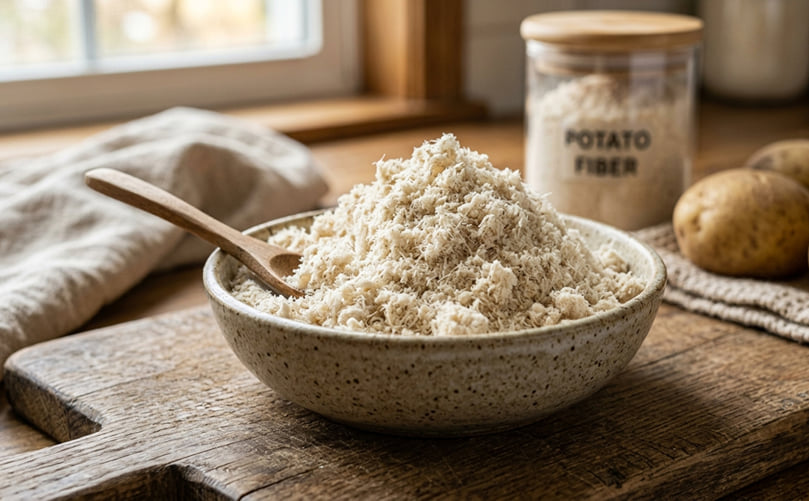
Potato Fiber Powder
What Is Potato Fiber Made From? Composition and Key Components
Potato fiber is made mainly from the structural components of the potato cell wall. Its composition is dominated by cellulose, hemicellulose and pectin, along with smaller amounts of lignin and other non-fiber components that remain after processing. This combination gives potato fiber its characteristic nutritional and functional properties.
Analyses of potato pulp show that its dry matter typically contains around 30–35% cellulose, 5–14% hemicellulose, 15–30% pectin and relatively low levels of lignin, commonly 1–6%. The pectin fraction is often rich in galactin branched rhamnogalacturonan-I. In refined commercial potato fiber, total dietary fiber commonly reaches 50–75%. Of this, about 55% is insoluble fiber, mainly cellulose, while 45% is soluble fiber, mainly pectin. Residual starch is generally reduced to 10–20%, sometimes lower, while protein accounts for around 3–7%, ash and minerals for 2–4% and fat for well below 1%. Some potato fiber products also retain 8–14% resistant starch as part of the fiber matrix.
The monosaccharide profile of potato fiber reflects the pectin-rich structure of potato cell walls. Galactose, galacturonic acid, arabinose and glucose are the main components with smaller amounts of rhamnose, xylose and mannose. Compared with woody biomass, potato fiber has a relatively low lignin content contributing to a more open and hydrated structure. This structure supports the characteristic water holding capacity of potato fiber. Protein reduction during refining also lowers potential allergenic and discoloration risks compared with less processed potato residues.
The composition of potato fiber also sets it apart from cereal bran, pure cellulose and isolated pectin. Cereal brans generally contain higher levels of lignin and hemicellulose, while pure cellulose and isolated pectin represent individual fiber components rather than the combination found in potato fiber. The balance between insoluble cellulose and soluble pectin contributes to the bulking properties of potato fiber and its role in viscosity and emulsion stability in food systems.
Where Does Potato Fiber Come From?
Potato fiber mainly comes from potato starch production. In starch factories, potatoes are first washed and then rasped or ground into a slurry. This slurry is separated into several parts, including starch milk, potato fruit water (potato juice) and a solid material called potato pulp.
Potato pulp, also known as potato residue or press cake is the main source of commercial potato fiber. It contains the disrupted cell wall material of the potato, including cellulose, hemicellulose and pectin as well as a portion of the peel. During starch extraction, most of the starch granules and soluble potato components are removed, leaving behind this fiber-rich pulp.
In the past, potato pulp was commonly used for animal feed, biogas production or sometimes disposed of as processing waste. Today, modern processing methods can dry, separate and refine this material to produce food-grade potato fiber, turning what was once a low value residue into a useful food ingredient.
Potato fiber can also be obtained from potato peel and other potato processing residues, particularly from fresh cut and processed potato operations. However, starch processing pulp remains an important commercial source because it is produced continuously in large quantities and can be collected through existing processing systems.
The availability of potato fiber is therefore closely linked to major potato starch production regions, including Northern and Central Europe, parts of North America and selected processing facilities in Asia. Because potato fiber is recovered from an existing processing by-product rather than grown as a separate crop, it does not require additional agricultural land specifically for fiber production.
This makes potato fiber a good example of by-product valorization in the potato industry. The same potatoes used to produce starch can also provide a valuable source of dietary and functional fiber, helping processors make better use of the raw material, reduce processing waste and support more resource efficient production.
How Is Potato Fiber Produced?
Industrial potato fiber production follows a multi-stage mechanical and refining process designed to isolate and purify the potato cell wall fraction while minimizing residual starch, protein, salts and glycoalkaloids.
The process begins with washing starch potatoes to remove soil and surface impurities. The cleaned tubers are then ground or rasped into a fine pulp, which ruptures the cell walls and liberates starch granules. Potato fruit water is then separated, typically using decanter centrifuges, removing a large portion of soluble proteins, polyphenols, enzymes and glycoalkaloids. The remaining solids are further fractionated using centrifugal sieves or hydro cyclones, washing away starch and leaving the raw fiber-rich pulp.
Refining the raw pulp is critical for producing food grade potato fiber. The pulp is pre-pressed to increase its dry matter content, often to 20–30% and washed with water to remove residual fruit juice and dissolved salts. It is then final pressed. Some patented processes recycle a portion of previously dried fiber into the wet stream to improve drying efficiency and achieve a feed dry matter content of 40–60% before drying. Drying is performed under controlled conditions to produce a stable powder with low moisture, typically below 10%. The dried material is then milled and sieved to obtain defined particle size grades, commonly below 1 mm for standard grades and below 0.2 mm for specialized applications.
Optional advanced processing steps include enzymatic treatment with cellulase or xylanase or high hydrostatic pressure assisted enzymatic modification to increase the soluble fiber proportion, open the fiber matrix and enhance water-retention and adsorption capacities. These modifications are applied selectively when higher soluble fiber functionality is required. The final product is a free-flowing potato fiber powder ready for food use, with controlled residual starch, protein and glycoalkaloid levels that meet food-safety and sensory standards.
The entire potato fiber production process is integrated into existing potato starch factories, so the incremental cost of fiber recovery is relatively low compared with dedicated fiber crops. The yield is modest approximately 1 kg of finished potato fiber is obtained from roughly 100 kg of raw potatoes reflecting the high water and starch content of the original tubers.
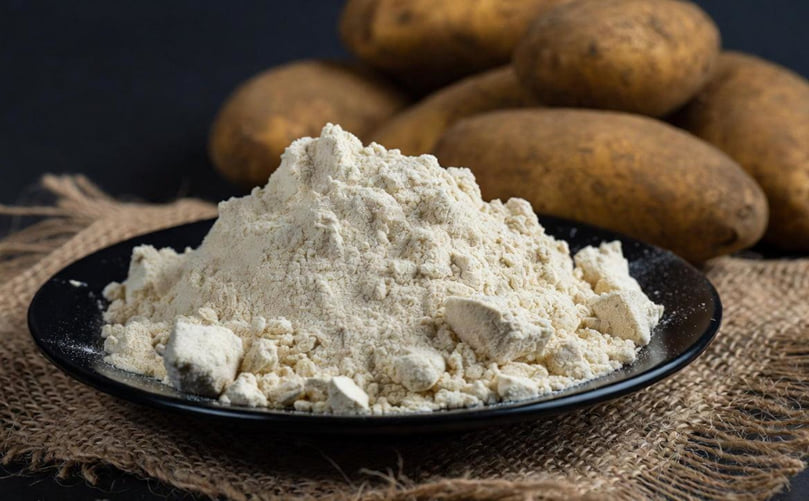
From Raw Potatoes to Food-Grade Potato Fiber Powder
Types of Potato Fiber and Their Key Characteristics
Potato fiber is not a single uniform ingredient. Commercial and research materials differ in solubility, source fraction, particle size and post-processing modifications.
Insoluble Potato Fiber: Insoluble potato fiber forms the majority of most commercial powders. It is dominated by cellulose and contributes to the bulk of the physical structure, water binding network and fecal bulking potential. Typical insoluble dietary fiber (IDF) accounts for roughly 55% of total dietary fiber in refined pulp preparations.
Soluble Potato Fiber: Soluble potato fiber is the pectin-rich fraction, often containing galactan branched rhamnogalacturonan-I. It represents approximately 40–45% of total dietary fiber in many refined products and contributes to viscosity, emulsification support and fermentability. Soluble dietary fiber (SDF) can be selectively enriched by enzymatic solubilization.
Total Dietary Fiber (TDF) Powder: Total dietary fiber (TDF) powders are the standard commercial form, combining both IDF and SDF in their native ratio after refining. Fiber content in these powders commonly ranges from 50–75% on a dry matter basis.
Potato Pulp or Potato-Residue Fiber: Potato residue or pulp fiber is the primary industrial type, recovered from the cell wall solids remaining after starch and fruit water separation.
Potato Peel Fiber: Potato peel fiber is a secondary type derived from peel streams. It tends to carry higher lignin and phenolic content and is studied more for bioactive enrichment than for large scale food texturizing.
Modified Potato Fiber: Modified potato fiber is produced by enzymatic treatment using cellulase or xylanase or through high hydrostatic pressure-assisted enzymatic processing. These treatments increase the soluble fraction, create a more porous matrix and improve water retention, swelling and adsorption capacities for glucose and cholesterol.
Potato Fiber Powder Grades by Particle Size: Potato fiber powder grades are further distinguished by particle size. Standard grades are often <1 mm, while finer “Crown-type” grades (<0.2 mm) provide a smoother texture and slightly lower absolute water holding values but improved mouthfeel in sensitive applications.
Potato Fiber Types for Different Applications: These distinctions matter for formulation. Insoluble dominant grades excel at moisture retention and yield in meat systems, while higher-soluble or modified grades are preferred when viscosity, emulsification or enhanced physiological adsorption is required.
Potato Fiber Nutritional Profile and Composition
The nutritional profile of potato fiber varies depending on the commercial specification and degree of refining, so product specific certificates of analysis should always be consulted. Representative ranges for refined commercial potato-fiber powders on a dry matter basis include 50–75% total dietary fiber with many products listing a minimum of 55% or 65%, while some organic grades exceed 75%. Insoluble dietary fiber typically accounts for 50–60% of the total fiber fraction and is mainly composed of cellulose, while soluble dietary fiber generally represents 40–45% and consists mainly of pectin.
Resistant starch can range from 8–14% in certain refined products, although levels may be lower after cooking or intensive processing. Protein generally ranges from 3–7% and is reduced in high purity grades to minimize allergenicity and discoloration. Fat is typically below 1%, often at 0.3% or less, while ash and minerals generally account for 2–4%. Residual digestible starch and carbohydrates can range from 10–20%, depending on processing, as tightly bound starch can be difficult to remove completely. Moisture is usually controlled below 10%.
The energy contribution of potato fiber is low because most of the material is non-digestible. Some commercial data report approximately 200–230 kcal/100 g, with a substantial portion of that energy attributed to the fermentable fiber fraction, often calculated at 0–2 kcal/g, depending on the jurisdiction. One organic grade is positioned as providing only about 8 g of net carbohydrates per 100 g together with 65 g of fiber, supporting low-carb and keto-style formulations.
Potato fiber is naturally gluten free. Its mineral content includes notable amounts of potassium and phosphorus in some analyses. Glycoalkaloid levels are reduced through modern refined processing, with examples of 100–120 ppm compared with higher levels in less refined material.
Because commercial potato fiber products differ in composition, nutrition labeling should always use the specific values supplied by the manufacturer rather than generic averages.
Potato Fiber Health Benefits and Gut Health Effects
The potential health benefits of potato fiber should be considered separately from the general effects of dietary fiber and from research specifically focused on pure potato resistant starch. Current evidence suggests that potato fiber may support digestive health, gut microbiota, satiety and some metabolic responses, although the strength of evidence varies by fiber type and product.
Digestive Regularity and Gut Function: The insoluble portion of potato fiber adds bulk and provides mechanical stimulation in the intestine. Refined potato pulp fiber has a relatively high-water-holding capacity, although some animal studies have reported lower fecal bulking efficiency than pure cellulose. Even so, it can support normal intestinal transit and help maintain stool consistency.
Gut Microbiota and Prebiotic Potential: Some potato fiber fractions are fermented by gut microorganisms, producing short-chain fatty acids such as acetate and butyrate. Enzymatically solubilized potato pulp fiber, particularly high molecular weight rhamnogalacturonan-I (RG-I), showed strong bifidogenic activity in vitro, with one study reporting activity approximately three times that of fructooligosaccharides. In a human trial, three weeks of RG-I intake produced a modest but significant increase in the relative abundance of Bifidobacterium. Hydrogen breath tests also indicated that both potato pulp fiber and its soluble fraction were fermented.
Satiety and Appetite: Potato fiber may also help with feelings of fullness. In a randomized controlled crossover trial involving healthy men, potato-pulp fiber (Fiber Bind, 68% fiber) increased post-meal satiety and fullness ratings compared with a soluble RG-I fraction and showed a trend compared with the control. The effect was not explained by differences in gastric emptying measured using paracetamol.
Glycemic and Insulin Responses: The same human trial found delayed glucose peaks and lower insulin peaks after consumption of the potato-pulp fiber. The soluble RG-I fraction also prolonged the glucose response. These results fit with the broader understanding that viscous and fermentable fibers can influence carbohydrate absorption, although human research specific to potato fiber is still limited.
Cholesterol and Metabolic Markers: Modified potato dietary fibers have shown an increased ability to adsorb cholesterol and glucose in vitro. However, animal research on blood lipid responses has produced mixed findings, so firm conclusions cannot yet be drawn. Some longer-term rat studies found no significant change in total cholesterol when potato fiber replaced cellulose.
Weight Management: Any potential role of potato fiber in weight management is likely to be indirect. Increased satiety, lower energy density in fiber enriched foods and possible effects on the gut microbiome may contribute, rather than a direct thermogenic effect.
Overall, potato fiber shows potential for supporting digestive health, gut microbiota and satiety, but health claims should remain product specific. The available evidence should also be kept separate from the stronger research base for certain resistant starches and well-studied soluble fibers such as beta-glucan and psyllium.
Functional Properties of Potato Fiber
The functional value of potato fiber comes from its ability to interact with water, oil and food matrices. These properties influence moisture retention, swelling, texture, viscosity and processing stability.
Water Holding Capacity (WHC): Commercial potato fiber grades commonly retain 7–15 g of water per g of fiber. Potex-type products are frequently cited at up to 12 g water/g, while finer grades may show slightly lower values of around 7–10 g/g. This capacity mainly comes from the insoluble, non-cellulosic cell-wall polysaccharide network. Enzymatic removal of hemi cellulosic and pectic components can reduce WHC by more than 60%, confirming the structural role of these polymers. WHC generally remains relatively stable across a useful pH range and can withstand heating and freeze thaw cycles in many commercial specifications.
Oil-Holding Capacity: Potato fiber typically has an oil-holding capacity of 1.8–5.5 g oil/g fiber. This property reflects its ability to retain oil within the fiber matrix.
Swelling Capacity: Potato fiber has a pronounced swelling capacity, with reported values of 6–19 mL/g, depending on the source and measurement method. Swelling results from water absorption and expansion of the fiber matrix.
Bulking and Texture Modification: Potato fiber adds bulk and contributes to structural modification without excessive grittiness when particle size is properly controlled. Its textural effect depends strongly on fiber concentration and particle size.
Thickening and Viscosity: Although potato fiber is not a classic hydrocolloid, its soluble pectin fraction contributes to viscosity. Research has also examined potato fiber as a potential texturizing alternative or complement to xanthan in tomato-based products.
Emulsification and Gel Formation: Soluble fractions and the overall fiber network can support emulsion stability. Some modified or higher soluble grades can also show improved gelling behavior under appropriate conditions.
Process Stability: Commercial potato fibers are generally heat tolerant, pH-stable and freeze thaw stable. In some cases, water binding capacity can increase after mechanical working or pasteurization because these processes further open the fiber matrix.
Potato fiber performance is strongly influenced by particle size, the soluble dietary fiber (SDF) to insoluble dietary fiber (IDF) ratio and enzymatic or pressure modification.
Food Applications of Potato Fiber
Bakery Products: Potato fiber is used in bread, cakes, cookies, biscuits, pastries and muffins to support moisture management, texture and fiber enrichment. Inclusion levels of 1–3% and in some trials up to 5–7% have been reported. It is also used in low carb and keto style bakery formulations as a partial flour replacer.
Snacks: Potato fiber is used in extruded snacks, potato-based snacks, crackers and fiber enriched snacks to support texture and fiber enrichment. In some frying applications, it can also help reduce oil uptake.
Meat Products: In sausages, processed meats, meatballs and burgers, potato fiber is used at approximately 1–3.5% of the formulation. Coarser grades are preferred for darker meat products such as hamburgers and meatballs because of their light-brown color.
Plant-Based Meat and Analogues: Potato fiber is used in plant-based burgers, meat analogues, seafood alternatives, texturized vegetable proteins and high moisture extrudates to improve binding, juiciness and fibrous texture.
Breakfast Cereals, Pasta and Noodles: Potato fiber increases total dietary fiber and can support fiber enrichment formulations. Potato peel fiber fractions with different particle sizes have been reported to increase dietary fiber in pasta while maintaining cooking loss within acceptable limits.
Dairy Products, Dairy Alternatives, Sauces, Fillings and Ready Meals: Potato fiber is used in fillings, creams, sauces, tomato products, ketchup and plant-based yogurt-style drinks. Finer grades are preferred for injected meats, pâté and smooth dairy applications.
Commercial potato fiber is therefore used mainly in bakery, meat, plant-based, snack, cereal, pasta, dairy and savory food applications, where fiber enrichment and functional performance are required.
Potato Fiber vs. Potato Starch: What’s the Difference?
| Feature | Potato Fiber | Potato Starch |
|---|---|---|
| Primary composition | Cell-wall polysaccharides (cellulose, hemicellulose, pectin) + residual starch | Nearly pure starch (amylose + amylopectin) |
| Main function | Fiber enrichment, water/oil binding, texture & yield improvement | Thickening, gelatinization, gelling, film formation |
| Dietary fiber content | High (typically 50–75%) | Very low (not considered a dietary-fiber ingredient) |
| Water interaction | High water-holding / retention capacity | Swelling and gelatinization upon heating |
| Texture contribution | Bulking, moisture retention, mouthfeel, anti-staling | Viscosity increase, gel strength, crispness |
| Typical applications | Bakery, meat, plant-based, snacks, functional foods | Sauces, soups, gravies, noodles, batters, coatings, gluten-free baking |
| Process behavior | Stable under heat, freeze–thaw; binds water physically | Gelatinizes at relatively low temperature; can break down under prolonged heat or shear |
Potato fiber cannot replace potato starch on a one-to-one basis because the two ingredients have different functional properties. Potato starch primarily provides thickening, viscosity, binding and gelling properties that are important in sauces, soups, bakery products and other processed foods. Potato fiber, in contrast, contributes dietary fiber, water holding capacity, texture, structure and moisture management and can help improve yield and juiciness in food formulations. Therefore, the two ingredients are often used together rather than as direct substitutes starch provides viscosity and gel structure, while fiber contributes water retention, texture and nutritional fiber enrichment.
Potato starch can also contribute resistant starch, particularly when it is consumed in its native form or when starch is cooked and subsequently cooled, allowing retrogradation. Potato fiber may also contain varying amounts of residual starch, including resistant starch, depending on the production process and composition of the fiber ingredient.
Potato Fiber vs. Resistant Starch: Nutritional and Functional Differences
Potato fiber and resistant starch (RS) may share some physiological effects, particularly their fermentation in the colon, but they differ substantially in chemical composition, origin and primary applications.
Chemical composition: Potato fiber consists primarily of non-starch cell wall components such as cellulose, hemicellulose and pectin. Resistant starch is a fraction of starch that resists digestion in the small intestine and reaches the colon, where it can be fermented. Commercial potato fiber may contain some residual starch, including resistant starch, but the amount varies depending on the raw material and processing method.
Digestibility and classification: Both potato fiber components and resistant starch can reach the large intestine and undergo microbial fermentation. However, RS is chemically starch, whereas potato fiber is predominantly composed of non-starch polysaccharides. Whether specific types of resistant starch are classified as dietary fiber depends on the applicable regulatory framework and analytical method.
Functional properties: Potato fiber is primarily valued for its water holding capacity, moisture management, bulking and contribution to texture and structure. Resistant starch is generally used for its physiological and nutritional properties, including its low digestibility, potential effects on postprandial glucose response and fermentation by the gut microbiota. Some resistant starches can also be incorporated with relatively limited effects on viscosity.
Food applications: Potato fiber is commonly used to improve moisture retention, yield, texture and structure in products such as bakery foods, meat products and plant-based foods. Resistant starch, including potato derived RS2 and RS3 is used to increase resistant starch or dietary fiber content and modify the nutritional and functional characteristics of foods.
Overlap and distinction: Commercial potato fiber may contain varying amounts of residual resistant starch, but the physiological effects demonstrated for purified resistant starch should not automatically be attributed to every potato fiber product. Conversely, resistant potato starch should not be considered a direct substitute for potato fiber when water binding, bulking and structural functionality are required.
Potato Fiber Compared with Other Dietary Fibers
Potato fiber is compared with other common dietary fibers based on water holding capacity, solubility, taste and color, gluten free status and food application.
Apple fiber and citrus fiber: Both fruit-derived fibers can provide good water holding and texture enhancing properties. Citrus fiber, depending on its composition and processing, can also provide strong water and oil binding functionality because of its pectin and other cell wall components. Potato fiber is often relatively neutral in flavor and color, particularly in refined grades and can be useful when a potato derived, gluten free fiber is desired.
Pea fiber: Pea fiber is a plant-based, gluten free ingredient commonly used for fiber enrichment, bulking and texture improvement. Its functional properties vary considerably by grade and processing method. Potato fiber can provide strong water binding and moisture retention, making it useful in bakery products, meat products, snacks and plant-based formulations.
Wheat fiber and oat fiber: Wheat fiber is generally rich in insoluble fiber and is widely used for fiber enrichment and bulking. However, wheat derived ingredients may not be suitable for gluten free products unless they meet applicable gluten specifications. Oat fiber is mainly used for fiber enrichment and bulking, while oat beta-glucan provides soluble, viscous fiber functionality. Potato fiber provides a gluten free, potato derived alternative with useful water binding properties.
Bamboo fiber and cellulose: Bamboo fiber and purified cellulose are primarily insoluble fibers used for bulking, texture modification and fiber enrichment. Potato fiber can provide additional water binding and moisture retention functionality, although performance depends on the specific ingredient grade and application.
Psyllium: Psyllium is a highly functional fiber with strong water absorption, viscosity and gel forming properties. It is widely used in products requiring structure and viscosity and has established evidence for certain physiological benefits. Potato fiber generally has lower viscosity and weaker gel-forming functionality, but it can provide useful water binding, moisture retention, texture modification and fiber enrichment.
Inulin: Inulin is a soluble, fermentable dietary fiber widely used for its prebiotic functionality and in selected fat and sugar reduction applications. Potato fiber is generally selected more for water binding, moisture management, texture and dietary fiber enrichment rather than for the specific prebiotic functionality associated with inulin.
Key Comparative Advantages of Potato Fiber
Potato fiber offers high water holding capacity, moisture retention, oil-binding ability, texture improvement and fiber enrichment. However, functional properties can vary significantly according to processing method, particle size, fiber composition and ingredient grade, so specific values should be based on supplier specifications rather than treated as universal.
Overall, the choice of dietary fiber depends on the desired application: psyllium and beta-glucan-rich oat ingredients for viscosity and specific health related functionality, cellulose and bamboo fiber for insoluble bulking, inulin for soluble prebiotic functionality and potato fiber for multifunctional moisture management, texture and fiber enrichment.
Potato Fiber Functionality in Food Processing
Potato fiber interacts with food matrices during mixing, hydration, heating, baking, extrusion, freezing, thawing and storage. Its relatively high water-holding capacity often requires adjustments to formulation water, particularly at higher inclusion levels, to maintain the desired dough or batter consistency. During mixing, potato fiber absorbs and retains water, which can contribute to dough structure in wheat-based products and improve body and cohesiveness in gluten free formulations. However, excessive inclusion may reduce dough extensibility and make processing more difficult.
In baking, potato fiber helps retain moisture in the crumb and can contribute to a softer texture during storage. By modifying water distribution wafer-thin the product, it may also help slow texture changes associated with starch retrogradation. Potato fiber generally tolerates typical baking conditions, although its performance depends on fiber grade, inclusion level and the overall formulation.
During extrusion, potato fiber can withstand the heat and shear conditions commonly used in food processing while influencing water distribution, expansion, bulk density, and texture. Its effects depend strongly on the fiber concentration, particle size, residual starch content, moisture level and extrusion conditions.
In frozen and thawed products, potato fiber can help bind water and improve product structure, potentially reducing moisture migration and syneresis. However, freeze thaw performance varies considerably with fiber grade, inclusion level and the composition of the food matrix.
Particle size also influences functionality. Coarser potato fiber generally provides greater water binding capacity and can contribute more noticeable structure, making it suitable for applications such as meat products and high fiber formulations. Finer grades disperse more uniformly and can provide a smoother texture making them useful in bakery, dairy and other applications where mouthfeel is important. The optimum particle size depends on the desired functionality and final product texture.
Concentration, residual starch content, processing history and any enzymatic or physical modification can further affect water absorption, viscosity, texture and process tolerance. In high inclusion applications, pre-hydration may be beneficial because it allows the fiber to hydrate more uniformly before incorporation into the final food matrix.
Potato Fiber Dosage and Usage Levels in Food Products
There is no universal dosage for potato fiber. The appropriate inclusion level depends on the product type, fiber specification, particle size, water-holding capacity, desired texture, formulation, processing conditions and applicable regulatory requirements for nutrition or fiber claims.
In bakery products such as bread, cakes and cookies, potato fiber is commonly evaluated at approximately 1–3% of flour weight as a starting range. Higher inclusion levels, such as 5–7%, have also been studied, but they can substantially increase water absorption and may reduce loaf volume or alter crumb structure if the formulation is not adequately adjusted. Lower inclusion levels, particularly around 1–2%, often provide better sensory acceptability while still contributing functional benefits.
In meat and processed meat products, inclusion levels of approximately 0.5–2% are commonly investigated, with some applications using levels of around 3% or higher depending on the product and formulation. Potato fiber can improve water retention, cooking yield, firmness and juiciness when used at appropriate levels. The optimum dosage depends on the type of meat product and the balance of water, fat, protein and other ingredients.
In plant-based meat alternatives, snacks, fillings and other formulated foods, potato fiber is often evaluated at approximately 1–3%, although the appropriate level can vary considerably. Higher inclusion rates may be used when the primary objective is fiber enrichment, but the final dosage should be determined based on the required nutritional contribution, sensory properties and applicable regulatory requirements.
Formulation trials should begin at a relatively low inclusion level and increase progressively while monitoring water absorption, dough or batter consistency, texture, processing performance, yield, and sensory characteristics. Because potato fiber can have a high-water holding capacity, water addition should be adjusted according to the specific fiber grade rather than using a fixed ratio. Values of approximately 7–15 times the fiber weight may be encountered for some grades, but actual water-binding capacity can vary substantially between products and should be confirmed from the supplier's technical specification or through laboratory testing.
Excessive inclusion may result in dryness, increased firmness, reduced extensibility, grittiness or undesirable changes in color and mouthfeel. Therefore, the practical maximum is usually determined by the balance between the desired functional or nutritional benefit and the sensory and processing characteristics of the finished product.
Potato Fiber: Advantages and Disadvantages
Key Advantages of Potato Fiber
- Effective fiber enrichment supporting “source of” or “high fiber” claims.
- Exceptional water and oil holding capacity that improves yield, juiciness and moisture retention.
- Texture improvement (softer crumb, better mouthfeel, reduced staling, enhanced binding).
- Neutral taste and light color in refined commercial grades.
- Inherently gluten free and suitable for clean label, plant-based and allergen conscious formulations.
- Derived from an abundant industrial by-product, supporting sustainability and circular economy positioning.
- Process stability under heat, freeze thaw and typical pH ranges.
- Dual nutritional and technological functionality in one ingredient.
Key Disadvantages and Limitations of Potato Fiber
- High water demand requires formula reformulation; insufficient water leads to dry or tight texture.
- At higher inclusion levels, can reduce loaf volume, increase density or introduce slight grittiness or color shift (especially less-refined grades).
- Residual starch content varies and may affect viscosity or retrogradation behavior.
- Product-to-product variability in particle size, soluble/insoluble ratio and residual protein or glycoalkaloids necessitates supplier-specific testing.
- Not a direct one-to-one replacement for starches or high viscosity hydrocolloids.
- Limited long-term human clinical data for some specific health claims compared with more established fibers (e.g., beta-glucan, psyllium).
- Potential sensory or processing constraints in very high fiber or sensitive applications.
Potato Fiber: A Sustainable Ingredient from Potato Processing By-Products
Potato fiber exemplifies circular economy valorization within the potato starch industry. Starch production generates substantial quantities of potato pulp and other residual streams that may be used for animal feed, biogas production or in some cases, disposal. Recovering and refining these streams into food grade fiber converts a relatively low value by-product into a higher value functional ingredient, helping reduce waste, improve resource efficiency and increase the economic value derived from the same potato input used to produce starch and protein.
Because potato fiber is produced from processing by-products, it does not require additional agricultural land or a dedicated crop. Integrated processing systems that recover starch, protein and fiber from the same potatoes can improve raw material utilization and potentially reduce the environmental footprint associated with producing functional ingredients compared with cultivating dedicated fiber crops. Potato pulp and peel are increasingly recognized as underutilized sources of dietary fiber and bioactive compounds, supporting efforts to reduce food waste and promote more sustainable food processing systems.
Further valorization pathways, including bioenergy, bio-composites and the extraction of bioactive compounds from potato peels, reinforce the broader circular economy potential of the potato processing industry. These approaches can help processors extract greater value from potato raw materials while supporting resource efficiency and more sustainable food production.
Potato Fiber Market: Global Growth, Key Suppliers and Industry Trends
The global potato fiber market is driven by growing demand for clean label functional ingredients, dietary fiber fortification, plant-based formulations and sustainable food ingredients. Market reports estimate the global market at approximately USD 540–565 million around 2025–2026, with projections reaching roughly USD 860–900 million by 2035, representing commonly reported CAGRs of 4.4%–4.8%. Estimates vary depending on the source, market definition and methodology, while some reports also provide volume estimates in the hundreds of thousands of metric tons.
Key producers and suppliers are primarily integrated potato-starch companies and specialized fiber manufacturers, including AVEBE, Emsland Group, Roquette Frères, J. Rettenmaier & Söhne (JRS/VITACEL), Ingredion, AGRANA, Lyckeby Starch, Pepees and others. Potato fiber is typically supplied as a food grade powder with specified dietary fiber content, often 55%–65% or higher, depending on the product grade and manufacturing process. Products may be available in different particle sizes and with certifications or specifications such as non-GMO, organic and allergen statements. Commercial packaging generally includes bags or bulk big bags. Pricing is influenced by factors such as fiber concentration, particle size, processing specifications, organic certification and geographic origin.
Europe remains a major production and consumption region because of its well-established potato starch industry. North America and Asia Pacific are also experiencing growing demand, supported by trends in bakery products, plant-based foods, functional foods and dietary fiber enrichment. Insoluble potato fiber grades account for a significant share of applications because of their water holding, moisture management and fat binding properties, particularly in bakery, meat products and other processed foods.
Potato Fiber Regulations and Food Labeling Requirements
The regulatory treatment of potato fiber as dietary fiber, as well as the requirements for nutrition and health claims, varies by jurisdiction and should be verified against current local regulations.
European Union: Under Regulation (EU) No 1169/2011, dietary fiber is defined as carbohydrate polymers with three or more monomeric units that are neither digested nor absorbed in the human small intestine, along with certain associated substances. Under Regulation (EC) No 1924/2006, the nutrition claim “source of fiber” requires at least 3 g of fiber per 100 g or 1.5 g per 100 kcal, while “high fiber” requires at least 6 g per 100 g or 3 g per 100 kcal. Conventional potato derived fiber can generally be included in dietary fiber declarations when it meets the applicable definition and is quantified using an appropriate analytical method. Pure potato fiber is naturally gluten-free, although any “gluten-free” claim must comply with applicable requirements and contamination limits.
United States: The U.S. FDA defines dietary fiber as non-digestible soluble and insoluble carbohydrates with three or more monomeric units, including lignin, that are intrinsic and intact in plants, as well as certain isolated or synthetic non-digestible carbohydrates that the FDA has recognized as having beneficial physiological effects. Potato fiber containing intrinsic and intact plant cell-wall components can generally qualify as dietary fiber when it meets the applicable regulatory definition. Dietary fiber must be declared on the Nutrition Facts label when present. Nutrient content claims such as “good source” and “high” are subject to FDA requirements and are based on the applicable Daily Value for dietary fiber, currently 28 g for adults. Isolated or modified fibers may require separate regulatory consideration. A “gluten-free” claim must meet the FDA threshold of less than 20 ppm gluten.
Other Markets: Canada, Australia and New Zealand and other jurisdictions have their own definitions, labeling requirements and thresholds for claims such as “source of fiber,” “high source” and “very high source.” The regulatory treatment of isolated, modified or novel fibers can also differ between markets. Energy values assigned to dietary fiber may vary by jurisdiction and by the type of fiber.
Manufacturers should use validated analytical methods, such as applicable AOAC methods, to determine dietary fiber content and support declared values. They should also maintain appropriate documentation for specifications, analytical results and any nutrition or health claims. The regulatory status of highly modified or novel potato-derived fibers should be assessed separately, even when conventional potato pulp fiber has an established history of food use.