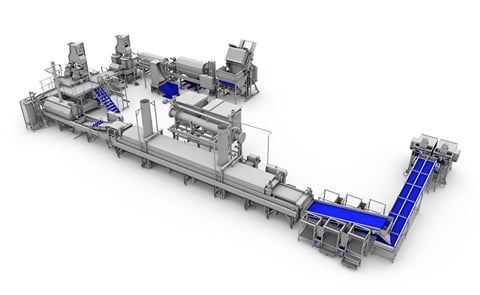

Introduction to Continuous Potato Chip Processing Lines
A continuous potato chip processing line is an integrated, automated production system that converts raw potatoes into finished, packaged potato chips through a continuous and uninterrupted manufacturing process. From potato receiving and washing to peeling, slicing, frying, seasoning, cooling and packaging, each stage is seamlessly connected to ensure efficient, high-volume production.
Continuous processing has become the industry standard for modern potato chip manufacturing because it delivers high production efficiency, consistent product quality, reduced labour requirements, improved hygiene and lower operating costs per unit. As global demand for potato chips continues to grow, continuous processing lines enable manufacturers to meet large scale production requirements while maintaining strict quality and food safety standards.
The primary difference between continuous and batch production lies in the production flow. Batch processing produces chips in separate, discrete batches making it suitable for small-scale operations and specialty products such as kettle-style potato chips. In contrast, continuous processing feeds potatoes through a series of interconnected machines without interruption, allowing for 24-hour operation, higher production capacities, precise process control and greater product consistency.
Today, continuous potato chip processing lines form the backbone of the global snack food industry. They are widely used by multinational food companies, private label manufacturers and export-oriented producers to efficiently manufacture high-quality potato chips at industrial scale while meeting international food safety and quality standards.
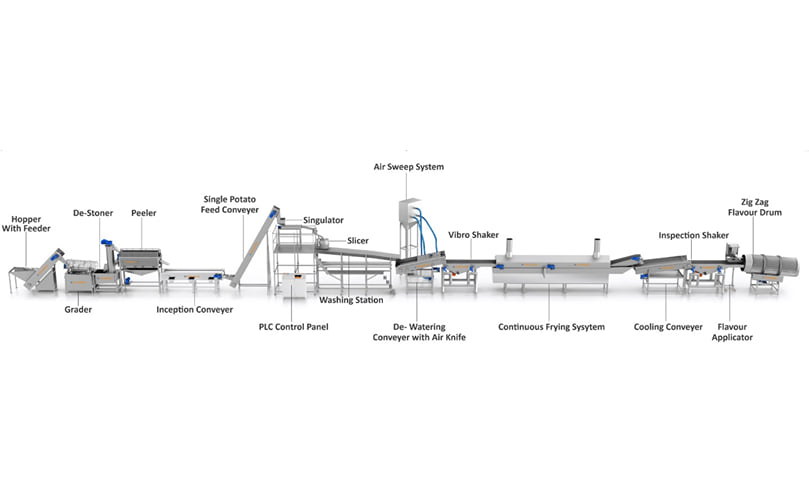
Modern Continuous Potato Chip Manufacturing Line
What is a Continuous Potato Chip Processing Line?
A continuous potato chip processing line is a fully or semi-automated production system comprising a series of interconnected machines that continuously convert raw potatoes into finished packaged potato chips without interruption between processing stages. Potatoes enter the line at one end, pass through each processing stage in a continuous flow and emerge as finished, ready-to-package potato chips at the other.
The continuous production concept is based on synchronized material handling, automated product transfer and precisely controlled processing conditions. Conveyors continuously transport potatoes through washing, peeling, slicing, rinsing, dewatering, frying, seasoning, cooling and packaging, while each stage is carefully coordinated to ensure a smooth and uninterrupted production flow.
The primary objectives of a continuous potato chip processing line are to maximize production efficiency, maintain consistent product quality and minimize operating costs. By ensuring precise control of processing parameters such as slice thickness, frying temperature, residence time, moisture content, oil absorption and seasoning application, continuous lines produce potato chips with uniform colour, texture, crispness, flavour and quality. In addition, they reduce labour requirements, improve food safety and hygiene, optimize energy and oil consumption, minimize product losses and provide scalable production capacities to meet the demands of modern industrial potato chip manufacturing.
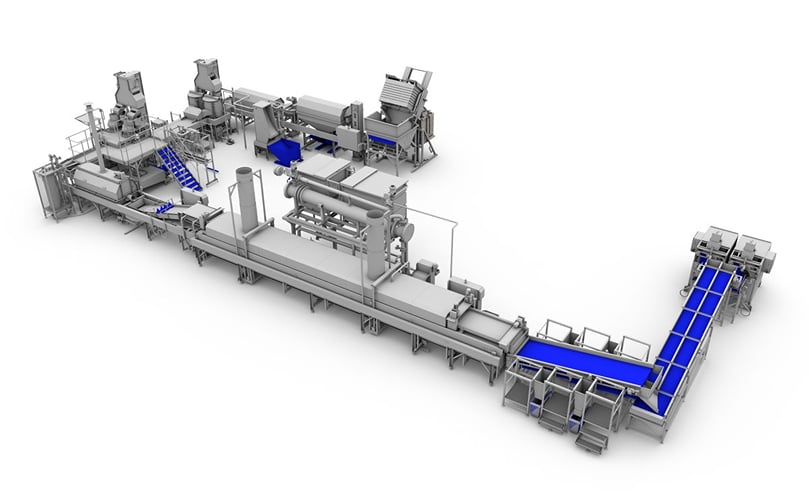
Continuous Potato Chip Processing Line
Project Planning and Plant Design for Continuous Potato Chip Processing Lines
Feasibility Study and Capacity Planning: Every successful continuous potato chip processing project begins with a comprehensive feasibility study. Manufacturers should evaluate market demand, target production capacity, investment costs, operating expenses, raw material availability and expected return on investment before selecting equipment. The processing line should be designed to meet current production needs while providing sufficient flexibility for future capacity expansion and product diversification.
Site Selection: Choosing the right location is critical for efficient plant operation. The processing facility should be situated close to reliable sources of processing grade potatoes to reduce transportation costs and maintain a consistent supply of raw materials. Easy access to major roads, distribution networks, utilities and labour also contributes to improved operational efficiency and lower production costs.
Plant Layout and Material Flow: An efficient plant layout improves productivity, product quality and food safety. The production process should follow a logical one-way flow, beginning with raw potato receiving and ending with packaging and finished product storage. Proper separation of processing areas minimizes cross-contamination, reduces unnecessary product handling and allows smoother movement of materials and personnel throughout the facility.
Equipment Installation and Infrastructure: The plant should be designed with adequate space for equipment installation, routine maintenance, cleaning and future upgrades. Supporting infrastructure, including electrical systems, fuel supply, water distribution, wastewater treatment, compressed air, ventilation and drainage, should be carefully planned to ensure reliable operation and efficient maintenance throughout the life of the facility.
Regulatory Compliance and Future Expansion: Compliance with building regulations, environmental requirements, occupational safety standards and food safety management systems should be considered during the planning stage. Early collaboration between equipment suppliers, engineers and regulatory authorities helps optimize plant design and avoid costly modifications during construction. Planning sufficient space for future expansion also enables manufacturers to increase production capacity or introduce new product lines with minimal disruption.
Main Equipment in a Continuous Potato Chip Processing Line
A continuous potato chip processing line consists of a series of interconnected machines, each designed to perform a specific operation while maintaining a continuous product flow. Together, these machines ensure efficient production, consistent product quality and high levels of food safety.
Potato Receiving System: The potato receiving system includes hoppers, elevators, conveyors and storage bins that receive raw potatoes and feed them into the processing line at a controlled and consistent rate, ensuring a continuous supply to downstream equipment.
Potato Washer: Potato washers, such as drum, brush or bubble washers, remove soil, stones, dust and other foreign materials from the potato surface. Effective washing helps protect downstream equipment and improves product hygiene.
Potato Peeler: Potato peelers remove the potato skin with minimal flesh loss. Depending on production requirements, abrasive, brush or steam peelers may be used to achieve high peeling efficiency while maximizing yield.
Inspection Conveyor: An illuminated inspection conveyor allows operators or optical sorting systems to identify and remove defective, green, sprouted, diseased or damaged potatoes before slicing, helping maintain consistent product quality.
Potato Slicer: High speed centrifugal or rotary slicers cut potatoes into uniform slices, typically 1.2–1.8 mm thick, depending on the desired chip style. Uniform slice thickness is essential for even frying, consistent texture and uniform colour.
Slice Washer (Rinser): After slicing, the potato slices are washed to remove excess surface starch. This reduces slice sticking, improves frying performance, minimizes oil degradation and promotes a more uniform chip colour.
Blancher (Optional): A hot water or steam blancher may be used when required to reduce reducing sugars, improve colour development, modify texture or prepare potatoes with challenging raw material characteristics. Blanching is not necessary for all potato chip production lines.
Dewatering System: Dewatering equipment, including vibrating screens, air knives, centrifugal dewaters or air dryers, removes excess surface moisture from potato slices before frying. Effective dewatering reduces oil splashing, improves frying efficiency and lowers oil absorption.
Continuous Fryer: The continuous fryer is the core component of the processing line. Single zone or multi-zone fryers continuously cook potato slices under precisely controlled oil temperature, circulation and residence time, producing chips with uniform colour, crispness, moisture and oil content.
Oil Filtration System: Continuous or intermittent oil filtration systems remove crumbs, fines and other suspended particles from the frying oil. Efficient filtration extends oil life, maintains product quality and reduces operating costs.
De-oiling System: After frying, vibratory conveyors or de-oiling systems remove excess surface oil from the potato chips, helping achieve the desired oil content while improving product texture and shelf life.
Seasoning System: Seasoning drums or spray applicators evenly distribute salt, spices, powders, or liquid flavourings across the potato chips, ensuring consistent flavour and appearance throughout the product.
Cooling Conveyor: Ambient or forced air cooling conveyors reduce the temperature of freshly seasoned chips before packaging. Proper cooling prevents condensation, preserves product crispness and improves packaging performance.
Packaging Machine: Automatic packaging systems, such as vertical form-fill-seal (VFFS) machines, accurately weigh, fill, seal and package potato chips. Many systems incorporate nitrogen flushing to extend shelf life and protect product freshness.
Metal Detector: Metal detectors inspect finished products for ferrous, non-ferrous and stainless-steel contaminants helping ensure food safety and compliance with international quality standards.
Check Weigher: Automatic check weighers verify that each package meets the specified weight, ensuring regulatory compliance, reducing product giveaway and maintaining production efficiency.
PLC Control System: A programmable logic controller (PLC) with a human machine interface (HMI) serves as the central control system for the entire production line. It continuously monitors and controls equipment speeds, temperatures, oil levels, conveyor synchronization, processing times and production recipes to ensure stable, efficient and consistent operation.
Construction Materials: Most equipment in continuous potato chip processing lines is manufactured from food grade stainless steel, typically SUS304, while SUS316 may be used in critical areas requiring enhanced corrosion resistance or exposure to more demanding processing conditions. This construction ensures durability, easy cleaning and compliance with international food safety and hygiene standards.
(Click picture to watch video) 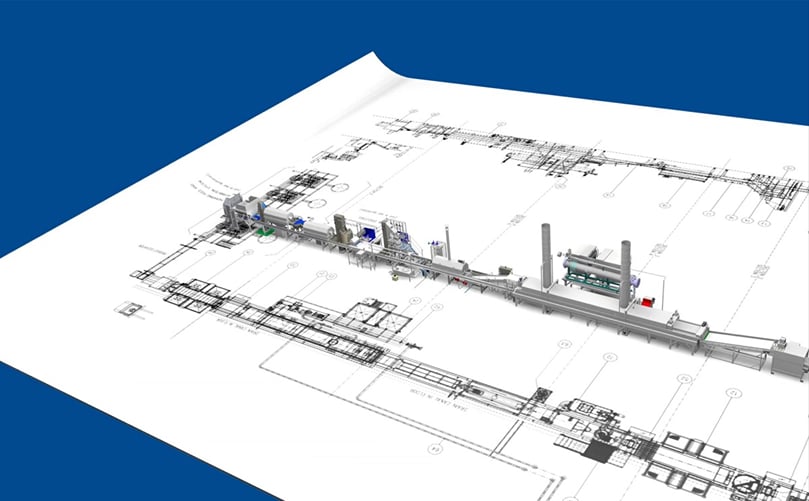
3D Animation Potato Chips Processing Plant PC500(E)
Processing Steps in a Continuous Potato Chip Processing Line
The production of potato chips in a continuous processing line involves a series of carefully synchronized operations that transform raw potatoes into finished packaged products. Each stage is designed to maintain a continuous product flow while ensuring consistent quality, high efficiency and food safety.
Receiving and Pre-cleaning: Raw potatoes are received, unloaded and continuously fed into the processing line through hoppers and conveyors. During pre-cleaning, destoners, dry cleaners or initial washing systems remove soil, stones, plant debris and other foreign materials. A consistent feeding rate is essential to maintain a balanced production flow and prevent bottlenecks.
Washing: Potatoes are thoroughly washed using drum, brush or bubble washing systems to remove any remaining dirt and contaminants. Modern processing lines often employ multi-stage washing with recirculated and filtered water to improve cleaning efficiency while reducing freshwater consumption. Proper washing also helps protect downstream equipment and maintain frying oil quality.
Peeling: The potato skin is removed using abrasive, brush or steam peelers to improve product appearance, reduce defects and eliminate surface contaminants. The choice of peeling method depends on production capacity, desired yield and potato variety. Potato peels are commonly collected for use as animal feed, compost, biogas production or other value-added applications.
Inspection and Sorting: After peeling, potatoes are inspected to remove green, sprouted, diseased, bruised or damaged tubers that could negatively affect product quality. Inspection may be carried out manually or by advanced optical sorting systems, which improve detection accuracy, increase throughput and reduce labour requirements.
Slicing: High-speed centrifugal or rotary slicers cut potatoes into uniform slices, typically 1.2–1.8 mm thick. Uniform slice thickness is critical because it directly influences frying time, oil absorption, colour development, crispness and final product yield. Consistent slicing ensures uniform cooking and product quality.
Rinsing (Starch Removal): Freshly cut potato slices are rinsed to remove excess surface starch. This prevents slices from sticking together, reduces oil degradation, promotes even frying and improves chip colour. Although rinsing contributes to some dry matter loss, it is an essential step for producing high-quality potato chips and maintaining frying efficiency.
Blanching (Optional): Depending on the potato variety and desired product characteristics, slices may be blanched in hot water or steam before frying. Blanching reduces reducing sugars helps minimize excessive browning and acrylamide formation and can improve texture and colour uniformity. Processing conditions are carefully controlled, as excessive blanching may reduce flavour and soften the potato tissue.
Dewatering: Before frying, excess surface moisture is removed using vibrating screens, centrifugal dewaterers, air knives or air dryers. Effective dewatering improves frying efficiency by reducing oil splashing, minimizing heat loss, shortening frying time and lowering oil absorption.
Frying: Potato slices are continuously conveyed through hot edible oil under precisely controlled conditions. During frying, moisture is rapidly reduced from approximately 80% to less than 2%, while the characteristic golden colour, crisp texture and flavour develop through moisture evaporation and the Maillard reaction. Most continuous potato chip processing lines operate at frying temperatures between 155 and 185 °C with residence times typically ranging from 2 to 4 minutes, depending on slice thickness, product specifications and fryer design. Continuous oil circulation and temperature control ensure consistent product quality.
Oil Removal: Immediately after frying, excess surface oil is removed using vibratory conveyors or mechanical de-oiling systems. The recovered oil is typically filtered and recirculated back to the fryer. Finished potato chips generally contain 30–40% oil, although the final oil content depends on potato dry matter, slice thickness, frying conditions and product formulation.
Seasoning: Salt, spices and other flavourings are applied while the chips remain slightly warm, allowing better adhesion to the chip surface. Modern seasoning systems ensure uniform distribution, providing consistent flavour and appearance across every batch of product.
Cooling: Seasoned potato chips pass through cooling conveyors where ambient or forced air reduces the product temperature before packaging. Proper cooling preserves crispness prevents condensation inside the package and improves packaging efficiency.
Packaging and Final Inspection: The cooled chips are automatically weighed, filled and sealed using packaging machines, often under a nitrogen atmosphere to preserve freshness and extend shelf life. Before final packing, packages pass through metal detectors and check weighers to verify food safety, product integrity and compliance with quality standards.
Process Synchronization: The efficiency of a continuous potato chip processing line depends on the precise synchronization of every processing stage. Conveyor speeds, residence times, equipment capacities and process parameters are continuously coordinated through automated control systems, ensuring uninterrupted product flow, minimizing bottlenecks, reducing product losses and maintaining consistent product quality throughout production.
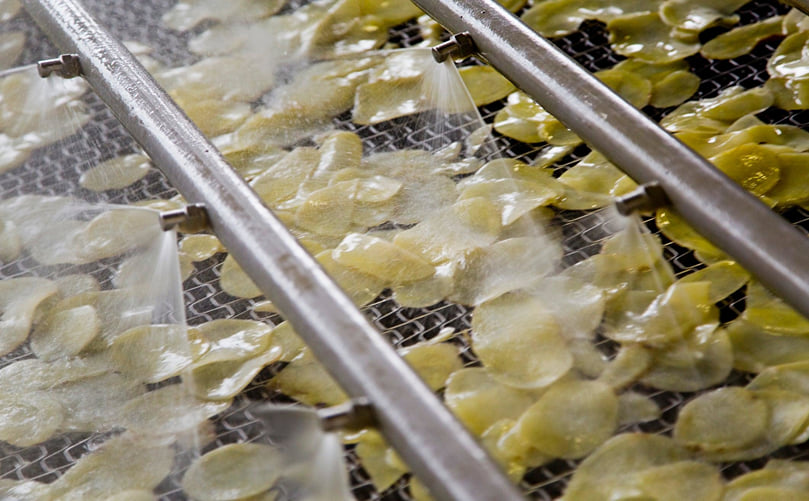
Potato Washing and Cleaning in a Continuous Potato Chip Processing Line
Production Capacity of Continuous Potato Chip Processing Lines
Continuous potato chip processing lines are available in a wide range of capacities to meet the needs of small, medium and large-scale manufacturers. Production capacity is generally expressed as the finished potato chip output per hour, although raw potato input capacity is also an important consideration when designing a processing line.
Continuous potato chip processing lines are available in a wide range of production capacities to meet different manufacturing requirements. Small-scale systems typically produce 50–150 kg/h of finished potato chips, while entry level industrial lines generally have capacities of 100–200 kg/h. Medium-scale production lines commonly operate at 300–500 kg/h, whereas large industrial systems produce 500–1,000 kg/h. High-capacity continuous processing lines typically range from 1,000–3,000 kg/h, while very large industrial installations can exceed 5,000 kg/h of finished potato chips. In addition, some specialized continuous frying systems are capable of producing 2,900 kg/h or more of finished potato chips, depending on the fryer design, processing conditions and overall production line configuration.
Some specialized continuous frying systems are capable of producing 2,900 kg/h or more of finished potato chips, depending on the fryer design, process configuration and production requirements.
Because potato chips lose a significant amount of water during frying, the finished-product output is considerably lower than the raw potato input. In most commercial operations, the raw potato-to-finished chip ratio ranges from approximately 3.5:1 to 4:1, although the ratio may be higher when processing potatoes with lower dry matter content. For example, a production line designed to produce 500 kg/h of finished potato chips typically requires approximately 1,750–2,000 kg/h or more of raw potatoes, depending on the characteristics of the raw material and processing conditions.
The actual production capacity and product yield depend on several processing and raw material factors, including:
- Potato dry matter content and specific gravity
- Slice thickness and cutting uniformity
- Fryer capacity, heat transfer efficiency and oil circulation
- Effectiveness of the dewatering system
- Raw potato quality and sorting losses
- Peeling efficiency and flesh loss
- Line balancing and synchronization of equipment
- Heating method and overall thermal efficiency
- Target product specifications, including colour, moisture content, texture and oil content
In addition, plant layout, equipment configuration, utility availability, automation level, maintenance practices and operator expertise all influence the sustained production capacity of a continuous potato chip processing line. Properly designed continuous systems can operate 24 hours a day with only scheduled maintenance and sanitation shutdowns, enabling significantly higher annual production volumes and greater operational efficiency than batch processing systems.
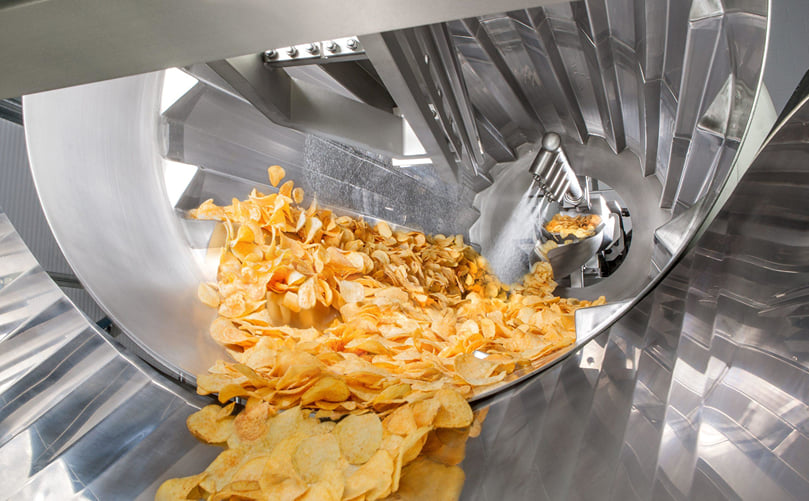
Finished Potato Chip Output by Processing Line Capacity
Raw Material Requirements for Potato Chip Processing
The quality of raw potatoes is one of the most critical factors influencing the final appearance, texture, flavour, oil uptake and shelf life of potato chips. Potato chip processing requires specific cultivars with desirable physical and chemical characteristics to ensure consistent frying performance and product quality.
Suitable processing varieties: Chip manufacturers generally prefer chipping specific potato varieties such as Atlantic, Lady Rosetta, Snowden, Hermes, FL 1867, Russet Burbank and other locally adapted processing cultivars. These varieties are selected based on their high dry matter content, low reducing sugar levels, good frying colour and ability to produce crispy chips with lower oil absorption.
Key raw material specifications include
Dry matter content and specific gravity: The preferred dry matter content for potato chips is typically 20–25% with a specific gravity generally ≥1.080. Higher dry matter levels improve chip yield, enhance crispness, reduce frying time and lower oil absorption. However, excessively high dry matter can result in hard texture and increased breakage, so an optimum balance is required.
Reducing sugar content: Reducing sugars, mainly glucose and fructose have a major impact on chip colour during frying. Ideal levels are generally maintained below 0.1–0.2% fresh weight basis with premium chip production often targeting <0.05–0.15% depending on market requirements. High sugar levels cause excessive browning through the Maillard reaction, resulting in dark coloured chips and increased potential for acrylamide formation.
Tubers size, shape and external quality: Uniform, medium sized tubers are preferred to achieve consistent slice dimensions and frying characteristics. Typical processing tubers may range from 50–150 g, depending on variety and processing system. Tubers should have a round to oval shape, smooth skin, shallow eyes and minimal defects to improve peeling efficiency and reduce processing losses. Avoiding green tubers, mechanical damage, bruising, disease infection and internal defects is essential.
Flesh colour and internal quality: Potato varieties with white to light cream flesh colour, low incidence of internal defects and good resistance to blackspot bruising are preferred. Consistent flesh quality helps maintain uniform chip appearance.
Storage requirements: Proper post-harvest storage is essential to maintain processing quality. Potatoes are generally stored under controlled conditions, commonly around 7–10°C with appropriate relative humidity, depending on variety and storage duration. Storage conditions should prevent excessive cold-induced sweetening, sprouting, dehydration and accumulation of reducing sugars that negatively affect frying colour.
Maturity and physiological age: Fully mature tubers with appropriate physiological age provide better processing performance. Immature potatoes may have poor skin development and higher moisture content, while over aged potatoes may show increased sugar levels, sprouting and reduced frying quality.
Incoming quality inspection: Before entering the processing line, potatoes are evaluated for specific gravity, dry matter, reducing sugars, tuber size distribution, defects and disease incidence. Maintaining strict raw material specifications ensures consistent chip quality, improved production efficiency and reduced processing losses.
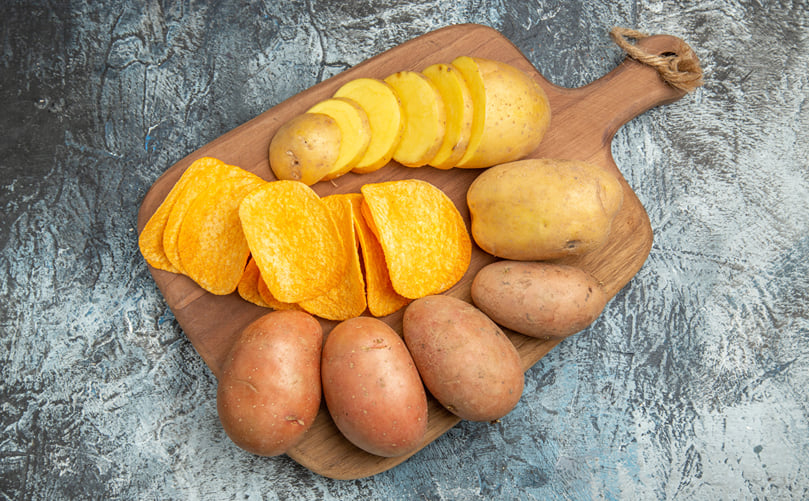
Raw Potato Selection for Continuous Chip Processing
Frying Technology and Process Control in Potato Chip Production
Frying is the core operation in industrial potato chip production, where sliced potatoes are transformed into crispy chips with the desired colour, flavour and texture. In continuous frying systems, potato slices move through a long fryer using a controlled conveyor or oil flow system while moisture is rapidly removed and oil is absorbed to develop the characteristic chip structure.
Modern continuous fryers are designed with multiple heating zones to provide precise control over the frying process. The temperature profile (Delta-T) is adjusted along the fryer length with higher temperatures at the initial stage for rapid moisture removal and slightly reduced temperatures in later zones to control colour development and minimize acrylamide formation. Typical frying temperatures range from approximately 155–185 °C, depending on slice thickness, variety, product type and target moisture content. Final chip moisture is generally maintained below 2% for good crispness and shelf stability.
The frying time is controlled by conveyor speed and fryer design, with residence times typically ranging from 2–5 minutes. Continuous oil circulation through external heating systems, filtration units and oil management systems ensures uniform heat transfer, removes fine particles and maintains consistent frying conditions.
Advanced frying systems use continuous filtration technologies, including drum filters, centrifugal separators and paper filtration systems, to remove crumbs and carbonized particles that accelerate oil degradation. Automatic crumb removal systems, oil level monitoring and oil replenishment mechanisms help maintain oil quality and extend operational efficiency.
Heat is supplied through external heat exchangers using thermal oil, steam, natural gas or LPG-based heating systems. Precise temperature control and independent fryer zones allow processors to produce different chip styles by adjusting frying conditions, including conventional crispy chips and thicker kettle style products.
Additional design features such as slice separation systems, oil-flow control and submerger belts ensure uniform immersion and prevent slice clustering. These technologies provide consistent chip colour, texture, moisture control and improved production capacity while reducing oil deterioration.
Automation and Digital Control Systems in Potato Chip Processing Lines
Modern continuous potato chip processing lines rely on advanced automation systems to achieve consistent product quality, high efficiency and reduced operational losses. A central programmable logic controller (PLC) manages different stages of the production line, including feeding, frying, seasoning, cooling and packaging.
The PLC receives real-time data from sensors monitoring critical parameters such as oil temperature, oil level, conveyor speed, product flow and equipment performance. Based on this information, automated control systems adjust heaters, pumps, valves and drive motors to maintain stable processing conditions.
Operators control the system through human machine interfaces (HMIs), which provide real-time monitoring, alarm notifications, process adjustments and recipe management. Multiple product settings can be stored for different chip varieties, slice thicknesses, flavours and frying conditions, allowing faster product changeovers.
Advanced sensors improve process accuracy by monitoring temperature, throughput, oil quality and product characteristics. Automated feedback systems help maintain uniform frying conditions by compensating for changes in production load and raw material variation. Some modern systems also include oil quality monitoring technologies to measure degradation indicators and optimize oil replacement schedules.
With the adoption of Industry 4.0 technologies, continuous chip lines can integrate with SCADA systems, cloud platforms and manufacturing software for data collection, traceability, predictive maintenance and production optimization. Real-time production data helps manufacturers improve energy efficiency, reduce downtime, maintain quality standards and achieve higher overall equipment effectiveness (OEE).
Automation has significantly reduced manual intervention while improving consistency, reliability and operational control in large-scale potato chip manufacturing facilities.
Product Quality Control and Quality Assurance
Quality control in continuous potato chip manufacturing ensures that the final product meets consumer expectations, processing standards and food safety requirements. Since chips are produced at high speeds, continuous monitoring of key quality parameters is essential for maintaining consistency across long production runs.
Colour and appearance: Chip colour is one of the most important quality indicators. A uniform light golden colour is preferred, while excessive browning may indicate high reducing sugar levels in potatoes, improper frying temperature or excessive frying time. Colour is evaluated through visual inspection as well as instrumental methods such as Lab colour measurement systems.
Texture and crispness: Crispness depends mainly on moisture removal, frying conditions and potato dry matter content. Texture is evaluated using instrumental texture analysis or sensory evaluation. Final moisture content is generally maintained below 2% (commonly around 1–1.5%) to ensure a crispy texture and longer shelf life.
Oil content and frying quality: Oil absorption affects taste, mouthfeel, and production cost. The oil content of finished chips is typically maintained around 30–40%, depending on product type and processing conditions. Proper control of frying temperature, residence time and de-oiling systems helps achieve the desired oil level.
Physical quality parameters: Uniform slice thickness is critical because it directly influences frying time, colour development, oil uptake and breakage. Modern processing lines use automatic thickness monitoring systems to maintain consistent slicing. Seasoning application is also controlled to ensure uniform flavour distribution and accurate dosage.
Food safety and process monitoring: Quality control programs include checks for foreign materials, metal contamination, microbiological safety and process contaminants such as acrylamide. Metal detectors, X-ray inspection systems and check weighers are commonly installed before packaging to ensure product safety and compliance.
Routine testing of raw materials and finished products supports consistent quality. Incoming potatoes are evaluated for parameters such as dry matter, specific gravity, reducing sugars and defects. During production, samples are regularly checked for moisture, oil content, colour, texture and sensory characteristics. HACCP-based monitoring, statistical process control and production data from automated systems help identify process variations and maintain product specifications.
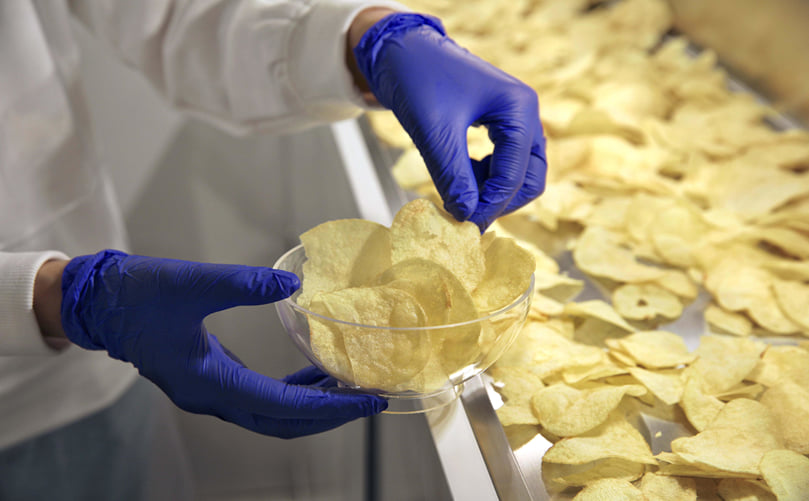
Potato Chip Colour and Quality Inspection
Energy and Utility Requirements for Potato Chip Processing
Energy management is an important factor in the operation of continuous potato chip processing lines, as frying requires significant thermal energy for moisture removal and product development.
Thermal energy requirements: The fryer is the largest energy consuming section of the production line. Heat is generally supplied through natural gas, LPG, diesel, steam or thermal oil heating systems. Efficient heat transfer and accurate temperature control are essential to reduce energy consumption and maintain frying quality.
Electrical requirements: Electricity is required for operating slicers, conveyors, pumps, fans, compressors, seasoning systems, packaging machines and automation equipment. The total electrical load depends on production capacity and the level of automation.
Water and compressed air requirements: Water is mainly used for potato washing, rinsing and cleaning operations. Modern plants use filtration, recycling and wastewater treatment systems to reduce water consumption. Compressed air is used for pneumatic controls, actuators, dewatering systems and packaging equipment.
Energy efficiency measures: Reducing surface moisture before frying is one of the most effective ways to lower energy use. Heat recovery systems can capture energy from fryer exhaust vapours and reuse it for heating water or other plant operations. Additional efficiency improvements include proper equipment insulation, variable frequency drives, optimized oil circulation and regular monitoring of utility consumption.
Efficient utility management helps reduce operating costs, improve sustainability and lower the environmental impact of potato chip manufacturing
Hygiene, Food Safety and Regulatory Compliance
Maintaining high hygiene standards is essential in continuous potato chip production to ensure product safety, quality and compliance with international food regulations.
Hygienic equipment design: Processing equipment is mainly constructed from food-grade stainless steel, such as AISI 304 with higher grade materials used in areas exposed to corrosion. Equipment surfaces are designed to be smooth, easy to clean and free from areas where product residues can accumulate.
Sanitation and cleaning systems: Regular cleaning and sanitation programs prevent microbial growth and contamination. Automated cleaning systems, including clean-in-place (CIP) systems where applicable, ensure effective cleaning of processing equipment, pipelines and related components.
Food safety management systems: HACCP programs identify and control critical points such as frying conditions, foreign material detection, packaging integrity and storage conditions. Good Manufacturing Practices (GMP), employee hygiene, pest control and sanitation procedures form the foundation of food safety management.
Foreign material and contamination control: Metal detectors and X-ray inspection systems are used to identify physical contaminants before the product reaches consumers. Equipment checks, environmental monitoring, allergen control (especially for flavoured chips) and proper separation of raw and finished product areas help minimize contamination risks.
Traceability and compliance: Modern processing plants use digital traceability systems to track raw potato batches, production parameters and finished products. Compliance with international standards such as BRCGS, IFS, SQF, FDA FSMA, and EU food hygiene regulations supports access to global retail and export markets.
Strong hygiene practices and food safety controls ensure that potato chips are produced consistently with high quality, safety and consumer confidence.
Installation, Commissioning and After-Sales Support
Installation and Commissioning: Proper installation and commissioning are essential to ensure that a continuous potato chip processing line operates safely, efficiently and at its designed production capacity. After factory acceptance testing, the equipment is transported to the production site, where it is assembled, aligned and connected to electrical, mechanical, and utility systems. Modern processing lines also require integration of PLC-based automation, sensors and human machine interface (HMI) systems.
The commissioning process generally begins with cold commissioning, during which conveyors, pumps, motors, control systems and safety devices are tested without product. This is followed by hot commissioning, where potatoes are processed through the complete production line to optimize frying temperatures, conveyor speeds, oil circulation, seasoning application, cooling and packaging performance. During this stage, equipment settings are adjusted to achieve the desired product quality and production efficiency.
Operator Training and Technical Support: Equipment suppliers usually provide operator and maintenance training covering equipment operation, routine maintenance, cleaning procedures, troubleshooting and safety practices. Comprehensive technical documentation, including operating manuals, maintenance schedules, electrical drawings and spare parts lists is also supplied to support daily operations.
Reliable after-sales support plays an important role in maintaining production efficiency throughout the equipment's service life. Many manufacturers offer warranty programs, spare parts supply, preventive maintenance services, remote diagnostics, software updates and on-site technical assistance to minimize downtime and improve long-term equipment performance.
Investment and Operating Costs
Investing in a continuous potato chip processing line requires careful financial planning. Total project cost depends on factors such as production capacity, level of automation, equipment configuration, heating system, plant construction and local installation costs. In addition to processing equipment, the overall investment includes civil works, utility infrastructure, installation, commissioning, operator training and initial spare parts.
Operating costs are largely influenced by raw material prices and plant efficiency. Potatoes generally represent the largest production cost, followed by cooking oil, energy, packaging materials, labour, maintenance, water, wastewater treatment and quality control activities. Efficient process control, continuous oil filtration, energy recovery systems and high-quality raw materials help reduce production costs while improving overall productivity.
The economic performance of a processing plant depends on production volume, equipment utilization, operating efficiency and market demand. Higher production capacity and better equipment utilization generally reduce the manufacturing cost per unit through economies of scale. Factors such as raw potato prices, energy costs, labour expenses, packaging costs and product selling price have a significant impact on profitability.
Before investing, manufacturers should prepare a detailed financial analysis that considers capital investment, operating expenses, expected production volume, market opportunities and potential business risks. Evaluating these factors helps determine the long-term financial viability of the project and supports informed investment decisions.
Applications of Continuous Potato Chip Processing Lines
Continuous potato chip processing lines are widely used by manufacturers requiring high production capacity, consistent product quality and efficient operation. Their scalability and flexibility make them suitable for a wide range of commercial applications from regional snack producers to multinational food companies.
Large-Scale Commercial Manufacturing: Large snack food manufacturers use continuous processing lines to produce high volumes of potato chips while maintaining consistent quality across multiple production shifts. These systems support the large-scale production required for national and international brands.
Regional and Expanding Snack Manufacturers: Regional and national potato chip producers often invest in continuous processing lines to increase production capacity, improve product consistency and replace traditional batch frying systems. Modern continuous lines also provide greater automation and operational efficiency as production volumes grow.
Contract Manufacturing and Private Label Production: Contract manufacturers and co-packers use continuous processing lines to produce potato chips for supermarkets, retail brands and food service companies. Automated process control enables rapid product changeovers while maintaining consistent quality across different customer specifications.
Export-Oriented Processing Facilities: Manufacturers supplying international markets benefit from continuous processing lines because they support consistent product quality, traceability and compliance with global food safety and quality standards required for export.
Specialty and Value-Added Potato Chips: Modern continuous processing lines can also manufacture a wide range of specialty potato chips, including kettle style chips, reduced oil products, flavoured varieties, organic chips and premium snack products. With appropriate equipment and process adjustments, manufacturers can efficiently produce multiple product types on the same processing line.
Advantages of Continuous Potato Chip Processing Lines
Continuous potato chip processing lines offer several advantages over batch production systems, particularly for medium and large-scale manufacturers seeking high productivity, consistent quality and efficient operation.
- High production capacity and efficiency, enabling continuous, large-scale manufacturing.
- Consistent product quality, with uniform slice thickness, frying colour, texture, moisture and oil content.
- Reduced labour requirements through a high level of automation and continuous operation.
- Improved hygiene and food safety with enclosed, food grade stainless steel equipment and minimal product handling.
- Better oil management, supported by continuous filtration, controlled oil circulation and automatic oil replenishment, resulting in longer oil life and improved product quality.
- Continuous operation with minimal downtime, increasing equipment utilization and overall productivity.
- Lower production costs per unit at high production volumes due to improved process efficiency and economies of scale.
- Precise process control, allowing accurate regulation of frying temperature, conveyor speed, seasoning application and packaging.
- Greater production flexibility, with the ability to produce different chip varieties and flavours through recipe-based automation.
- Easy integration with automated packaging, quality inspection and digital monitoring systems for complete production-line management.
Challenges and Limitations of Continuous Potato Chip Processing Lines
Despite their many advantages, continuous potato chip processing lines also present several technical and economic challenges that manufacturers must consider.
- High initial capital investment for equipment, installation and plant infrastructure.
- Large space requirements, including adequate factory layout for processing, utilities, storage and packaging operations.
- High utility demand, with significant consumption of thermal energy, electricity, water and compressed air.
- Dependence on high-quality raw materials, as variations in potato variety, dry matter, reducing sugar content or tuber size can affect product quality and processing efficiency.
- Requirement for skilled operators and maintenance personnel to manage automated equipment and troubleshoot technical issues.
- Regular maintenance and scheduled cleaning, which are essential to maintain equipment performance, food safety and production efficiency.
- Careful oil management, including filtration, monitoring and replacement, to maintain frying performance and control operating costs.
- Limited economic viability for small scale production, as continuous processing systems are most cost effective when operated at high production capacities.
- Higher maintenance costs associated with advanced automation, sensors, conveyors and control systems.
These challenges can be effectively managed through proper equipment selection, preventive maintenance, operator training and robust process control, enabling manufacturers to achieve reliable, high-quality and efficient potato chip production.
Future Trends in Continuous Potato Chip Processing
Continuous potato chip processing continues to evolve as manufacturers adopt new technologies to improve production efficiency, product quality and sustainability. Advances in automation, digital technologies and energy management are transforming modern potato chip manufacturing.
Smart Manufacturing and Artificial Intelligence: Artificial intelligence (AI), machine vision and advanced process monitoring are increasingly being used to optimize slicing, frying, seasoning and quality inspection. These technologies enable real-time process adjustments, improve product consistency, reduce waste and support predictive maintenance to minimize unplanned downtime.
Industry 4.0 and Digital Integration: Modern processing plants are becoming increasingly connected through Industry 4.0 technologies. Integration with PLCs, SCADA systems, cloud-based platforms and enterprise software enables real-time production monitoring, traceability, performance analysis and data driven decision making throughout the manufacturing process.
Sustainable Processing Technologies: Reducing energy consumption, water use and environmental impact have become a major focus for the potato processing industry. Heat recovery systems, improved oil management, water recycling and energy-efficient equipment are being widely adopted to improve sustainability while reducing operating costs.
Health-Oriented Processing Innovations: Growing consumer demand for healthier snack products is driving the development of technologies that reduce oil absorption and control acrylamide formation. Innovations such as pulsed electric field (PEF) pre-treatment, optimized multi-zone frying, improved de-oiling systems and vacuum frying for selected products help manufacturers produce healthier potato chips without compromising product quality.
Automation and Sustainable Packaging: Robotic systems for packaging and palletizing continue to improve production efficiency and reduce labour requirements. At the same time, manufacturers are increasingly adopting recyclable and sustainable packaging materials while exploring opportunities to utilize potato peels, starch and other processing by-products, supporting a more circular and resource efficient production system.
These developments are shaping the next generation of continuous potato chip processing lines, making them more intelligent, efficient, flexible and environmentally sustainable while meeting evolving consumer and industry requirements.