
Complete Potato Processing Lines: Everything You Need to Know
The potato processing industry relies on highly automated production systems to convert raw potatoes into a wide range of value-added products, including French fries, potato chips, flakes, granules, starch and frozen specialties. Complete potato processing lines integrate every stage of production into a single, coordinated system, enabling manufacturers to maximize efficiency, maintain consistent product quality, reduce waste and comply with stringent food safety standards.
What are complete potato processing lines?
Complete potato processing lines are fully integrated, automated systems that transform raw potatoes into finished consumer or industrial products. They encompass every stage of production, including raw potato receiving and storage, washing, peeling, sorting, cutting, thermal processing (such as blanching, frying, baking or drying), cooling, freezing or packaging, quality inspection and final product handling. By seamlessly integrating these processes, complete processing lines maximize yield, improve operational efficiency, ensure product consistency, optimize the use of water, energy and minimize waste.
What is a turnkey potato processing line?
A turnkey potato processing line is a complete, ready-to-operate solution supplied by a single manufacturer or a consortium of technology providers. It typically includes process design, engineering, equipment manufacturing or procurement, installation, commissioning, automation, operator training and after sales technical support. Turnkey solutions simplify project implementation by providing a fully integrated production system, allowing processors to focus on manufacturing rather than coordinating multiple equipment suppliers.
Benefits of integrated potato processing lines
- Higher production efficiency and throughput with reduced labor requirements and downtime.
- Consistent product quality through automation, precision process control and standardized operations.
- Improved product yield with reduced raw material losses and optimized use of water, energy and utilities.
- Compliance with food safety and quality management standards, including HACCP and international processing regulations.
- Scalability and flexibility to produce multiple potato products or expand production capacity as demand grows.
- Lower total cost of ownership through integrated system design, efficient resource utilization and simplified maintenance.
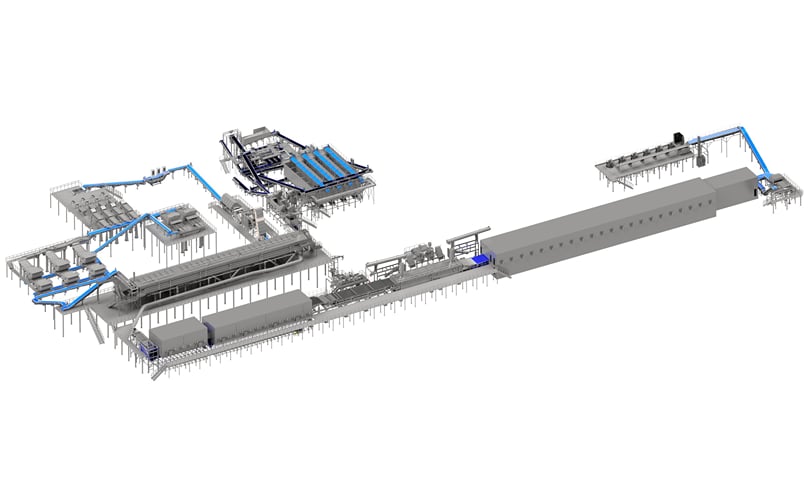
Complete Turnkey Potato Processing Line
Types of Turnkey Potato Processing Lines
Complete potato processing lines are designed according to the intended end product, production capacity and customer requirements. Although most processing lines share common operations such as receiving, washing and grading, the processing sequence, thermal treatment, packaging and finishing stages vary depending on the desired product characteristics, texture, shelf life and end-use application. Modern turnkey potato processing lines are available for a wide range of fresh and processed potato products, providing automated, efficient and flexible production solutions.
Turnkey Lines for Packed Potatoes
Overview: Turnkey lines for packed potatoes are designed to process fresh table potatoes for retail, wholesale and foodservice markets. These lines focus on minimal processing to preserve the potatoes natural quality, freshness and appearance while preparing them for distribution. Depending on market requirements, potatoes may be marketed as washed or unwashed products.
Products Produced: These processing lines produce whole, graded, washed or unwashed potatoes that are packed for retail or bulk distribution. Depending on customer requirements, the potatoes may also be lightly polished to improve their appearance before packaging.
Typical Process Flow: The processing sequence typically begins with raw potato receiving and storage followed by destoning and washing, grading and sorting, optional light peeling or polishing, quality inspection, weighing and final packaging in bags, crates, boxes or bulk containers.
Main Equipment: The main equipment typically includes receiving hoppers, destoners, brush or flotation washers, grading and sizing machines, optical sorters, inspection conveyors, weighing systems and automated bagging or packaging machines.
Applications: Packed potato processing lines are widely used by potato packers, supermarkets, wholesale distributors and foodservice suppliers. They are suitable for both seasonal and year-round potato supply chains and help deliver consistent product quality with minimal handling.
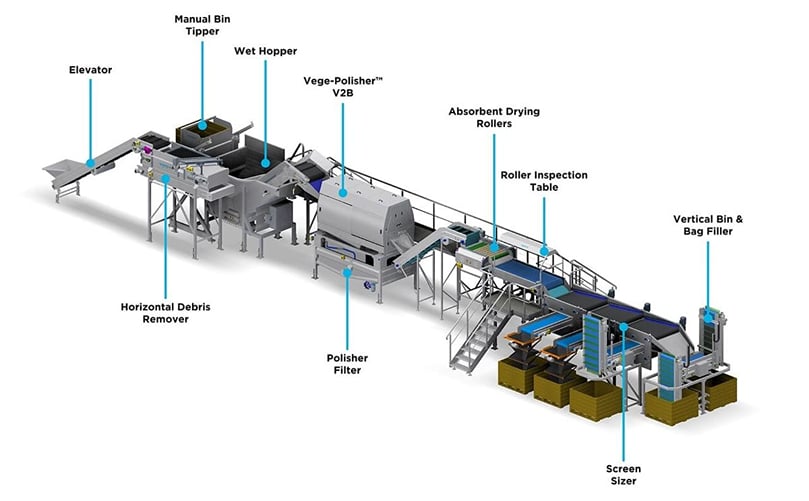
Turnkey Packed Potato Processing Line
Turnkey Lines for Peeled Potatoes
Overview: Turnkey lines for peeled potatoes produce ready-to-cook potato products for foodservice operations, institutional kitchens, catering companies and further processing industries. These lines automate peeling and preparation while maintaining product quality, hygiene and processing efficiency.
Typical Process Flow: The production process begins with receiving, storage and washing followed by peeling using steam, abrasive or lye peelers. The potatoes are then trimmed and inspected before being processed as whole potatoes or cut into dices, slices, strips or wedges. Depending on product requirements, blanching or anti-browning treatments may be applied to improve color retention before packaging. The finished products are typically vacuum packed or packaged under modified atmosphere packaging (MAP) to maintain freshness and extend shelf life.
Main Equipment: Typical equipment includes steam, abrasive or brush peelers, trimming stations, inspection conveyors, dicers, slicers, wedge cutters, blanchers, vacuum packaging machines and modified atmosphere packaging systems.
End Products: These processing lines produce peeled whole potatoes, diced potatoes, sliced potatoes, potato wedges and other ready-to-cook potato products for hotels, restaurants, catering companies (HoReCa), institutional kitchens, retail markets and canning operations.
Advantages: Peeled potato processing lines reduce preparation time for end users, improve production efficiency, minimize product losses, extend shelf life through advanced packaging technologies and maintain high standards of hygiene and food safety.
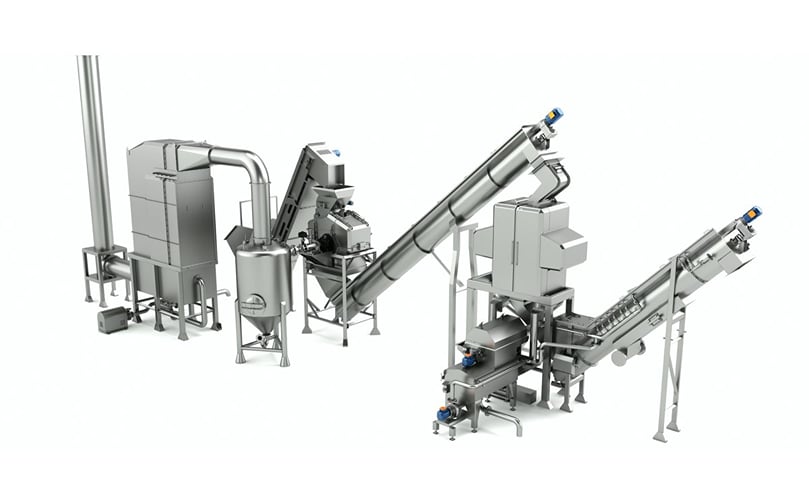
Turnkey Peeled Potato Processing Line
Turnkey Lines for Mashed Potatoes
Overview: Turnkey mashed potato processing lines are designed to manufacture fresh or refrigerated mashed potato products for retail, foodservice and industrial applications. Fresh mashed potatoes are intended for immediate consumption, while refrigerated mashed potatoes are formulated with suitable ingredients or stabilizers to achieve an extended chilled shelf life and maintain product quality during storage.
Typical Process Flow: The production process includes receiving and storage, washing and peeling, cutting or dicing, steam cooking, mashing, mixing with ingredients such as butter, milk, cream, seasonings or stabilizers when required followed by cooling or pasteurization and final packaging.
Main Equipment: The processing line typically includes steam cookers, mashers or pulpers, mixers, ingredient dosing systems, depositors, pasteurizers, cooling equipment and automated packaging machines.
Applications: Mashed potato processing lines are widely used to manufacture fresh and refrigerated mashed potatoes for retail and foodservice markets. They also produce mashed potato bases for ready-to-eat meals and formed potato products such as croquettes, potato cakes and other value-added potato products.
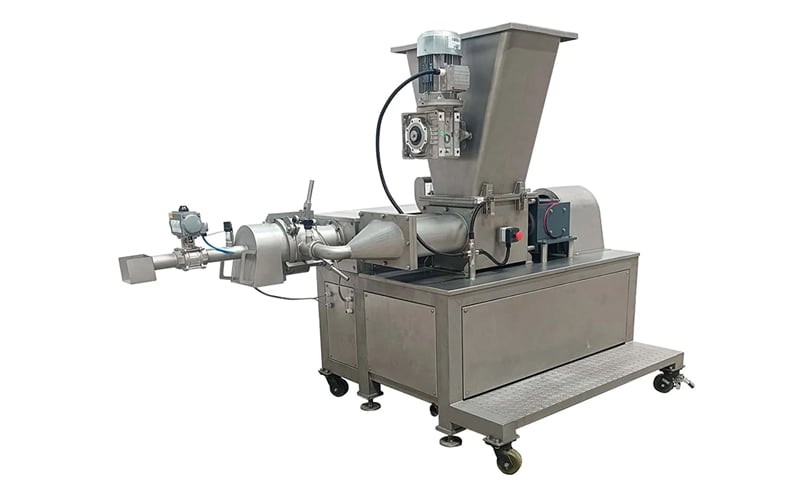
Turnkey Lines for Mashed Potatoes line
Turnkey Lines for Packed and/or Peeled Potatoes
Overview: Turnkey lines for packed and peeled potatoes are flexible processing systems capable of producing both packed fresh potatoes and peeled f within the same facility. Their modular design allows processors to switch efficiently between different product types according to customer demand while maximizing equipment utilization.
Flexible Configuration: These systems typically share upstream operations such as receiving, washing, grading and peeling, while downstream processing and packaging lines are configured to produce different finished products. The modular design enables processors to adapt production with minimal downtime and supports future expansion as production requirements change.
Typical Users: Combined processing lines are commonly used by multi-product potato processors, contract processing facilities, foodservice suppliers and small to medium sized potato processing companies seeking greater production flexibility, improved equipment utilization and lower operating costs. These integrated systems provide an efficient solution for processors serving multiple markets from a single production facility.
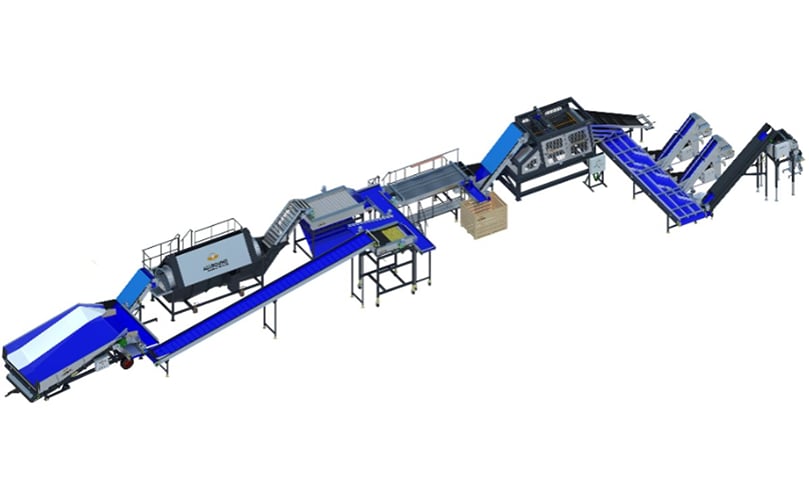
Potato Washing, Grading, Peeling and packaing Line
Turnkey Lines for French Fries and Potato Specialties
Turnkey French fry processing lines are among the most advanced and high-capacity potato processing systems. These fully integrated production lines are designed to manufacture frozen French fries and other value-added potato products with consistent quality, high production efficiency and minimal waste. Modern systems combine automated processing, advanced quality control, energy efficient technologies and food safety measures to meet the requirements of retail, foodservice and quick service restaurant (QSR) markets.
Turnkey Lines for Frozen French Fries
The production process begins with raw potato receiving and storage, where high dry matter potato varieties, typically containing 18–22% dry matter, are inspected before processing. The potatoes undergo destoning and washing to remove soil, stones and other foreign materials before being peeled using steam or abrasive peelers. Modern peeling systems are designed to minimize peeling losses, which are generally maintained below 10–15%.
After peeling, the potatoes are cut into uniform strips using hydro-cutters or precision mechanical cutters with common French fry dimensions ranging from 7–12 mm in cross-section. Optical sorting systems and manual inspection stations remove defective potatoes, slivers, nubbins and other off-specification products to ensure consistent product quality.
The potato strips are then blanched in continuous screw or belt blanchers, typically operating at 70–95°C, to inactivate enzymes, reduce excess sugars for improved color control and partially cook the product. Following blanching, the fries pass through dewatering and drying systems that prepare the surface for par-frying while reducing oil absorption.
Par-frying is performed in continuous industrial fryers, where the potato strips develop their characteristic color, texture and flavor. Depending on the final product an optional batter or coating may be applied before frying to improve crispiness, enhance flavor adhesion and increase oven performance.
The fries are subsequently frozen using Individual Quick Freezing (IQF) systems before final packaging and cold storage, preserving product quality and extending shelf life.
Main Equipment: A complete French fry processing line typically includes receiving systems, storage bins, cyclone destoners, drum or brush washers, steam or abrasive peelers, hydro-cutters, optical sorting systems, blanchers, dewatering conveyors, dryers, continuous fryers, coating equipment where required, IQF freezing tunnels, automated packaging machines and palletizing systems. Many modern lines also incorporate efficient oil filtration systems, heat recovery technologies, starch recovery units, water recycling systems and advanced automation to improve sustainability and reduce operating costs.
Production Capacity and Automation: French fry processing lines are available in capacities ranging from approximately 1,000 kg per hour to more than 30 tonnes per hour, depending on plant size and production requirements. Advanced automation integrates programmable logic controllers (PLCs), supervisory control and data acquisition (SCADA) systems, machine vision, AI-assisted optical sorting and real-time process monitoring to optimize yield, maintain product consistency, reduce oil uptake, minimize waste and improve overall production efficiency.
French Fry Products: Modern processing lines manufacture a wide range of French fry products, including straight-cut fries, crinkle-cut fries, shoestring fries, steak fries, waffle fries and other specialty cuts. Coated French fries require additional coating, drying and frying stages to improve texture, crispiness and holding performance in ovens, air fryers and deep fryers.
Turnkey Lines for Potato Specialties
Potato specialties processing lines share many of the same upstream operations as French fry lines including washing, peeling, sorting and cutting, but incorporate additional processing steps to manufacture a wider variety of value-added potato products.
Hash browns are typically produced from shredded or diced potatoes that are formed into patties before being par-fried or frozen. Tater Tots are manufactured by combining grated or minced potatoes with suitable binders before extrusion into cylindrical shapes and subsequent frying. Croquettes are generally produced from mashed potatoes that are mixed with ingredients, formed into the desired shape, coated with breadcrumbs where required and then fried or baked. Other specialty products, including potato wedges, slices, dices, smiles and shaped potato products, require dedicated cutting, forming, coating or molding equipment depending on the final product.
Unlike conventional French fry lines, potato specialties lines incorporate additional mixers, extruders, molders, forming machines, breading systems and coating equipment, enabling manufacturers to produce a diverse portfolio of potato products on flexible and modular production systems.
Applications and Advantages: The flexibility of potato specialties processing lines enables manufacturers to utilize by-products, including nubbins and off cuts generated during French fry production, thereby improving raw material utilization and reducing waste. These production lines allow processors to respond quickly to changing consumer demand for breakfast products, appetizers, snacks and premium value-added potato products.
Modern turnkey processing lines emphasize hygiene through Clean-in-Place (CIP) systems, digital process monitoring, product traceability and automated quality control. Environmental sustainability is supported through water recycling, starch recovery, heat recovery and energy efficient processing technologies. These integrated systems improve operational efficiency, increase product value, maximize raw material utilization and ensure consistent product quality throughout the production process.
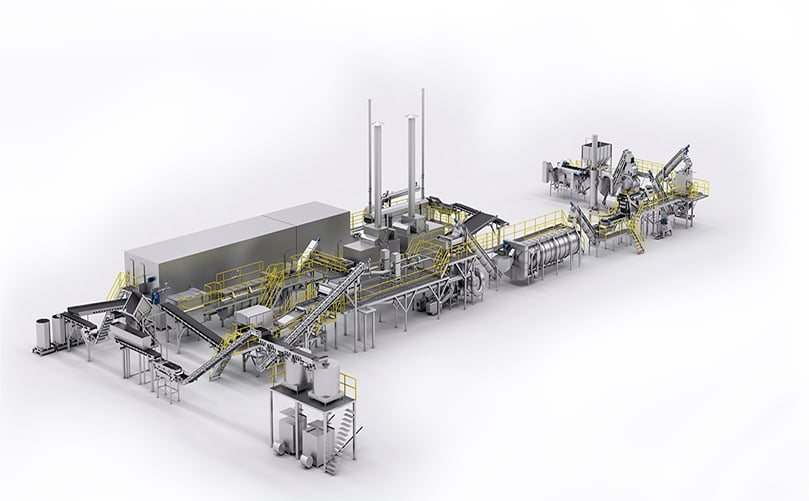
Turnkey French Fry and Potato Specialties Processing Line
Turnkey Lines for the Production of Potato Chips and Snacks
Turnkey potato chip and snack production lines are designed to manufacture a wide range of potato-based snack products with high efficiency, consistent quality and maximum production capacity. These fully integrated processing systems automate every stage of production from raw potato handling through washing, slicing, frying, seasoning, packaging and quality control. Modern production lines combine advanced automation, energy efficient technologies and food safety systems to produce shelf-stable snack products for retail, foodservice and private label markets.
Continuous Potato Chip Processing
Continuous potato chip processing lines are designed for high volume production of thin, crispy potato chips with consistent color, texture and flavor. The production process begins with raw potato receiving and storage, followed by washing and peeling using brush washers and peelers, which are often integrated into a single system. After peeling, the potatoes pass through inspection and sorting conveyors where defective tubers and foreign materials are removed before slicing.
High speed slicers cut the potatoes into uniform slices, typically 1.0–1.5 mm thick. The slices are washed to remove excess surface starch and may be briefly blanched depending on the product specification. After dewatering, the slices enter continuous fryers operating at temperatures of approximately 160–180°C, where precise oil temperature control, circulation and filtration systems ensure uniform frying, consistent product quality and extended frying oil life.
Following frying, the chips are de-oiled using centrifugal or air blowing systems before being cooled and transferred to seasoning drums. Seasonings are applied using oil-based or dry seasoning applicators to ensure even flavor distribution. The finished chips are then packaged, typically under a nitrogen atmosphere, to preserve freshness maintain crispness and extend shelf life.
Batch and Specialty Snack Processing
Batch or kettle style potato chip processing lines are designed for smaller production volumes and premium snack products. Unlike continuous systems, kettle chips are fried in individual kettles at lower temperatures for longer periods, producing thicker chips with a distinctive texture, irregular appearance and enhanced flavor.
Modern snack processing facilities may also produce baked potato chips, which use baking ovens instead of deep frying to reduce oil content. Extruded potato snacks are manufactured from potato flakes or potato granules that are mixed into a dough, extruded into various shapes and subsequently fried or baked. Pellet snacks are produced as semi-finished dried products that are later expanded by frying or hot air processing. Stackable potato chips are manufactured by preparing a potato-based dough, which is sheeted, cut into uniform shapes and cooked before being packaged in cylindrical containers. Some turnkey snack production systems can also be adapted to manufacture tortilla chips by incorporating dedicated corn processing equipment.
Main Equipment: A complete potato chip and snack production line typically includes receiving systems, storage bins, washers, peelers, inspection conveyors, slicers, starch removal systems, blanchers where required, dewatering equipment, continuous or batch fryers, oil filtration systems, de-oiling equipment, cooling conveyors, seasoning drums, flavor application systems, metal detectors, checkweighers, packaging machines, case packers and palletizing systems. Modern turnkey solutions integrate these processing stages into a fully automated production line with centralized process control.
Production Capacity and Automation: Continuous potato chip processing lines are available in capacities ranging from several hundred kilograms to several tonnes per hour. Automated control systems continuously monitor product flow, frying conditions, oil quality, temperature, moisture content and seasoning application to maintain consistent product quality while minimizing production losses. Machine vision systems and inline quality inspection technologies monitor chip color, dimensions, moisture content and product defects throughout the production process.
Sustainability and Process Efficiency: Modern potato chip production lines emphasize energy efficiency and environmental sustainability. Heat recovery systems improve thermal efficiency, while oil management systems reduce oil consumption and maintain frying performance. Water recycling and starch recovery systems minimize resource consumption and reduce wastewater generation. Many processing lines also incorporate Clean-in-Place (CIP) systems, automated cleaning programs, exhaust treatment systems and advanced emission controls to improve hygiene, simplify maintenance and reduce environmental impact.
Applications and Advantages: Turnkey potato chip and snack production lines provide manufacturers with the flexibility to produce multiple flavors, product formats and package sizes while supporting both branded and private label production. Rapid product changeovers, automated seasoning systems and advanced packaging technologies enable processors to respond quickly to changing consumer preferences and market demands. These integrated processing systems deliver high production efficiency, consistent product quality, reduced operating costs, extended shelf life and improved food safety, allowing manufacturers to produce premium, shelf-stable potato snacks with excellent taste, texture and convenience.
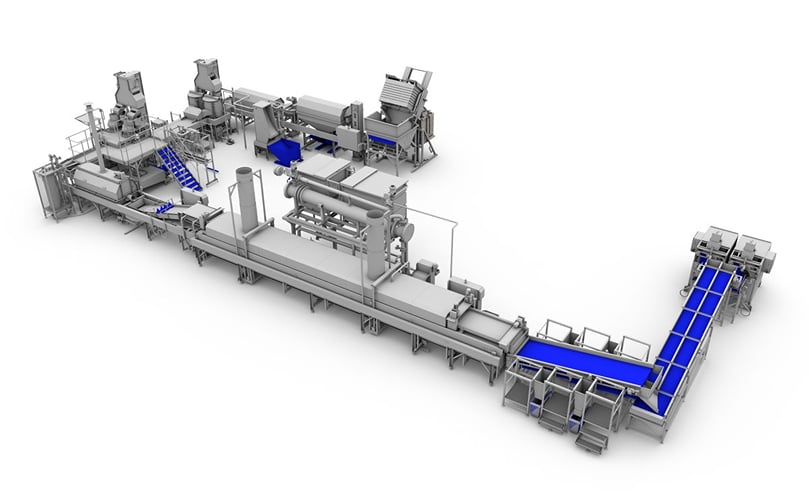
Complete Potato Chip Processing Line
Turnkey Lines for Dehydrated Potato Products
Turnkey dehydrated potato processing lines are designed to manufacture shelf-stable potato ingredients with extended storage life, excellent rehydration properties and high production efficiency. These integrated systems convert fresh potatoes into dehydrated products such as potato flakes and potato granules, which are widely used in the food processing industry. Modern production lines combine automated processing, advanced drying technologies and stringent quality control to ensure consistent product quality while maximizing raw material utilization.
Dehydrated potato products offer significant advantages over fresh potatoes, including reduced transportation and storage costs, longer shelf life and year-round availability. Many processing facilities also improve sustainability by utilizing off-cuts and by-products generated during French fry and other potato processing operations, increasing overall raw material utilization and reducing food waste.
The production of potato flakes and potato granules follows similar upstream processing stages, including washing, peeling, cooking and mashing. However, the drying technology and final product characteristics differ, resulting in dehydrated ingredients suitable for a wide range of food applications.
Potato Flake Processing Lines
Potato flake production begins with washing, steam peeling, slicing or dicing, blanching and steam cooking to gelatinize the starch. The cooked potatoes are mashed into a uniform puree and food grade emulsifiers such as monoglycerides may be added to improve product quality and facilitate drum release during drying.
The mashed potatoes are then dried using steam heated drum dryers, which are the core component of potato flake production lines. A thin layer of potato mash is applied to the surface of single or double drum dryers operating at surface temperatures of approximately 150–170°C. As the drums rotate, moisture evaporates rapidly within a few seconds, producing a thin dried sheet that is continuously removed by doctor blades. The dried material is subsequently cooled, milled, screened and packaged to produce potato flakes with uniform particle size and a final moisture content typically ranging from 5–10%.
Careful control of drum speed, steam pressure, mash consistency and drying conditions is essential to produce potato flakes with good color, rapid rehydration and consistent quality.
Potato Granule Processing Lines
Potato granule production follows a similar sequence of washing, peeling, cooking and mashing but differs significantly during the drying stage. Instead of drum drying, potato granules are generally produced using air drying or fluidized bed drying systems that preserve more of the potato cell structure and create a coarser granular product.
Additional granulation and conditioning stages are incorporated to achieve the desired particle size and texture. Compared with potato flakes, potato granules typically exhibit different rehydration characteristics and provide a less sticky texture making them suitable for applications requiring specific mouthfeel, viscosity or thickening properties.
Main Equipment: A complete dehydrated potato processing line typically includes receiving systems, storage bins, washers, steam peelers, slicers or dicers, blanchers, steam cookers, mashers, mixers, drum dryers or fluidized-bed dryers, cooling systems, crushers, milling equipment, screening systems, packaging machines and automated process control systems. Many modern production lines also incorporate starch recovery systems, fiber handling equipment and heat recovery technologies to improve resource efficiency and reduce environmental impact.
Applications and Advantages: Potato flakes and potato granules are widely used in instant mashed potatoes, snack foods, bakery products, soups, sauces, prepared meals, meat products and pet food formulations. These dehydrated ingredients provide excellent shelf stability, rapid rehydration, convenient handling and consistent quality throughout the food manufacturing process.
Turnkey dehydrated potato processing lines maximize the value of fresh potatoes by converting them into stable, transport efficient ingredients while reducing waste and improving sustainability. Modern production systems emphasize energy efficient drying technologies, automated process control, hygienic stainless-steel construction, Clean-in-Place (CIP) systems and digital process monitoring. Recent developments include AI-assisted process optimization, improved drum dryer designs, enhanced energy recovery systems and greater utilization of processing by-products, enabling manufacturers to improve efficiency, reduce operating costs and meet the growing global demand for convenient dehydrated potato products.
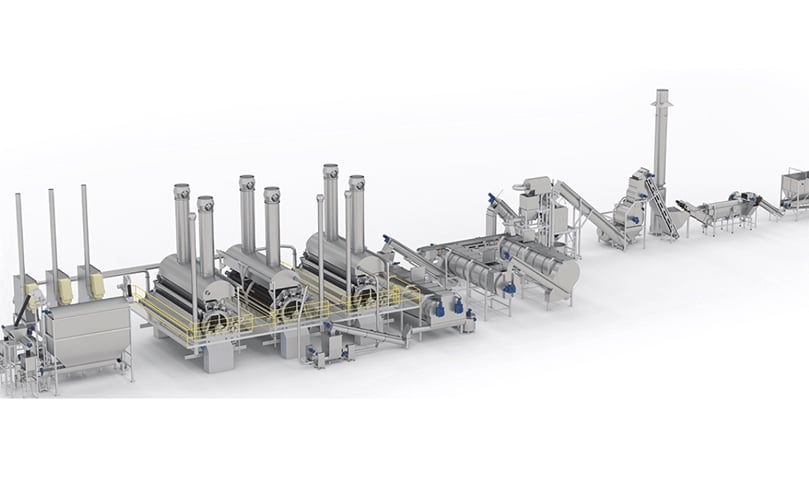
Turnkey Dehydrated Potato Products Processing Line
Lines for Potato Starch and Derivatives
Potato Starch Production Process: Potato starch production begins with cleaning and rasping (grating) the potatoes to release starch granules from the cells. The resulting slurry undergoes separation using centrifuges, sieves or hydro cyclones to isolate starch from fibers and proteins followed by washing and purification to achieve high purity starch. Dewatering, using decanters or filters and flash or pneumatic drying produce the final starch powder. Modern plants emphasize reduced freshwater consumption through water recycling and counter-current washing. Flottweg, Alfa Laval, SiccaDania and Myande supply advanced equipment for efficient starch extraction.
By-product Recovery and Modified Starches: By-product recovery is an integral part of modern starch processing. Fruit water (potato juice) is treated to recover potato protein through coagulation and separation, while potato fibers are dewatered for use in animal feed or biogas production. Starch recovery systems can also capture starch from French fry and potato chip processing water, improving overall yield and reducing effluent. Modified potato starches undergo further chemical, enzymatic or physical treatments, such as cross-linking or acetylation to provide specific functional properties, including improved stability and thickening performance.
Applications, Automation and Sustainability:Potato starch is valued for its large granule size, high viscosity and neutral taste making it suitable for food applications as a thickener and binder as well as for the paper, textile, adhesive and pharmaceutical industries. Processing lines are highly automated with PLC-based controls to ensure consistent product quality and minimize downtime. Sustainability features include closed loop water systems and energy efficient drying technologies. Integration with other potato processing operations, such as recovering starch from French fry and potato chip production lines helps maximize raw material utilization.
Industrial Applications: These processing lines support both dedicated potato starch factories and starch recovery systems integrated into French fry and potato chip processing facilities. Modern technologies address challenges such as handling large process water volumes and achieving food-grade purity while maximizing starch yield, reducing environmental impact and producing both native and modified potato starches for diverse industrial applications.
Common Equipment Used in Potato Processing Lines
While specific processing lines vary depending on the final product, many core machines are common across potato processing facilities worldwide. Most equipment is constructed from stainless steel to ensure hygiene, durability and compliance with food safety standards. Integration through conveyors, pumps and PLC/SCADA control systems ensures a smooth and continuous production flow.
Receiving and Storage: Hoppers, elevators, destoners and bulk storage silos or bins handle raw potato intake, remove stones and clods and manage the supply of potatoes for continuous operation. Flotation or air-based systems are commonly used for initial cleaning.
Washing: Brush washers, drum washers and flotation washers remove soil, stones and other debris from potatoes. High pressure spray systems and water recirculation with filtration improve water efficiency. Multi-stage systems often include a pre-wash followed by a final rinse.
Peeling: Steam peelers, abrasive peelers, brush peelers and lye peelers are commonly used depending on the application. Steam peeling is generally preferred because it minimizes flesh loss, typically to 1–5%, while reducing waste. Dry peel separation and wastewater treatment systems are often incorporated into the process.
Sorting and Inspection: Optical sorters equipped with cameras, lasers and AI-based vision systems identify defects, color variations, size differences and foreign materials. Manual inspection tables with appropriate lighting and size graders are also widely used. Advanced systems can detect green potatoes, bruises and other defects at high processing speeds.
Cutting or Slicing: Hydro-cutters use high pressure water to produce French fries while minimizing mechanical damage. Mechanical slicers, dicers and shredders are used for potato chips and specialty products. Cutting equipment can produce strips, slices, wedges, crinkle-cut fries and other product shapes, often followed by starch removal.
Cooking, Blanching or Frying: Screw, belt and drum blanchers are used to inactivate enzymes and leach reducing sugars, which is particularly important for achieving consistent color in French fries. Continuous fryers equipped with oil filtration, heat exchangers and automatic temperature control are widely used for French fries and potato chips. Steam cookers are commonly used in mashed potato and potato flake production.
Drying or Freezing: Dewatering shakers, air dryers and spin dryers remove excess surface moisture before further processing. Drum dryers are used in potato flake production, while IQF (Individual Quick Freezing) tunnels and spiral freezers are commonly used for frozen French fries and potato specialties. Cryogenic freezing systems are also available for specific applications.
Packaging: Packaging systems include weighing scales, vertical form-fill-seal baggers, cartoners, vacuum packaging and modified atmosphere packaging (MAP) systems to extend product shelf life. Metal detectors, X-ray inspection systems and checkweighers help ensure product safety and quality.
Quality Inspection and Ancillary Systems: Quality inspection systems include vision systems, metal detectors, X-ray inspection equipment and traceability software. Ancillary systems include wastewater treatment, starch recovery and energy recovery systems. Automation reduces labor requirements, while sensors continuously monitor process parameters such as temperature, moisture and oil quality.
Across all processing lines, equipment is designed with modularity to provide production flexibility, facilitate cleaning through Clean-in-Place (CIP) systems where applicable and support compliance with international food safety standards such as HACCP, FDA and European Union regulations.
Factors to Consider When Choosing a Potato Processing Line
Selecting a potato processing line requires balancing technical, economic and operational factors to ensure long-term efficiency and profitability across diverse production environments.
Product Type and Specifications: Select a processing line that matches the intended end products, such as French fries, potato flakes or potato chips, as well as the required quality specifications, including color, texture and oil content. Production flexibility for seasonal or multiple product types should also be considered.
Capacity: Choose a processing line based on current production requirements while allowing for future expansion. Processing capacities typically range from 500 kg/h to more than 5,000 kg/h. Raw material availability and market demand should also be considered to avoid underutilization or production bottlenecks.
Automation Level: Processing lines range from semi-automatic systems to fully automated lines equipped with PLC controls, AI-based inspection and robotics. Higher levels of automation improve product consistency and reduce labor requirements but require greater initial investment.
Food Safety and Regulatory Requirements: Ensure the processing line complies with applicable food safety and quality standards, including traceability, allergen control and hygienic equipment design. Easy-to-clean equipment and certified food contact materials are essential for regulatory compliance.
Utility Consumption and Sustainability: Evaluate energy consumption, water usage and wastewater generation, particularly for energy intensive processes such as frying and drying. Processing lines with water recycling, heat recovery and energy efficient technologies can reduce operating costs and environmental impact.
Expansion Possibilities and Modularity: Modular processing lines allow additional equipment or processing stages to be integrated as production requirements change. Future expansion, available floor space and compatibility with existing facilities should be considered during line selection.
Total Cost of Ownership: Evaluate the total cost of ownership, including the initial investment, maintenance requirements, spare parts availability, operator training and technical support. Return on investment and financing options should also be considered.
Raw Material Variability and Local Conditions: Potato variety, dry matter content and seasonal availability can significantly influence processing performance. Local factors such as climate, storage requirements, water availability and power reliability should also be considered.
Supplier Support: Choose suppliers that offer turnkey solutions with installation experience, operator training, after-sales service, spare parts availability and remote technical support.
Emerging Trends in Potato Processing
The global potato processing market is growing steadily (projected CAGR of approximately 5–6% through the early 2030s), driven by increasing demand for convenience foods, snacks and processed potato products, particularly in emerging markets across Asia and Africa.
Automation and Artificial Intelligence (AI): Automation and AI are being widely adopted for sorting, inspection, predictive maintenance, and process optimization. Robotics are increasingly used for packaging and palletizing to address labor challenges. Unmanned processing lines are emerging in leading production facilities.
Energy Efficiency and Sustainability: The industry is focusing on water recycling, with modern plants capable of recycling up to 80–90% of process water, waste valorization through starch, protein and fiber recovery, and the integration of renewable energy sources. Circular economy practices help reduce the environmental footprint while addressing climate pressures on potato supply.
Digital Monitoring and Industry 4.0: IoT sensors, real-time data analytics and cloud-based control systems improve traceability, yield optimization and product quality consistency across global supply chains.
Product Innovation: Manufacturers continue to develop healthier products, including baked, reduced-oil and functional potato products, as well as clean-label products and ethnic or specialty flavors. Demand is also increasing for extruded snacks, pellet snacks and plant-based applications.
Supply Chain Resilience: Processors are strengthening raw material supply through improved grower contracts, climate resilient potato varieties and nearshoring strategies. Greater emphasis is being placed on upstream quality management before potatoes reach the processing facility.
Regulatory and Consumer Pressures: The industry is adapting to stricter regulations on recyclable and biodegradable packaging, acrylamide reduction and product transparency. Consumer demand for sustainable and ethically sourced potato products continues to influence processing technologies and production practices.
Regional variations exist with high levels of automation in Europe and North America, while China and India continue to expand processing capacity through significant investments in new facilities.
Leading Manufacturers of Potato Processing Lines
The global potato processing equipment market is led by specialized manufacturers in Europe, North America and Asia. Many companies provide complete turnkey processing solutions, including engineering, equipment manufacturing, installation, commissioning, automation and after-sales support for fresh and processed potato products.
Leading manufacturers include: Kiremko (Netherlands), Tummers Food Processing Solutions B.V. (Netherlands), Heat and Control (United States/Australia), Idaho Steel & Reyco (United States), Vanmark Equipment LLC (United States), TOMRA (Norway), Flo-Mech Ltd (United Kingdom), PPM Technologies Inc. (United States), FPS Food Process Solutions (Canada), Rosenqvists Food Technologies (Sweden), Kuipers Food Processing Machinery (Netherlands), Allround Group (Netherlands), Wyma Solutions (New Zealand), Sormac B.V. (Netherlands), Dutch Tec Source BV (DTS) (Netherlands), Foodera Technologies (India), Natural Storage Solutions Pvt. Ltd. (NSSPL) (India), Shri Vibracion Technologies Pvt. Ltd. (India), Siddhivinayak Agri Processing Pvt. Ltd. (SV Agri) (India), Forsfood Oy (Finland), SiccaDania A/S (Denmark), Incalfer (Argentina), Incomec (Belgium), SINOBAKE (China) and Shandong Sensitar Industrial Equipment Co., Ltd. (China).
When selecting a processing line supplier, consider the company's product specialization, production capacity, engineering expertise, automation capabilities, regional references, after-sales support network, spare parts availability and technical expertise. Site visits, performance guarantees, factory acceptance tests (FAT) and a detailed total cost of ownership (TCO) analysis are recommended before making an investment decision.